Man made Fiber Lightweight Storage Bags
CN → US| HS Code | Tariff Rate | Origin | Destination | Doc |
|---|---|---|---|---|
| 6305900000 | 23.7% | CN | US | Official Doc |
| 5608192010 | 40.0% | CN | US | Official Doc |
| 4202929100 | 52.6% | CN | US | Official Doc |
| 5608192090 | 40.0% | CN | US | Official Doc |
| 4202929336 | 52.6% | CN | US | Official Doc |
Product Images
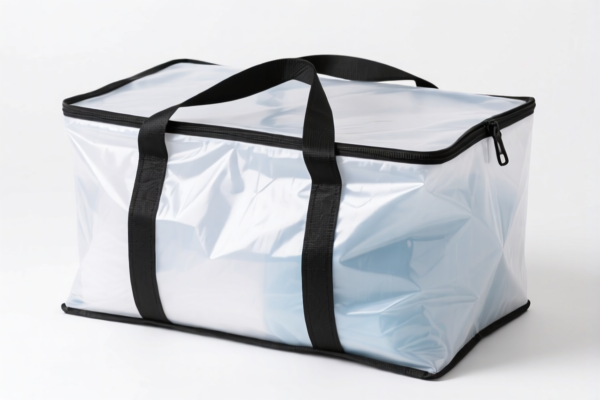
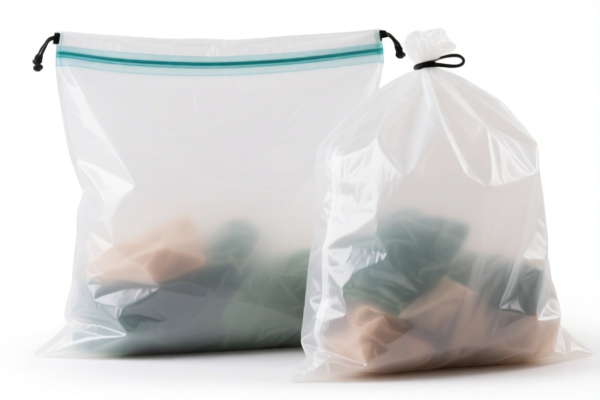

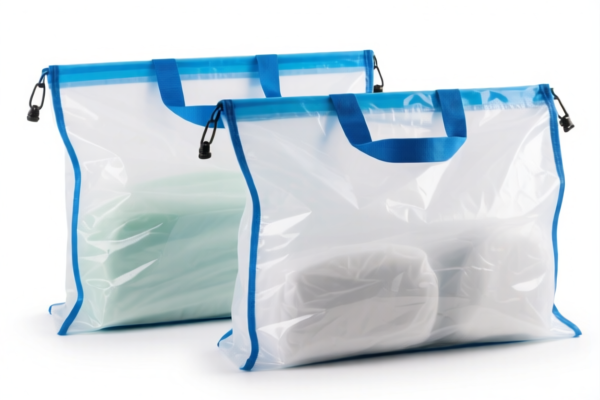
AI Analysis
🎒 Man-Made Fiber Lightweight Storage Bags: The Ultimate HS Code Classification Guide (2026 Update)
🌐 HS Code Reference & Customs Clearance Guide | 2026 Tariff Analysis | Professional Strategy for US Imports
📌 I. Product Definition & Classification: Do You Really Understand "Storage Bags"?
Man-Made Fiber Lightweight Storage Bags are versatile textile-based containers designed for organizing, storing, or transporting goods. In international trade, these items often face a "classification trap." They are neither simple nets nor high-end fashion accessories, but rather general-purpose textile containers.
The core of the classification debate lies in two factors: 1. Material Composition: Is it purely textile? Does it have a plastic coating? Is it synthetic (polyester/nylon) or natural blend? 2. Function & Form: Is it a simple mesh bag (like a laundry bag) or a structured container (like a duffel or organizer)?
⚠️ Critical Distinction:
- If the bag is primarily a mesh/net structure used for holding items loosely → It likely falls under Chapter 56 (Nets/Bag-like articles).
- If the bag is a structured container with an outer textile surface, zipper, and defined volume → It likely falls under Chapter 42 (Articles of leather/similar materials; Travel goods, handbags, containers).
📦 II. HS Code Classification Details (Authoritative 2026 Tariff Comparison)
Below are the 5 specific HS Codes derived from the provided data, ranked by total tax efficiency.
| HS Code | Product Description | Classification Logic | Total Tax Rate | Tax Breakdown |
|---|---|---|---|---|
| 6305.90.00.00 | Fiber Storage Bags (Textile Material) | Best Match: Bags made of textile materials used for storage/packaging. Fits the general "textile bag" category. | 23.7% | Base: 6.2% Section 301: 7.5% Section 122: 10% |
| 5608.19.20.10 | Fiber Storage Bags (Artificial Fiber, Net/Bag Type) | Alternative: Artificial fiber material, net-like/form of bag. Uses the "other" fallback logic for net products. | 40.0% | Base: 5.0% Section 301: 25.0% Section 122: 10% |
| 5608.19.20.90 | Fiber Storage Bags (Artificial/Textile, Other Net Products) | Alternative: Artificial/textile material, final net-product category. Uses "other finished products" fallback. | 40.0% | Base: 5.0% Section 301: 25.0% Section 122: 10% |
| 4202.92.91.00 | Fiber Storage Bags (Artificial Fiber, Textile Surface) | High-End/Structured: Container form, artificial fiber textile surface. Fits "outer surface of textile material" requirement. | 52.6% | Base: 17.6% Section 301: 25.0% Section 122: 10% |
| 4202.92.93.36 | Fiber Storage Bags (Textile Material, Container Form) | High-End/Structured: Storage bag form, textile material. Fits "outer surface of textile material" requirement. | 52.6% | Base: 17.6% Section 301: 25.0% Section 122: 10% |
🔍 Key Insight:
- 6305.90.00.00 is the most cost-effective option at 23.7% total tax, provided the bag is classified as a general textile storage bag. - 4202.xxxx codes carry the highest burden (52.6%) because they treat the bag as a "travel good" or "fashion container," attracting higher base duties. - 5608.xxxx codes sit in the middle (40.0%) and are used when the bag is viewed primarily as a "net" product rather than a structured container.
💰 III. 2026 Detailed Tariff Rate Explanation (Including Surcharges & Policy Add-ons)
✅ Applicable Country: United States (US)
✅ Country of Origin: China (CN)
✅ Effective Time: 2025 onwards (including subsequent imports)
🎯 1. 6305.90.00.00 —— The Optimal Choice: Textile Storage Bags
| Item | Details |
|---|---|
| Base Duty Rate | 6.2% (Ad valorem) |
| Section 301 Surcharge | +7.5% (Specific to this HTSUS code under 301 Tariff List 4) |
| Section 122 Surcharge | +10% (Under International Emergency Economic Powers Act - IEEPA) |
| Total Tax Rate | 23.7% |
| Tax Calculation | CIF Value × 23.7% |
| De Minimis Exemption | ❌ Not Eligible (deny_de_minimis applies to Section 301/122 goods) |
| Legal Basis Path | USITC:6305.90.00.00 → 301:Footnote 9903.88.01 → IEEPA:9903.01.25 |
📌 Explanation:
- This code benefits from the lowest Section 301 rate (7.5%) compared to other textile codes. - The Base Rate (6.2%) is moderate, making the total cost manageable. - Strategy: Ensure product descriptions emphasize "storage," "packaging," and "textile material" to support this classification.
🎯 2. 5608.19.20.10 & 5608.19.20.90 —— The "Net Product" Route
| Item | Details |
|---|---|
| Base Duty Rate | 5.0% |
| Section 301 Surcharge | +25.0% (Higher than 6305) |
| Section 122 Surcharge | +10% |
| Total Tax Rate | 40.0% |
| Tax Calculation | CIF Value × 40.0% |
| De Minimis Exemption | ❌ Not Eligible |
📌 Explanation:
- Although the Base Rate is lower (5.0%), the Section 301 surcharge jumps to 25%. - This code is often used for mesh laundry bags or produce nets. If your storage bag is structured (has zippers, lining, handles), this classification is risky and may be challenged by Customs and Border Protection (CBP).
🎯 3. 4202.92.91.00 & 4202.92.93.36 —— The "Travel Good" Route (Highest Cost)
| Item | Details |
|---|---|
| Base Duty Rate | 17.6% |
| Section 301 Surcharge | +25.0% |
| Section 122 Surcharge | +10% |
| Total Tax Rate | 52.6% |
| Tax Calculation | CIF Value × 52.6% |
| De Minimis Exemption | ❌ Not Eligible |
📌 Explanation:
- These codes classify the bag as a handbag, travel bag, or similar container. - The Base Rate (17.6%) is significantly higher than textile codes. - Strategy: Avoid this classification unless the bag is marketed as a fashion accessory or luxury travel item. For generic storage bags, this is a costly error.
🛠️ IV. Customs Clearance Practical Advice (Battle-Tested Tips)
✅ 1. Required Documentation Checklist (Non-Negotiable)
| Document | Required? | Description |
|---|---|---|
| ✅ Product Specification Sheet | ✔️ | Must state material composition (e.g., "100% Polyester"), dimensions, and closure type (zipper/drawstring). |
| ✅ Product Photos | ✔️ | Clear images of the bag, including interior, exterior, labels, and closure mechanisms. |
| ✅ Commercial Invoice | ✔️ | Must accurately describe the item as "Textile Storage Bag" or "Fiber Storage Container." Avoid vague terms like "Accessory." |
| ✅ Packing List | ✔️ | Details quantity, weight, and packaging method. |
| ✅ Origin Certificate (CO) | ✔️ | To prove country of origin (China) for Section 122/301 applicability. |
✅ 2. Declaration Tips (Key Mnemonics)
🔥 "Material Defines Chapter, Function Defines Code, Description Prevents Delay!"
| Scenario | Correct Declaration | Incorrect Practice |
|---|---|---|
| Generic Storage Bag | 6305.90.00.00 - "Fiber Storage Bag, Textile Material, for Organizing" |
Using vague terms like "Bag" → High risk of misclassification. |
| Mesh Laundry Bag | 5608.19.20.10 - "Textile Net Bag, Artificial Fiber, for Laundry" |
Classifying mesh bag as 4202 → Unjustified high tax. |
| Luxury Travel Organizer | 4202.92.91.00 - "Travel Storage Case, Synthetic Leather/Textile Surface" |
Describing luxury item as "Storage Bag" → Risk of fraud claim. |
| Mixed Material Bag | Careful Analysis | If the bag has plastic coating or leather trim, classification changes! |
✅ 3. Special Case Handling
| Situation | Recommendation |
|---|---|
| Bag with Plastic Coating | May fall under 3923 (Plastic Articles) instead of textile codes. Check if plastic is the primary material. |
| OEM/Custom Storage Bags | Provide design drawings to prove it is a "storage" item, not a "fashion" item, to support 6305. |
| Sample vs. Commercial | Samples under $2,500 may still be subject to tariffs if not properly declared as "Samples for Sale" (still taxable, but may avoid some formalities). However, Section 301/122 applies regardless of value. |
| Re-export from Third Country | If shipped from Vietnam/Mexico, provide Certificate of Origin to potentially avoid Section 122, but Section 301 may still apply if components are Chinese. |
🌍 V. Global Market Comparison (2026 Update)
| Country/Region | Recommended HS Code | Estimated Duty | Certification Requirements | Notes |
|---|---|---|---|---|
| 🇺🇸 USA | 6305.90.00.00 |
23.7% | None (General) | Best rate. Avoid 4202 (52.6%). |
| 🇨🇳 China | 6305.90.00.00 |
~5-10% | CCC (if applicable) | Lower base duty, no Section 301/122. |
| 🇪🇺 EU | 6305.90.00 |
~12-16% | CE (if electronic storage) | No Section 122 equivalent. |
| 🇦🇺 Australia | 6305.90.00 |
~5-10% | None | No major surcharges. |
| 🇯🇵 Japan | 6305.90.00 |
~7-10% | PSE (if electronic) | Stable tariff environment. |
📌 Conclusion:
- The USA is the most challenging market due to Section 301 and Section 122 surcharges. - Optimization is key: Using6305.90.00.00saves ~30% in total tax compared to4202codes. - China-origin goods face the highest combined duties in the US. Consider supply chain diversification if volumes are high.
📌 VI. Common Mistakes & Pitfalls (Lessons Learned)
❌ Mistake 1: Classifying a structured storage bag as 6305 when it has metal zippers and rigid handles.
👉 Consequence: CBP may reclassify as 4202 → Back taxes + Penalties (52.6% vs 23.7%).
❌ Mistake 2: Using "Storage Bag" as the sole description without material details.
👉 Consequence: CBP request for additional information → Delays, demurrage charges.
❌ Mistake 3: Assuming "Net" classification (5608) applies to all mesh bags.
👉 Consequence: If the bag has a zipper and lining, it is not a "net" → Risk of audit.
❌ Mistake 4: Ignoring Section 122 (10%).
👉 Consequence: Underpayment of duties → Compliance violations.
✅ Correct Approach:
"Lightweight Storage Bag, 100% Polyester Textile Material, with Zipper Closure, For Organizing Clothing, Model XYZ, Made in China"
🎯 VII. Conclusion: Professional Classification, Savings Guaranteed!
🎯 Remember the Golden Rule:
🔹 "Textile Storage = 6305 (23.7%) | Net Mesh = 5608 (40%) | Travel/Fashion = 4202 (52.6%)"
🔹 "Material and Function Determine the Code. Wrong Code = Double the Tax!"
📌 Pro Tip:
If your storage bags are originating from Vietnam, Mexico, Thailand, or Malaysia, you may be eligible for IEEPA (Section 122) exemptions. However, Section 301 may still apply if Chinese components exceed threshold limits.
Recommendation: Apply for an Advance Ruling (Ruling Letter) from CBP before shipping large volumes to ensure classification certainty.
📣 Immediate Action:
📞 Consult a licensed customs broker + Provide Product Photos + Request HS Code Advance Ruling
🚀 Streamline Clearance, Minimize Tariffs, Maximize Profit!
✨ Professional Clearance Starts with Accurate Classification!
💼 Every Cent Saved is Pure Profit!
Customer Reviews
About HS Code Classification
The Harmonized System (HS) is an internationally standardized nomenclature developed by the World Customs Organization (WCO) to classify traded products. Over 200 countries use the HS system as the basis for customs tariffs, trade statistics, and import/export regulations.
Each HS code follows a hierarchical structure:
- Chapter (2 digits) — Broad category of goods (e.g., Chapter 84: Machinery and Mechanical Appliances)
- Heading (4 digits) — More specific grouping within the chapter
- Subheading (6 digits) — Internationally standardized breakdown, used by all WCO member countries
- National subdivisions (8-10 digits) — Country-specific extensions for further classification, such as US HTSUS 10-digit codes
Correct HS code classification is essential for smooth customs clearance, accurate duty payment, and compliance with trade regulations. Misclassification can lead to customs delays, overpayment of duties, or penalties.
When importing from CN to US, the applicable tariff rates may include:
- Most-Favored-Nation (MFN) rate — The standard duty rate applied to WTO members
- General rate — Applied to countries without trade agreements
- Trade remedy duties — Additional tariffs such as Section 301 (anti-dumping), Section 232 (national security), or countervailing duties
The information provided on this page is for reference purposes only. For official classification, please consult with your local customs authority or a licensed customs broker.