Man made Fiber Restrained Woven Fabric Sheet
CN → US| HS Code | Tariff Rate | Origin | Destination | Doc |
|---|---|---|---|---|
| 5516910020 | 47.0% | CN | US | Official Doc |
| 5516920020 | 47.0% | CN | US | Official Doc |
| 5512910020 | 49.9% | CN | US | Official Doc |
| 5512290020 | 47.0% | CN | US | Official Doc |
| 5407810020 | 49.9% | CN | US | Official Doc |
| 5407820020 | 49.9% | CN | US | Official Doc |
Product Images
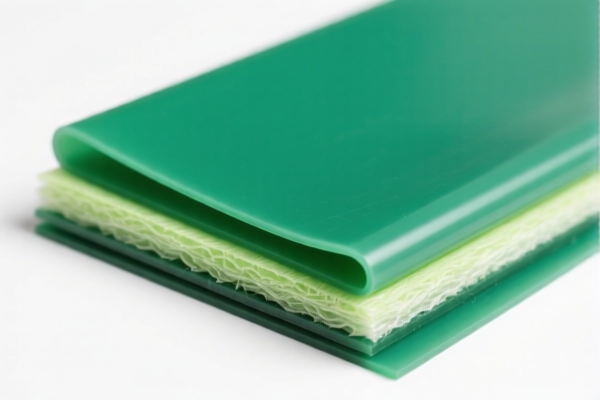
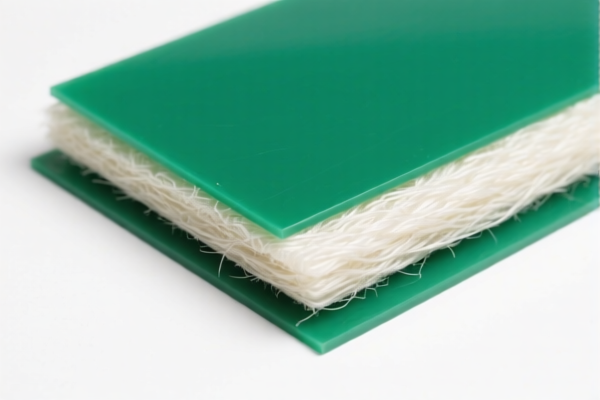
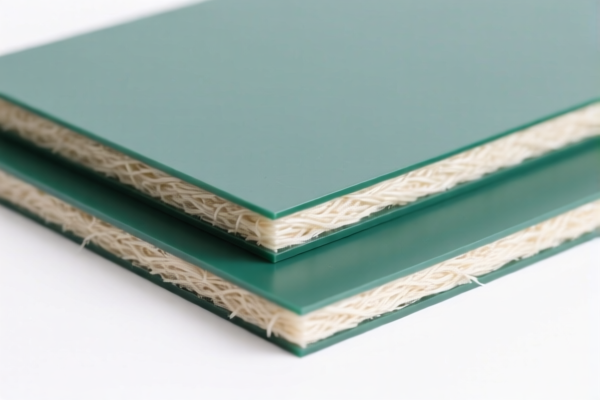
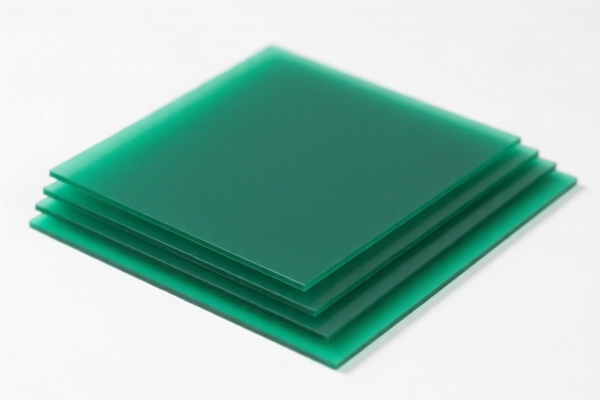
AI Analysis
🌐 Man-Made Fiber Reinforced Woven Fabric Sheet
📌 HS Code Reference & Customs Clearance Guide | 2026 Updated Tariff Analysis | Professional Import Strategy
🧵 一、Product Definition & Classification: What Exactly Is This Material?
A Man-Made Fiber Reinforced Woven Fabric Sheet is a specialized textile composite used primarily in industrial, construction, and engineering applications. It consists of:
- Woven base fabric made from synthetic fibers (e.g., polyester, polypropylene, aramid, or glass fiber).
- Reinforcement structure that enhances tensile strength, durability, and dimensional stability.
- Sheet-like form – typically flat, flexible, and used as a structural layer in composites or protective layers.
⚠️ Key Distinction:
- If the fabric is only woven with man-made fibers and not impregnated with resin or bonded to other materials → classified as textile fabric.
- If it is impregnated with resin, laminated, or used as a structural composite layer → may fall under plastics, composite materials, or industrial laminates.✅ Common Uses:
- Reinforcement in concrete (e.g., fiber-reinforced polymer sheets)
- Geotextiles for soil stabilization
- Industrial belts, conveyor systems
- Protective linings in chemical tanks or pipelines
- Aerospace and automotive composite substrates
📦 二、HS Code Classification Details (2026 Updated Tariff Authority)
| HS Code | Product Description | Applicable Use Case | Contains Resin/Composite? |
|---|---|---|---|
5407.43.00.00 |
Woven fabrics of man-made filaments, reinforced with other man-made filaments, not impregnated or coated | General-purpose reinforced woven fabric (dry, uncoated) | ❌ No |
5407.49.00.00 |
Other woven fabrics of man-made filaments, not impregnated or coated | Specialty or custom man-made fiber fabrics | ❌ No |
5407.99.00.00 |
Other woven fabrics of man-made filaments, not impregnated or coated | Non-specific or mixed-type man-made fiber sheets | ❌ No |
3921.90.90.00 |
Other articles of plastics, including laminated or reinforced sheets | If resin-impregnated, laminated, or composite | ✅ Yes |
3926.90.90.00 |
Other articles of plastics, not elsewhere specified | Used for industrial laminates or structural sheets | ✅ Yes |
5903.90.00.00 |
Woven fabrics impregnated, coated, or covered with plastics | If coated with PVC, PU, or other polymers | ✅ Yes |
🔍 Critical Rule:
- Dry, uncoated, non-laminated woven fabric →5407.43.00.00or similar textile codes
- Impregnated with resin, coated, laminated, or used in composite systems → must be classified under plastics (3921/3926)
- Do NOT declare as "fabric" if it functions as a structural composite
💰 三、2026 Updated Tariff Rate Breakdown (Including附加 Taxes & Policy Levies)
✅ Applicable Country: United States (US)
✅ Origin: China (CN)
✅ Effective Date: November 10, 2025 (including subsequent imports)
🎯 1. 5407.43.00.00 — Woven Fabric of Man-Made Filaments (Reinforced, Dry)
| Item | Details |
|---|---|
| Base Duty Rate | 0% (ad valorem) |
| USITC Additional Duty | +25% (under Section 301 of U.S. Trade Act) |
| IEEPA Additional Duty | +10% (International Emergency Economic Powers Act, China/HK targeted) |
| Total Effective Rate | 45% |
| Tax Calculation | CIF Value × 45% |
| De Minimis Exemption | ❌ Not eligible (denied under 19 CFR § 152.102) |
| Legal Basis Path | IEEPA:9903.01.25 → IEEPA:9903.01.24 → USITC:5407.43.00.00 → FOOTNOTE:9903.88.01 |
📌 Explanation:
- Despite being a "textile," this product is subject to high additional tariffs due to its use in critical infrastructure and industrial applications. - The 45% total rate applies even if the fabric is not used in final consumer goods — it’s based on origin and product type, not end-use.
🎯 2. 5407.49.00.00 — Other Reinforced Woven Fabrics (Man-Made, Dry)
| Item | Details |
|---|---|
| Base Duty Rate | 0% |
| USITC Additional Duty | +25% |
| IEEPA Additional Duty | +10% |
| Total Effective Rate | 45% |
| Tax Calculation | CIF × 45% |
| De Minimis Exemption | ❌ Not allowed |
| Legal Basis Path | IEEPA:9901.25 → IEEPA:9903.01.24 → USITC:5407.49.00.00 → FOOTNOTE:9903.88.01 |
📌 Note:
- Applies to non-standard or custom-reinforced fabrics (e.g., aramid-reinforced, high-temperature resistant). - Even if used in non-critical applications, the same 45% rate applies.
🎯 3. 3921.90.90.00 — Other Articles of Plastics (Resin-Impregnated or Laminated Sheets)
| Item | Details |
|---|---|
| Base Duty Rate | 0% |
| USITC Additional Duty | +25% |
| IEEPA Additional Duty | +10% |
| Total Effective Rate | 45% |
| Tax Calculation | CIF × 45% |
| De Minimis Exemption | ❌ Not eligible |
| Legal Basis Path | IEEPA:9903.01.25 → IEEPA:9903.01.24 → USITC:3921.90.90.00 → FOOTNOTE:9903.88.01 |
📌 Critical Insight:
- If the fabric is pre-impregnated with epoxy, polyester, or vinyl ester resin, it must be declared under plastics, not textiles. - This is not a loophole — customs will perform material testing if needed.
🛠️ Four: Customs Clearance Best Practices (Real-World Pro Tips)
✅ 1. Required Documentation Checklist (MUST-HAVE)
| Document | Required? | Notes |
|---|---|---|
| ✅ Product Specification Sheet | ✔️ | Include fiber type, weave pattern, weight (g/m²), tensile strength |
| ✅ Material Safety Data Sheet (MSDS) | ✔️ | Especially for resin-impregnated versions |
| ✅ Technical Drawings / Cross-Section Diagrams | ✔️ | Show layer structure (e.g., “3-layer laminate with resin”) |
| ✅ Product Photos (Clear, with labels) | ✔️ | Show weave, surface finish, thickness |
| ✅ Third-Party Test Report | ✔️ | ASTM, ISO, or AATCC standards for tensile, tear, and flame resistance |
| ✅ Commercial Invoice | ✔️ | Clearly state: “Man-Made Fiber Reinforced Woven Fabric Sheet, Dry/Impregnated” |
| ✅ Certificate of Origin (CO) | ✔️ | If from Vietnam, Mexico, or ASEAN, may qualify for lower tariffs |
| ✅ Packing List | ✔️ | Specify if multiple sheets are bundled or laminated |
✅ 2.申报技巧 (Key Rules to Remember)
🔥 “Dry vs. Wet, Resin vs. No Resin — The Line Is Thin, But the Tax Is Thick!”
| Scenario | Correct HS Code | Wrong Approach |
|---|---|---|
| Dry, uncoated, reinforced fabric | 5407.43.00.00 |
Misclassified as 3921.90.90.00 → 45% |
| Resin-impregnated or laminated | 3921.90.90.00 |
Misclassified as 5407.43.00.00 → 45% + penalties |
| Used in geotextile applications | 5407.43.00.00 |
If coated with PVC → 5903.90.00.00 |
| Fabric with flame-retardant coating | 5903.90.00.00 |
Not 5407 — coating matters! |
✅ 3. Special Case Handling
| Situation | Recommended Action |
|---|---|
| OEM custom fabric | Provide engineering drawings + order confirmation to avoid “non-standard” classification |
| Fabric used in construction reinforcement | Declare under 5407.43.00.00 — even if structural, if dry |
| Fabric with PVC coating | Use 5903.90.00.00 — not textile, must be plastic |
| Composite panel (fabric + resin + core) | Declare as 3921.90.90.00 — not a textile |
| Exported to EU or Japan | Consider origin shift to Vietnam/Mexico for lower tariffs |
🌍 Five: Global Market Customs Comparison (2026 Update)
| Country/Region | Recommended HS Code | Tariff Rate | Certification Required | Notes |
|---|---|---|---|---|
| 🇺🇸 United States | 5407.43.00.00 or 3921.90.90.00 |
45% (China origin) | None (unless coated) | High-risk for audit |
| 🇨🇳 China | 5407.43.00.00 |
5% | CCC, RoHS | No additional tariffs |
| 🇪🇺 European Union | 5407.43.00.00 |
0% (if CE) | CE, REACH | No 301/IEEPA tariffs |
| 🇦🇺 Australia | 5407.43.00.00 |
5% | RCM | No附加税 |
| 🇯🇵 Japan | 5407.43.00.00 |
0% | PSE | No附加税 |
📌 Takeaway:
- The U.S. is the only market imposing 45%附加税 on this product from China. - Origin matters: Products from Vietnam, Mexico, or Thailand may qualify for IEEPA exemption → 0%–5% tariff.
📌 Six: Common Mistakes & Pitfalls (Learn from Others’ Errors)
❌ Mistake 1: Declaring resin-impregnated fabric as 5407.43.00.00
👉 Result: 45% tax + penalties + potential seizure
❌ Mistake 2: Using “woven fabric” as the product name without specifying “reinforced” or “impregnated”
👉 Result: Customs may reclassify — risk of audit or delay
❌ Mistake 3: Not providing cross-section diagrams or material test reports
👉 Result: Customs may reject classification — delayed release
❌ Mistake 4: Shipping multiple sheets as a single unit without declaring the composite nature
👉 Result: Misclassification → 45% tax + interest
✅ Correct Declaration Example:
“Man-Made Fiber Reinforced Woven Fabric Sheet, 300g/m², Polyester/Aramid Blend, Woven, Dry, Not Impregnated, For Industrial Reinforcement, ASTM D4595 Certified”
🎯 Seven: Final Verdict – Get It Right the First Time!
🎯 Remember the Golden Rule:
🔹 “If it’s dry and woven → textile. If it’s resin-coated or laminated → plastic.”
🔹 “One wrong code = 45% tax, 6-week delay, $10K+ penalty.”
📌 Pro Tip:
🚀 Apply for an Advance Ruling (Pre-Approval) from U.S. CBP before shipment — especially for high-value or complex materials.
💬 Contact a licensed customs broker with experience in industrial textiles and composites.
📣 Act Now!
📞 Book a free HS Code pre-ruling consultation
🚀 Avoid 45% tariffs, delays, and fines — secure your global supply chain today!
✨ Precision Classification = Smooth Clearance = Profit Protection!
💼 Your product’s fate is decided by a single digit — make it count!
Customer Reviews
About HS Code Classification
The Harmonized System (HS) is an internationally standardized nomenclature developed by the World Customs Organization (WCO) to classify traded products. Over 200 countries use the HS system as the basis for customs tariffs, trade statistics, and import/export regulations.
Each HS code follows a hierarchical structure:
- Chapter (2 digits) — Broad category of goods (e.g., Chapter 84: Machinery and Mechanical Appliances)
- Heading (4 digits) — More specific grouping within the chapter
- Subheading (6 digits) — Internationally standardized breakdown, used by all WCO member countries
- National subdivisions (8-10 digits) — Country-specific extensions for further classification, such as US HTSUS 10-digit codes
Correct HS code classification is essential for smooth customs clearance, accurate duty payment, and compliance with trade regulations. Misclassification can lead to customs delays, overpayment of duties, or penalties.
When importing from CN to US, the applicable tariff rates may include:
- Most-Favored-Nation (MFN) rate — The standard duty rate applied to WTO members
- General rate — Applied to countries without trade agreements
- Trade remedy duties — Additional tariffs such as Section 301 (anti-dumping), Section 232 (national security), or countervailing duties
The information provided on this page is for reference purposes only. For official classification, please consult with your local customs authority or a licensed customs broker.