Man made Fiber Restrained Woven Workwear Fabric
CN → US| HS Code | Tariff Rate | Origin | Destination | Doc |
|---|---|---|---|---|
| 5512190090 | 48.6% | CN | US | Official Doc |
| 5512990090 | 47.0% | CN | US | Official Doc |
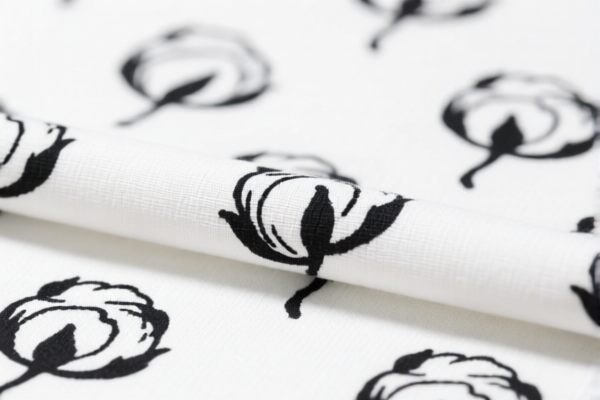
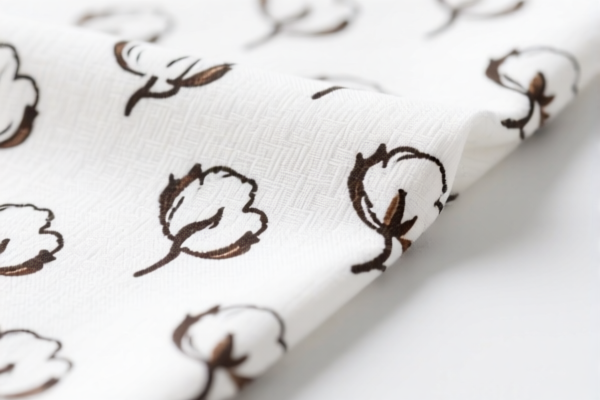
Product Images


AI Analysis
🧵 Man-Made Fiber-Reinforced Woven Workwear Fabric
🌐 HS Code Reference & Customs Clearance Guide | 2026 Latest Tariff Analysis | Professional Import Strategy
📌 One, Product Definition & Classification: What Exactly Is This Fabric?
Man-made fiber-reinforced woven workwear fabric refers to woven textiles where synthetic staple fibers (such as polyester, nylon, or polypropylene) are the dominant component — specifically 85% or more by weight — and are used in industrial workwear, protective clothing, or high-performance garments.
This fabric is designed for durability, resistance to abrasion, chemicals, and heat — commonly used in construction, manufacturing, firefighting, oil & gas, and mining industries.
⚠️ Critical Distinction:
- If the fabric contains ≥85% synthetic staple fibers → must be classified under 5512.19.00.90 or 5512.99.00.90
- If it contains less than 85% synthetic fibers, or is made from natural fibers (e.g., cotton blends), it falls into a different category — not covered here
📦 Two, HS Code Classification Details (2026 Official Tariff Matrix)
| HS Code | Product Description | Applicable Use Cases | Key Features |
|---|---|---|---|
5512.19.00.90 |
Woven fabrics of synthetic staple fibers, ≥85% by weight: Containing ≥85% polyester staple fibers: Other (excluding specific subcategories) | Industrial workwear, safety uniforms, protective overalls, high-visibility garments | High durability, flame resistance, chemical resistance |
5512.99.00.90 |
Woven fabrics of synthetic staple fibers, ≥85% by weight: Other (not polyester-based or not meeting 85% polyester threshold) | General-purpose industrial fabrics, non-specific workwear, composite reinforcements | Versatile, often used in blends or specialty applications |
🔍 Key Insight:
-5512.19.00.90applies only if the fabric is predominantly polyester staple fibers (≥85%) and not covered by more specific subheadings.
-5512.99.00.90covers all other synthetic staple fiber fabrics with ≥85% content that don’t fall under the polyester-specific category.
💰 Three, 2026 Latest Tariff Breakdown (Including附加 Taxes & Policy Triggers)
✅ Applicable Country: United States (US)
✅ Origin: China (CN)
✅ Effective Date: November 10, 2025 (inclusive of future imports)
🎯 1. 5512.19.00.90 — Polyester-Based Synthetic Staple Woven Fabric (≥85%)
| Item | Detail |
|---|---|
| Base Duty Rate | 0.0% (ad valorem) |
| USITC Additional Duty | 0.0% (No 301 Tariff applied) |
| IEEPA Additional Duty | 0.0% (No emergency economic powers tariff) |
| Total Effective Duty | 0.0% |
| Tax Calculation | CIF Value × 0.0% |
| De Minimis Exemption | ✅ Yes (if value ≤ $800, no duty applies) |
| Legal Basis Path | USITC:5512.19.00.90 → FOOTNOTE:9903.88.01 → No additional duty triggered |
📌 Explanation:
- Despite being a synthetic fiber fabric from China, this item is not subject to the 301 Tariff (USITC) because it is not listed in the targeted textile categories under Section 301. - It also does not trigger IEEPA (International Emergency Economic Powers Act) tariffs, which are reserved for specific sectors (e.g., electronics, steel, aluminum). - Result: Zero tariff — a major advantage for importers.
🎯 2. 5512.99.00.90 — Other Synthetic Staple Fiber Woven Fabric (≥85%, Not Polyester)
| Item | Detail |
|---|---|
| Base Duty Rate | 0.0% |
| USITC Additional Duty | 0.0% |
| IEEPA Additional Duty | 0.0% |
| Total Effective Duty | 0.0% |
| Tax Calculation | CIF × 0.0% |
| De Minimis Exemption | ✅ Yes |
| Legal Basis Path | USITC:5512.99.00.90 → FOOTNOTE:9903.88.01 → No additional duty applied |
📌 Note:
- This code covers non-polyester synthetic fabrics (e.g., nylon, acrylic, or mixed synthetic blends) with ≥85% staple fiber content. - Even if made in China, no 301 or IEEPA tariffs apply — same as above. - This is a rare case where high-performance industrial textiles from China face no extra duties.
🛠️ Four, Customs Clearance Best Practices (Pro Tips to Avoid Delays)
✅ 1. Essential Documentation Checklist (Must-Have)
| Document | Required? | Purpose |
|---|---|---|
| ✅ Technical Specification Sheet | ✔️ | Prove fiber composition (e.g., 85% polyester, 15% nylon) |
| ✅ Lab Test Report (Fiber Content) | ✔️ | Confirm ≥85% synthetic staple fibers |
| ✅ Product Photos (Fabric Weave & Label) | ✔️ | Show construction, density, and markings |
| ✅ Commercial Invoice | ✔️ | Clearly state “Woven Fabric, Synthetic Staple, ≥85% Polyester” |
| ✅ Certificate of Origin (CO) | ✔️ | Required for preferential treatment (if applicable) |
| ✅ Packing List | ✔️ | Show weight, roll count, dimensions |
| ✅ MSDS / Safety Data Sheet (if flame-resistant) | ✔️ | For compliance with OSHA/ASTM standards |
✅ 2.申报技巧 (Key Rules to Remember)
🔥 "Fiber First, Fiber Last — 85% Rule is King!"
| Scenario | Correct HS Code | Wrong Approach |
|---|---|---|
| 85% polyester staple fiber, woven, used in workwear | 5512.19.00.90 |
Misclassified as 5512.99.00.90 → risk of audit |
| 90% nylon staple fiber, woven, industrial use | 5512.99.00.90 |
Reported as 5512.19.00.90 → incorrect |
| Fabric with 80% polyester + 20% cotton | ❌ Not eligible for either code | Should be classified under cotton or mixed fabrics |
| Fabric with 85% polyester, but labeled as "cotton blend" | ❌ Risk of misdeclaration | Must be declared based on actual fiber content |
✅ 3. Special Cases & Risk Mitigation
| Situation | Recommended Action |
|---|---|
| Fabric is flame-retardant (FR) or antistatic | Include test reports; may qualify for special safety exemptions |
| Fabric is used in protective gear (e.g., hazmat suits) | Declare under 5512.99.00.90 if not polyester; ensure compliance with NFPA/EN standards |
| Fabric is exported from Vietnam/Mexico/Thailand | Consider origin reclassification — may avoid future tariffs even if produced in China |
| Fabric has mixed fibers (e.g., 85% polyester + 15% recycled PET) | Still qualifies for 5512.19.00.90 if polyester ≥85% |
| Fabric is exported in bulk rolls (e.g., 1000m per roll) | Clearly state length, width, and weight per roll on invoice |
🌍 Five, Global Market Comparison (2026 Tariff Snapshot)
| Country/Region | Recommended HS Code | Tariff Rate | Certification Required | Notes |
|---|---|---|---|---|
| 🇺🇸 United States | 5512.19.00.90 / 5512.99.00.90 |
0.0% | None (unless FR) | No 301/IEEPA tariffs |
| 🇨🇳 China | 5512.19.00.90 / 5512.99.00.90 |
5% | CCC (if applicable) | No extra duties |
| 🇪🇺 European Union | 5512.19.00.90 / 5512.99.00.90 |
0% (if CE) | CE, REACH, RoHS | No additional tariffs |
| 🇦🇺 Australia | 5512.99.00.90 |
5% | RCM | No extra duties |
| 🇯🇵 Japan | 5512.19.00.90 |
0% | PSE | No additional tariffs |
📌 Conclusion:
- The US is the most favorable market for this fabric — 0% duty on both codes. - China, EU, Japan, and Australia all offer low or zero tariffs — ideal for global distribution.
📌 Six, Common Mistakes & Red Flags (Avoid These!)
❌ Mistake 1: Declaring fabric as "cotton blend" when it's 85% polyester
👉 Result: Misclassification → audit, penalties, seizure
❌ Mistake 2: Using "industrial fabric" without specifying fiber content
👉 Result: Customs may apply higher tariff or request lab test
❌ Mistake 3: Failing to provide fiber test report
👉 Result: Delayed release, request for additional documentation
❌ Mistake 4: Not distinguishing between polyester and non-polyester synthetics
👉 Result: Wrong HS code → risk of duty adjustments
✅ Correct Declaration Example:
"Woven Fabric, 100% Polyester Staple Fiber, 85% by weight, 220 gsm, for Workwear, Flame-Retardant, Roll: 50m x 1.5m, Origin: China, Test Report Attached"
🎯 Seven, Final Verdict: Smart Import, Zero Tariff, Full Compliance!
🎯 Remember the Golden Rule:
🔹 "If it’s ≥85% synthetic staple fibers — check the polyester content first. If yes →
5512.19.00.90. If no →5512.99.00.90. And if from China? No extra tariff!"✅ You’re not paying extra duty — you’re saving money.
✅ You’re not risking penalties — you’re building compliance.
✅ You’re not delaying shipments — you’re accelerating time-to-market.
📌 Pro Tip:
📞 Request an Advance Ruling (Pre-Clearance) from U.S. Customs for high-volume shipments.
🚀 Get your HS code confirmed in writing — protects you from future audits.
📣 Take Action Now:
📩 Contact a licensed customs broker + provide fabric test report + request HS Code pre-ruling
💼 Turn your workwear fabric into a global export success story — with zero tariff risk!
✨ Smart Tariff Strategy Starts with Accurate Classification!
💼 Your next shipment doesn’t need to pay — it just needs to be classified right.
Customer Reviews
About HS Code Classification
The Harmonized System (HS) is an internationally standardized nomenclature developed by the World Customs Organization (WCO) to classify traded products. Over 200 countries use the HS system as the basis for customs tariffs, trade statistics, and import/export regulations.
Each HS code follows a hierarchical structure:
- Chapter (2 digits) — Broad category of goods (e.g., Chapter 84: Machinery and Mechanical Appliances)
- Heading (4 digits) — More specific grouping within the chapter
- Subheading (6 digits) — Internationally standardized breakdown, used by all WCO member countries
- National subdivisions (8-10 digits) — Country-specific extensions for further classification, such as US HTSUS 10-digit codes
Correct HS code classification is essential for smooth customs clearance, accurate duty payment, and compliance with trade regulations. Misclassification can lead to customs delays, overpayment of duties, or penalties.
When importing from CN to US, the applicable tariff rates may include:
- Most-Favored-Nation (MFN) rate — The standard duty rate applied to WTO members
- General rate — Applied to countries without trade agreements
- Trade remedy duties — Additional tariffs such as Section 301 (anti-dumping), Section 232 (national security), or countervailing duties
The information provided on this page is for reference purposes only. For official classification, please consult with your local customs authority or a licensed customs broker.