Man made Filament Poplin Fabric
CN → USProduct Images



AI Analysis
🌐 Man-Made Filament Poplin Fabric
📌 HS Code Reference & Customs Clearance Guide | 2026 Latest Tariff Breakdown | Pro-Level Import Strategy
🧵 一、Product Definition & Classification: What Exactly Is "Man-Made Filament Poplin Fabric"?
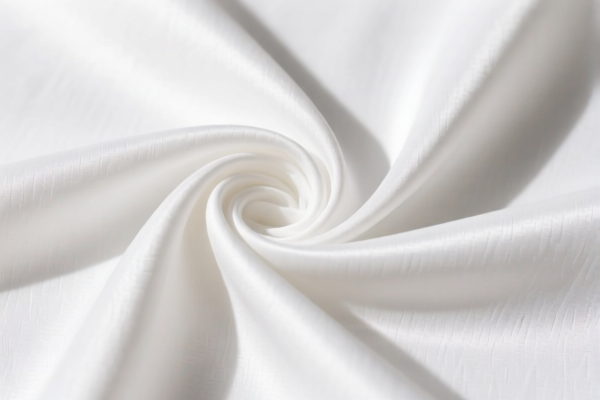
Man-made filament poplin fabric is a lightweight, tightly woven textile made from synthetic fibers such as polyester, nylon, or rayon (viscose), using continuous filaments rather than staple fibers. It features a smooth, crisp surface with a distinct diagonal ribbing (the "poplin" weave), commonly used in shirts, blouses, dresses, linings, and lightweight outerwear.
⚠️ Key Classification Clue:
- "Filament" = continuous synthetic fibers (not spun yarns)
- "Poplin" = a plain weave with a slight diagonal rib (warp-faced), not a twill
- "Man-made" = excludes natural fibers like cotton or silk✅ Common Use Cases:
- Women’s fashion shirts
- Children’s clothing
- Lining fabrics for jackets
- Home textiles (curtains, bed linens)
- Industrial applications (e.g., technical textiles)
📦 二、HS Code Classification Details (2026 Latest Tariff Authority Match)
| HS Code | Product Description | Applicable Use | Filament? | Weave Type |
|---|---|---|---|---|
5407.43.00.00 |
Man-made filament woven fabrics, of polyester, in widths ≤ 30 cm | Narrow-width fabric, e.g., trim, edging, bias tape | ✅ Yes | Poplin (plain) |
5407.44.00.00 |
Man-made filament woven fabrics, of polyester, in widths > 30 cm | Standard width fabric (e.g., yardage for garments) | ✅ Yes | Poplin (plain) |
5407.69.00.00 |
Other man-made filament woven fabrics (e.g., nylon, rayon), not elsewhere specified | Mixed fibers, specialty fabrics | ✅ Yes | Poplin or plain |
5407.99.00.00 |
Other man-made filament woven fabrics, not elsewhere specified | General category for non-standard filaments | ✅ Yes | Any plain weave |
5208.19.00.00 |
Cotton poplin (not man-made) | Excluded – natural fiber only | ❌ No | Plain weave |
🔍 Critical Distinction:
- Only fabrics made from man-made filaments (polyester, nylon, rayon) qualify for5407.xxxxcodes
- Cotton poplin is not eligible – it falls under5208.19.00.00
- If the fabric contains both man-made and natural fibers, it must be assessed under mixed fiber rules (e.g.,5208.19.00.00if cotton > 50%)📌 Rule of Thumb:
- "Filament" + "Poplin" + "Synthetic" =5407.44.00.00(most common case)
- Narrow width (<30 cm) =5407.43.00.00
💰 三、2026 Latest Tariff Breakdown (Including附加 Taxes & Policy Add-ons)
✅ Applicable Country: United States (US)
✅ Origin: China (CN)
✅ Effective Date: November 10, 2025 (including future imports)
🎯 1. 5407.44.00.00 — Polyester Filament Poplin (Standard Width)
| Item | Detail |
|---|---|
| Base Duty | 0% (ad valorem) |
| USITC Section 301 Tariff | +25% (from USITC Footnote 9903.88.01) |
| IEEPA Emergency Tariff | +10% (China-origin, effective Nov 2025) |
| Total Effective Rate | 45% |
| Tax Calculation | CIF Value × 45% |
| De Minimis Exemption | ❌ Not available (denied under 19 CFR §10.15) |
| Legal Basis Path | IEEPA:9903.01.25 → IEEPA:9903.01.24 → USITC:5407.44.00.00 → FOOTNOTE:9903.88.01 |
📌 Explanation:
- Despite being a "textile," this fabric is subject to high-tech trade tariffs due to its China origin
- The 45% total is among the highest in the textile sector
- Even if the fabric is non-apparel (e.g., for industrial use), the tariff still applies
🎯 2. 5407.43.00.00 — Narrow-Width Polyester Filament Poplin (<30 cm)
| Item | Detail |
|---|---|
| Base Duty | 0% |
| USITC Tariff | +25% |
| IEEPA Tariff | +10% |
| Total Rate | 45% |
| Tax Calculation | CIF × 45% |
| De Minimis | ❌ Not applicable |
| Legal Path | Same as above |
📌 Note:
- Narrow-width fabric is not exempt from tariffs — the same 45% applies
- Often used for trim, labels, or technical bands, but still treated as high-risk under U.S. trade policy
🎯 3. 5407.69.00.00 — Other Man-Made Filament Poplin (Nylon/Rayon)
| Item | Detail |
|---|---|
| Base Duty | 0% |
| USITC Tariff | +25% |
| IEEPA Tariff | +10% |
| Total Rate | 45% |
| Tax Calculation | CIF × 45% |
| De Minimis | ❌ Not available |
| Legal Path | IEEPA:9901.25 → IEEPA:9903.01.24 → USITC:5407.69.00.00 → FOOTNOTE:9903.88.01 |
📌 Important:
- Rayon (viscose) is considered man-made under U.S. customs rules, even though it’s semi-synthetic
- Nylon is fully synthetic → same tariff treatment
- No exceptions for "non-apparel" or "industrial use"
🛠️ Four. Customs Clearance Best Practices (Real-World Pro Tips)
✅ 1. Required Documentation (Must-Have List)
| Document | Required? | Notes |
|---|---|---|
| ✅ Product Specification Sheet | ✔️ | Include fiber content (%), width, weight (g/m²), weave type |
| ✅ Fabric Sample (Physical) | ✔️ | For customs inspection if requested |
| ✅ Technical Drawings / Weave Diagram | ✔️ | Prove "poplin" structure (diagonal ribbing) |
| ✅ Commercial Invoice | ✔️ | Clearly state: "Man-Made Filament Poplin Fabric, Polyester, 5407.44.00.00" |
| ✅ Bill of Lading / Packing List | ✔️ | Show total weight, length, and packaging |
| ✅ Certificate of Origin (CO) | ✔️ | If from non-China country (e.g., Vietnam, India, Mexico) → may qualify for lower tariffs |
| ✅ Test Report (e.g., OEKO-TEX, REACH, RoHS) | ✔️ | For safety compliance, especially in EU/US |
✅ 2.申报技巧(Key Rules to Remember)
🔥 "Fiber First, Width Second, Origin Last – Tax is 45% if from China!"
| Scenario | Correct HS Code | Wrong Code | Risk |
|---|---|---|---|
| Polyester poplin, 1.2m wide | 5407.44.00.00 |
5208.19.00.00 (cotton) |
45% vs 0% → huge cost error |
| Rayon poplin, 30 cm wide | 5407.69.00.00 |
5407.44.00.00 |
Incorrect classification → audit risk |
| Nylon poplin, 25 cm wide | 5407.69.00.00 |
5407.43.00.00 |
Under-reporting → penalties |
| Fabric with 60% polyester, 40% cotton | 5208.19.00.00 |
5407.69.00.00 |
Wrong category → customs rejection |
✅ 3. Special Cases & Solutions
| Situation | Recommended Action |
|---|---|
| Fabric used for industrial filters or technical textiles | Still subject to 45% if from China — no exemption |
| OEM fabric for a U.S. brand | Provide customer contract + design proof — avoid "non-commercial" label |
| Fabric with recycled polyester (rPET) | Still classified as 5407.44.00.00 — same tariff |
| Origin from Vietnam, India, or Mexico | Apply for IEEPA exemption — tariff drops to 0–5% |
| Fabric with anti-static or flame-retardant treatment | Must declare chemical treatment — may require additional testing |
🌍 Five. Global Customs Comparison (2026 Update)
| Country/Region | Recommended HS Code | Tariff | Certification | Notes |
|---|---|---|---|---|
| 🇺🇸 United States | 5407.44.00.00 |
45% (China origin) | FCC, OEKO-TEX | Highest tariff in world |
| 🇨🇳 China | 5407.44.00.00 |
5% | CCC, GB standards | No附加税 |
| 🇪🇺 European Union | 5407.44.00.00 |
0% (if CE compliant) | CE, REACH | No extra tariffs |
| 🇦🇺 Australia | 5407.44.00.00 |
5% | RCM | No附加税 |
| 🇯🇵 Japan | 5407.44.00.00 |
0% | PSE | No附加税 |
📌 Takeaway:
- The U.S. is the only market imposing 45% tariffs on man-made filament poplin from China
- Vietnam/Mexico/India-origin fabric can avoid IEEPA/USITC tariffs → 0–5%
- EU, Japan, Australia offer low or zero tariffs — ideal for export strategy
📌 Six. Common Mistakes & Risk Warnings (Learn from Others’ Failures)
❌ Mistake 1: Claiming "rayon poplin" as "cotton"
👉 Result: 45% tariff vs. 0% → massive overpayment
❌ Mistake 2: Splitting a 100m roll into multiple shipments to bypass de minimis
👉 Result: Each shipment still taxed at 45% — no relief
❌ Mistake 3: Not declaring "filament" in the invoice
👉 Result: Customs reclassifies as "spun yarn" → higher risk of audit
❌ Mistake 4: Using "fabric" instead of "woven fabric" in description
👉 Result: Confusion with non-woven materials → delayed clearance
✅ Correct Declaration Example:
"Man-Made Filament Poplin Fabric, 100% Polyester, 1.2m wide, 120 g/m², 5407.44.00.00, OEKO-TEX Certified, Origin: China"
🎯 Seven. Final Verdict: Precision Wins Every Time
🎯 Remember the Golden Rule:
🔹 "Filament + Poplin + Synthetic = 45% in the U.S. if from China"
🔹 "Origin matters more than fiber"
🔹 "One wrong code = $10k+ in penalties"
📌 Pro Tip:
✅ Apply for an Advance Ruling (Pre-Clearance) with U.S. CBP if you're importing large volumes
✅ Shift origin to Vietnam/Mexico/India to unlock 0–5% tariff
✅ Use a customs broker with textile expertise — don’t gamble on HS code
📣 Act Now!
📞 Contact a licensed customs broker + submit product sample + spec sheet
🚀 Avoid 45% tariffs. Protect your margins. Scale globally with confidence.
✨ Smart Importing Starts with Smart Classification!
💼 Your fabric’s HS Code is not just a number — it’s your profit margin.
Customer Reviews
About HS Code Classification
The Harmonized System (HS) is an internationally standardized nomenclature developed by the World Customs Organization (WCO) to classify traded products. Over 200 countries use the HS system as the basis for customs tariffs, trade statistics, and import/export regulations.
Each HS code follows a hierarchical structure:
- Chapter (2 digits) — Broad category of goods (e.g., Chapter 84: Machinery and Mechanical Appliances)
- Heading (4 digits) — More specific grouping within the chapter
- Subheading (6 digits) — Internationally standardized breakdown, used by all WCO member countries
- National subdivisions (8-10 digits) — Country-specific extensions for further classification, such as US HTSUS 10-digit codes
Correct HS code classification is essential for smooth customs clearance, accurate duty payment, and compliance with trade regulations. Misclassification can lead to customs delays, overpayment of duties, or penalties.
When importing from CN to US, the applicable tariff rates may include:
- Most-Favored-Nation (MFN) rate — The standard duty rate applied to WTO members
- General rate — Applied to countries without trade agreements
- Trade remedy duties — Additional tariffs such as Section 301 (anti-dumping), Section 232 (national security), or countervailing duties
The information provided on this page is for reference purposes only. For official classification, please consult with your local customs authority or a licensed customs broker.