Man made fiber plain canvas fabric
CN → US| HS Code | Tariff Rate | Origin | Destination | Doc |
|---|---|---|---|---|
| 5512210050 | 47.0% | CN | US | Official Doc |
| 5911310080 | 38.8% | CN | US | Official Doc |
| 5911900080 | 38.8% | CN | US | Official Doc |
| 5407922030 | 49.9% | CN | US | Official Doc |
| 5407932030 | 47.0% | CN | US | Official Doc |
Product Images
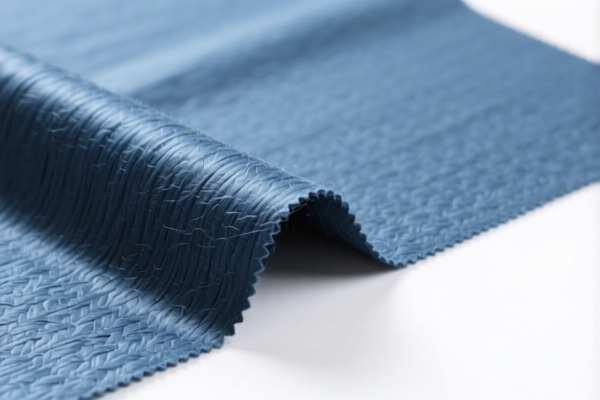
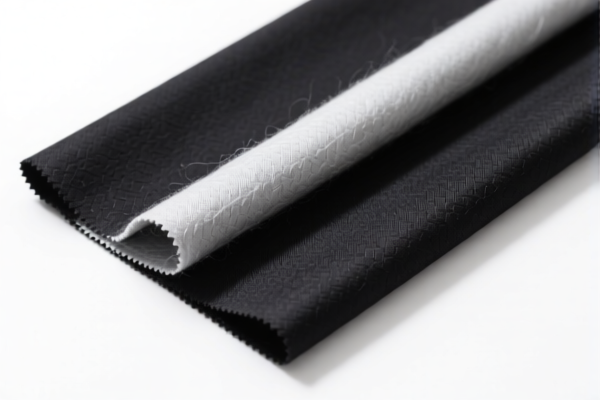
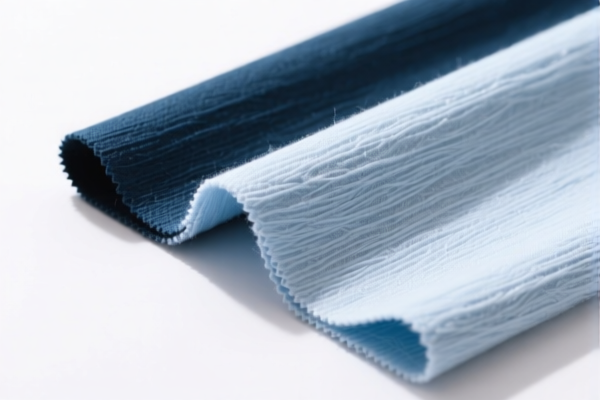
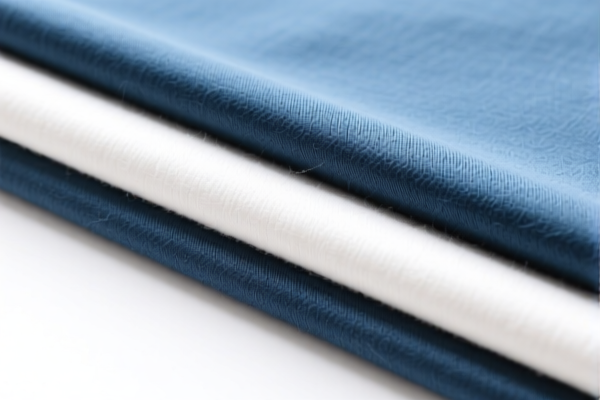
AI Analysis
🧵 Man-Made Fiber Plain Canvas Fabric
🌐 HS Code Reference & Customs Clearance Guide | 2026 Latest Tariff Analysis | Professional Clearance Strategy
📌 I. Product Definition: What is "Man-Made Fiber Plain Canvas"?
Man-Made Fiber Plain Canvas is a heavy-duty, woven textile made from synthetic or artificial fibers (such as polyester, nylon, or viscose), characterized by a plain weave structure. It is widely used in industrial applications, including workwear, tarps, tents, bags, and technical textiles.
In international trade, this product is not a single HS code but depends on its specific fiber composition, technical function, and weave pattern. Below is a detailed breakdown of the 5 most likely HS Codes for this product, based on 2026 tariff rules.
📦 II. HS Code Classification Details (2026 Latest Tariff Mapping)
| HS Code | Product Description | Key Characteristics | Total Tax Rate (China Origin → US) |
|---|---|---|---|
5512.21.00.50 |
Man-Made Fiber Workwear Canvas | Material: Man-made fiber; Form: Canvas; Specific Match: Duck Weave (Twill-like plain canvas) | 47.0% |
5911.31.00.80 |
Man-Made Fiber Technical Canvas | Material: Man-made fiber; Form: Canvas; Feature: Matches textile fabric characteristics, technical use | 38.8% |
5911.90.00.80 |
Man-Made Fiber Workwear Canvas (Tech Textile) | Material: Man-made fiber; Form: Canvas; Use: Workwear; Fits technical textile category | 38.8% |
5407.92.20.30 |
Man-Made Fiber Canvas (Synthetic Filament) | Material: Synthetic filaments; Form: Canvas; Category: "Other" residual category | 49.9% |
5407.93.20.30 |
Man-Made Fiber Canvas (Synthetic Fiber Fabric) | Material: Synthetic filaments/fibers; Form: Canvas; Feature: Synthetic fiber fabric characteristics | 47.0% |
🔍 Key Distinction Logic:
-5512vs5407: If the canvas is made from staple fibers (short fibers spun into yarn), it may fall under 5512. If made from filaments (continuous long fibers), it falls under 5407.
-5911(Technical Textiles): If the canvas has specific technical functions (e.g., filtering, industrial reinforcement, specialized workwear), it may be classified under 5911, which often has a lower base tariff.
-5512.21.00.50: Specifically matches "duck weave" plain canvas, a common industrial structure.
💰 III. 2026 Latest Tariff Rate Breakdown (Including Surcharges & Policy Add-ons)
✅ Applicable Country: United States (US)
✅ Origin: China (CN)
✅ Effective Date: November 10, 2025 onwards (including subsequent imports)
🎯 1. 5512.21.00.50 —— Man-Made Fiber Workwear Canvas (Duck Weave)
| Item | Details |
|---|---|
| Base Tariff | 12.0% |
| Section 301 Surcharge | +25.0% |
| IEEPA Add-on (Section 122) | +10.0% |
| Total Tax Rate | 47.0% |
| Tax Calculation | CIF Value × 47% |
| De Minimis Exemption | ❌ Not Eligible (deny_de_minimis) |
| Legal Basis Path | Section 301: 8524.11.10.00 → IEEPA:9903.01.25 → USITC:5512.21.00.50 → FOOTNOTE:9903.88.01 |
📌 Explanation:
- This code is used when the canvas is identified as workwear-grade duck weave.
- The 12% base tariff is relatively high compared to technical textiles.
- Total 47% is a significant cost driver for imports.
🎯 2. 5911.31.00.80 & 5911.90.00.80 —— Technical/Workwear Canvas
| Item | Details |
|---|---|
| Base Tariff | 3.8% |
| Section 301 Surcharge | +25.0% |
| IEEPA Add-on (Section 122) | +10.0% |
| Total Tax Rate | 38.8% |
| Tax Calculation | CIF Value × 38.8% |
| De Minimis Exemption | ❌ Not Eligible (deny_de_minimis) |
| Legal Basis Path | Section 301: 5911.31.00.80 → IEEPA:9903.01.25 → USITC:5911.31.00.80 → FOOTNOTE:9903.88.01 |
📌 Advantage:
- Lower Base Tariff (3.8%) makes these codes more cost-effective than5512or5407.
- Applicable if the fabric has technical textile features (e.g., reinforced, coated, or specialized industrial use).
- Critical: Must provide proof of "technical use" or "workwear specification" to qualify for5911.
🎯 3. 5407.92.20.30 —— Synthetic Filament Canvas (Residual Category)
| Item | Details |
|---|---|
| Base Tariff | 14.9% |
| Section 301 Surcharge | +25.0% |
| IEEPA Add-on (Section 122) | +10.0% |
| Total Tax Rate | 49.9% |
| Tax Calculation | CIF Value × 49.9% |
| De Minimis Exemption | ❌ Not Eligible (deny_de_minimis) |
| Legal Basis Path | Section 301: 5407.92.20.30 → IEEPA:9903.01.25 → USITC:5407.92.20.30 → FOOTNOTE:9903.88.01 |
📌 Warning:
- This is the highest tariff category (49.9%).
- Applies to synthetic filament canvases that do not fit specific sub-categories.
- Avoid this code unless necessary; it significantly reduces profit margins.
🎯 4. 5407.93.20.30 —— Synthetic Fiber Fabric Canvas
| Item | Details |
|---|---|
| Base Tariff | 12.0% |
| Section 301 Surcharge | +25.0% |
| IEEPA Add-on (Section 122) | +10.0% |
| Total Tax Rate | 47.0% |
| Tax Calculation | CIF Value × 47.0% |
| De Minimis Exemption | ❌ Not Eligible (deny_de_minimis) |
| Legal Basis Path | Section 301: 5407.93.20.30 → IEEPA:9903.01.25 → USITC:5407.93.20.30 → FOOTNOTE:9903.88.01 |
📌 Comparison:
- Same total rate as5512.21.00.50but different base tariff logic.
- Applies to synthetic fiber fabrics with specific weaves.
🛠️ IV. Customs Clearance Practical Advice (Avoid Pitfalls)
✅ 1. Preparation Checklist (All Required)
| Document | Required | Notes |
|---|---|---|
| ✅ Product Specification Sheet | ✔️ | Must include fiber type (staple vs. filament), weave type (plain/duck), weight, width, and end-use (workwear/technical). |
| ✅ Fabric Sample | ✔️ | Provide a physical sample for customs verification if requested. |
| ✅ Composition Certificate | ✔️ | Issued by a third-party lab (e.g., SGS, BV) confirming 100% man-made fiber content. |
| ✅ Commercial Invoice | ✔️ | Clearly state: "Man-Made Fiber Plain Canvas, [Fiber Type], for [End Use]" |
| ✅ Packing List | ✔️ | Detail roll count, weight, and dimensions. |
| ✅ End-Use Declaration | ✔️ | Crucial for 5911 classification. Must declare if used for "technical textiles" or "workwear." |
✅ 2. Declaration Strategy (Key Mnemonic)
🔥 "Fiber Type Dictates Code, End-Use Determines Rate!"
| Scenario | Correct HS Code | Incorrect Code | Risk |
|---|---|---|---|
| Staple Fiber + Duck Weave | 5512.21.00.50 |
5407.92.20.30 |
Misclassification → 49.9% vs 47% |
| Filament + Technical Use | 5911.31.00.80 |
5407.92.20.30 |
Missed savings → 38.8% vs 49.9% |
| Filament + General Use | 5407.93.20.30 |
5911.90.00.80 |
No proof of technical use → Higher tariff |
| Workwear Canvas | 5911.90.00.80 |
5512.21.00.50 |
If not duck weave, may be rejected |
📌 Critical Tip:
- If your canvas is not for technical use, do not declare it under5911. Customs may audit and penalize for false declaration.
- If it is for technical use, provide end-use documentation to qualify for the lower 3.8% base tariff.
✅ 3. Special Cases
| Situation | Handling Advice |
|---|---|
| OEM Custom Canvas | Provide design specs and end-user letter to justify 5911 classification. |
| Mixed Fiber Canvas | If >50% is man-made, classify under man-made codes. If mixed with cotton, different HS codes apply. |
| Coated/Laminated Canvas | If coated for technical purposes, 5911 is more likely. If plain weave, 5512 or 5407. |
| Small Sample Shipments | Still subject to de minimis denial (deny_de_minimis). No $800 exemption. |
🌍 V. Global Market Comparison (2026 Latest)
| Country/Region | Recommended HS Code | Tariff | Certification | Notes |
|---|---|---|---|---|
| 🇺🇸 USA | 5911.31.00.80 |
38.8% | None | Best rate if technical use proven. |
| 🇪🇺 EU | 5911.31.00.80 |
6.5% | REACH | No Section 301 or IEEPA surcharges. |
| 🇨🇳 China | 5911.31.00.80 |
8% | CCC (if applicable) | Import tariff applies. |
| 🇦🇺 Australia | 5911.31.00.80 |
5% | None | No surcharges. |
| 🇯🇵 Japan | 5911.31.00.80 |
6.0% | None | No surcharges. |
📌 Conclusion:
- USA is the most expensive market due to Section 301 and IEEPA surcharges.
- EU, Australia, and Japan offer significantly lower tariffs (5-6.5%) with no political surcharges.
- If possible, relocate production to non-China origins to avoid US surcharges.
📌 VI. Common Mistakes & Pitfalls (Lessons Learned)
❌ Mistake 1: Declaring "Canvas" without specifying fiber type (staple vs. filament).
👉 Consequence: Customs may assign the highest tariff code (5407.92.20.30) → 49.9%.
❌ Mistake 2: Using 5911 without proof of technical use.
👉 Consequence: Customs rejects the classification, reclassifies to 5512 or 5407 → Higher Base Tariff.
❌ Mistake 3: Assuming de minimis applies to textiles.
👉 Consequence: All shipments from China are subject to tariffs, regardless of value. No $800 exemption.
❌ Mistake 4: Confusing "duck weave" with "plain weave."
👉 Consequence: 5512.21.00.50 specifically matches duck weave. If it’s a true plain weave, it may fall under 5407 or 5512 general.
✅ Correct Approach:
"Man-Made Fiber Canvas, 100% Polyester Staple Fiber, Plain/Duck Weave, for Industrial Workwear, Certified by SGS"
🎯 VII. Conclusion: Professional Classification Saves Money!
🎯 Remember the Mnemonic:
🔹 "Staple Fiber → 5512, Filament → 5407, Technical → 5911"
🔹 "Base Tariff 3.8% vs 14.9%: A Difference of 30%!"
🔹 "No De Minimis for Textiles: Every Shipment Pays Tariffs!"
📌 Pro Tip:
- If your canvas is technically advanced (e.g., flame-resistant, water-repellent), ensure it qualifies for 5911 to save 8.2%–11.1% in total tariffs.
- Apply for an Advance Ruling from US Customs (CBP) if your product is complex. This provides legal certainty and avoids post-clearance audits.
📣 Take Action Now:
📞 Contact a professional customs broker + Provide fiber composition report + Declare end-use accurately
🚀 Clear Customs Smoothly, Reduce Costs, and Boost Profits!
✨ Professional Classification Starts with Precision!
💼 Every Percent of Tariff Saved is Pure Profit!
Customer Reviews
About HS Code Classification
The Harmonized System (HS) is an internationally standardized nomenclature developed by the World Customs Organization (WCO) to classify traded products. Over 200 countries use the HS system as the basis for customs tariffs, trade statistics, and import/export regulations.
Each HS code follows a hierarchical structure:
- Chapter (2 digits) — Broad category of goods (e.g., Chapter 84: Machinery and Mechanical Appliances)
- Heading (4 digits) — More specific grouping within the chapter
- Subheading (6 digits) — Internationally standardized breakdown, used by all WCO member countries
- National subdivisions (8-10 digits) — Country-specific extensions for further classification, such as US HTSUS 10-digit codes
Correct HS code classification is essential for smooth customs clearance, accurate duty payment, and compliance with trade regulations. Misclassification can lead to customs delays, overpayment of duties, or penalties.
When importing from CN to US, the applicable tariff rates may include:
- Most-Favored-Nation (MFN) rate — The standard duty rate applied to WTO members
- General rate — Applied to countries without trade agreements
- Trade remedy duties — Additional tariffs such as Section 301 (anti-dumping), Section 232 (national security), or countervailing duties
The information provided on this page is for reference purposes only. For official classification, please consult with your local customs authority or a licensed customs broker.