Manifold Gasket
CN → US| HS Code | Tariff Rate | Origin | Destination | Doc |
|---|---|---|---|---|
| 8409999990 | 35.0% | CN | US | Official Doc |
| 8409999910 | 35.0% | CN | US | Official Doc |
| 8484100000 | 37.5% | CN | US | Official Doc |
| 8484900000 | 37.5% | CN | US | Official Doc |
| 4016931010 | 37.5% | CN | US | Official Doc |
| 4016931050 | 37.5% | CN | US | Official Doc |
Product Images
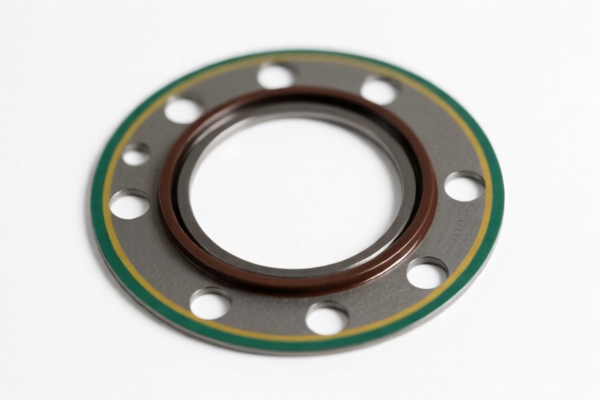
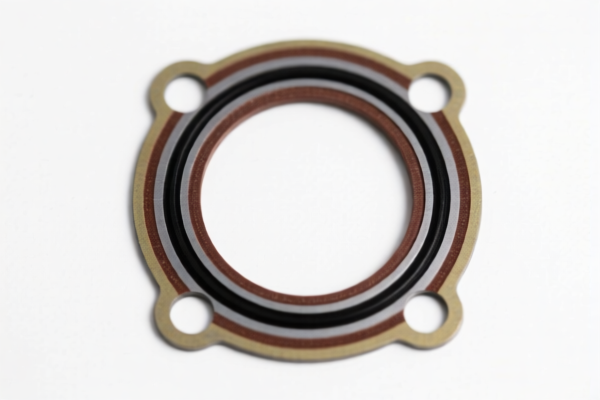
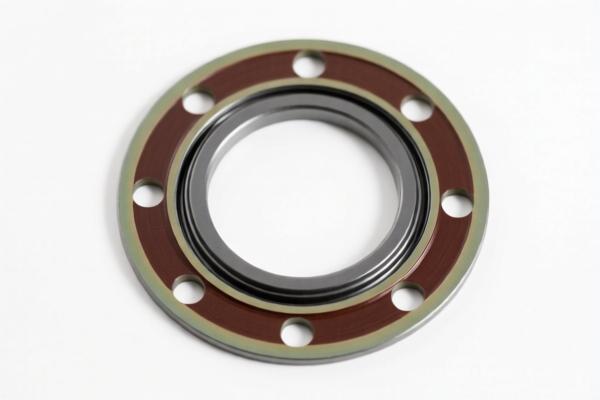
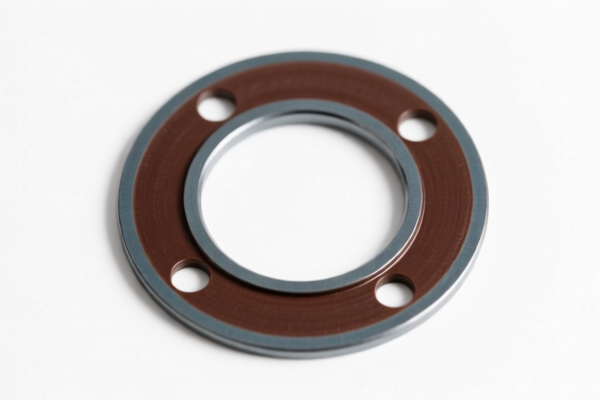
AI Analysis
🏭 Manifold Gaskets & Engine Seals (Metal/Rubber Composite Parts)
🌐 HS Code Reference & Customs Clearance Guide | 2026 Latest Tariff Analysis | Professional Compliance Strategy
📌 I. Product Definition & Classification: Do You Know What a "Manifold Gasket" Really Is?
In the automotive and industrial equipment sectors, a Manifold Gasket is a critical sealing component used to prevent leaks (oil, exhaust, coolant, or air) between engine parts. In international trade, these are NOT simply grouped as "rubber seals" or "metal sheets." Their classification depends heavily on their composition and specific application.
Key Distinctions: * Metal Composite Gaskets: Made of metal sheeting combined with other materials (rubber, cork, asbestos, etc.). These are often used for exhaust manifolds or cylinder heads. * Automotive Specific Seals (O-Rings/Seals): Specifically designed for automotive goods (Chapter 87). If it’s an O-ring or seal of a kind used in automotive goods, it may fall under Chapter 40 (Rubber). * Engine Parts: If the gasket is considered a "part suitable for use solely or principally with engines," it may fall under Chapter 84 (Machinery/Engines).
⚠️ Critical Classification Point:
- If it is a joint made of metal sheeting combined with other material → 8484.10.00.00
- If it is a rubber seal/O-ring specifically for automotive use → 4016.93.10.10 / 4016.93.10.50
- If it is classified as a generic engine part (not explicitly a gasket/joint in 8484) → 8409.99.99.90
📦 II. HS Code Classification Details (2026 Latest Tariff Authority Match)
Based strictly on the provided <DATA>, here are the applicable HS Codes and their specific tax implications:
| HS Code | Product Description | Material/Type | Primary Use Case |
|---|---|---|---|
8484.10.00.00 |
Gaskets and similar joints of metal sheeting combined with other material or of two or more layers of metal | Metal + Other Material (e.g., Rubber/Cork) | Exhaust manifolds, Cylinder heads, Industrial engines |
8484.90.00.00 |
Other gaskets/joints; sets/assortments; mechanical seals: Other | Any Material (Non-metal composite or Sets) | General purpose gasket sets, Mechanical seals |
4016.93.10.10 |
Other articles of vulcanized rubber... Gaskets, washers and other seals: Of a kind used in the automotive goods of chapter 87 O-Rings | Vulcanized Rubber (O-Rings) | Automotive O-Rings, Silicone seals for engine bays |
4016.93.10.50 |
Other articles of vulcanized rubber... Gaskets, washers and other seals: Of a kind used in the automotive goods of chapter 87 Other | Vulcanized Rubber (Non-O-Ring Seals) | Automotive rubber gaskets, seals (not O-rings) |
8409.99.99.90 |
Parts suitable for use solely or principally with engines... Other | Any Material (Engine Component) | Classified broadly as engine parts if not specifically a gasket/joint under 8484 |
8409.99.99.10 |
Parts suitable for use solely or principally with engines... Other Connecting rods | Metal (Connecting Rods) | Note: Included in data for context, but NOT a gasket. Exclude unless misidentified. |
🔍 Key Insight:
- Most standard Manifold Gaskets (metal/rubber/cork composite) should be classified under 8484.10.00.00.
- If the product is purely rubber and used in cars, look at 4016.93.10.
- Do NOT classify as8409.99.99.90unless the customs authority explicitly requires engine parts to be declared separately from gaskets (rare for standard gaskets).
💰 III. 2026 Latest Tariff Rate Breakdown (Detailed Tax Clauses)
✅ Applicable Country: USA (US)
✅ Origin: China (CN)
✅ Effective Date: Current tariffs apply (27.5% for key gasket codes)
🎯 1. 8484.10.00.00 —— Gaskets of Metal Sheeting Combined with Other Material
| Item | Detail |
|---|---|
| Base Tariff | 2.5% |
| Additional Tariff (Section 301) | 25.0% |
| Total Tariff | 27.5% |
| Tax Calculation | CIF Value × 27.5% |
| De Minimis Exemption | ❌ Not Eligible (Section 301 goods generally excluded from de minimis) |
| Legal Basis | HTSUS 8484.10.00.00 + USITC Footnote 9903.88.01 (301 Tariff) |
📌 Explanation:
- This is the most common code for Manifold Gaskets.
- The 25% additional tariff is a punitive trade tariff on Chinese-made metal/rubber composite gaskets.
- Total Cost Impact: High. Budget for nearly 30% duty on CIF value.
🎯 2. 8484.90.00.00 —— Other Gaskets/Joints (Sets, Assortments, Mechanical Seals)
| Item | Detail |
|---|---|
| Base Tariff | 0.0% |
| Additional Tariff | 0.0% |
| Total Tariff | 0.0% |
| Tax Calculation | CIF Value × 0% |
| De Minimis Exemption | ✅ Potentially Eligible (if value < $800 and not on exclusion list) |
| Legal Basis | HTSUS 8484.90.00.00 |
📌 Explanation:
- If your manifold gasket is sold as a set or assortment (e.g., a "Full Engine Gasket Kit"), it may qualify for 0%.
- Risk: Customs may reclassify single gaskets into8484.10.00.00if they are sold individually.
- Strategy: If selling individual gaskets, do NOT use this code unless you are sure it's a "set."
🎯 3. 4016.93.10.10 & 4016.93.10.50 —— Automotive Rubber Seals / O-Rings
| Item | Detail |
|---|---|
| Base Tariff | 2.5% |
| Additional Tariff (Section 301) | 25.0% |
| Total Tariff | 27.5% |
| Tax Calculation | CIF Value × 27.5% |
| De Minimis Exemption | ❌ Not Eligible (Section 301 goods) |
| Legal Basis | HTSUS 4016.93.10.xx + USITC Footnote 9903.88.01 |
📌 Explanation:
- If your "Manifold Gasket" is actually a rubber O-ring or rubber seal used in automotive engines, it falls here.
- Same 27.5% total tariff as metal composite gaskets.
- Distinction: Use this only if the product is primarily rubber and defined as a seal/O-ring, not a metal sheeting joint.
🎯 4. 8409.99.99.90 —— Other Engine Parts
| Item | Detail |
|---|---|
| Base Tariff | 0.0% |
| Additional Tariff (Section 301) | 25.0% |
| Total Tariff | 25.0% |
| Tax Calculation | CIF Value × 25.0% |
| De Minimis Exemption | ❌ Not Eligible |
| Legal Basis | HTSUS 8409.99.99.90 + USITC Footnote 9903.88.01 |
📌 Explanation:
- Some customs brokers may classify gaskets as "parts of engines" (8409) instead of "gaskets" (8484).
- Slightly Lower Tariff (25% vs 27.5%), but high risk of reclassification and penalties if not justified.
- Not Recommended unless you have a strong legal argument that it is an integral engine part rather than a sealing joint.
🛠️ IV. Customs Clearance Practical Advice (Avoiding Pitfalls)
✅ 1. Documentation Checklist (Essential for Clearance)
| Document | Required? | Notes |
|---|---|---|
| ✅ Product Specification Sheet | ✔️ | Must detail material composition (e.g., "Stainless steel core with NBR rubber coating") |
| ✅ HS Code Justification Letter | ✔️ | Explain why it fits 8484.10.00.00 (metal sheeting combined with other material) |
| ✅ Commercial Invoice | ✔️ | Clearly state "Manifold Gasket" and HS Code. Do not use vague terms like "Auto Part" |
| ✅ Product Photos | ✔️ | Show cross-section if possible to prove metal+rubber composition |
| ✅ Bill of Lading | ✔️ | Match HS Code and Description exactly |
✅ 2. Classification Strategy (Key Tips)
🔥 "Metal Core = 8484.10, Pure Rubber = 4016.93, Be Precise!"
| Scenario | Recommended HS Code | Reason |
|---|---|---|
| Exhaust Manifold Gasket (Steel + Rubber/Cork) | 8484.10.00.00 |
Classic "metal sheeting combined with other material" |
| Cylinder Head Gasket (Multi-layer steel) | 8484.10.00.00 |
Multi-layer metal joint |
| Rubber O-Ring for Engine Oil | 4016.93.10.10 |
Rubber article, automotive use, O-ring type |
| Silicone Gasket (No metal) | 4016.93.10.50 |
Rubber article, automotive use, other seals |
| Full Gasket Set (Boxed kit) | 8484.90.00.00 |
Attempt this for 0% rate, but high audit risk if items are sold individually |
✅ 3. Special Considerations
| Issue | Handling Advice |
|---|---|
| Misclassification Risk | Do not mislabel rubber gaskets as "Metal Gaskets" to avoid tariffs. Customs has material testing labs. |
| Section 301 Exclusions | Check if your specific HS code has an exclusion list entry. Most gasket codes are included in 301 tariffs. |
| De Minimis (800 Limit) | Do NOT rely on de minimis for these goods. Section 301 tariffs generally apply regardless of value for China-origin goods. |
| Engine Parts vs. Gaskets | Avoid 8409.99.99.90 unless necessary. It is less common for gaskets and may trigger questions. |
🌍 V. Global Market Comparison (2026 Latest)
| Country/Region | Recommended HS Code | Tariff (China Origin) | Notes |
|---|---|---|---|
| 🇺🇸 USA | 8484.10.00.00 |
27.5% (2.5% Base + 25% 301) | High tariff. Must be precise. |
| 🇺🇸 USA | 8484.90.00.00 |
0% (If Set) | Only for assortments/sets. |
| 🇨🇳 China | 8484.10.00.00 |
2.5% | Low import duty into China. |
| 🇪🇺 EU | 8484.10.00 |
~3-6.5% | Varies by specific subheading. No 25% punitive tariff. |
| 🇲🇽 Mexico | 8484.10.00 |
0% (USMCA) | If meeting Rules of Origin. |
📌 Conclusion:
- USA is the most expensive market for these goods due to Section 301 tariffs.
- EU and Mexico offer significant tariff advantages.
- Compliance is Key: Misclassification leads to penalties, not just back taxes.
📌 VI. Common Mistakes & Pitfalls (Lessons Learned)
❌ Mistake 1: Classifying a steel+rubber gasket as "Other Articles of Rubber" (4016)
👉 Consequence: Customs may reclassify to 8484.10.00.00 and assess 27.5%.
❌ Mistake 2: Classifying individual gaskets as a "Set" (8484.90.00.00) to get 0%
👉 Consequence: Audit failure. Customs will split the shipment and apply 27.5%.
❌ Mistake 3: Ignoring Section 301 applicability
👉 Consequence: Underpayment of duties. No de minimis exemption for these codes.
✅ Correct Approach:
"Manifold Gasket, 3-Piece, Stainless Steel Core with NBR Rubber Coating, for Automotive Engine Use"
HS Code:8484.10.00.00
Duty: 27.5%
🎯 VII. Conclusion: Precise Classification Saves Money!
🎯 Remember:
🔹 "Metal Core + Rubber = 27.5% (8484.10)"
🔹 "Pure Rubber Seal = 27.5% (4016.93)"
🔹 "Sets/Assortments = 0% (8484.90) - But High Risk"
🔹 "De Minimis Does NOT Apply to China-Origin Gaskets in USA"
📌 Pro Tip:
If you are importing large volumes, consider supplier diversification (e.g., from Vietnam or Mexico) to avoid Section 301 tariffs.
For small shipments, ensure your commercial invoice explicitly describes the material composition to avoid customs delays.
📣 Immediate Action:
📞 Consult a licensed customs broker with your product sample and material MSDS.
📄 Request a Binding Ruling from CBP if importing high-value goods.
🚀 Correct HS Code = Predictable Costs = Happy Customers!
✨ Professional Customs Clearance Starts with Accurate Classification!
💼 Every 2.5% saved is pure profit!
Customer Reviews
About HS Code Classification
The Harmonized System (HS) is an internationally standardized nomenclature developed by the World Customs Organization (WCO) to classify traded products. Over 200 countries use the HS system as the basis for customs tariffs, trade statistics, and import/export regulations.
Each HS code follows a hierarchical structure:
- Chapter (2 digits) — Broad category of goods (e.g., Chapter 84: Machinery and Mechanical Appliances)
- Heading (4 digits) — More specific grouping within the chapter
- Subheading (6 digits) — Internationally standardized breakdown, used by all WCO member countries
- National subdivisions (8-10 digits) — Country-specific extensions for further classification, such as US HTSUS 10-digit codes
Correct HS code classification is essential for smooth customs clearance, accurate duty payment, and compliance with trade regulations. Misclassification can lead to customs delays, overpayment of duties, or penalties.
When importing from CN to US, the applicable tariff rates may include:
- Most-Favored-Nation (MFN) rate — The standard duty rate applied to WTO members
- General rate — Applied to countries without trade agreements
- Trade remedy duties — Additional tariffs such as Section 301 (anti-dumping), Section 232 (national security), or countervailing duties
The information provided on this page is for reference purposes only. For official classification, please consult with your local customs authority or a licensed customs broker.