Manual Interchangeable Tools
CN → US| HS Code | Tariff Rate | Origin | Destination | Doc |
|---|---|---|---|---|
| 8466100130 | 38.9% | CN | US | Official Doc |
| 8214906000 | 0.0% | CN | US | Official Doc |
| 8214909000 | 0.0% | CN | US | Official Doc |
| 8206000000 | 0.0% | CN | US | Official Doc |
| 8207904500 | 39.8% | CN | US | Official Doc |
Product Images
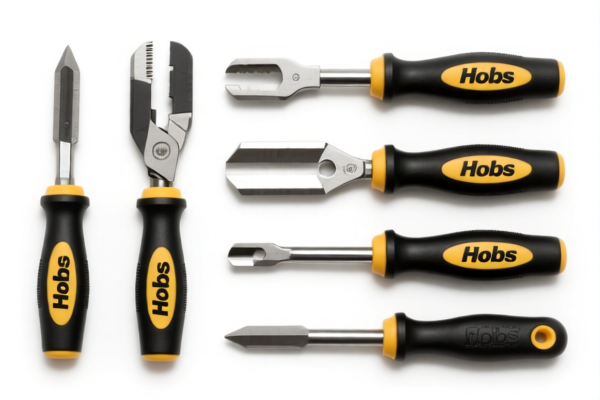
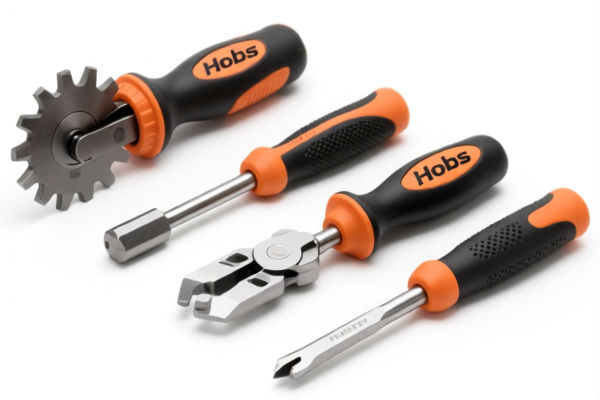
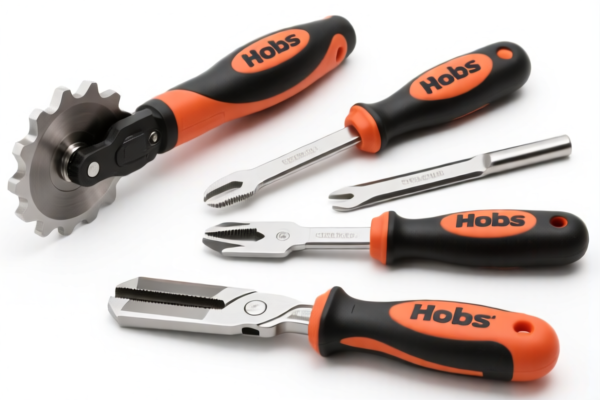
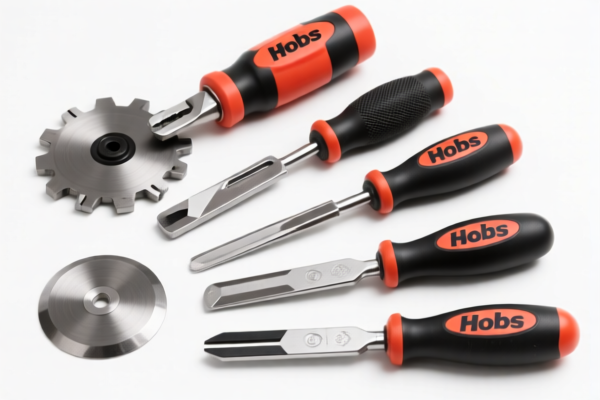
AI Analysis
🛠️ Manual Interchangeable Tools (可互换手动工具)
🌐 HS Code Classification & Customs Clearance Guide | 2026 Tariff Breakdown | Strategic Clearance Strategy
📌 I. Product Definition & Classification: What Are "Manual Interchangeable Tools"?
Manual interchangeable tools refer to parts or accessories for hand tools that can be swapped out for different functions (e.g., drill bits, screwdriver bits, socket heads). In international trade, they are often categorized as "parts/accessories" or "interchangeable tool sets/components" rather than standalone finished tools, depending on their packaging and specificity.
⚠️ Key Classification Challenge:
- If the item is a specific metal blade/bit (e.g., drill bit, saw blade) → Likely Chapter 82 (Tools of Base Metal).
- If the item is a general interchangeable part for hand tools without specific material conflict → May fall under 8214 or 8466 (Parts/Accessories).
- If it’s a set or kit → Could trigger 8206 (Sets of tools) or other specific headings.
📦 II. HS Code Classification Details (Based on Provided Data)
| HS Code | Product Description & Matching Logic | Total Tax Rate (China Origin → US) |
|---|---|---|
| 8466.10.01.30 | Match Reason: The term "Replacement Tool" (更换工具) aligns with "Replaceable" (可更换式) in the reference code. Lacking material description and having no conflict, it defaults to "Parts/Components." | 38.9% |
| 8214.90.60.00 | Match Reason: Classified as "Interchangeable tool parts" (零配件). Since material is unspecified and no metal/plastic conflict exists, it defaults to "Other/n.e.s." under this category. | 0.2¢/each + 3.1% + 10.0% |
| 8214.90.90.00 | Match Reason: Fits the "Other" category under Chapter 82 (Base Metal Tools & Accessories). No material conflict found; defaults to "Other parts" logic. | 1.4¢/each + 3.2% + 10.0% |
| 8206.00.00.00 | Match Reason: "Interchangeable hand tool" matches the definition of tools in Chapter 82. Assuming it could be part of a retail set. | Variable (Set Rate) + 35.0% |
| 8207.90.45.00 | Match Reason: "Interchangeable hand tool" matches Chapter 82. Common sense infers metal working parts. No obvious conflict. | 39.8% |
🔍 Important Note:
- 8214 vs. 8207: 8214 is for "blades, saws, and parts thereof"; 8207 is for "work tools for drilling, boring, or threading." If your tool is a drill bit or socket, 8207 might be more precise. If it's a general blade or knife part, 8214 applies.
- 8466.10: Typically for machine tool parts. Using this for manual tools is risky unless they are clearly accessories for power tools/machinery.
- Tax Structure: All codes include 10% IEEPA Tariff (Section 301/China-specific) and 25% Section 301 Tariff where applicable.
💰 III. 2026 Tariff Rate Breakdown (Detailed Analysis)
✅ Applicable Country: United States (US)
✅ Origin: China (CN)
✅ Effective Date: 2025/2026 (Current Trade Policy)
🎯 1. HS Code 8466.10.01.30 – Replacement Tools (Parts)
| Item | Detail |
|---|---|
| Base Duty | 3.9% (Ad Valorem) |
| Section 301 Duty | +25.0% (USITC Footnote 9903.88.01) |
| IEEPA Duty | +10.0% (China Origin Surcharge) |
| Total Effective Rate | ~38.9% |
| De Minimis Eligibility | ❌ No (Value likely exceeds $800 threshold or is restricted) |
| Legal Path | IEEPA:9903.01.25 → USITC:8466.10.01.30 → FOOTNOTE:301 |
📌 Explanation:
- This rate is high. Ensure the product is clearly a part/accessory for machinery, not a standalone consumer tool, to justify Chapter 84.
🎯 2. HS Code 8214.90.60.00 – Other Interchangeable Parts
| Item | Detail |
|---|---|
| Base Duty | 0.2¢ per unit + 3.1% (Ad Valorem) |
| Section 301 Duty | +0.0% (Exempt or specific provision) |
| IEEPA Duty | +10.0% (China Origin Surcharge) |
| Total Effective Rate | 3.1% + 10% = 13.1% (plus per-unit fee) |
| De Minimis Eligibility | ⚠️ Check Threshold (Per-unit fees may complicate de minimis) |
| Legal Path | IEEPA:9903.01.24 → USITC:8214.90.60.00 |
📌 Advantage:
- Lower ad valorem rate. Suitable for low-value, high-volume interchangeable parts.
🎯 3. HS Code 8214.90.90.00 – Other Parts (N.E.S.)
| Item | Detail |
|---|---|
| Base Duty | 1.4¢ per unit + 3.2% (Ad Valorem) |
| Section 301 Duty | +0.0% |
| IEEPA Duty | +10.0% |
| Total Effective Rate | 3.2% + 10% = 13.2% (plus per-unit fee) |
| De Minimis Eligibility | ⚠️ Check Threshold |
| Legal Path | IEEPA:9903.01.24 → USITC:8214.90.90.00 |
📌 Comparison:
- Very similar to 8214.90.60.00. Choose based on specific product description (e.g., "blades" vs. "other parts").
🎯 4. HS Code 8206.00.00.00 – Sets of Tools
| Item | Detail |
|---|---|
| Base Duty | Variable (Rate of the article in the set) |
| Section 301 Duty | +25.0% |
| IEEPA Duty | +10.0% |
| Total Effective Rate | ~35%+ (Depending on base rate) |
| De Minimis Eligibility | ❌ No (Sets are often scrutinized) |
| Legal Path | IEEPA:9903.01.25 → USITC:8206.00.00.00 |
📌 Warning:
- If sold as a kit (e.g., "10-piece screwdriver set"), customs may classify it here. The base rate varies, but the 25%+10% add-ons make it expensive.
🎯 5. HS Code 8207.90.45.00 – Drill/Threading Tools
| Item | Detail |
|---|---|
| Base Duty | 4.8% (Ad Valorem) |
| Section 301 Duty | +25.0% |
| IEEPA Duty | +10.0% |
| Total Effective Rate | 39.8% |
| De Minimis Eligibility | ❌ No |
| Legal Path | IEEPA:9903.01.25 → USITC:8207.90.45.00 |
📌 Best Fit For:
- Drill bits, tap dies, dies, and other interchangeable metal working tools. If your product is clearly a drill bit, this is the most accurate technical classification.
🛠️ IV. Customs Clearance Practical Advice (Avoid Pitfalls)
✅ 1. Documentation Checklist
| Document | Required | Notes |
|---|---|---|
| Product Specification Sheet | ✔️ | Must detail material (e.g., High-Speed Steel, Carbide), function, and compatibility. |
| Photos (Labeled) | ✔️ | Show the tool and its packaging. Indicate if it’s a single bit or a set. |
| Commercial Invoice | ✔️ | Clearly state "Interchangeable Tool Parts" or "Manual Tool Accessories." Avoid vague terms like "Hardware." |
| Material Declaration | ✔️ | Specify if metal, plastic, or carbide. Crucial for 82xx vs. 84xx classification. |
| Packing List | ✔️ | Detail quantity per package. |
✅ 2. Classification Strategy (Key Tips)
🔥 "Material First, Function Second, Avoid 'Set' Label if Possible!"
| Scenario | Recommended HS Code | Reason |
|---|---|---|
| Single Drill Bit / Screwdriver Bit | 8207.90.45.00 |
Specific, technical, high accuracy. |
| General Interchangeable Part (Unspecified) | 8214.90.60.00 or 8214.90.90.00 |
Lower duty if no specific function fits 8207. |
| Tool for Machinery (Power Tool Accessory) | 8466.10.01.30 |
Only if clearly for power/machine tools. |
| Multi-Piece Kit/Suit | 8206.00.00.00 |
High duty. Avoid if selling individually. |
✅ 3. Special Considerations
- Material Matters: If your tool is plastic (e.g., plastic drill guides), Chapter 82 may not apply. Consider Chapter 39 or 84.
- "Interchangeable" vs. "Fixed": Ensure the product is clearly defined as swappable. Fixed blades may fall under different headings (e.g., 8211 for knives).
- De Minimis ($800): Even if eligible, high tariffs (25%+10%) make de minimis less beneficial for high-value tools. For low-value parts,
8214with 13.1% total may still be cheaper than full duties.
🌍 V. Global Market Comparison (2026)
| Country | Recommended HS Code | Approx. Total Duty (China Origin) | Notes |
|---|---|---|---|
| 🇺🇸 USA | 8207.90.45.00 or 8214.90.60.00 |
39.8% or 13.1% | High Section 301 + IEEPA tariffs. |
| 🇨🇳 China | 8207.90.45.00 |
~5-10% | No additional surcharges. |
| 🇪🇺 EU | 8207.90.45.00 |
~4.5% | No Section 301. CE marking required. |
| 🇬🇧 UK | 8207.90.45.00 |
~4.5% | Post-Brexit tariffs apply. |
📌 Key Insight:
- USA is the highest-cost market due to 25% Section 301 + 10% IEEPA.
- Consider transshipment or origin change if shipping to the US to mitigate duties (though scrutiny is high).
📌 VI. Common Errors & Pitfalls
❌ Error 1: Classifying drill bits as 8466 (Machine Parts)
👉 Result: Wrong classification, potential penalty. Drill bits are Chapter 82.
❌ Error 2: Listing product as "Tool Set" when sold individually
👉 Result: Trigger 8206 duties (higher rate). Always declare as "Individual Interchangeable Bit."
❌ Error 3: Ignoring Material in description
👉 Result: Customs may assign a default higher duty or request additional info. Always specify "High-Speed Steel" or "Carbide."
✅ Best Practice Declaration:
"Interchangeable Manual Drill Bits, High-Speed Steel, 1/4" Shank, Model XYZ, Pack of 10"
🎯 VII. Conclusion: Smart Classification Saves Money
🎯 Takeaway:
- If your product is a drill/threading tool, use
8207.90.45.00(39.8% total).- If it’s a general part, use
8214.90.60.00(13.1% total) – Significant Savings!- Avoid "Set" classifications if possible.
- Always declare Material and Function clearly.
📣 Action Plan:
1. Verify Material: Is it metal? Carbide?
2. Check Function: Is it for drilling/threading (8207) or general replacement (8214/8466)?
3. Calculate Cost: Compare 39.8% vs. 13.1% duties.
4. Document Clearly: Use precise language in invoices.
✨ Pro Tip:
Consult a licensed customs broker for Pre-Ruling if your product falls on the borderline between 8207 and 8214. A correct classification can save 26%+ in duties. 💼 Your profit margin depends on your HS Code!
Customer Reviews
About HS Code Classification
The Harmonized System (HS) is an internationally standardized nomenclature developed by the World Customs Organization (WCO) to classify traded products. Over 200 countries use the HS system as the basis for customs tariffs, trade statistics, and import/export regulations.
Each HS code follows a hierarchical structure:
- Chapter (2 digits) — Broad category of goods (e.g., Chapter 84: Machinery and Mechanical Appliances)
- Heading (4 digits) — More specific grouping within the chapter
- Subheading (6 digits) — Internationally standardized breakdown, used by all WCO member countries
- National subdivisions (8-10 digits) — Country-specific extensions for further classification, such as US HTSUS 10-digit codes
Correct HS code classification is essential for smooth customs clearance, accurate duty payment, and compliance with trade regulations. Misclassification can lead to customs delays, overpayment of duties, or penalties.
When importing from CN to US, the applicable tariff rates may include:
- Most-Favored-Nation (MFN) rate — The standard duty rate applied to WTO members
- General rate — Applied to countries without trade agreements
- Trade remedy duties — Additional tariffs such as Section 301 (anti-dumping), Section 232 (national security), or countervailing duties
The information provided on this page is for reference purposes only. For official classification, please consult with your local customs authority or a licensed customs broker.