Manual Juicer
CN → US| HS Code | Tariff Rate | Origin | Destination | Doc |
|---|---|---|---|---|
| 8438600000 | 35.0% | CN | US | Official Doc |
| 8438800000 | 35.0% | CN | US | Official Doc |
| 8509400030 | 14.2% | CN | US | Official Doc |
| 8509400015 | 14.2% | CN | US | Official Doc |
| 8438600000 | 35.0% | CN | US | Official Doc |
Product Images
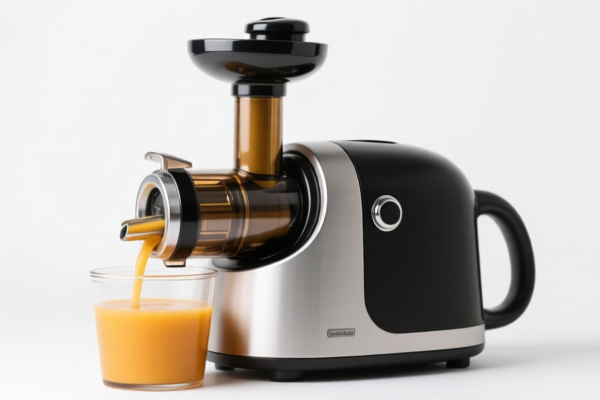
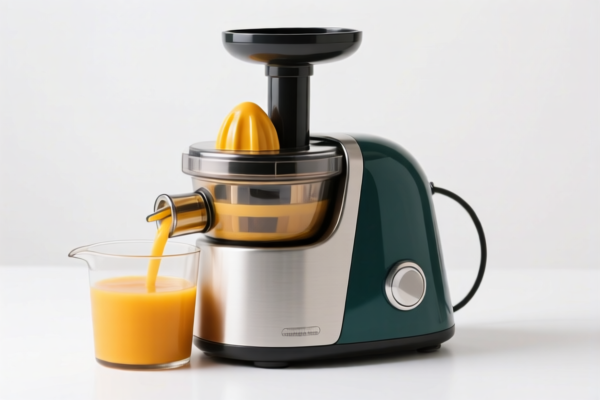
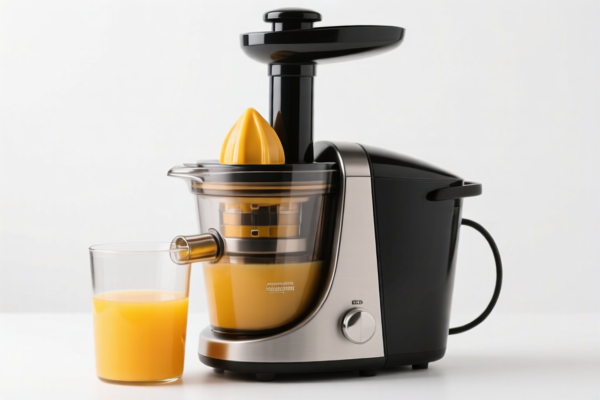
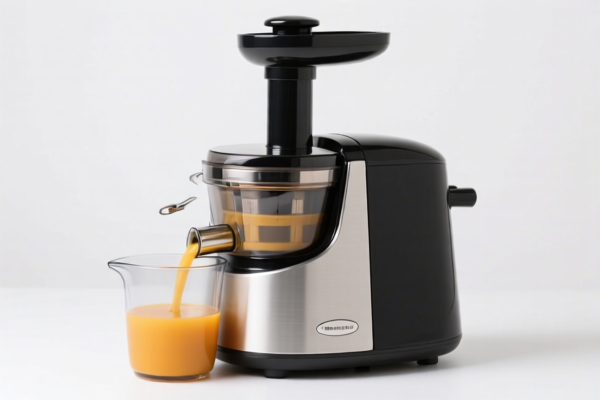
AI Analysis
🍊 Manual Juicer (Citrus Press & Fruit Extractors)
🌐 HS Code Reference & Customs Clearance Guide | 2026 Latest Tariff Analysis | Professional Clearance Strategy
📌 I. Product Definition & Classification: Do You Really Understand “Manual Juicers”?
A Manual Juicer is a non-electric kitchen tool used to extract juice from fruits (like oranges, lemons, grapefruits) or vegetables (like carrots, apples). In international trade, the classification depends heavily on usage context and power source. Unlike electric juicers (which fall under HS 8509), manual juicers are often classified under Chapter 84 (Machinery) because they are mechanical devices for food preparation, even if operated by hand.
⚠️ Key Distinction Point:
- If it is non-electric, hand-operated → It is a Machinery/Device for food preparation → HS 8438 or HS 8509 (if specifically designed as a home appliance).
- Crucial Note: While many simple manual juicers are considered "household articles," specific HS codes exist for "Fruit/Vegetable Juice Extractors" under HS 8509 only if they are classified as "electrical or non-electrical machines of a kind commonly used in households." However, purely mechanical manual presses are often grouped under HS 8438 (Machinery for preparing fruit/veg) unless explicitly categorized as household extractors. Based on the provided DATA, we must analyze all listed possibilities.
📦 II. HS Code Classification Details (Based on Provided DATA)
| HS Code | Product Description | Applicability | Tax Rate | Tax Detail Breakdown |
|---|---|---|---|---|
| 8438.60.00.00 | Machinery for the preparation of fruit, nuts, or vegetables (including juicing) | Industrial or semi-industrial manual presses; commercial kitchen tools | 35.0% | Base: 0%, Section 301: 25%, Section 122: 10% |
| 8438.80.00.00 | Machinery for the preparation of food or beverages (industrial scale) | Large-scale manual juice extraction equipment for factories | 35.0% | Base: 0%, Section 301: 25%, Section 122: 10% |
| 8509.40.00.30 | Fruit or vegetable juice extractors (specifically classified as household appliances) | Small, handheld, or countertop manual juicers marketed for home use | 14.2% | Base: 4.2%, Section 301: 0%, Section 122: 10% |
| 8509.40.00.15 | Household appliances under the "Juice Extractor" category | Standard home manual citrus juicers | 14.2% | Base: 4.2%, Section 301: 0%, Section 122: 10% |
🔍 Critical Insight:
- HS 8438 codes incur a 35% total tax due to the 25% Section 301 tariff (US Trade Act) and 10% Section 122.
- HS 8509 codes incur only a 14.2% total tax because the 25% Section 301 tariff does NOT apply (0% Section 301), but the 10% Section 122 still applies.
- This is a massive difference! Proper classification can save 20.8% in duties.
💰 III. 2026 Latest Tariff Rate Breakdown (Including Additional Taxes)
✅ Applicable Country: United States (US)
✅ Origin: China (CN)
✅ Effective Date: November 10, 2025 (and subsequent imports)
🎯 1. 8438.60.00.00 & 8438.80.00.00 — Machinery for Food Preparation
| Item | Content |
|---|---|
| Base Duty Rate | 0% (ad valorem) |
| USITC Additional Duty (Section 301) | +25% (Footnote 9903.88.01) |
| IEEPA Additional Duty (Section 122) | +10% (Targeting Chinese products) |
| Total Effective Rate | 35.0% |
| Tax Calculation | CIF Value × 35% |
| De Minimis Exemption | ❌ Not Eligible (Deny de minimis for Section 301/122 goods) |
| Legal Basis Path | IEEPA:9903.01.25 → USITC:8438.60.00.00 → FOOTNOTE:9903.88.01 |
📌 Explanation:
- The 25% Section 301 is the primary driver here.
- These HS codes are classified as "Machinery," which triggers the full US-China trade war tariffs.
🎯 2. 8509.40.00.30 & 8509.40.00.15 — Juice Extractors (Household)
| Item | Content |
|---|---|
| Base Duty Rate | 4.2% (ad valorem) |
| USITC Additional Duty (Section 301) | +0% (Exempt or not applicable to this subheading) |
| IEEPA Additional Duty (Section 122) | +10% |
| Total Effective Rate | 14.2% |
| Tax Calculation | CIF Value × 14.2% |
| De Minimis Exemption | ❌ Not Eligible for the 10% Section 122 portion |
| Legal Basis Path | IEEPA:9903.01.24 → USITC:8509.40.00.30 → FOOTNOTE:9903.88.01 |
📌 Explanation:
- The 10% Section 122 still applies, but the 25% Section 301 is 0%.
- This makes HS 8509 significantly cheaper for importers.
🛠️ IV. Customs Clearance Practical Advice (Avoid Pitfalls)
✅ 1. Documentation Checklist (Mandatory)
| Document | Required | Notes |
|---|---|---|
| ✅ Product Specifications | ✔️ | Must specify: "Manual," "Hand-operated," "No Electrical Parts." |
| ✅ Product Photos | ✔️ | Clear images showing no motor, battery, or electrical plug. |
| ✅ Material Composition | ✔️ | Specify materials (e.g., stainless steel, plastic, aluminum). |
| ✅ Commercial Invoice | ✔️ | Clearly state "Manual Juice Extractor" or "Citrus Press." |
| ✅ Certificate of Origin | ✔️ | Essential for determining Section 122 applicability. |
| ✅ Packaging List | ✔️ | Ensure no electrical accessories are included in the same shipment. |
✅ 2. Declaration Strategy (Key Tips)
🔥 Rule of Thumb:
"If it’s for the home, aim for 8509. If it’s industrial, accept 8438."
| Scenario | Correct HS Code | Incorrect HS Code | Consequence |
|---|---|---|---|
| Small manual citrus juicer (home use) | 8509.40.00.15 / .30 | 8438.60.00.00 | Overpaying 20.8% duty! |
| Large manual juice press (commercial kitchen) | 8438.60.00.00 | 8509.40.00.15 | Underpayment, potential penalty |
| Electric manual juicer | 8509.40.00.30 | 8438.60.00.00 | Incorrect classification |
📌 Note: The distinction between HS 8438 (Machinery) and HS 8509 (Household Appliances) is critical. If the product is marketed and designed for household use, you have a strong argument for HS 8509. If it’s made of industrial-grade materials and sold to restaurants, HS 8438 is safer.
✅ 3. Special Cases
| Situation | Handling Advice |
|---|---|
| Bundle Deals (Juicer + Cups) | Declare as a set. If the juicer is the primary function, classify the whole set under HS 8509 if possible. |
| OEM Customization | Provide design drawings. If designed for home use, claim HS 8509. |
| Mixed Shipments (Manual + Electric) | Declare separately! Do not mix. Electric parts may trigger different tariffs. |
| Materials | Stainless steel parts do not change the HS code if the function is still "juice extraction." |
🌍 V. Global Market Clearance Comparison (2026 Latest)
| Country/Region | Recommended HS Code | Tariff | Certification | Notes |
|---|---|---|---|---|
| 🇺🇸 USA | 8509.40.00.30 |
14.2% | FDA (if food contact) | Best option for home juicers |
| 🇺🇸 USA | 8438.60.00.00 |
35.0% | FDA | Avoid if possible due to high tariff |
| 🇨🇳 China | 8509.40.00.30 |
4.2% - 10% | CCC | No Section 122 for imports into China |
| 🇪🇺 EU | 8509.40.00.30 |
6.5% | CE + RoHS | No US-style additional tariffs |
| 🇬🇧 UK | 8509.40.00.30 |
6.5% | UKCA | Post-Brexit rules apply |
📌 Conclusion:
- The US market is the most complex due to Section 301 (25%) and Section 122 (10%) tariffs.
- HS 8509 is the optimal choice for manual home juicers to minimize tax burden.
📌 VI. Common Errors & Pitfalls (Blood Lessons)
❌ Error 1: Classifying a home manual juicer under HS 8438
👉 Consequence: Pay 35% instead of 14.2%. Lost profit!
❌ Error 2: Declaring a manual juicer as "Kitchen Utensil" (HS 8215)
👉 Consequence: Customs may reclassify as HS 8438 or HS 8509, causing delays and penalties.
❌ Error 3: Including electric components (e.g., rechargeable base) without declaring
👉 Consequence: Could trigger Section 301 tariffs and require FCC certification.
❌ Error 4: Ignoring Section 122 (10%)
👉 Consequence: Even under HS 8509, the 10% is still due. Failing to pay this leads to seizure.
✅ Correct Practice:
“Manual Citrus Juicer, Stainless Steel Press, Household Use, No Electrical Parts, Model XYZ”
🎯 VII. Conclusion: Smart Classification, Maximize Profit!
🎯 Remember:
🔹 “Home Use = 8509 (14.2%), Industrial Use = 8438 (35%)”
🔹 “Section 122 is unavoidable, but Section 301 can be avoided!”
🔹 “Clear documentation saves thousands in duties!”
📌 Tips:
- For US imports, always argue for HS 8509 if the product is for household use.
- Provide photos and product descriptions that emphasize "Manual," "Non-Electric," and "Household."
- Consult with a customs broker to apply for an Advance Ruling if you are unsure.
📣 Action Required:
📞 Contact your customs broker today!
🚀 Ensure your commercial invoice clearly states “Manual Juicer for Home Use” to secure the 14.2% rate.
✨ Professional Clearance Starts with Accurate Classification!
💼 Every Dollar Saved in Duty is Pure Profit!
Customer Reviews
About HS Code Classification
The Harmonized System (HS) is an internationally standardized nomenclature developed by the World Customs Organization (WCO) to classify traded products. Over 200 countries use the HS system as the basis for customs tariffs, trade statistics, and import/export regulations.
Each HS code follows a hierarchical structure:
- Chapter (2 digits) — Broad category of goods (e.g., Chapter 84: Machinery and Mechanical Appliances)
- Heading (4 digits) — More specific grouping within the chapter
- Subheading (6 digits) — Internationally standardized breakdown, used by all WCO member countries
- National subdivisions (8-10 digits) — Country-specific extensions for further classification, such as US HTSUS 10-digit codes
Correct HS code classification is essential for smooth customs clearance, accurate duty payment, and compliance with trade regulations. Misclassification can lead to customs delays, overpayment of duties, or penalties.
When importing from CN to US, the applicable tariff rates may include:
- Most-Favored-Nation (MFN) rate — The standard duty rate applied to WTO members
- General rate — Applied to countries without trade agreements
- Trade remedy duties — Additional tariffs such as Section 301 (anti-dumping), Section 232 (national security), or countervailing duties
The information provided on this page is for reference purposes only. For official classification, please consult with your local customs authority or a licensed customs broker.