Manual Packaging Machine
CN → US| HS Code | Tariff Rate | Origin | Destination | Doc |
|---|---|---|---|---|
| 8479896500 | 20.3% | CN | US | Official Doc |
| 8479820040 | 35.0% | CN | US | Official Doc |
| 8422309185 | 35.0% | CN | US | Official Doc |
| 8422309191 | 35.0% | CN | US | Official Doc |
Product Images
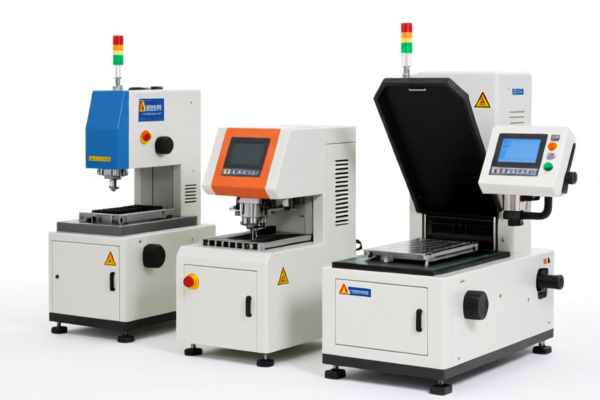
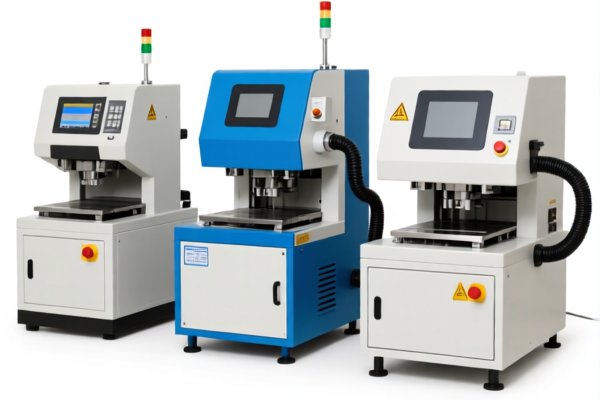
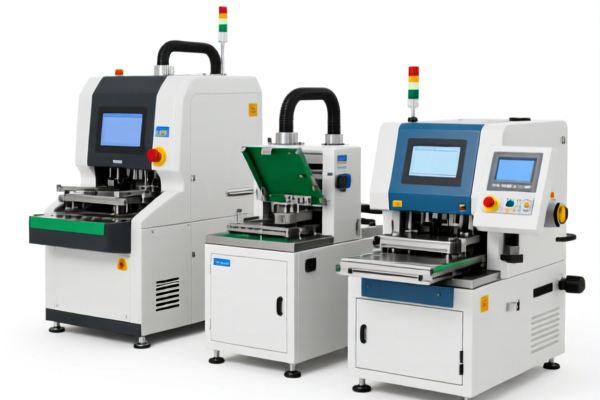

AI Analysis
📦 Manual Packaging Machine (Packaging Machines)
🌐 HS Code Reference & Customs Clearance Guide | 2026 Latest Tariff Analysis | Professional Classification Strategy
📌 I. Product Definition & Classification: What Exactly is a "Manual Packaging Machine"?
A "Manual Packaging Machine" refers to mechanical devices used for filling, closing, sealing, or labeling products. However, in international trade and customs classification, the term is often too broad. The key to accurate classification lies in identifying specific functions versus general mechanical utility.
International trade customs (such as U.S. CBP) distinguish between: 1. Specific Functional Machinery: Machines dedicated to filling, closing, sealing, or labeling (Chapter 84.22). 2. General Purpose Machinery: Machines with independent functions that do not fit specific functional headings, often including those with self-contained motors (Chapter 84.79).
⚠️ Key Distinction Point:
- If the machine is primarily for filling, closing, sealing, or labeling → It likely falls under 8422.30.
- If the machine is a general-purpose mechanical apparatus with an independent function (and no specific "packaging" function like filling/sealing is explicitly defined or if it’s a general mechanical device) → It may fall under 8479.89.
📦 II. HS Code Classification Details (2026 Latest Tariff Authority Comparison)
Based on the provided data, here are the potential HS Code classifications for "Manual Packaging Machine," ranked by classification logic:
| HS Code | Product Description & Logic | Tax Rate (US/CN) | Applicability |
|---|---|---|---|
8422.30.91.85 |
Fill, Close, Seal, or Label Machinery High compatibility with the name "Packaging Machine." Since "Packaging Machine" is generic, it defaults to this functional category unless specified otherwise. |
35.0% | General Packaging (Filling/Sealing) |
8422.30.91.91 |
Other Fill/Close/Seal Machinery Used if the machine doesn't fit the specific criteria of 85 but still performs filling/closing functions. Matches "Other/Residual" principle in absence of conflict. |
35.0% | General Packaging (Fill/Close) |
8479.82.00.40 |
Other Machinery with Independent Functions Classified as mechanical apparatus. The logic assumes it fits the "other machinery" residual category if specific packaging functions are ambiguous or if it’s a general mechanical unit. |
35.0% | General Mechanical/Industrial Machine |
8479.89.65.00 |
Other Machinery with Independent Functions (Motor-Driven) Matches machines with self-contained electric motors that have independent functions. No material or form conflict detected. |
20.3% | Motor-Driven General Machinery |
🔍 Important Note:
- The highest probability for a generic "Packaging Machine" is under 8422.30 (Fill/Close/Seal) due to functional alignment.
- 8479.89 is a residual category for machinery with independent functions that don’t fit specific headings.
- Tax rates vary significantly (20.3% vs. 35.0%) based on the precise functional interpretation by customs.
💰 III. 2026 Latest Tariff Rate Breakdown (Including Surtaxes & Policy Add-ons)
✅ Applicable Country: United States (US)
✅ Origin: China (CN)
✅ Effective Date: From 2025-11-10 onwards (including subsequent imports)
🎯 1. 8479.89.65.00 —— Other Machinery with Independent Functions (Motor-Driven)
| Item | Detail |
|---|---|
| Base Tariff | 2.8% (ad valorem) |
| Section 301 Surcharge | +7.5% |
| Section 122 Tariff | +10% |
| Total Tariff | 20.3% |
| Tax Calculation | CIF Value × 20.3% |
| De Minimis Eligibility | ❌ No (deny_de_minimis) |
| Legal Path | USITC:8479.89.65.00 → Section 122:10% → Section 301:7.5% → Base:2.8% |
📌 Explanation:
- Base 2.8%: Standard MFN rate for "Other machinery and mechanical appliances."
- Section 301 (7.5%): Additional tariff on Chinese goods under Section 301 of the Trade Act.
- Section 122 (10%): Additional tariff on specific machinery categories under Section 122 of the Trade Expansion Act.
- Total 20.3%: Significantly lower than the 35% options, making this the most cost-effective classification if the machine qualifies as "independent function machinery" rather than specific packaging machinery.
🎯 2. 8422.30.91.85 & 8422.30.91.91 —— Fill, Close, Seal, or Label Machinery
| Item | Detail |
|---|---|
| Base Tariff | 0.0% |
| Section 301 Surcharge | +25.0% |
| Section 122 Tariff | +10% |
| Total Tariff | 35.0% |
| Tax Calculation | CIF Value × 35.0% |
| De Minimis Eligibility | ❌ No (deny_de_minimis) |
| Legal Path | USITC:8422.30.91.XX → Section 122:10% → Section 301:25% → Base:0% |
📌 Explanation:
- Base 0%: Standard MFN rate for "Machinery for filling, closing, sealing, or labeling."
- Section 301 (25%): High surcharge on Chinese packaging machinery.
- Section 122 (10%): Additional surcharge on specific machinery.
- Total 35.0%: This is the higher cost scenario. If customs classifies your "Manual Packaging Machine" as specifically designed for filling/sealing, you will face this higher rate.
🎯 3. 8479.82.00.40 —— Other Machinery with Independent Functions
| Item | Detail |
|---|---|
| Base Tariff | 0.0% |
| Section 301 Surcharge | +25.0% |
| Section 122 Tariff | +10% |
| Total Tariff | 35.0% |
| Tax Calculation | CIF Value × 35.0% |
| De Minimis Eligibility | ❌ No (deny_de_minimis) |
| Legal Path | USITC:8479.82.00.40 → Section 122:10% → Section 301:25% → Base:0% |
📌 Explanation:
- Similar to 8422, this classification incurs the 25% Section 301 surcharge plus 10% Section 122.
- Despite having a 0% base rate, the total effective rate is 35.0%.
- This category is used when the machine is considered "other machinery" but still falls under the high-tariff "independent function" bucket without the lower base rate of 8479.89.
🛠️ IV. Customs Clearance Practical Advice (Real-World Pitfall Avoidance)
✅ 1. Preparation Checklist (Non-Negotiable)
| Document | Required? | Note |
|---|---|---|
| ✅ Product Specifications | ✔️ | Must detail function: Is it for filling, sealing, labeling, or general mechanical operation? |
| ✅ Operation Manual/Photos | ✔️ | Show how it works. Does it "fill" or "seal"? Or is it a general mechanical apparatus? |
| ✅ Commercial Invoice | ✔️ | Clearly describe the item as "Packaging Machine" or "Mechanical Apparatus" based on classification. |
| ✅ Origin Certificate | ✔️ | Essential for determining Section 301/122 applicability. |
| ✅ Power/Motor Details | ✔️ | If it has a self-contained motor, it supports classification under 8479.89. |
✅ 2. Classification Strategy (Key Mnemonic)
🔥 "Function Specific, Tariff High; General Independent, Tariff Low!"
| Scenario | Recommended HS Code | Expected Tax Rate | Risk |
|---|---|---|---|
| Specifically for Filling/Sealing | 8422.30.91.85 / 8422.30.91.91 |
35.0% | High tax due to 25% Section 301. |
| General Mechanical Apparatus with Motor | 8479.89.65.00 |
20.3% | Optimal if functional justification supports it. |
| General Mechanical (Non-Motor or Ambiguous) | 8479.82.00.40 |
35.0% | High tax due to 25% Section 301. |
✅ 3. Special Considerations
| Situation | Handling Advice |
|---|---|
| OEM Custom Machine | Provide design drawings to prove it’s a "general mechanical apparatus" with independent function, potentially supporting 8479.89.65.00. |
| Machine Used for Multiple Functions | If it can fill, seal, and perform other mechanical tasks, argue for the independent function classification (8479) to reduce tax from 35% to 20.3%. |
| Manual vs. Automatic | The term "Manual" may imply lack of complex automation, which could support the "independent function" argument if it’s a simple mechanical device. |
| Pre-Ruling Application | Strongly Recommended: Apply for an Advance Ruling (Ruling Letter) from CBP to lock in the 20.3% rate if applicable. |
🌍 V. Global Market Comparison (2026 Latest)
| Country/Region | Recommended HS Code | Tariff (CN Origin) | Certification | Note |
|---|---|---|---|---|
| 🇺🇸 USA | 8479.89.65.00 (Preferred) |
20.3% | FCC, UL (if electrical) | Avoid 8422 unless unavoidable due to 35% rate. |
| 🇨🇳 China | 8422.30 or 8479.89 |
~5-10% | CCC (if electrical) | Lower base rates, no Section 301/122. |
| 🇪🇺 EU | 8422.30 or 8479.89 |
0-2.7% | CE, RoHS | No additional surcharges like US. |
| 🇦🇺 Australia | 8422.30 or 8479.89 |
5% | RCM | No additional surcharges. |
| 🇯🇵 Japan | 8422.30 or 8479.89 |
0-2.8% | PSE (if electrical) | No additional surcharges. |
📌 Conclusion:
- USA is the most challenging market due to Section 301 and Section 122 surcharges.
- Strategic Advantage: Classifying under 8479.89.65.00 saves 14.7% compared to 8422.30.
- EU/Asia: Tariffs are stable and lower, making classification less critical for cost but still important for compliance.
📌 VI. Common Mistakes & Pitfalls (Lessons Learned)
❌ Mistake 1: Assuming all "Packaging Machines" are the same
👉 Result: Misclassification leading to 35% tax when 20.3% was possible.
❌ Mistake 2: Ignoring Section 122 and Section 301
👉 Result: Underestimating total landed cost by 35% vs. 20.3%.
❌ Mistake 3: Using "Packaging Machine" without functional detail in invoice
👉 Result: Customs may apply the highest default rate (35%) due to ambiguity.
❌ Mistake 4: Not checking for self-contained motors
👉 Result: Missing the opportunity to classify under 8479.89.65.00 with lower surcharges.
✅ Correct Approach:
"Manual Packaging Machine, General Purpose, with Self-Contained Electric Motor, Model XYZ, for Mechanical Apparatus Use, FCC Certified"
🎯 VII. Conclusion: Precise Classification, Cost Savings, Efficient Clearance
🎯 Remember the Golden Rule:
🔹 "Function Specific → 35%; Independent Function → 20.3%"
🔹 "14.7% Savings Possible with Smart Classification!"
🔹 "HS Code Determines Tax, Tax Determines Profit!"
📌 Pro Tip:
If your machine is a general mechanical apparatus with a self-contained motor and not strictly defined as a "filling/sealing" machine, strive for classification under 8479.89.65.00.
Consider applying for an Advance Ruling with CBP to secure the lower 20.3% rate and avoid customs disputes.
📣 Immediate Action Required:
📞 Contact a Professional Customs Broker + Provide Detailed Product Specs + Apply for HS Code Pre-Ruling
🚀 Save 14.7% in Tariffs, Ensure Smooth Clearance, Maximize Profit Margins!
✨ Professional Customs Clearance Starts with Accurate Classification!
💼 Every Dollar Saved in Tariffs is Pure Profit!
Customer Reviews
About HS Code Classification
The Harmonized System (HS) is an internationally standardized nomenclature developed by the World Customs Organization (WCO) to classify traded products. Over 200 countries use the HS system as the basis for customs tariffs, trade statistics, and import/export regulations.
Each HS code follows a hierarchical structure:
- Chapter (2 digits) — Broad category of goods (e.g., Chapter 84: Machinery and Mechanical Appliances)
- Heading (4 digits) — More specific grouping within the chapter
- Subheading (6 digits) — Internationally standardized breakdown, used by all WCO member countries
- National subdivisions (8-10 digits) — Country-specific extensions for further classification, such as US HTSUS 10-digit codes
Correct HS code classification is essential for smooth customs clearance, accurate duty payment, and compliance with trade regulations. Misclassification can lead to customs delays, overpayment of duties, or penalties.
When importing from CN to US, the applicable tariff rates may include:
- Most-Favored-Nation (MFN) rate — The standard duty rate applied to WTO members
- General rate — Applied to countries without trade agreements
- Trade remedy duties — Additional tariffs such as Section 301 (anti-dumping), Section 232 (national security), or countervailing duties
The information provided on this page is for reference purposes only. For official classification, please consult with your local customs authority or a licensed customs broker.