Manual Press
CN → US| HS Code | Tariff Rate | Origin | Destination | Doc |
|---|---|---|---|---|
| 8463900080 | 39.4% | CN | US | Official Doc |
| 8479300000 | 35.0% | CN | US | Official Doc |
| 8462614060 | 39.4% | CN | US | Official Doc |
| 8462625090 | 39.4% | CN | US | Official Doc |
| 8463900040 | 39.4% | CN | US | Official Doc |
Product Images
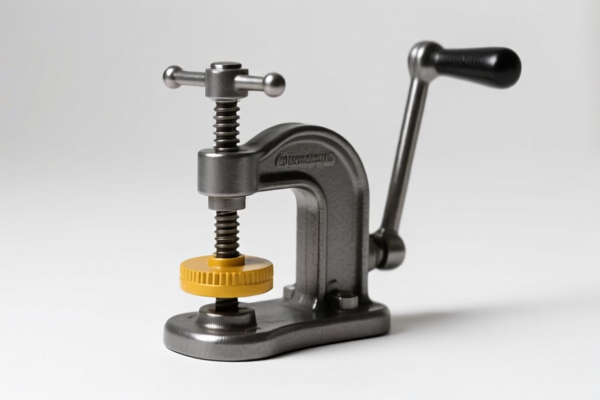
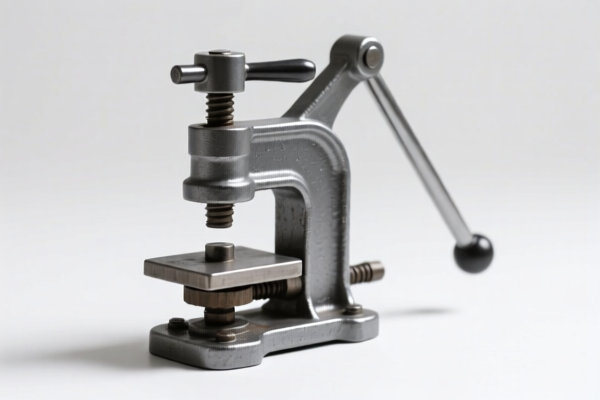
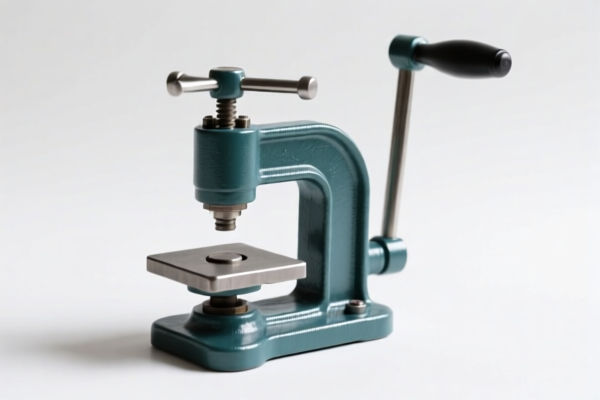
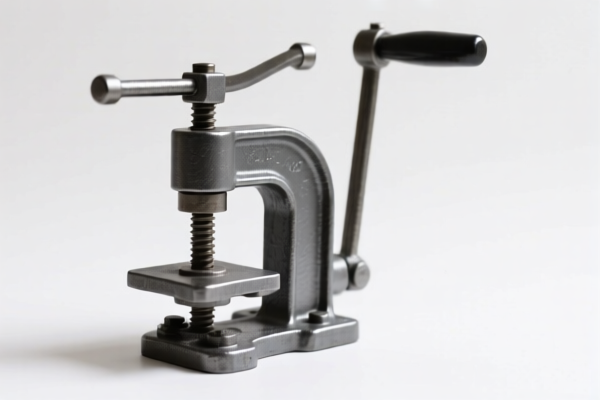
AI Analysis
🔨 Manual Press (Metalworking Machinery)
🌐 HS Code Reference & Customs Clearance Guide | 2026 Latest Tariff Analysis | Professional-Level Clearance Strategy
📌 1. Product Definition & Classification: Do You Truly Understand "Manual Press"?
A Manual Press falls under the category of metalworking machine tools. In international trade, its classification depends on its specific mechanical structure, power source (hand-operated vs. hydraulic/pneumatic assisted), and primary application (metal forming, cold forging, etc.). Because "Manual Press" is a broad term, it often lands in "residual" or "other" subheadings depending on whether it is classified as a general mechanical press or a specific hydraulic/pneumatic unit.
⚠️ Key Distinction:
- If the press is a general mechanical press or hydraulic press without specific specialized features, it often falls under Chapter 8462 (Metalworking machine tools) or 8463 (Other machine tools).
- The primary driver for HS Code selection is whether it matches the core definition of a "press" in 8462 (mechanical/hydraulic/pneumatic presses) or if it is classified as a "other" machine tool in 8463 due to lack of specific enumeration.
📦 2. HS Code Classification Details (2026 Latest Tariff Authoritative Comparison)
Based on the provided data, here are the 5 most likely HS Codes for "Manual Press," along with their tax implications and logical grouping.
| HS Code | Product Description & Summary | Tax Rate (Total) | Tax Breakdown |
|---|---|---|---|
8463.90.00.80 |
General Machine Tool: Classified under "Other" residual categories for metalworking machines. No material conflict. | 39.4% | Base: 4.4% Additional (301): 25.0% Section 122: 10% |
8479.30.00.00 |
Industrial Machinery (Residual): Matches usage description for presses perfectly. No material conflict. Likely for presses not fitting specific tool subheadings. | 35.0% | Base: 0.0% Additional (301): 25.0% Section 122: 10% |
8462.61.40.60 |
Hydraulic Press: Matches usage for hydraulic presses. Classified under "Other" residual category. No obvious material conflict. | 39.4% | Base: 4.4% Additional (301): 25.0% Section 122: 10% |
8462.62.50.90 |
Mechanical Press: Perfect match for core usage of mechanical presses. Inferred as cold metalworking press. | 39.4% | Base: 4.4% Additional (301): 25.0% Section 122: 10% |
8463.90.00.40 |
Metal/Ceramic Machine Tool: Fits machine tool category characteristics. Leans towards metalworking or ceramic processing. | 39.4% | Base: 4.4% Additional (301): 25.0% Section 122: 10% |
🔍 Key Insight:
- 8462 codes (Hydraulic/Mechanical) are the most specific for powered presses, but Manual Presses often face classification ambiguity if they don't fit strict "mechanical/hydraulic" definitions in 8462, pushing them to 8463 or 8479.
- 8479.30.00.00 offers the lowest total tax (35.0%) because the base duty is 0%. However, it must strictly match the "usage description" of presses without conflicting material attributes.
💰 3. 2026 Latest Tariff Rate Details (Including Surtaxes & Policy Add-ons)
✅ Applicable Country: USA (US)
✅ Country of Origin: China (CN)
✅ Effective Time: From November 10, 2025 onwards (including subsequent imports)
🎯 1. 8463.90.00.80 & 8462.61.40.60 & 8462.62.50.90 & 8463.90.00.40 —— General Machine Tools / Presses
| Item | Content |
|---|---|
| Base Duty Rate | 4.4% (ad valorem) |
| USITC Surtax (Section 301) | +25.0% |
| Section 122 Surtax | +10.0% |
| Total Effective Rate | 39.4% |
| Tax Calculation | CIF Value × 39.4% |
| De Minimis Eligibility | ❌ Not Eligible (deny_de_minimis) |
| Legal Basis Path | USITC:8462.xxxx / 8463.xxxx → USITC Footnote 301 (25%) → Section 122 (10%) |
📌 Explanation:
- These codes fall under metalworking machine tools.
- The 25% surtax applies due to US Trade Act Section 301 targeting Chinese manufacturing.
- The 10% surtax is under Section 122 (often related to national security or specific trade remedies, adding to the cost).
- Total 39.4% is a high tariff, significantly impacting profit margins.
🎯 2. 8479.30.00.00 —— Industrial Machinery (Presses)
| Item | Content |
|---|---|
| Base Duty Rate | 0.0% (ad valorem) |
| USITC Surtax (Section 301) | +25.0% |
| Section 122 Surtax | +10.0% |
| Total Effective Rate | 35.0% |
| Tax Calculation | CIF Value × 35.0% |
| De Minimis Eligibility | ❌ Not Eligible (deny_de_minimis) |
| Legal Basis Path | USITC:8479.30.00.00 → USITC Footnote 301 (25%) → Section 122 (10%) |
📌 Note:
- This is the most cost-effective option at 35.0%.
- Condition: Must strictly justify that the manual press fits the "usage description" of presses in Chapter 8479 (Machines and mechanical appliances having individual functions) and does not conflict with specific machine tool definitions in 8462/8463.
- Risk: US Customs may challenge this if the press is clearly a "machine tool" under 8462. Ensure product documentation supports this classification.
🛠️ 4. Customs Clearance Practical Advice (Battle-Tested Pitfall Avoidance Guide)
✅ 1. Required Documentation Checklist (None Can Be Omitted)
| Document | Required | Notes |
|---|---|---|
| ✅ Product Specifications | ✔️ | Must detail operating force, tonnage, stroke, and power source (manual/hydraulic). |
| ✅ Technical Diagrams | ✔️ | Show internal structure to prove it is a "press" and not a general appliance. |
| ✅ Product Photos (Nameplate) | ✔️ | Clear view of model number, brand, and max pressure. |
| ✅ Commercial Invoice | ✔️ | Must clearly state "Manual Press for Metal Working" or similar precise description. |
| ✅ Packing List | ✔️ | List all components. Do not split accessories if they are integral to the press. |
| ✅ Certificate of Origin (CO) | ✔️ | Essential for origin determination. |
| ✅ Third-Party Test Report | ✔️ | Safety certifications (if any) help verify industrial use. |
✅ 2. Declaration Tactics (Key Mantra)
🔥 "Precise Description, Correct Code, Avoid 'General' Traps!"
| Scenario | Correct Declaration | Incorrect Action | Consequence |
|---|---|---|---|
| Manual Hydraulic Press | Use 8462.61.40.60 or 8479.30.00.00 |
Declare as "General Machine" | Risk of misclassification → 39.4% vs 35.0% |
| Simple Mechanical Lever Press | Use 8463.90.00.80 or 8462.62.50.90 |
Declare as "Tool" | Risk of higher duty or detention |
| Complete Press Unit | Declare as Whole Unit | Split into "Frame + Pump + Table" | Each part taxed separately → Total > 100% |
| Non-Metal Press (e.g., for plastics) | Verify if still 8462/8463 |
Assume Chapter 8479 always applies | If used for metal, must use 8462/8463 |
✅ 3. Special Case Handling
| Situation | Handling Advice |
|---|---|
| OEM Custom Press | Provide customer orders + design drawings to prove specific industrial use. |
| "Manual" but Hydraulic-Assisted | Clearly specify "Hydraulic Manual Press" to justify 8462 or 8479 over general tools. |
| Multi-Function Press | If it also cuts/bends, emphasize the primary function (pressing) in description. |
| Export to US | High Tariff Alert: All options are >35%. Consider pre-ruling (Advance Ruling) to confirm if 8479.30.00.00 is acceptable to save 4.4%. |
🌍 5. Global Market Comparison (2026 Latest)
| Country/Region | Recommended HS Code | Est. Tariff (China Origin) | Certification Required | Notes |
|---|---|---|---|---|
| 🇺🇸 USA | 8462.xxxx / 8479.30 |
35.0% – 39.4% | None specific for HS, but safety certs help | High Surtax (35%+) applies. Critical to optimize code. |
| 🇨🇳 China | 8462.61.40.60 etc. |
~4.4% - 10% | CCC (if applicable) | Low duty, no 301/122 surtaxes. |
| 🇪🇺 EU | 8462.61 etc. |
~4.5% - 6.5% | CE + Machinery Directive | No major surtaxes, but strict safety compliance. |
| 🇨🇦 Canada | 8462.61 etc. |
~5.0% - 10.0% | None specific for HS | MFN rates apply. |
| 🇦🇺 Australia | 8462.61 etc. |
~5.0% - 8.0% | RCM (if electrical) | No major surtaxes. |
📌 Conclusion:
- The USA is the most expensive market due to Section 301 (25%) + Section 122 (10%) surtaxes.
- Optimization Strategy: Attempt to classify under8479.30.00.00if technically defensible to save 4.4% (Base Duty).
- Risk: If USCBP challenges this and reclassifies to8462, you will owe the difference + penalties.
📌 6. Common Errors & Pitfall Guide (Lessons Learned)
❌ Error 1: Declaring "Manual Press" as "Tool" under Chapter 82 (Tools)
👉 Consequence: Wrong chapter → Rejection or Retroactive Duty. Presses are machinery (Ch 84), not hand tools (Ch 82).
❌ Error 2: Ignoring "Manual" in the name but declaring as "Automatic"
👉 Consequence: Misdeclaration → Fines + Delay. Must accurately reflect power source.
❌ Error 3: Splitting the press into parts (Frame, Motor, Pump)
👉 Consequence: Parts taxed at different rates → Total tax exceeds 100%. Always declare as Complete Machine.
❌ Error 4: Using vague description "Metal Press"
👉 Consequence: Customs ambiguity → Inspection Delay. Use precise terms: "Hydraulic Manual Press, 50 Ton, Model XYZ".
✅ Correct Practice:
"Manual Hydraulic Press, 50 Tonnage, For Metal Stamping, Model MHP-50T, Complete Unit, No Power Tool Function"
🎯 7. Conclusion: Precise Classification Saves Money!
🎯 Remember the Mantra:
🔹 "Press is Machinery, Not Tool! Chapter 84 is Key."
🔹 "USA Tariff = 35% - 40%. Optimize Code to Save 4.4%."
🔹 "Base 0% (8479) vs Base 4.4% (8462). Choose Wisely."
📌 Tips:
- If your press is strictly mechanical (no hydraulics), 8462.62.50.90 is safer.
- If it has hydraulic systems but is manually operated, 8462.61.40.60 or 8479.30.00.00 are contenders.
- Recommendation: Apply for an Advance Ruling from US Customs to lock in the 8479.30.00.00 (35%) rate if possible, as it saves 4.4% compared to 8462 codes.
📣 Immediate Action:
📞 Contact your customs broker with technical specs + photos.
📝 Request a HS Code Pre-Ruling for "Manual Press" to mitigate 39.4% risk.
🚀 Clear Customs Smoothly, Maximize Profit!
✨ Professional Clearance Starts with Accurate Classification!
💼 Every Percent Counts in the Age of High Tariffs!
Customer Reviews
About HS Code Classification
The Harmonized System (HS) is an internationally standardized nomenclature developed by the World Customs Organization (WCO) to classify traded products. Over 200 countries use the HS system as the basis for customs tariffs, trade statistics, and import/export regulations.
Each HS code follows a hierarchical structure:
- Chapter (2 digits) — Broad category of goods (e.g., Chapter 84: Machinery and Mechanical Appliances)
- Heading (4 digits) — More specific grouping within the chapter
- Subheading (6 digits) — Internationally standardized breakdown, used by all WCO member countries
- National subdivisions (8-10 digits) — Country-specific extensions for further classification, such as US HTSUS 10-digit codes
Correct HS code classification is essential for smooth customs clearance, accurate duty payment, and compliance with trade regulations. Misclassification can lead to customs delays, overpayment of duties, or penalties.
When importing from CN to US, the applicable tariff rates may include:
- Most-Favored-Nation (MFN) rate — The standard duty rate applied to WTO members
- General rate — Applied to countries without trade agreements
- Trade remedy duties — Additional tariffs such as Section 301 (anti-dumping), Section 232 (national security), or countervailing duties
The information provided on this page is for reference purposes only. For official classification, please consult with your local customs authority or a licensed customs broker.