Map Box
CN → US| HS Code | Tariff Rate | Origin | Destination | Doc |
|---|---|---|---|---|
| 3926901000 | 20.9% | CN | US | Official Doc |
| 3926909989 | 22.8% | CN | US | Official Doc |
| 4202929336 | 52.6% | CN | US | Official Doc |
| 4820300040 | 35.0% | CN | US | Official Doc |
Product Images
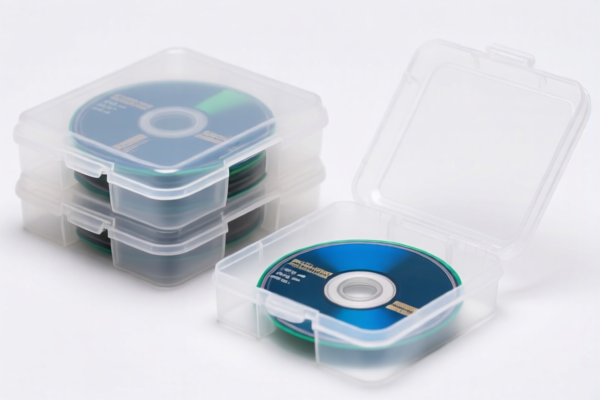
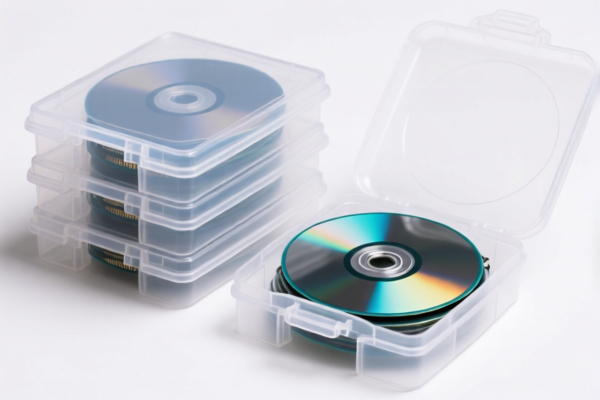
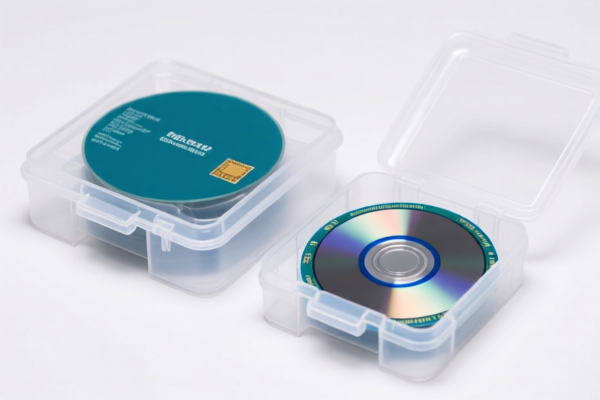
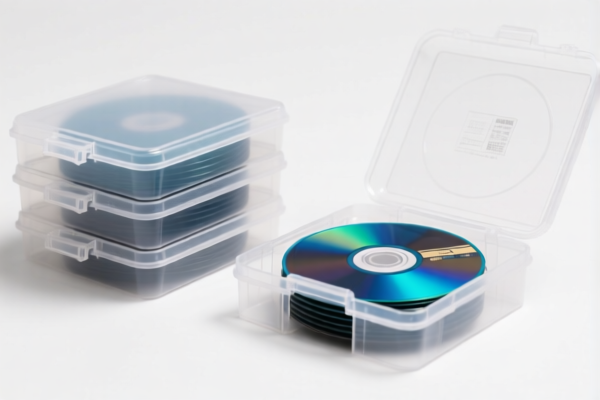
AI Analysis
📦 Map Box (Map Cases / Map Folders)
🌐 HS Code Reference & Customs Clearance Guide | 2026 Latest Tariff Analysis | Professional Clearance Strategy
📌 I. Product Definition & Classification: Do You Really Understand "Map Boxes"?
A Map Box (often referred to as a map case, map folder, or portfolio) is a specialized container designed to hold, protect, and transport large-format documents, blueprints, charts, or maps. In international trade, these items are classified based on their material composition and structural form.
Key Classification Criteria: * Plastic/Composite Materials: Rigid or semi-rigid containers made primarily of plastic, vinyl, or synthetic composites → Classified under Chapter 39. * Textile/Laminated Materials: Soft-sided cases, often with fabric interiors or laminated plastic exteriors → Classified under Chapter 42. * Paper/Cardboard: Rigid folders, sleeves, or boxes made entirely of paper, cardboard, or pulp → Classified under Chapter 48.
⚠️ Critical Distinction:
- If the item is a rigid container (like a tub or box) made of plastic → HS Code 3926.
- If it is a soft case/folder with textile elements or plastic sheeting laminated to fabric → HS Code 4202.
- If it is purely paper-based (like a file folder or cardboard sleeve) → HS Code 4820.
📦 II. HS Code Classification Details (2026 Latest Tariff Authority Match)
| HS Code | Product Description | Applicable Scenario | Primary Material |
|---|---|---|---|
3926.90.10.00 |
Other articles of plastics and articles of other materials of headings 3901 to 3914: Plastic map cases/boxes | Rigid plastic map boxes, plastic-coated map holders | ✅ Plastic |
3926.90.99.89 |
Other塑料制品 (Plastic articles): General plastic containers not specifically excluded | General plastic map folders/cases not falling under more specific plastic subcategories | ✅ Plastic |
4202.92.93.36 |
Other articles of apparel and clothing accessories, not elsewhere specified or included: Textile/Plastic sheeting containers | Soft-sided map cases, fabric-lined map holders, plastic-laminated textile folders | ✅ Textile/Plastic Composite |
4820.30.00.40 |
Notebooks, account books, letter pads, memorandum pads, diaries and similar articles: Paper/Cardboard map folders | Paper-based map sleeves, cardboard map cases, file folders for maps | ✅ Paper/Cardboard |
🔍 Key Reminder:
- Plastic Rigid Boxes: Must be classified under Chapter 39. Do not misclassify as "furniture" or "accessories." - Textile/Composite Cases: If the outer layer is textile or plastic-laminated fabric, it falls under Chapter 42. This is a common trap, as many "plastic" map cases are actually laminated fabric. - Paper Folders: Purely paper-based map holders fall under Chapter 48. These are often lower in duty but highly susceptible to misclassification as plastic if they have plastic coatings.
💰 III. 2026 Latest Tariff Rate Details (Including Surtaxes & Policy Additions)
✅ Applicable Country: United States (US)
✅ Country of Origin: China (CN)
✅ Effective Date: 2025年11月10日起 (Including subsequent imports)
🎯 1. 3926.90.10.00 —— Plastic Map Boxes/Cases
| Item | Content |
|---|---|
| Base Duty Rate | 3.4% |
| Section 301 Surcharge | 7.5% |
| Section 122 Tariff | 10% |
| Total Duty Rate | 20.9% |
| Tax Calculation | CIF Value × 20.9% |
| De Minimis Exemption? | ❌ Not Applicable |
| Legal Basis Path | Base: 3926.90.10.00 → Section 301: +7.5% → Section 122: +10% |
📌 Explanation:
- Base Duty (3.4%): Standard MFN rate for other plastic articles. - Section 301 (7.5%): Additional duty under U.S. Trade Law Section 301 for Chinese-origin plastic goods. - Section 122 (10%): Additional tariff under Section 122 of the Trade Expansion Act for imports affecting national security/economy. - Total: 20.9%. This is a moderate-high duty rate.
🎯 2. 3926.90.99.89 —— Other Plastic Map Containers (General)
| Item | Content |
|---|---|
| Base Duty Rate | 5.3% |
| Section 301 Surcharge | 7.5% |
| Section 122 Tariff | 10% |
| Total Duty Rate | 22.8% |
| Tax Calculation | CIF Value × 22.8% |
| De Minimis Exemption? | ❌ Not Applicable |
| Legal Basis Path | Base: 3926.90.99.89 → Section 301: +7.5% → Section 122: +10% |
📌 Note:
- This code is a "catch-all" for plastic articles not specified elsewhere. - The base duty is higher than3926.90.10.00(5.3% vs 3.4%), leading to a higher total duty (22.8%). - Ensure your product description aligns with3926.90.10.00if it fits, to save 1.9%.
🎯 3. 4202.92.93.36 —— Textile/Plastic Composite Map Cases
| Item | Content |
|---|---|
| Base Duty Rate | 17.6% |
| Section 301 Surcharge | 25.0% |
| Section 122 Tariff | 10% |
| Total Duty Rate | 52.6% |
| Tax Calculation | CIF Value × 52.6% |
| De Minimis Exemption? | ❌ Not Applicable |
| Legal Basis Path | Base: 4202.92.93.36 → Section 301: +25% → Section 122: +10% |
📌 Critical Warning:
- This is a high-risk code for cost control. - Section 301 Surcharge is 25% (standard for many textile/apparel-related imports). - Total Duty: 52.6%. This is extremely high. If your product is made of plastic, do not classify it here unless it is definitively a textile article. Misclassification can lead to massive back-taxes.
🎯 4. 4820.30.00.40 —— Paper/Cardboard Map Folders
| Item | Content |
|---|---|
| Base Duty Rate | 0.0% |
| Section 301 Surcharge | 25.0% |
| Section 122 Tariff | 10% |
| Total Duty Rate | 35.0% |
| Tax Calculation | CIF Value × 35.0% |
| De Minimis Exemption? | ❌ Not Applicable |
| Legal Basis Path | Base: 4820.30.00.40 → Section 301: +25% → Section 122: +10% |
📌 Note:
- Base Duty is 0%, which is attractive. - However, Section 301 Surcharge is 25%, significantly increasing the total cost. - Total Duty: 35.0%. While lower than the textile composite option, it is still higher than the plastic box option (20.9%). - Use this only if the product is strictly paper/cardboard with no structural plastic components.
🛠️ IV. Customs Clearance Practical Advice (Expert Pitfall Avoidance)
✅ 1. Preparation Checklist (No Exceptions)
| Document | Required | Notes |
|---|---|---|
| ✅ Product Specification Sheet | ✔️ | Must clearly state material composition (e.g., "100% Polypropylene" or "Canvas with PVC coating"). |
| ✅ Material Breakdown | ✔️ | Percentages of plastic, textile, paper, and metal parts. |
| ✅ Product Photos | ✔️ | Show exterior, interior, and any labels/tags. |
| ✅ Commercial Invoice | ✔️ | Use precise terminology: "Plastic Map Case" or "Paper Map Folder." Avoid vague terms like "Container." |
| ✅ Packing List | ✔️ | Detail contents, especially if mixed materials are present. |
| ✅ Origin Certificate | ✔️ | If applicable, to prove country of origin for duty calculations. |
✅ 2. Declaration Tips (Key Mantras)
🔥 "Material Defines Code, Don't Guess the Duty!"
| Scenario | Correct Declaration | Error Consequence |
|---|---|---|
| Rigid Plastic Box | 3926.90.10.00 (20.9%) |
Misclassifying as Textile → 52.6% Tax |
| Laminated Fabric Case | 4202.92.93.36 (52.6%) |
Misclassifying as Plastic → 20.9% Tax (Risk of Audit) |
| Pure Paper Folder | 4820.30.00.40 (35.0%) |
Misclassifying as Plastic → 20.9% Tax (But might be rejected if not plastic) |
| Mixed Plastic/Paper | Likely 3926 or 4820 depending on essential character |
Ambiguous declaration → Delays & Seizures |
✅ 3. Special Cases Handling
| Scenario | Recommendation |
|---|---|
| Hybrid Materials | If the product has a plastic outer shell and fabric interior, it is likely Plastic (Ch 39) under GRI 3(b). |
| Waterproof Map Cases | Even if waterproof, if made of plastic, it stays in Ch 39. |
| Vintage/Collectible Map Cases | If made of leather or special materials, different codes may apply, but for mass-produced goods, stick to the above. |
| Samples | Even samples are subject to duty. Declare accurately. |
🌍 V. Global Market Comparison (2026 Latest)
| Country/Region | Recommended HS Code | Duty Rate (China Origin) | Notes |
|---|---|---|---|
| 🇺🇸 USA | 3926.90.10.00 |
20.9% | High Surtaxes apply. Best option if plastic. |
| 🇨🇳 China | 3926.90.10.00 |
5-8% | Lower duties. No Section 301/122. |
| 🇪🇺 EU | 3926.90.90 |
6.5% | No Section 301/122. Standard MFN. |
| 🇯🇵 Japan | 3926.90.00 |
0-8% | Varies by specific type. No Surtaxes. |
| 🇦🇺 Australia | 3926.90.00 |
5% | Lower duties. No Surtaxes. |
📌 Conclusion:
- The USA has the highest effective duty rate due to Section 301 and Section 122 surcharges. - Plastic (Ch 39) is the most cost-effective classification for import into the US (20.9% vs 35-52.6%). - If possible, design products as plastic containers to minimize duty costs.
📌 VI. Common Mistakes & Pitfalls (Lessons Learned)
❌ Mistake 1: Classifying a plastic map box as a "textile case" to avoid "plastic" scrutiny.
👉 Result: If found to be plastic, duty jumps from 52.6% to 20.9%? No, wait!
Correction: If it is plastic, it should be 20.9%. If you declare it as textile (4202) but it is plastic, you risk penalties for misclassification. If it is truly plastic, declaring it as plastic saves money (20.9% vs 52.6%).
Better Mistake: Declaring a plastic item as plastic (20.9%) vs textile (52.6%). Always choose the correct material.
❌ Mistake 2: Declaring a paper folder as plastic to get lower base duty.
👉 Result: Customs may reject the declaration if the item is not plastic. Even if accepted, it is a compliance risk. Paper folders are 35.0%, Plastic is 20.9%. Plastic is cheaper.
❌ Mistake 3: Ignoring Section 122 Tariff.
👉 Result: Missing the 10% surcharge leads to underpayment and audits.
❌ Mistake 4: Using vague terms like "Map Holder" without material specification.
👉 Result: Customs may assign a default code with higher duty or request additional info, causing delays.
✅ Correct Practice:
"Plastic Map Case, Rigid, Polypropylene, Clear Front, Black Back, Model XYZ"
"Paper Map Folder, Cardboard, 4-Fold, Model ABC"
🎯 VII. Conclusion: Professional Declaration, Cost Savings, Efficiency!
🎯 Remember the Mantra:
🔹 "Plastic is Best (20.9%), Paper is Middle (35.0%), Textile is Worst (52.6%)!"
🔹 "Material Truth Prevents Penalties!"
📌 Pro Tip:
If your product can be redesigned to use more plastic and less textile/paper, you can significantly reduce your duty burden when importing into the US.
Consider applying for an HTS Exclusion if applicable, though unlikely for standard map cases.
📣 Take Action Now:
📞 Consult with a licensed customs broker.
📤 Provide detailed material breakdowns.
🚀 Ensure accurate HS Code classification to optimize costs and ensure smooth clearance.
✨ Professional Clearance Starts with Accurate Classification!
💼 Every Dollar Saved is a Dollar Earned!
Customer Reviews
About HS Code Classification
The Harmonized System (HS) is an internationally standardized nomenclature developed by the World Customs Organization (WCO) to classify traded products. Over 200 countries use the HS system as the basis for customs tariffs, trade statistics, and import/export regulations.
Each HS code follows a hierarchical structure:
- Chapter (2 digits) — Broad category of goods (e.g., Chapter 84: Machinery and Mechanical Appliances)
- Heading (4 digits) — More specific grouping within the chapter
- Subheading (6 digits) — Internationally standardized breakdown, used by all WCO member countries
- National subdivisions (8-10 digits) — Country-specific extensions for further classification, such as US HTSUS 10-digit codes
Correct HS code classification is essential for smooth customs clearance, accurate duty payment, and compliance with trade regulations. Misclassification can lead to customs delays, overpayment of duties, or penalties.
When importing from CN to US, the applicable tariff rates may include:
- Most-Favored-Nation (MFN) rate — The standard duty rate applied to WTO members
- General rate — Applied to countries without trade agreements
- Trade remedy duties — Additional tariffs such as Section 301 (anti-dumping), Section 232 (national security), or countervailing duties
The information provided on this page is for reference purposes only. For official classification, please consult with your local customs authority or a licensed customs broker.