Maple Flooring Wood Rough
CN → US| HS Code | Tariff Rate | Origin | Destination | Doc |
|---|---|---|---|---|
| 4403990160 | 35.0% | CN | US | Official Doc |
| 4407930020 | 35.0% | CN | US | Official Doc |
| 4409292630 | 35.0% | CN | US | Official Doc |
| 4407910022 | 35.0% | CN | US | Official Doc |
| 4403910020 | 35.0% | CN | US | Official Doc |
Product Images
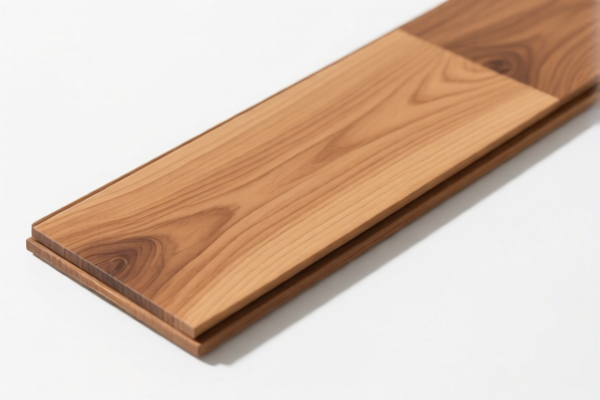
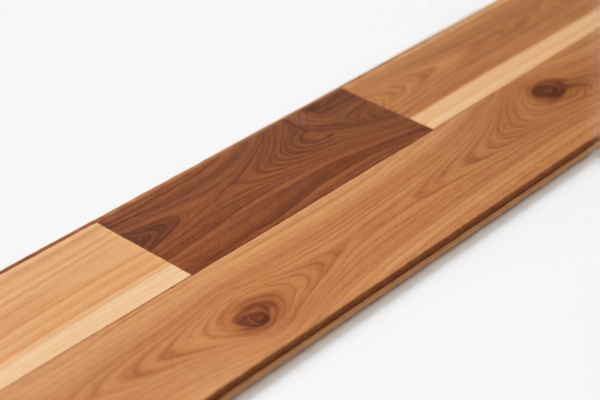

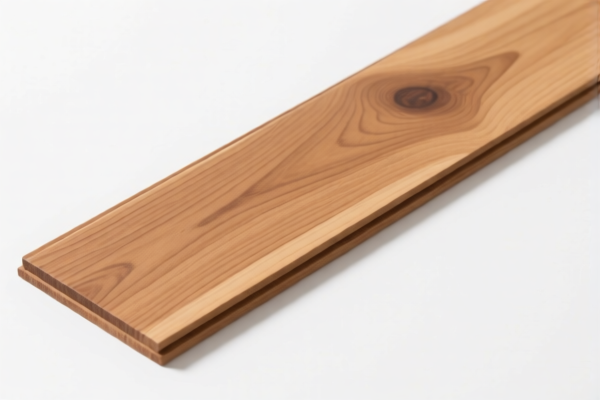
AI Analysis
🌳 Maple Flooring Wood (Rough Processed) | 🇺🇸 US Customs Clearance Guide
🌐 HS Code Reference & Customs Strategy | 2026 Tariff Analysis | Wood Products Clearance Protocol
📌 I. Product Definition & Classification: What is "Rough Maple Flooring Wood"?
Maple flooring wood in its "rough" state refers to lumber that has been sawn or planed but has not yet undergone final finishing (sanding, staining, tongue-and-groove profiling for immediate installation). In international trade, the classification depends heavily on the specific processing stage and wood species (Maple vs. Red Oak, though Red Oak is included in your data for comparison).
Key Distinctions: * Rough Lumber (4403/4407): Wood that has been sawn but not deeply machined. Often used by mills to create finished flooring. * Processed Flooring (4409): Wood that has been tongued, grooved, or shaped specifically for flooring installation. * Species Matter: Maple (generally Acer spp.) and Red Oak (Quercus rubra) have different HS code nuances based on their specific subheadings in the HTSUS.
⚠️ Critical Warning for US Imports:
Wood products from China are currently subject to Section 301 and Section 122 tariffs. Misclassification can lead to severe penalties or delayed clearance. Always ensure the description matches the physical state of the goods.
📦 II. HS Code Classification Matrix (Based on Provided Data)
| HS Code | Product Description | Processing State | Key Characteristics |
|---|---|---|---|
4403.99.01.60 |
Rough Maple Flooring Wood | Roughly processed | Material: Maple. State: Roughly processed timber. |
4407.93.00.20 |
Maple Lumber (>6mm) | Longitudinally sawn/cut | Material: Maple. Thick >6mm, longitudinal sawing/planing. |
4409.29.26.30 |
Maple Flooring (Processed) | Finalized for flooring | Material: Maple. Conforms to processed flooring requirements (tongue/groove). |
4407.91.00.22 |
Rough Red Oak Lumber | Longitudinally sawn/cut | Material: Red Oak. State: Roughly sawn/planed/bored. |
4403.91.00.20 |
Rough Red Oak Timber | Rough sawn | Material: Red Oak. State: Rough sawn timber. |
🔍 Analysis:
- All items listed are subject to the same total tax rate of 35.0%. - The distinction between4403(Preserved/Rough Timber) and4407(Wood Sawn/Chipped) is subtle but critical for customs inspection.4409indicates the wood is specifically shaped for flooring (molding), which is a higher value-added state.
💰 III. 2026 Latest Tariff Rate Breakdown (Detailed Policy)
✅ Applicable Country: United States (US)
✅ Origin: China (CN) (Implied by "Section 122" and 35% total tax structure typical for US-China wood tariffs)
✅ Effective Time: Current active rates under Section 301 & 122 provisions.
🎯 Universal Tax Structure for All Listed HS Codes
| Component | Rate | Description | Legal Basis |
|---|---|---|---|
| Base Duty | 0.0% | Most Favored Nation (MFN) rate for many wood products | HTSUS Base Schedule |
| Section 301 Surcharge | +25.0% | Additional duty on Chinese imports (List 4B/3B) | US Trade Policy Section 301 |
| Section 122 Surcharge | +10.0% | Additional duty on specific wood/ceramic products from China | 19 U.S.C. § 1673d / Section 122 |
| TOTAL EFFECTIVE RATE | 35.0% | Combined Ad Valorem Duty | Sum of above components |
📌 Explanation of Taxes: 1. Base Tariff (0%): Unlike many manufactured goods, raw/rough wood often has a 0% MFN base rate. However, this is where the "trap" lies for importers. 2. Section 301 Tariff (+25%): Imposed by the US Trade Representative (USTR) on specific Chinese imports to address unfair trade practices. This applies to almost all wood products from China. 3. Section 122 Tariff (+10%): A special provision allowing the President to impose duties on imports of certain goods (including wood) if they threaten to impair national security. This is a significant additional cost layer not always present on other goods.
🛠️ IV. Customs Clearance Operational Advice (Best Practices)
✅ 1. Documentation Checklist (Mandatory)
| Document | Requirement | Why It Matters |
|---|---|---|
| Commercial Invoice | Must clearly state "Rough Maple Flooring" or "Sawn Maple Lumber" | Prevents misclassification as finished flooring (which might have different duties if not for the surcharges). |
| Packing List | Detail weight, dimensions, and number of bundles | Wood is density-sensitive; accurate weight prevents demurrage. |
| Phytosanitary Certificate | REQUIRED | Wood is susceptible to pests. Must be treated and certified free of live insects/bark. |
| Fumigation Certificate | REQUIRED | Specific proof of fumigation (e.g., Methyl Bromide) if not treated at source. |
| Wood Species Declaration | Explicitly state "Maple" or "Red Oak" | Customs officers will verify species against HTSUS headings. Misidentifying species can lead to fines. |
| Processing Description | State "Rough Sawn" vs. "Planed" | Determines if it falls under 4403 or 4407. |
✅ 2. Classification Strategy & Pitfalls
| Scenario | Correct Action | Common Mistake |
|---|---|---|
| Wood has bark removed but is still rough | Use 4403.99.01.60 (Rough Maple) |
Trying to force it into finished flooring 4409 without actual tongue/groove profiling. |
| Wood is sawn >6mm thick | Use 4407.93.00.20 |
Confusing "sawn lumber" with "rough timber" 4403. Both have 35% tax, but legal descriptions differ. |
| Wood is pre-profiled (T&G) | Use 4409.29.26.30 |
Declaring as "Lumber" to avoid "Finished Flooring" scrutiny, but it is physically shaped for flooring. |
| Red Oak vs. Maple | Verify species via wood grain/sampling | Red Oak (4407.91.00.22) and Maple (4407.93.00.20) have different subheadings. |
🔥 Pro Tip:
"Define the State, Not Just the Name."
Do not just write "Maple Wood." Write: "Maple Flooring Lumber, Rough Sawn, Heat Treated, Phytosanitary Certified, for Flooring Manufacturing." This clarity speeds up CBP examination.
✅ 3. Special Considerations for Wood Imports
| Issue | Solution |
|---|---|
| Pest Inspection | Ensure wood is bark-free and has a valid PPQ Form 546 (USDA Phytosanitary Certificate). |
| Moisture Content | CBP may require proof of moisture content (usually <20% for rough lumber) to prevent mold/pest issues. |
| Tariff Engineering | Since all listed codes have a 35% total tax, there is no tariff advantage in shifting between 4403, 4407, or 4409 for tax reasons. Focus on correct description to avoid delays. |
| Section 122 Exemptions | Check if your specific product form qualifies for any exclusion (rare for wood). |
🌍 V. Global Market Comparison (2026 Context)
| Country/Region | HS Code Logic | Total Duty (China Origin) | Key Requirements |
|---|---|---|---|
| 🇺🇸 USA | 4403/4407/4409 series |
35% (0% Base + 25% Sec 301 + 10% Sec 122) | Phytosanitary Cert, Fumigation Cert, Detailed Description |
| 🇨🇳 China | Varies by import | Low (5-10%) | No major surcharges on wood imports to China |
| 🇪🇺 EU | 4407/4409 series |
~0-5% | FLEGT License (for legality), Fumigation if non-treated |
| 🇨🇦 Canada | 4407/4409 series |
~0% (USMCA eligible) | If from Canada, 0%. If from China, MFN rate applies (~0-5%). |
📌 Conclusion:
The US market is high-cost for Chinese wood products due to the叠加 (stacking) of Section 301 and Section 122 tariffs. There is no duty-saving strategy by changing the HS code within the provided list, as all are taxed at 35%. Compliance accuracy is the only way to ensure smooth clearance.
📌 VI. Common Errors & Risk Mitigation
❌ Error 1: Under-declaring Value
👉 Risk: CBP audits, penalties, and potential seizure.
✅ Fix: Declare full CIF value.
❌ Error 2: Missing Phytosanitary Certificate
👉 Risk: Immediate refusal of entry, destruction of goods, or re-export at owner's expense.
✅ Fix: Ensure supplier provides USDA-accepted phytosanitary certificate before shipment.
❌ Error 3: Mislabeling Species
👉 Risk: If "Red Oak" is declared as "Maple" to fit a different quota or inspection protocol, it is fraud.
✅ Fix: Use accurate botanical names if required.
❌ Error 4: Ignoring Section 122
👉 Risk: Underpaying duties by assuming only 25% (Sec 301) is due.
✅ Fix: Budget for 35% total duty from day one.
🎯 VII. Conclusion: Streamline Your Wood Import
🎯 Key Takeaway:
"35% is the floor, not the ceiling."
For rough maple/red oak flooring wood from China to the US, the tax is fixed at 35%.
Focus your resources on Phytosanitary Compliance and Accurate Description to avoid customs delays.
📌 Action Plan: 1. Verify HS Code based on actual processing state (Rough vs. Sawn vs. Processed). 2. Confirm Phytosanitary Status with supplier. 3. Calculate Landed Cost including the 35% total duty. 4. Prepare Detailed Invoice specifying "Rough Processed" and "Material: Maple/Oak".
✨ Professional Clearance, Precision in Classification!
💼 Every board counts. Get the duty right, get the wood cleared.
Customer Reviews
About HS Code Classification
The Harmonized System (HS) is an internationally standardized nomenclature developed by the World Customs Organization (WCO) to classify traded products. Over 200 countries use the HS system as the basis for customs tariffs, trade statistics, and import/export regulations.
Each HS code follows a hierarchical structure:
- Chapter (2 digits) — Broad category of goods (e.g., Chapter 84: Machinery and Mechanical Appliances)
- Heading (4 digits) — More specific grouping within the chapter
- Subheading (6 digits) — Internationally standardized breakdown, used by all WCO member countries
- National subdivisions (8-10 digits) — Country-specific extensions for further classification, such as US HTSUS 10-digit codes
Correct HS code classification is essential for smooth customs clearance, accurate duty payment, and compliance with trade regulations. Misclassification can lead to customs delays, overpayment of duties, or penalties.
When importing from CN to US, the applicable tariff rates may include:
- Most-Favored-Nation (MFN) rate — The standard duty rate applied to WTO members
- General rate — Applied to countries without trade agreements
- Trade remedy duties — Additional tariffs such as Section 301 (anti-dumping), Section 232 (national security), or countervailing duties
The information provided on this page is for reference purposes only. For official classification, please consult with your local customs authority or a licensed customs broker.