Maple Wood Construction Logs
CN → US| HS Code | Tariff Rate | Origin | Destination | Doc |
|---|---|---|---|---|
| 4407930020 | 35.0% | CN | US | Official Doc |
| 4401120000 | 35.0% | CN | US | Official Doc |
| 4403990160 | 35.0% | CN | US | Official Doc |
Product Images
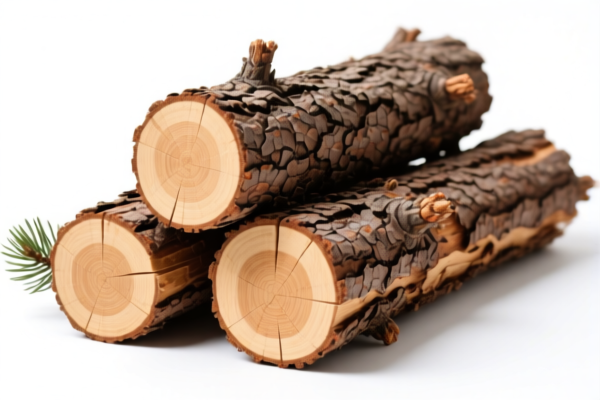
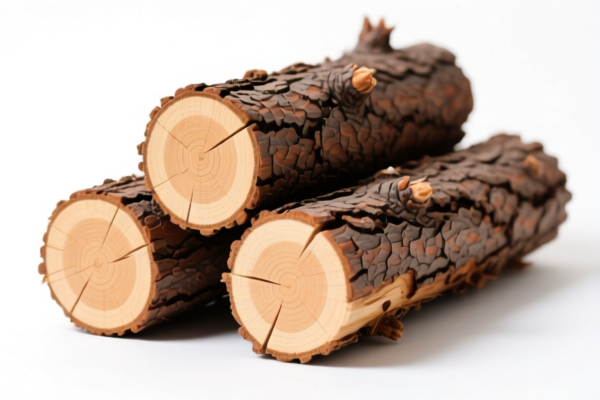
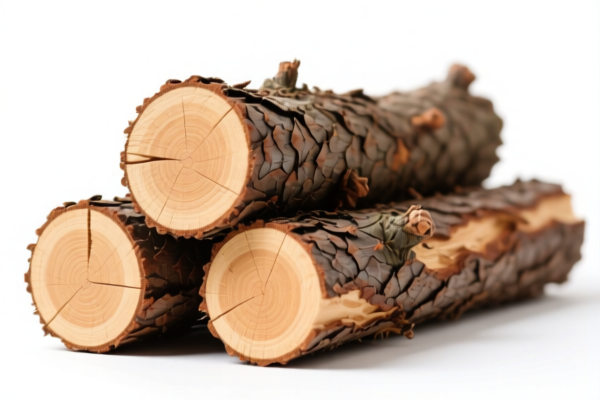
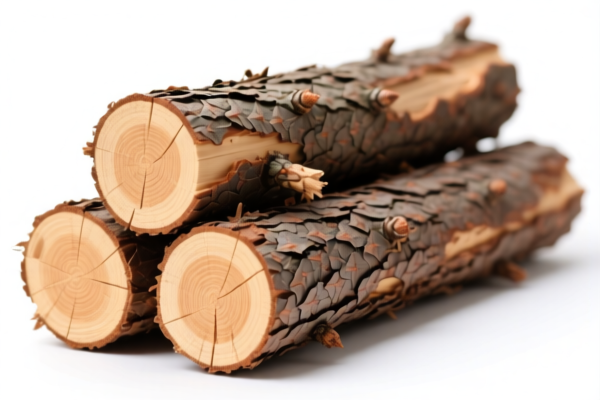
AI Analysis
🌲 Maple Wood Construction Logs
🌐 HS Code Reference & Customs Clearance Guide | 2026 Latest Tariff Analysis | Professional Clearance Strategy
📌 I. Product Definition and Classification: Do You Really Understand "Maple Wood Construction Logs"?
Maple wood logs are a significant category of raw timber in international trade. In the context of customs classification, "logs" (原木) refer to wood that has been felled, stripped of its bark, and/or roughly squared, but not yet processed into sawn timber or veneer sheets.
The classification depends heavily on the state of processing (raw vs. prepared) and the intended use (fuel vs. construction/industrial). Under the Harmonized System (HS), maple logs fall primarily under Chapter 44, but different subheadings apply based on their physical characteristics and economic purpose.
⚠️ Key Distinction Points:
- If the logs are thick (>6mm) and intended for lumber, veneer, or construction, they are classified as sawn timber or similar wood products (4407).
- If the logs are intended strictly as fuel (non-coniferous), they are classified under fuel wood (4401).
- If the logs are roughly processed (bark removed, but not sawn) and do not fit specific high-value categories, they may fall under other raw wood (4403).
📦 II. HS Code Classification Details (2026 Latest Tariff Authority Cross-Reference)
| HS Code | Product Description | Application Scenario | Processing Status |
|---|---|---|---|
4407.93.00.20 |
Maple logs, thickness over 6mm, classified as other maple wood products | High-quality maple for veneer, lumber, or furniture | ✅ Processed (>6mm thick, sawn/riven) |
4401.12.00.00 |
Maple logs, classified as non-coniferous fuel wood | Biomass energy, heating fuel, industrial boiler fuel | ⚠️ Intended as Fuel |
4403.99.01.60 |
Maple logs, classified as rough timber category | Basic raw material, unfinished logs for further processing | ✅ Raw/Rough (Bark removed/squared) |
🔍 Critical Reminder:
-4407is for wood prepared for specific industrial uses (like making plywood or boards). If your logs are thick enough to be processed into construction materials, this is the correct code.
-4401is strictly for fuel. Misdeclaring construction logs as fuel to avoid higher tariffs is a major compliance risk.
-4403is for raw logs that are not yet processed into sawn timber but are not intended as fuel. It is a "catch-all" for rough timber.
💰 III. 2026 Latest Tariff Rate Details (Including Surcharges and Policy Add-ons)
✅ Applicable Country: United States (US)
✅ Origin: China (CN)
✅ Effective Date: 2025 November 10 onwards (including subsequent imports)
🎯 1. 4407.93.00.20 —— Maple Wood, Thickness > 6mm (Other Maple Wood Products)
| Item | Content |
|---|---|
| Base Tariff | 0.0% (ad valorem) |
| Section 301 Surcharge | +25.0% |
| Section 122 Tariff | +10.0% |
| Total Tariff Rate | 35.0% |
| Tax Calculation | CIF Value × 35% |
| De Minimis Eligibility | ❌ Not Eligible (deny_de_minimis) |
| Legal Basis Path | USITC:4407.93.00.20 → SECTION_301:FOOTNOTE:4407 → SECTION_122 |
📌 Explanation:
- The 25% Section 301 tariff applies to most Chinese-origin timber products.
- The 10% Section 122 tariff is an additional duty specifically targeting certain imports under the International Emergency Economic Powers Act (IEEPA) or related trade actions.
- Total: 35%. This is a significant cost factor for maple wood imports.
🎯 2. 4401.12.00.00 —— Maple Logs (Non-Coniferous Fuel Wood)
| Item | Content |
|---|---|
| Base Tariff | 0.0% (ad valorem) |
| Section 301 Surcharge | +25.0% |
| Section 122 Tariff | +10.0% |
| Total Tariff Rate | 35.0% |
| Tax Calculation | CIF Value × 35% |
| De Minimis Eligibility | ❌ Not Eligible (deny_de_minimis) |
| Legal Basis Path | USITC:4401.12.00.00 → SECTION_301:FOOTNOTE:4401 → SECTION_122 |
📌 Note:
- Even though the base tariff is 0%, the add-ons remain the same.
- Crucial: Do not declare construction logs as "fuel" to save costs. Customs will inspect the logs. If they are suitable for construction (e.g., straight, debarked, specific dimensions), they will be reclassified to4407or4403, leading to penalties.
🎯 3. 4403.99.01.60 —— Maple Logs (Rough Timber Category)
| Item | Content |
|---|---|
| Base Tariff | 0.0% (ad valorem) |
| Section 301 Surcharge | +25.0% |
| Section 122 Tariff | +10.0% |
| Total Tariff Rate | 35.0% |
| Tax Calculation | CIF Value × 35% |
| De Minimis Eligibility | ❌ Not Eligible (deny_de_minimis) |
| Legal Basis Path | USITC:4403.99.01.60 → SECTION_301:FOOTNOTE:4403 → SECTION_122 |
📌 Explanation:
- This code covers logs that are not yet processed into sawn timber but are not fuel.
- The 35% total tariff applies uniformly across these three maple log categories due to the current trade policy.
- Key Takeaway: Regardless of whether it’s4407,4401, or4403, the effective duty rate is 35% for Chinese-origin maple logs entering the US in 2026.
🛠️ IV. Practical Customs Clearance Advice (Battle-Tested Pitfall Avoidance)
✅ 1. Required Documentation Checklist (Non-Negotiable)
| Document | Mandatory | Description |
|---|---|---|
| ✅ Commercial Invoice | ✔️ | Must clearly state "Maple Wood Logs," HS Code, and Country of Origin. |
| ✅ Packing List | ✔️ | Detail dimensions, weight, and quantity of each package. |
| ✅ Phytosanitary Certificate | ✔️ | Critical! Issued by the exporting country’s plant protection agency to prove freedom from pests. |
| ✅ Fumigation Certificate | ✔️ | Proof of heat treatment or methyl bromide fumigation (IPPC mark required). |
| ✅ Bill of Lading/Air Waybill | ✔️ | Standard transport document. |
| ✅ Product Description | ✔️ | Specify: "Debarked," "Squared," or "Round." Avoid vague terms like "Raw Wood." |
✅ 2. Declaration Strategy (Key Mnemonics)
🔥 “Logs Must Be Logs: Fuel vs. Timber, Clear Distinction!”
| Scenario | Correct Declaration | Wrong Practice |
|---|---|---|
| Logs intended for lumber/veneers | 4407.93.00.20 or 4403.99.01.60 |
Declaring as "Fuel" |
| Logs intended for heating/boilers | 4401.12.00.00 |
Declaring as "Construction Timber" |
| Mixed Load (Fuel + Timber) | Separate B/L or Clear Partition | Mixing in one container → Full cargo inspection |
| Green Logs (High Moisture) | Specify moisture content | Omitting moisture → Risk of rejection |
✅ 3. Special Case Handling
| Situation | Handling Advice |
|---|---|
| High Moisture Content | Logs with >20% moisture may be rejected for fungal growth. Ensure proper ventilation. |
| Pest Inspection | CBP may require a pre-inspection or on-site inspection by APHIS (Animal and Plant Health Inspection Service). |
| Value Declaration | Ensure CIF value includes freight and insurance. Under-declaring value triggers audits. |
| Origin Proof | Provide Certificate of Origin to confirm Chinese origin, as other origins (e.g., US, Canada) have 0% tariffs. |
🌍 V. Global Market Customs Comparison (2026 Latest)
| Country/Region | Recommended HS Code | Tariff (China Origin) | Certification Requirements | Remarks |
|---|---|---|---|---|
| 🇺🇸 USA | 4407.93.00.20 / 4401.12.00.00 / 4403.99.01.60 |
35% (25% + 10%) | Phytosanitary + Fumination | High barrier; strict IPPC enforcement. |
| 🇨🇳 China | 4403.99.01.60 (Import) |
5% - 10% | Phytosanitary | Lower duties than US. |
| 🇪🇺 EU | 4403.94.00 |
0% (if EBA eligible) | Fumigation (IPPC) | Strict wood packaging rules (ISPM 15). |
| 🇯🇵 Japan | 4403.94.00 |
0% - 3.4% | Phytosanitary | No 301-style surcharges. |
📌 Conclusion:
- The US is the most expensive market for Chinese maple logs due to the 35% combined tariff.
- EU and Japan offer more favorable rates, but require strict adherence to ISPM 15 (wood packaging material) and phytosanitary standards.
📌 VI. Common Errors & Pitfall Guide (Blood and Tears Lessons)
❌ Error 1: Declaring construction logs as "Fuel Wood" (4401)
👉 Consequence: Customs detects discrepancy in dimensions/quality → Seizure, Fine, and Back-tariff (35%).
❌ Error 2: Omitting Fumigation Certificate
👉 Consequence: Cargo rejected at port or destroyed → Total loss + demurrage fees.
❌ Error 3: Using "Maple Lumber" for Logs
👉 Consequence: HS Code mismatch (4407 vs 4403) → Delay in clearance for re-classification.
❌ Error 4: Ignoring Moisture Content
👉 Consequence: High moisture leads to mold growth during transit → Rejection by APHIS.
✅ Correct Practice:
“Maple Wood Logs, Debarked, Squared, Fumigated, IPPC Marked, HS Code: 4407.93.00.20, Origin: China”
🎯 VII. Conclusion: Professional Declaration, Cost Control, Efficiency!
🎯 Remember the Mnemonic:
🔹 “Logs: Fuel or Timber? Declare Clearly!”
🔹 “35% is the US Price, Don’t Try to Che!”
🔹 “Phytosanitary is King, Fumigation is Queen!”
📌 Pro Tip:
If your maple logs are originating from the US, Canada, or Mexico, the tariff is 0% (USMCA).
Consider supply chain optimization to source from non-China origins if possible.
📣 Immediate Action:
📞 Contact a licensed customs broker + Provide Phytosanitary Certificate + Apply for Pre-Ruling if unsure.
🚀 Ensure your maple logs pass inspection smoothly, clear customs quickly, and maximize your profit!
✨ Professional clearance starts with accurate classification!
💼 Every penny of duty is worth calculating precisely!
Customer Reviews
About HS Code Classification
The Harmonized System (HS) is an internationally standardized nomenclature developed by the World Customs Organization (WCO) to classify traded products. Over 200 countries use the HS system as the basis for customs tariffs, trade statistics, and import/export regulations.
Each HS code follows a hierarchical structure:
- Chapter (2 digits) — Broad category of goods (e.g., Chapter 84: Machinery and Mechanical Appliances)
- Heading (4 digits) — More specific grouping within the chapter
- Subheading (6 digits) — Internationally standardized breakdown, used by all WCO member countries
- National subdivisions (8-10 digits) — Country-specific extensions for further classification, such as US HTSUS 10-digit codes
Correct HS code classification is essential for smooth customs clearance, accurate duty payment, and compliance with trade regulations. Misclassification can lead to customs delays, overpayment of duties, or penalties.
When importing from CN to US, the applicable tariff rates may include:
- Most-Favored-Nation (MFN) rate — The standard duty rate applied to WTO members
- General rate — Applied to countries without trade agreements
- Trade remedy duties — Additional tariffs such as Section 301 (anti-dumping), Section 232 (national security), or countervailing duties
The information provided on this page is for reference purposes only. For official classification, please consult with your local customs authority or a licensed customs broker.