Maps and plans
CN → US| HS Code | Tariff Rate | Origin | Destination | Doc |
|---|---|---|---|---|
| 4905200000 | 17.5% | CN | US | Official Doc |
| 4905906000 | 17.5% | CN | US | Official Doc |
Product Images
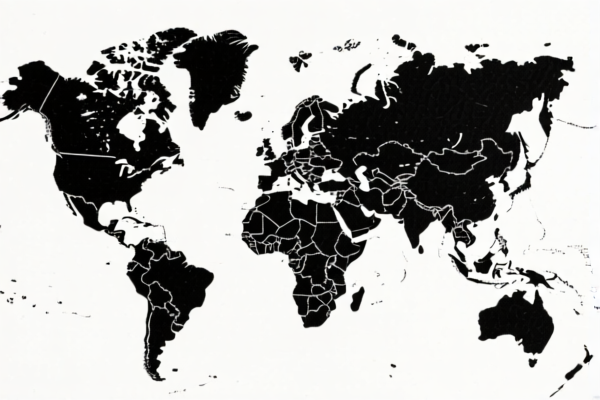
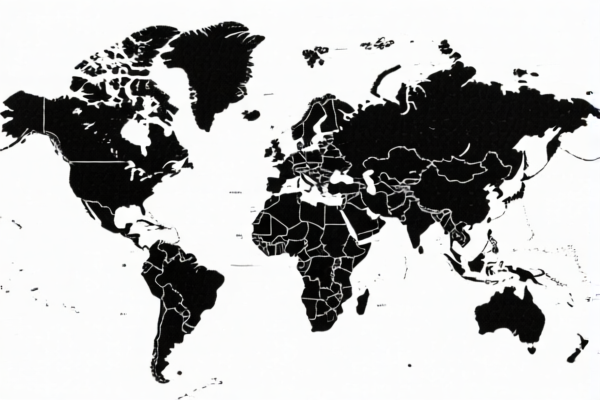
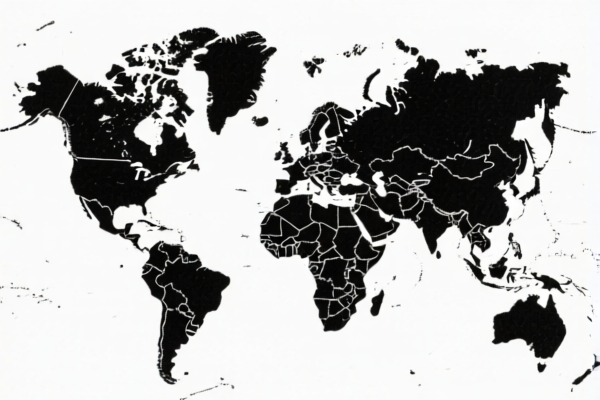
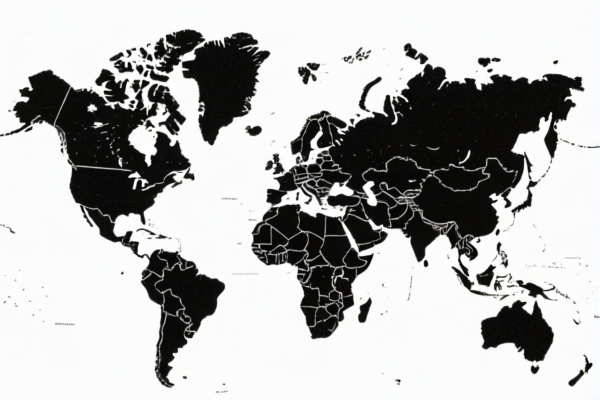
AI Analysis
🗺️ Maps and Plans (Printed)
🌐 HS Code Reference & Customs Clearance Guide | 2026 Latest Tariff Analysis | Professional-Level Entry Strategy
📌 1. Product Definition & Classification: Do You Really Understand "Maps"?
Maps, atlases, and topographical plans are fundamental tools for navigation, surveying, and geographic information. In international trade, they are strictly classified based on their physical form and format, not just their content.
Two Main Categories for Clearance: * In Book Form (Atlas/Book Maps): Maps bound together like a book or magazine, typically used for study, reference, or general navigation. * Other/Loose Leaf (Wall Maps/Globes/Charts): Single sheets, large fold-out maps, rolled charts, or globes used for display, professional surveying, or hydrographic purposes.
⚠️ Key Distinction Point: * If the maps are bound into a book-like structure (e.g., an Atlas) → Code 4905.20.00.00 * If the maps are loose, rolled, framed, or globes → Code 4905.90.60.00
📦 2. HS Code Classification Details (2026 Latest Tariff Authority)
| HS Code | Product Description | Applicable Scenario | Format |
|---|---|---|---|
4905.20.00.00 |
Maps and hydrographic or similar charts of all kinds, including atlases, wall maps, topographical plans and globes, printed: In book form | Atlases, printed map books, educational geography books | ✅ Bound/Book Form |
4905.90.60.00 |
Maps and hydrographic or similar charts of all kinds, including atlases, wall maps, topographical plans and globes, printed: Other: Other | Large wall maps, rolled nautical charts, loose topographical plans, globes | ❌ Loose/Rolled/Display Form |
🔍 Crucial Reminder: * Book Form (4905.20): If multiple map pages are stitched or glued together to form a single binding, it is considered "In Book Form." * Other (4905.90): Single sheets, even if printed on both sides, are generally classified here unless they are bound. This includes large-scale professional charts and globes.
💰 3. 2026 Latest Tariff Rate Details (Including Surcharge Policies)
✅ Applicable Country: United States (US)
✅ Origin: China (CN)
✅ Effective Date: 2025-11-10 onwards (for subsequent imports)
🎯 1. 4905.20.00.00 —— Maps and Plans (In Book Form)
| Item | Content |
|---|---|
| Base Tariff Rate | 0.0% (ad valorem) |
| Section 301 Additional Tariff | 0.0% |
| IEEPA Additional Tariff | 0.0% (Not applicable to this category under current footnote structures for general printed matter) |
| Total Tax Rate | 0.0% |
| Tax Calculation | CIF Value × 0% = $0 |
| De Minimis Eligibility | ✅ Yes (Standard low-value exemption may apply, subject to current $800 threshold rules) |
| Legal Basis Path | HTSUS:4905.20.00.00 → Section 301 Footnote: Not Listed |
📌 Explanation: * Maps and printed charts in book form are generally considered "printed matter" with low strategic sensitivity compared to high-tech goods. * Unlike electronics or steel, maps do not currently attract the heavy 25% or 10% surcharges under Section 301 or IEEPA lists for this specific subheading. * Total Landed Duty: 0%
🎯 2. 4905.90.60.00 —— Maps and Plans (Other: Other)
| Item | Content |
|---|---|
| Base Tariff Rate | 0.0% (ad valorem) |
| Section 301 Additional Tariff | 0.0% |
| IEEPA Additional Tariff | 0.0% |
| Total Tax Rate | 0.0% |
| Tax Calculation | CIF Value × 0% = $0 |
| De Minimis Eligibility | ✅ Yes |
| Legal Basis Path | HTSUS:4905.90.60.00 → Section 301 Footnote: Not Listed |
📌 Explanation: * Large wall maps, rolled nautical charts, and globes are also classified as 0% duty. * These items are not listed in the exclusive "China List 3" or "List 4B" that trigger the 25% tariff. * Total Landed Duty: 0%
🛠️ 4. Customs Clearance Practical Advice (Real-World Pitfall Avoidance)
✅ 1. Document Preparation Checklist (Essential)
| Document | Required | Explanation |
|---|---|---|
| ✅ Commercial Invoice | ✔️ | Must clearly state "Printed Maps" or "Atlases," specify format (Book vs. Loose). |
| ✅ Packing List | ✔️ | Detail if items are rolled (tube) or boxed (book). |
| ✅ Product Photos | ✔️ | Show binding type. Is it a stapled book? Bound volume? Or a single rolled sheet? |
| ✅ Content Description | ✔️ | Specify if they are "Topographical," "Hydrographic," or "Wall Maps." Avoid vague terms like "Paper Sheets." |
| ✅ Country of Origin | ✔️ | Must declare China (CN) if applicable. |
✅ 2. Declaration Tips (Key Mantra)
🔥 “Bound is Book, Loose is Other; Both are Zero, But Describe Clearly!”
| Situation | Correct Declaration | Incorrect Action |
|---|---|---|
| Atlas/Map Book | 4905.20.00.00 ("In Book Form") |
Declaring as "Paper" (4801) → 0% but risk of classification error audit. |
| Large Wall Map | 4905.90.60.00 ("Other") |
Declaring as "Book" → Misclassification penalty. |
| Rolled Nautical Chart | 4905.90.60.00 |
Declaring as "Printing" (4901) → May raise red flags for hydrographic restrictions. |
| Educational Map Book | 4905.20.00.00 |
No special education exemption needed, just correct HS. |
📌 Note: * Do not declare maps as "Printing Papers" (Chapter 48) if they are specifically classified as maps (Chapter 49). Chapter 49 is the lex specialis (specific law) for maps. * Ensure the description explicitly mentions "Printed" to differentiate from hand-drawn or engraved originals (which might have different duties or restrictions).
✅ 3. Special Cases Handling
| Scenario | Handling Advice |
|---|---|
| Hydrographic Charts (Nautical) | Ensure they are current and compliant with NOAA/USCG regulations if used for navigation. While duty is 0%, content restrictions may apply. |
| Topographical Plans for Surveying | No export restrictions for general commercial use, but military-grade detailed terrain maps may face dual-use checks. Keep descriptions professional and non-military. |
| Globes | Classified under 4905.90.60.00. Ensure they are not toys (which might fall under Chapter 95) but educational/geographic instruments. |
| Digital Maps on USB | Different HS Code! If maps are stored digitally, they are not "Printed Maps." They may fall under Chapter 85 or 84. This guide only applies to PHYSICAL PRINTED MAPS. |
🌍 5. Global Major Markets Comparison (2026 Latest)
| Country/Region | Recommended HS Code | Tariff (CN Origin) | Notes |
|---|---|---|---|
| 🇺🇸 USA | 4905.20.00.00 / 4905.90.60.00 |
0% | No Section 301 surcharge for these specific map codes. |
| 🇨🇳 China | 4905.20.00.00 / 4905.90.60.00 |
Varies (0-5%) | Import duties may apply depending on specific trade agreements, but generally low. |
| 🇪🇺 EU | 4905.10 / 4905.20 |
0% | Generally duty-free for printed maps under GSP or general rates. |
| 🇬🇧 UK | 4905.20 / 4905.90 |
0% | Post-Brexit tariffs often mirror EU or are lower for printed goods. |
| 🇯🇵 Japan | 4905.20 / 4905.90 |
0% | No tariffs for most printed maps. |
📌 Conclusion: * USA is the primary market of concern due to Section 301 tariffs, but Maps are largely exempt from the highest brackets. * 0% Duty is a significant advantage for paper-based geographic products. * Focus on accurate format description (Book vs. Other) to avoid customs queries.
📌 6. Common Errors & Pitfalls (Lessons Learned)
❌ Error 1: Declaring "Paper Maps" as "Printing Paper" (4901) 👉 Consequence: While duty might be similar, it triggers a customs audit because Chapter 49 is specific for maps. Risk of classification penalty.
❌ Error 2: Ignoring the "Bound" vs. "Loose" distinction 👉 Consequence: Customs may reclassify a book atlas as "Other" if not explicitly stated, leading to delays or incorrect reporting in statistics.
❌ Error 3: Not specifying "Printed" 👉 Consequence: If the origin is unclear, customs might suspect hand-drawn or engraved items, which could have different valuation methods.
❌ Error 4: Mixing Digital and Physical in One Declaration 👉 Consequence: If you ship USB drives with maps AND paper maps together, you must split the line items. Digital files do not get the "Printed Map" HS Code.
✅ Correct Practice:
"Printed Topographical Map Book, Hardcover, 100 Pages, Series XYZ, Origin: China"
OR
"Large Scale Hydrographic Chart, Rolled, Waterproof Paper, Origin: China"
🎯 7. Conclusion: Professional Declaration, Smooth Clearance!
🎯 Remember the Mantra:
🔹 "Bound = Book (4905.20), Loose = Other (4905.90)"
🔹 "Both are 0% Duty, But Accuracy is Key!"
📌 Tip: If your maps contain sensitive military coordinates or restricted survey data, consult with a compliance officer before shipping. While the duty is 0%, export controls or import restrictions on specific geographic data may apply.
📣 Immediate Action:
📞 Confirm with your freight forwarder: "Is the map bound or loose?"
🚀 Ensure your invoice clearly states "Printed Maps, Chapter 49" to avoid Chapter 48 errors.
✨ Professional Clearance Starts with Precise Classification!
💼 Even 0% Duty Requires 100% Accuracy!
Customer Reviews
About HS Code Classification
The Harmonized System (HS) is an internationally standardized nomenclature developed by the World Customs Organization (WCO) to classify traded products. Over 200 countries use the HS system as the basis for customs tariffs, trade statistics, and import/export regulations.
Each HS code follows a hierarchical structure:
- Chapter (2 digits) — Broad category of goods (e.g., Chapter 84: Machinery and Mechanical Appliances)
- Heading (4 digits) — More specific grouping within the chapter
- Subheading (6 digits) — Internationally standardized breakdown, used by all WCO member countries
- National subdivisions (8-10 digits) — Country-specific extensions for further classification, such as US HTSUS 10-digit codes
Correct HS code classification is essential for smooth customs clearance, accurate duty payment, and compliance with trade regulations. Misclassification can lead to customs delays, overpayment of duties, or penalties.
When importing from CN to US, the applicable tariff rates may include:
- Most-Favored-Nation (MFN) rate — The standard duty rate applied to WTO members
- General rate — Applied to countries without trade agreements
- Trade remedy duties — Additional tariffs such as Section 301 (anti-dumping), Section 232 (national security), or countervailing duties
The information provided on this page is for reference purposes only. For official classification, please consult with your local customs authority or a licensed customs broker.