Massage Belt
CN → US| HS Code | Tariff Rate | Origin | Destination | Doc |
|---|---|---|---|---|
| 8509805095 | 14.2% | CN | US | Official Doc |
| 8509805080 | 14.2% | CN | US | Official Doc |
| 9019102020 | 10.0% | CN | US | Official Doc |
| 9019102050 | 10.0% | CN | US | Official Doc |
Product Images
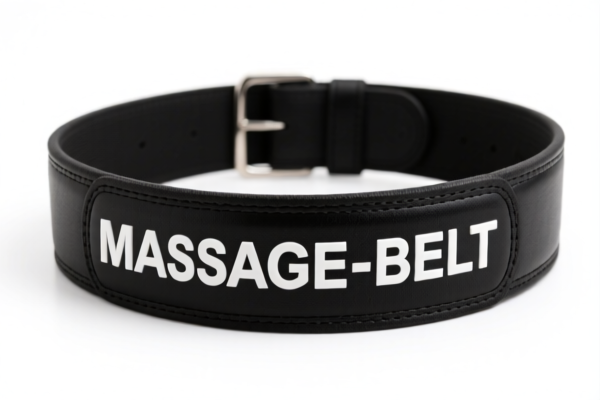


AI Analysis
🧘♀️ Massage Belt: Ultimate HS Code Guide & Customs Strategy (2026)
🌐 HS Code Reference & Customs Guide | 2026 Tariff Breakdown | Professional Clearance Strategy
📌 I. Product Definition & Classification: Do You Really Know the "Massage Belt"?
A Massage Belt is a versatile wellness device designed to relieve muscle tension, improve circulation, and promote relaxation around the waist and abdomen. In international trade, its classification hinges on one critical factor: Power Source.
The product falls into two distinct categories: * Powered Massage Belts (Self-Contained Motor): Devices with built-in electric motors (battery or plug-in) for vibration, kneading, or heat. * Non-Powered Massage Belts: Devices relying on manual manipulation, mechanical springs, or simple elastic tension without an internal motor.
⚠️ Key Distinction:
- If it has a self-contained electric motor → It is an Electric Home Appliance (Chapter 85).
- If it is non-electric/manual → It is a Massage Instrument/Device (Chapter 90).
📦 II. HS Code Classification Details (2026 Latest Tariff Schedule)
| HS Code | Product Description | Applicable Scenario | Power Source |
|---|---|---|---|
8509.80.50.95 |
Other appliances with a self-contained electric motor | Electric massage belts with internal motors; "Other" category appliance logic. | ✅ Electric (Motor) |
8509.80.50.80 |
Other household appliances with a self-contained motor | Electric massage belts classified under "Home Appliances" functional compatibility. | ✅ Electric (Motor) |
9019.10.20.20 |
Massage appliances (Device) | Electric or battery-operated massage equipment; matches "Device" form. | ✅ Electric/Battery |
9019.10.20.50 |
Massage appliances (Non-electric) | Manual or mechanical massage devices; inferred as non-electric based on "Non-電動" logic. | ❌ Non-Electric |
🔍 Critical Reminder:
- Electric Belts must be classified under 8509 (Home Appliances with Motor) or 9019 (Massage Instruments). The choice depends on specific motor integration and function.
- Non-Electric Belts strictly fall under 9019.10.20.50.
- Do not mix: A battery-operated belt cannot be declared as a non-electric device to avoid taxes; misclassification leads to severe penalties.
💰 III. 2026 Tariff Rate Breakdown (Detailed Tax Clauses)
✅ Scope: China Export to US Market (Subject to 122 Clause / Section 301 Tariffs)
✅ Effective Date: Current 2026 Regulations
✅ Tax Structure: Base Duty + Additional Tariffs (122 Clause)
🎯 1. 8509.80.50.95 & 8509.80.50.80 — Electric Massage Belts
(Category: Self-Contained Motor Home Appliances)
| Tax Component | Rate | Legal Basis & Explanation |
|---|---|---|
| Base Duty | 4.2% | Standard Most-Favored-Nation (MFN) rate for electric home appliances. |
| Add-on Tariff (Section 301) | 0.0% | No additional "Section 301" surcharge for this specific sub-category. |
| 122-Clause Tariff | 10.0% | CRITICAL: Additional 10% tax applied under "122 Clause" (specific policy for Chinese goods in this category). |
| Total Tax Rate | 14.2% | 4.2% + 0.0% + 10.0% |
| Calculation | CIF Value × 14.2% | Tax is calculated on the Cost, Insurance, and Freight value. |
| De Minimis Exemption? | ❌ No | High-value goods >$800 usually require full duty; low-value shipments still subject to 122 Clause. |
📌 Tax Logic:
- These codes treat the massage belt as a "Home Appliance with Motor".
- Despite being a "wellness" tool, the presence of a motor pushes it into Chapter 85.
- 14.2% Total is the unavoidable cost unless a specific exemption (e.g., manufacturing in non-China countries) applies.
🎯 2. 9019.10.20.20 & 9019.10.20.50 — Massage Instruments
(Category: Massage Devices)
| Tax Component | Rate | Legal Basis & Explanation |
|---|---|---|
| Base Duty | 0.0% | Standard MFN rate for general medical/fitness instruments is often duty-free. |
| Add-on Tariff (Section 301) | 0.0% | No additional "Section 301" surcharge. |
| 122-Clause Tariff | 10.0% | CRITICAL: The 10% "122 Clause" tariff still applies to massage instruments of Chinese origin. |
| Total Tax Rate | 10.0% | 0.0% + 0.0% + 10.0% |
| Calculation | CIF Value × 10.0% | Tax is calculated on the CIF value. |
| De Minimis Exemption? | ❌ No | Subject to full inspection and tariff. |
📌 Tax Logic:
- These codes classify the product as a "Massage Instrument" (Chapter 90).
- Advantage: Lower Base Duty (0%) compared to appliances (4.2%).
- Result: 10% Total Tax is lower than the 14.2% for electric appliances, BUT you must prove it is a "Massage Instrument" and not just a generic "Appliance".
- Distinction:9019.10.20.20(Electric/Battery inferred) vs.9019.10.20.50(Non-electric inferred). Both incur the same 10% final tax.
🛠️ IV. Customs Clearance Practical Advice (Avoiding Pitfalls)
✅ 1. Documentation Checklist (Mandatory)
| Document | Requirement | Why It Matters |
|---|---|---|
| ✅ Product Spec Sheet | ✔️ Must state: Motor Type, Voltage, Power (Watts), Battery Capacity | Crucial for distinguishing 8509 (Appliance) vs. 9019 (Instrument). |
| ✅ Internal Diagram | ✔️ Show motor placement and circuit board | Proves "Self-Contained Motor" status for 8509 classification. |
| ✅ Functional Description | ✔️ Explicitly state: "Massage Instrument for Muscle Relief" | Supports 9019 classification if applicable. |
| ✅ User Manual | ✔️ Must include "Safety Warnings" and "Operational Steps" | Validates it as a controlled medical/wellness device. |
| ✅ Commercial Invoice | ✔️ Must match HS Code exactly (e.g., "Electric Massage Belt") | Prevents "Mismatch" flags from CBP. |
| ✅ Origin Certificate | ✔️ Clear "Made in China" statement | Triggers the 122-Clause 10% Tariff. |
✅ 2. Declaration Strategy (The "Secret Formula")
🔥 "Power Source Defines Code, 122 Clause Defines Cost!"
| Scenario | Recommended HS Code | Tax Rate | Risk Level |
|---|---|---|---|
| Electric Belt (Motor) | 8509.80.50.95 / 8509.80.50.80 |
14.2% | 🟡 Medium (Higher Base Duty) |
| Battery Belt (Inferred) | 9019.10.20.20 |
10.0% | 🟢 Low (Lower Base Duty) |
| Manual Belt (No Motor) | 9019.10.20.50 |
10.0% | 🟢 Low (Non-electric logic) |
| Misclassification (Non-electric declared as Electric) | 8509 |
14.2% | 🔴 High (Overpaying or Audit) |
💡 Pro Tip:
If the product is battery-operated, declaring it under9019.10.20.20(Massage Instrument) is often more tax-efficient (10% vs 14.2%) if it fits the "Instrument" definition. However, if it is purely an "Appliance" with no specific medical/therapeutic claim, customs may force8509.
✅ 3. Special Cases & Risk Management
| Situation | Action Plan |
|---|---|
| OEM Custom Belts | Provide design drawings to prove "Massage Instrument" function, not just "Appliance". |
| Hybrid Devices (Heat + Motor) | Clearly separate "Heating Element" from "Motor" in specs; motor determines 8509. |
| High-Value Shipments | Pre-Arrival Ruling: Apply to CBP for a binding HS Code determination before shipping. |
| 122-Clause Avoidance | Strategy: Manufacture or assemble in Vietnam, Mexico, or Thailand (if eligible) to bypass the 10% "122-Clause" tariff. |
🌍 V. Global Market Comparison (2026 Tariff Snapshot)
| Market | Recommended HS Code | Total Tax (China Origin) | Key Constraint |
|---|---|---|---|
| 🇺🇸 USA | 8509.80.50.95 (Electric) |
14.2% | 122-Clause 10% is strict. |
| 🇺🇸 USA | 9019.10.20.20 (Instrument) |
10.0% | Must prove "Instrument" status. |
| 🇪🇺 EU | 8509.80.50.95 / 9019 |
~6-8% | No 122-Clause; standard EU duties apply. |
| 🇨🇳 China (Import) | 8509 / 9019 |
~4.2% | Domestic tax applies; no Section 301. |
📌 Conclusion:
- USA is the only market with the 122-Clause (10%) burden.
- European Union offers significantly lower rates (no 122-Clause).
- China benefits from low base duties but faces import restrictions.
📌 VI. Common Mistakes & Avoidance Guide (Lessons Learned)
❌ Mistake 1: Declaring an Electric Belt as a "Non-electric Massage Device" (9019.10.20.50) to save tax.
👉 Consequence: Customs Audit + Seizure. Motor detection will reveal the error.
❌ Mistake 2: Ignoring the 122-Clause 10% in cost calculations.
👉 Consequence: Profit Margin Erosion. 14.2% vs 10% is a 40% tax increase on the base duty!
❌ Mistake 3: Failing to specify "Battery vs. AC Power" in the spec sheet.
👉 Consequence: Customs cannot verify "Self-Contained Motor" logic → Delay in clearance.
❌ Mistake 4: Using generic names like "Waist Belt" without "Massage" or "Motor" keywords.
👉 Consequence: Classification by default (often higher duty) or "Information Request" delays.
✅ Correct Declaration:
"Massage Belt, Electric, Battery Powered, with Vibration Motor, Model XYZ, 12V, for Muscle Relief (HS Code: 9019.10.20.20)"
🎯 VII. Conclusion: Precision is Profit
🎯 Remember the Golden Rule:
🔹 "Motor = Appliance (14.2%); Instrument = Device (10%); 122-Clause = 10%."
🔹 "HS Code defines your tax; 122 Clause defines your profit."
📌 Smart Tip:
If your product is battery-operated, consider declaring under 9019.10.20.20 (Massage Instrument) to achieve the 10% rate, provided the device's primary function is clearly "Massage" rather than "General Appliance". Always prepare a Technical Data Sheet to support this classification.
📣 Immediate Action:
📞 Consult a Customs Broker + Verify Motor Specs + Check 122-Clause Eligibility
🚀 Optimize your HS Code, save 4.2% today, and secure your supply chain!
✨ Professional Clearance Starts with Precise Classification!
💼 Every dollar saved on tax is a dollar earned in profit!
Customer Reviews
About HS Code Classification
The Harmonized System (HS) is an internationally standardized nomenclature developed by the World Customs Organization (WCO) to classify traded products. Over 200 countries use the HS system as the basis for customs tariffs, trade statistics, and import/export regulations.
Each HS code follows a hierarchical structure:
- Chapter (2 digits) — Broad category of goods (e.g., Chapter 84: Machinery and Mechanical Appliances)
- Heading (4 digits) — More specific grouping within the chapter
- Subheading (6 digits) — Internationally standardized breakdown, used by all WCO member countries
- National subdivisions (8-10 digits) — Country-specific extensions for further classification, such as US HTSUS 10-digit codes
Correct HS code classification is essential for smooth customs clearance, accurate duty payment, and compliance with trade regulations. Misclassification can lead to customs delays, overpayment of duties, or penalties.
When importing from CN to US, the applicable tariff rates may include:
- Most-Favored-Nation (MFN) rate — The standard duty rate applied to WTO members
- General rate — Applied to countries without trade agreements
- Trade remedy duties — Additional tariffs such as Section 301 (anti-dumping), Section 232 (national security), or countervailing duties
The information provided on this page is for reference purposes only. For official classification, please consult with your local customs authority or a licensed customs broker.