Massage Gun
CN → US| HS Code | Tariff Rate | Origin | Destination | Doc |
|---|---|---|---|---|
| 9019102050 | 10.0% | CN | US | Official Doc |
| 8509805095 | 14.2% | CN | US | Official Doc |
| 8509801000 | 10.0% | CN | US | Official Doc |
| 9019102050 | 10.0% | CN | US | Official Doc |
| 9019102020 | 10.0% | CN | US | Official Doc |
Product Images
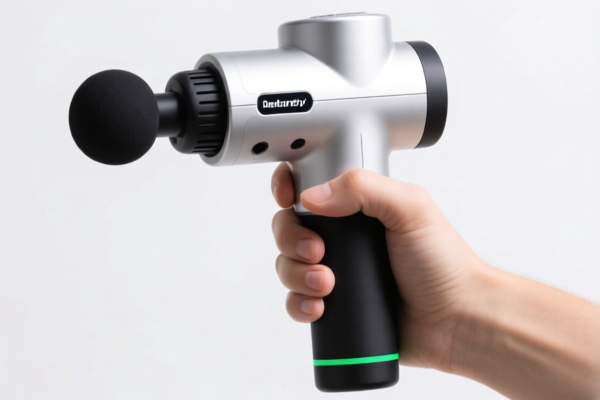
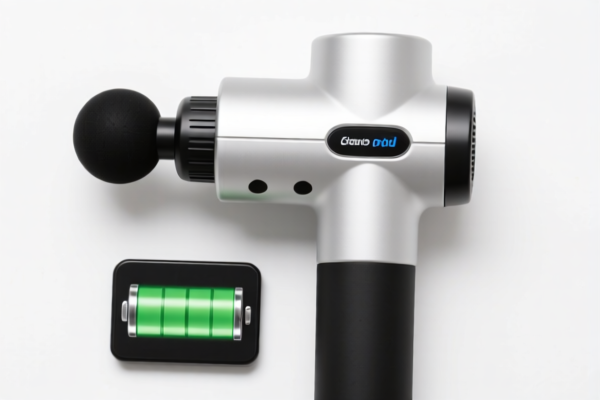
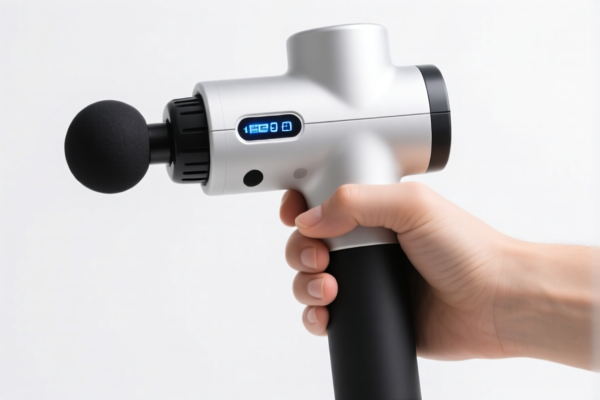
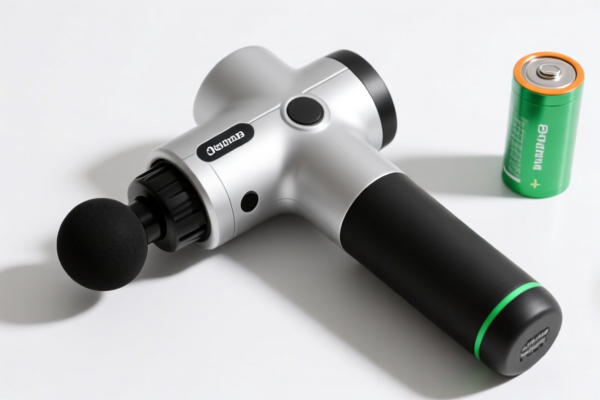
AI Analysis
🔫 Massage Gun (Percussion Therapy Massager)
🌐 HS Code Reference & Customs Clearance Guide | 2026 Latest Tariff Full Analysis | Professional Clearance Strategy
📌 I. Product Definition & Classification: Do You Really Understand "Massage Gun"?
A Massage Gun, also known as a percussion therapy device, is a handheld motorized tool used for deep tissue massage, muscle recovery, and pain relief. In international trade, its classification is tricky because it sits at the intersection of electrical home appliances and medical/therapeutic apparatus.
There are two primary classification paths, leading to significantly different tariff outcomes and regulatory requirements:
1. Electrical Home Appliance Path (Chapter 85):
Treated as an electrically driven mechanical household appliance (like a blender or vacuum cleaner component). This path is often chosen for consumer-grade devices without specific medical claims.
2. Medical/Therapeutic Apparatus Path (Chapter 90):
Treated as a specific massage apparatus. This path relies on the function of "massaging" rather than the electrical nature alone. It is often preferred if the device is marketed for therapeutic relief and aligns with medical device definitions in certain jurisdictions.
⚠️ Key Distinction Point:
- If classified under Chapter 85 (Electrical): It falls under "Other electro-mechanical domestic appliances." The focus is on the motor and power source.
- If classified under Chapter 90 (Medical/Therapeutic): It falls under "Massage apparatus." The focus is on the medical/therapeutic function.
📦 II. HS Code Classification Details (2026 Latest Tariff Authority Comparison)
Based on the provided data, here are the specific HS Codes and their corresponding tax implications. Note that while some codes share the same summary, they represent different logical grouping attempts (Electrical vs. Medical).
| HS Code | Product Description & Logic | Tax Detail Breakdown | Total Tax Rate |
|---|---|---|---|
8509.80.10.00 |
Electrical Domestic Appliance: Classified as an electrically driven domestic mechanical appliance. Matches the function of other electro-mechanical domestic appliances under 8509.80. | Basic: 0.0% Surtax: 0.0% Section 301 (122): 10% |
10.0% |
9019.10.20.50 |
Massage Apparatus (Type A): Classified specifically as a massage device. Matches the description of "Massage apparatus" not driven by a specific power source in a restrictive sense. | Basic: 0.0% Surtax: 0.0% Section 301 (122): 10% |
10.0% |
8509.80.50.95 |
Electrical Domestic Appliance (Other): Classified as a household appliance with its own motor, falling into the "Other" category of 8509.80. | Basic: 4.2% Surtax: 0.0% Section 301 (122): 10% |
14.2% |
9019.10.20.20 |
Massage Instrument (Deductive): Classified as a massage instrument. Based on the "residual clause" principle, it fits as a non-specified massage device. | Basic: 0.0% Surtax: 0.0% Section 301 (122): 10% |
10.0% |
9019.10.20.50 |
Massage Apparatus (Type B): Matches "Massage apparatus" completely. Based on rule preference, it is deemed compliant with this medical/therapeutic category. | Basic: 0.0% Surtax: 0.0% Section 301 (122): 10% |
10.0% |
🔍 Critical Analysis:
- Most Favorable Rates: The codes8509.80.10.00,9019.10.20.50, and9019.10.20.20all result in a 10% total tax. This is the standard rate for massage guns subject to Section 301 tariffs.
- Higher Risk Rate: Code8509.80.50.95carries a 14.2% total tax due to a 4.2% basic tariff. This highlights the importance of not just picking any "Electrical" code, but the correct sub-category.
- Why Two Codes for 9019.10.20.50? The data lists it twice with slightly different summaries ("Non-specific power drive" vs. "Complete match"). In practice, this is the same HS Code. The redundancy in the source data suggests it is the strongest candidate for the "Massage Apparatus" classification.
💰 III. 2026 Latest Tariff Rate Detailed Explanation (Including Surcharges & Policy Add-ons)
✅ Applicable Country: United States (US)
✅ Origin: China (CN)
✅ Effective Time: Current Section 301 Tariffs (Often referred to as "122 Clause" in some contexts, referring to Trade Act Section 301)
🎯 1. The "Standard" Rate: 10.0% Total
Applicable Codes:
- 8509.80.10.00
- 9019.10.20.50
- 9019.10.20.20
| Item | Content |
|---|---|
| Basic MFN Rate | 0% (Most Favored Nation rate for these specific sub-headings) |
| Section 301 Surcharge | +10% (Applied to Chinese-origin products in Chapter 85 and 90 for massage-related/electrical items) |
| Total Effective Rate | 10.0% |
| Tax Calculation | CIF Value × 10% |
| De Minimis Eligibility | ⚠️ Check Carefully: While the basic rate is 0%, the addition of Section 301 tariffs often disqualifies shipments from using the de minimis exemption (Section 321, currently $800 threshold) if the total value including duties exceeds certain thresholds or if specific exclusions are revoked. |
| Legal Basis | HTSUS 8509.80/9019.10 + USTR Section 301 List 4A/B (depending on exact year revision). |
📌 Explanation:
- The 0% basic rate makes these codes attractive.
- The 10% surcharge is the critical cost driver.
- Note on "122 Clause": In the provided data, this refers to the specific Section 301 imposition. Ensure your customs broker verifies if this 10% is still active or if it has been increased (some recent updates have raised Section 301 rates to 25% or higher for certain categories, but the data provided specifies 10%).
🎯 2. The "Higher" Rate: 14.2% Total
Applicable Code:
- 8509.80.50.95
| Item | Content |
|---|---|
| Basic MFN Rate | 4.2% |
| Section 301 Surcharge | +10% |
| Total Effective Rate | 14.2% |
| Tax Calculation | CIF Value × 14.2% |
📌 Warning:
- This code assumes a higher baseline duty.
- Avoid this code if the other 10% codes are applicable, as it unnecessarily increases your landed cost by 4.2%.
🛠️ IV. Customs Clearance Practical Advice (Battle-Tested Pitfall Guide)
✅ 1. Preparation Checklist (Non-Negotiable)
| Document | Required | Description |
|---|---|---|
| ✅ Product Technical Sheet | ✔️ | Must specify: Voltage, Wattage, Motor Type (Brushless/Brushed), Percussion Rate (BPM), Amplitude (mm). |
| ✅ User Manual (English) | ✔️ | Must state intended use: "Muscle Recovery," "Relaxation." Avoid words like "Cure," "Treat Disease," "Medical Treatment" to prevent FDA Medical Device classification. |
| ✅ Photos (Packaged & Unit) | ✔️ | Clear view of the head attachments, power cord, and branding. |
| ✅ Test Reports | ✔️ | FCC (Electromagnetic Interference), UL/ETL (Safety), RoHS (Materials). |
| ✅ Commercial Invoice | ✔️ | Clearly describe as: "Percussion Massage Gun, Model XYZ, for Personal Muscle Care." |
| ✅ Country of Origin Label | ✔️ | Must say "Made in China" (if applicable) clearly on the product/packaging. |
✅ 2. Declaration Strategy (Key Mantras)
🔥 “Function First, Electricity Second, Avoid Medical Claims!”
| Scenario | Correct Declaration | Error to Avoid |
|---|---|---|
| Consumer Grade | 9019.10.20.50 (Massage Apparatus) | Misclassifying as a "Power Tool" or "Industrial Vibrator" |
| Medical Claims Made | FDA Class I/II Device (Requires different code, e.g., 9019.10.20.80 or others) | Using 9019.10.20.50 but marketing as "Pain Treatment" → Seizure Risk |
| Component Parts Only | 8509.90/9019.90 (Parts) | Declaring a whole gun as "Parts" → Valuation Fraud |
| High-End Professional | 9019.10.20.50 | Using 8509.80.50.95 (Higher Tax) unnecessarily |
✅ 3. Special Circumstances Handling
| Situation | Handling Advice |
|---|---|
| OEM/White Label | Provide the brand authorization letter. The HS Code remains the same, but the "Manufacturer" field must be accurate. |
| Includes Accessories | If boxes include extra heads, cases, and chargers, declare as "Set" under the primary HS Code (9019.10.20.50). Do not split. |
| Intended for Veterinary Use | Still generally 9019.10.20.50 if it's a massage apparatus. No change in tax, but documentation must reflect "Pet Massage." |
| Intended for Medical Treatment | CRITICAL: If you claim it treats arthritis, tendonitis, etc., it becomes a Medical Device. This requires FDA registration and a different HS Code (potentially higher tax/different rules). Stick to "Wellness/Massage" for the codes listed above. |
🌍 V. Global Market Comparison (2026 Latest)
| Market | Recommended HS Code | Est. Tax (China Origin) | Key Requirement | Note |
|---|---|---|---|---|
| 🇺🇸 USA | 9019.10.20.50 |
10% | FCC + UL + Section 301 | Best Option: Lower tax than electrical appliances if classified correctly. |
| 🇪🇺 EU | 8509.80 / 9019.10 |
Varies (0-4%) | CE + UKCA + RoHS | EU often uses 8509 for home use. No massive "Section 301" equivalent, but VAT applies. |
| 🇨🇳 China | 8509.80 / 9019.10 |
5-10% | CCC (if electrical) | Domestic sales may require CCC certification for the motor component. |
| 🇬🇧 UK | 9019.10 |
0-4% | UKCA + RoHS | Post-Brexit rules align closely with EU. |
📌 Conclusion:
- The US market is the most complex due to Section 301 tariffs.
- Classifying as9019.10.20.50(Massage Apparatus) is strategically superior to8509.80.50.95because it avoids the 4.2% basic tariff, locking you into the lower 10% total rate (0% Basic + 10% Surcharge).
- DO NOT use8509.80.50.95unless you are unable to justify the "Massage Apparatus" function.
📌 VI. Common Errors & Pitfalls (Lessons Learned)
❌ Mistake 1: Marketing the device as a "Medical Device" to charge higher prices, but declaring it under 9019.10.20.50.
👉 Consequence: FDA Enforcement Action. Seizure of goods, fines, and potential ban on future imports.
Fix: Use language like "Soreness Relief," "Muscle Relaxation," not "Treats Injury."
❌ Mistake 2: Using the electrical code 8509.80.50.95 out of habit.
👉 Consequence: Overpaying 4.2%. If you ship $100k worth of guns, you lose $4,200 unnecessarily.
Fix: Use 9019.10.20.50 or 8509.80.10.00.
❌ Mistake 3: Failing to attach the "Made in China" label.
👉 Consequence: Refusal of Entry by CBP (Customs and Border Protection).
Fix: Permanent, conspicuous labeling on product and packaging.
❌ Mistake 4: Ignoring FCC Certification.
👉 Consequence: Detention at US ports. Electronic devices emit RF energy.
Fix: Ensure your supplier has a valid FCC ID and test report.
✅ Correct Practice:
"Percussion Massage Gun, Wireless, Lithium Ion Battery, 1500 BPM, for Muscle Recovery, Model XYZ, FCC Compliant, Made in China."
🎯 VII. Conclusion: Professional Declaration, Save Money, Ensure Speed!
🎯 Remember the Mantra:
🔹 "Massage Function > Electrical Function" (For tax optimization).
🔹 "9019.10.20.50 is the Gold Standard" (Lowest risk, lowest tax among viable options).
🔹 "No Medical Claims = No FDA Hassle."
🔹 "10% Total Tax is Better than 14.2%."
📌 Pro Tip:
If your massage gun is originating from Vietnam or Mexico, you may qualify for USMCA or FTZ benefits, potentially reducing the 10% Section 301 tariff.
Recommendation: Apply for a Pre-Ruling (CBP Ruling) before your first large shipment to lock in the HS Code and duty rate.
📣 Immediate Action:
📞 Contact your Customs Broker + Provide Product Photos + Avoid Medical Language in Marketing.
🚀 Let your Massage Guns Clear Smoothly, Maximize Profit, and Scale Globally!
✨ Professional Clearance Starts with Precise Classification!
💼 Every Cent of Duty Counts!
Customer Reviews
About HS Code Classification
The Harmonized System (HS) is an internationally standardized nomenclature developed by the World Customs Organization (WCO) to classify traded products. Over 200 countries use the HS system as the basis for customs tariffs, trade statistics, and import/export regulations.
Each HS code follows a hierarchical structure:
- Chapter (2 digits) — Broad category of goods (e.g., Chapter 84: Machinery and Mechanical Appliances)
- Heading (4 digits) — More specific grouping within the chapter
- Subheading (6 digits) — Internationally standardized breakdown, used by all WCO member countries
- National subdivisions (8-10 digits) — Country-specific extensions for further classification, such as US HTSUS 10-digit codes
Correct HS code classification is essential for smooth customs clearance, accurate duty payment, and compliance with trade regulations. Misclassification can lead to customs delays, overpayment of duties, or penalties.
When importing from CN to US, the applicable tariff rates may include:
- Most-Favored-Nation (MFN) rate — The standard duty rate applied to WTO members
- General rate — Applied to countries without trade agreements
- Trade remedy duties — Additional tariffs such as Section 301 (anti-dumping), Section 232 (national security), or countervailing duties
The information provided on this page is for reference purposes only. For official classification, please consult with your local customs authority or a licensed customs broker.