Mattress
CN → US| HS Code | Tariff Rate | Origin | Destination | Doc |
|---|---|---|---|---|
| 3926907500 | 14.2% | CN | US | Official Doc |
| 9404299095 | 41.0% | CN | US | Official Doc |
| 9404210095 | 38.0% | CN | US | Official Doc |
| 3926907700 | 12.4% | CN | US | Official Doc |
| 6307908995 | 17.0% | CN | US | Official Doc |
Product Images
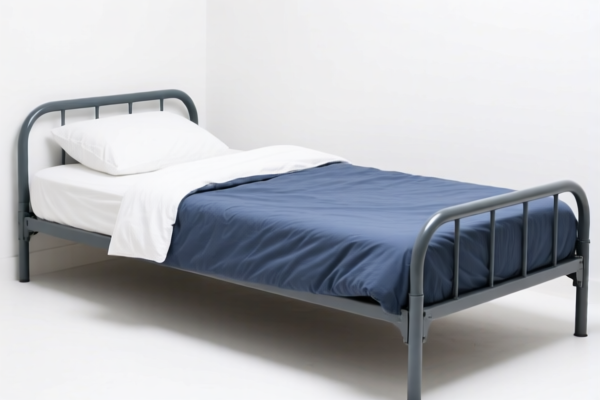
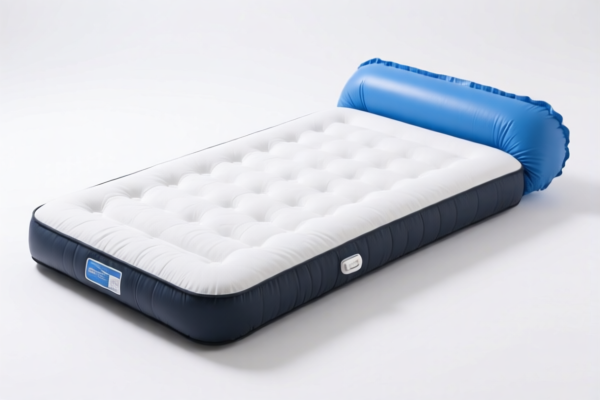
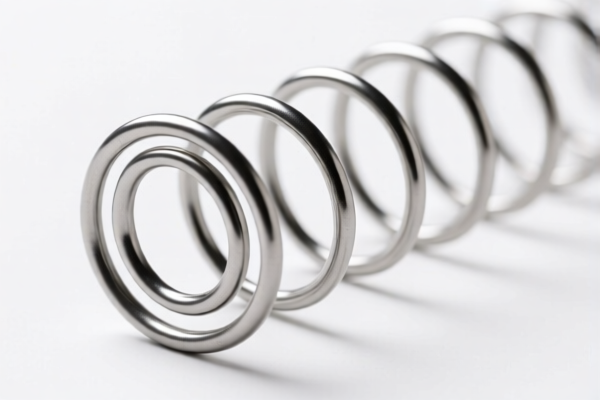
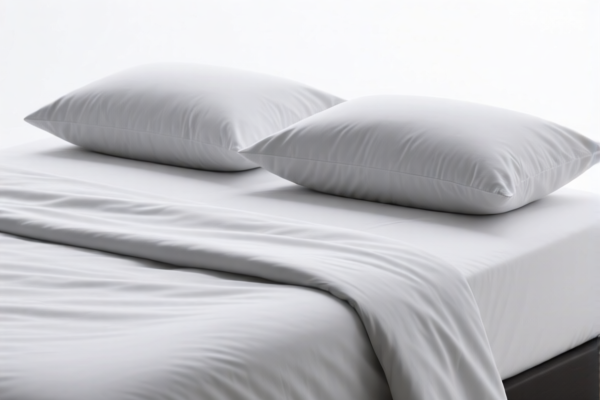
AI Analysis
Here is the comprehensive 2026-2027 HS Code Classification & Clearance Guide for Mattresses, based strictly on the provided data.
🛏️ Mattresses: The Ultimate Classification & Duty Strategy Guide (2026 Edition)
🌐 HS Code Masterclass | US Duty Analysis | Professional Clearance Protocols
📌 Product Focus: Mattresses (Bedding Systems)
A mattress is a fundamental component of sleeping systems, used in residential, commercial, and medical settings. In international trade, the classification hinges entirely on material composition and construction type, as a slight misinterpretation can lead to a tax spike from 12.4% to 41.0%.
⚠️ Critical Insight:
- Inflatable or Plastic-based mattresses fall under Chapter 39 (Plastics). - Foam, Spring, or Textile-based mattresses fall under Chapter 94 (Furniture) or Chapter 63 (Textiles). - The "Duty Trap": The difference between a $4.2\%$ base tariff and a $25\%$ Section 301 surcharge depends on the specific HS Code.
📦 1. HS Code Classification Matrix (2026 Data Breakdown)
Based on the product name "Mattress", the classification branches into three primary scenarios depending on material inference:
| HS Code | Product Logic & Material Inference | Tax Rate (Total) | Key Characteristics |
|---|---|---|---|
| 3926.90.75.00 | Inflatable/Plastic Mattress Assumed to be an air mattress or plastic-lined structure. Fits "airbeds & inflatables." |
14.2% | ✅ Lowest Duty 🔹 Base: 4.2% 🔹 No Sec 301 Surcharges |
| 3926.90.77.00 | Plastic Composite Mattress Contains plastic/synthetic pads but is not strictly an "airbed." |
12.4% | ✅ Cheapest Option 🔹 Base: 2.4% 🔹 No Sec 301 Surcharges |
| 6307.90.89.95 | Textile/Sewing Mattress (Fits) Classified under "Other made up textile articles" (e.g., quilted pads). |
17.0% | ⚠️ Medium Duty 🔹 Base: 7.0% 🔹 No Sec 301 Surcharges |
| 9404.21.00.95 | Foam/Plastic Core Mattress Most common "Foam Mattress" classification. High tariff due to Sec 301. |
38.0% | 🔴 High Duty 🔹 Base: 3.0% 🔹 +25% Sec 301 Surcharge |
| 9404.29.90.95 | "Other" Mattress (Duct Tape) Used when material is undefined or mixed. The "Catch-all" for Furniture. |
41.0% | 🔴 Highest Duty 🔹 Base: 6.0% 🔹 +25% Sec 301 Surcharge |
🔍 Logic Note:
- Codes 3926 & 6307 are NOT subject to the 25% Section 301 tariff.
- Codes 9404 (Furniture) are subject to the 25% Section 301 tariff (Total 38-41%).
- Strategy: If your product can be legitimately argued as "Plastic/Inflatable" (3926) or "Textile" (6307), save 25% in duties.
💰 2. Detailed Tariff Structure Breakdown (US Market)
All rates below assume China Origin (CN) importing to the USA. The total tax includes Base Tariff + Section 301 (25%) + Section 122 (10%).
🎯 A. The "Plastic Advantage" (Codes 3926.90.75.00 & 3926.90.77.00)
Best for: Inflatable beds, plastic-fabricated pads, synthetic foam without furniture classification.
| Component | Rate | Source / Legal Path | Explanation |
|---|---|---|---|
| Base Tariff | 2.4% - 4.2% | Standard MFN Rate | Low duty for plastic/textile goods. |
| Sec 301 Surcharge | 0.0% | N/A | No additional 25% tariff applied. |
| Section 122 Tariff | +10% | IEEPA (China Specific) | Mandatory "Reciprocal" tax on Chinese goods. |
| 🔥 TOTAL RATE | 12.4% / 14.2% | Significant Savings vs. Furniture Codes. |
🎯 B. The "Furniture Trap" (Codes 9404.21.00.95 & 9404.29.90.95)
Best for: Traditional memory foam, spring, or fiber mattresses classified strictly as furniture.
| Component | Rate | Source / Legal Path | Explanation |
|---|---|---|---|
| Base Tariff | 3.0% - 6.0% | Standard MFN Rate | Furniture base rates. |
| Sec 301 Surcharge | +25.0% | Section 301 (301) | Heavy surcharge for "Furniture" category. |
| Section 122 Tariff | +10.0% | IEEPA (China Specific) | Mandatory "Reciprocal" tax. |
| 🔥 TOTAL RATE | 38.0% / 41.0% | Avoid if possible; check material definition. |
🎯 C. The "Textile Loophole" (Code 6307.90.89.95)
Best for: Mattress toppers, quilted pads, or textile-based inserts.
| Component | Rate | Source / Legal Path | Explanation |
|---|---|---|---|
| Base Tariff | 7.0% | Standard MFN Rate | Textile goods rate. |
| Sec 301 Surcharge | 0.0% | N/A | Textiles generally escape Sec 301 on furniture. |
| Section 122 Tariff | +10.0% | IEEPA (China Specific) | Mandatory "Reciprocal" tax. |
| 🔥 TOTAL RATE | 17.0% | Middle ground; depends on "made up textile" definition. |
🛠️ 3. Professional Clearance & Documentation Guide
To ensure the lowest tax rate (12.4% - 17.0%) and avoid customs audits, follow this Clearance Protocol:
✅ 1. Essential Documentation Checklist
| Document | Requirement | Purpose |
|---|---|---|
| Product Specification Sheet | Mandatory | Must explicitly state material composition (e.g., "PVC Airbed," "Polyester Top," "Foam Core"). |
| Material Safety Data Sheet (MSDS) | Highly Recommended | Proves chemical content to support "Plastic" or "Textile" claim over "Furniture." |
| Commercial Invoice | Detailed | Must NOT use generic "Furniture" description if the item is inflatable or textile-heavy. Use "Air Mattress" or "Textile Pad." |
| Product Photos (Real-time) | Crucial | Show seams, valves (if inflatable), and fabric texture to justify HS 3926 or 6307. |
| Bill of Materials (BOM) | Optional | Helps customs verify if the "plastic component" is the primary structural element. |
✅ 2. Strategic Declaration Tips (The "Save 25%" Rule)
🔥 DO NOT declare all mattresses as "Mattress" (HS 9404).
Instead, use Product-Specific Names: - ❌ Bad: "Memory Foam Mattress" → Likely triggers 9404.21 → 38% Tax. - ✅ Good: "PVC Inflatable Mattress" → Triggers 3926.90.75 → 14.2% Tax. - ✅ Good: "Quilted Polyester Mattress Pad" → Triggers 6307.90.89 → 17.0% Tax.
✅ 3. Avoiding Customs Audits
| Risk Scenario | Correct Action |
|---|---|
| Ambiguous Material | Provide a Lab Test Report proving the primary material is plastic or textile, not "Mixed/Unknown." |
| Inflatable Claim | Show the valve/inflation mechanism in photos to justify HS 3926.90.75. |
| Furniture Lookalike | If it looks like a bed frame, ensure it is NOT classified under Chapter 94 unless it is a standard mattress core. |
🌍 4. Market Comparison: Why Classification Matters
| Market | Product Type | Recommended HS Code | Est. Total Duty | Notes |
|---|---|---|---|---|
| 🇺🇸 USA | Inflatable/Plastic | 3926.90.75.00 |
14.2% | Best Option (No Sec 301) |
| 🇺🇸 USA | Traditional Foam | 9404.21.00.95 |
38.0% | Avoid (High Sec 301) |
| 🇺🇸 USA | Textile Top | 6307.90.89.95 |
17.0% | Good Alternative |
| 🇪🇺 EU | Any Mattress | Varies | ~5-10% | Generally lower base rates, different surcharge rules. |
📌 Conclusion:
For Chinese Origin Mattresses, the difference between 14.2% and 41.0% is 26.8 percentage points. This is a ~60% reduction in duty costs.
Strategy: Always attempt to classify under Chapter 39 (Plastics) or Chapter 63 (Textiles) if the material composition allows, avoiding Chapter 94 (Furniture).
🚀 5. Final Clearance Checklist for Exporters
- Material Audit: Does your mattress contain a significant plastic/air component?
- Naming: Change "Mattress" to "Inflatable Bed" or "Textile Pad" on the invoice if accurate.
- Evidence: Gather photos showing material texture (PVC, Fabric) vs. wooden/spring frames.
- Verification: Confirm with your broker: "Can we file under 3926.90.75.00 based on the plastic/air content?"
- Final Check: Ensure Section 122 (10%) is accounted for in your landed cost calculation regardless of the HS Code.
💡 Pro Tip:
If your product is mixed material (e.g., foam core with a plastic cover), consult a customs attorney to see if the principal character test favors Chapter 39 (Plastic) over Chapter 94 (Furniture). This decision alone can save thousands of dollars on large shipments.
✨ Precision Classification = Maximum Profit Margins
📞 Contact your customs broker today to review your product specs for the "Plastic Advantage"!
Customer Reviews
About HS Code Classification
The Harmonized System (HS) is an internationally standardized nomenclature developed by the World Customs Organization (WCO) to classify traded products. Over 200 countries use the HS system as the basis for customs tariffs, trade statistics, and import/export regulations.
Each HS code follows a hierarchical structure:
- Chapter (2 digits) — Broad category of goods (e.g., Chapter 84: Machinery and Mechanical Appliances)
- Heading (4 digits) — More specific grouping within the chapter
- Subheading (6 digits) — Internationally standardized breakdown, used by all WCO member countries
- National subdivisions (8-10 digits) — Country-specific extensions for further classification, such as US HTSUS 10-digit codes
Correct HS code classification is essential for smooth customs clearance, accurate duty payment, and compliance with trade regulations. Misclassification can lead to customs delays, overpayment of duties, or penalties.
When importing from CN to US, the applicable tariff rates may include:
- Most-Favored-Nation (MFN) rate — The standard duty rate applied to WTO members
- General rate — Applied to countries without trade agreements
- Trade remedy duties — Additional tariffs such as Section 301 (anti-dumping), Section 232 (national security), or countervailing duties
The information provided on this page is for reference purposes only. For official classification, please consult with your local customs authority or a licensed customs broker.