Measuring Cup
CN → US| HS Code | Tariff Rate | Origin | Destination | Doc |
|---|---|---|---|---|
| 3924104000 | 13.4% | CN | US | Official Doc |
| 3924102000 | 24.0% | CN | US | Official Doc |
| 7013496090 | 24.7% | CN | US | Official Doc |
| 7013492090 | 40.0% | CN | US | Official Doc |
| 3924104000 | 13.4% | CN | US | Official Doc |
Product Images
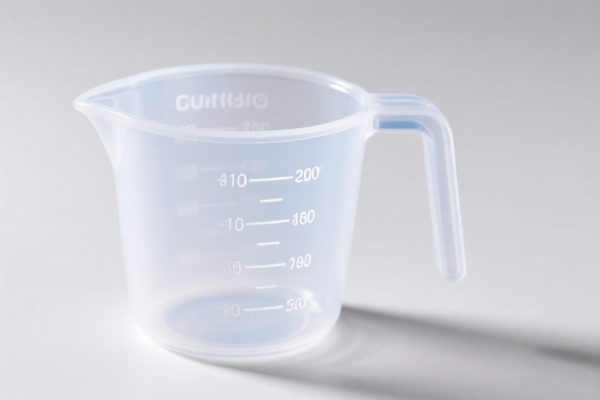
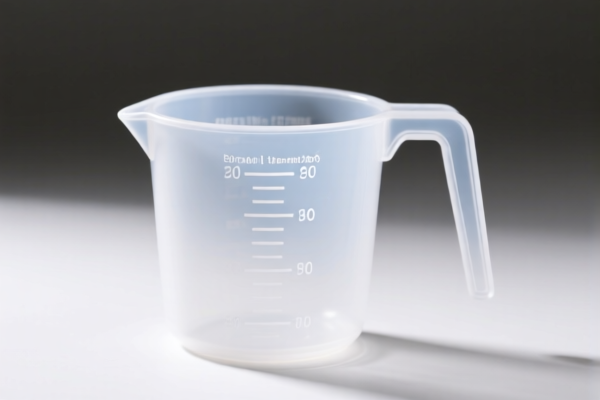
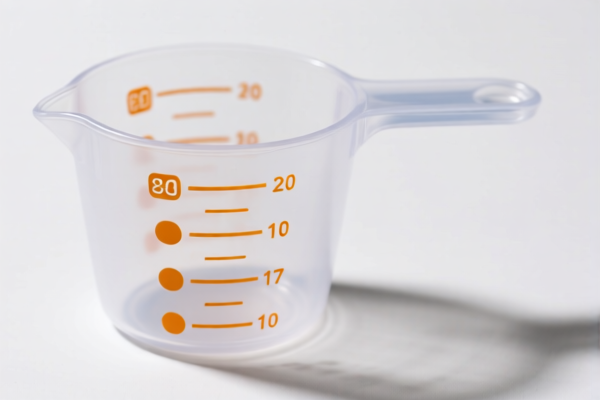
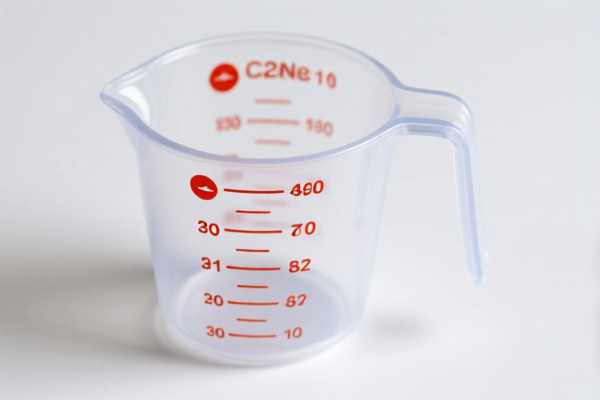
AI Analysis
🥣 Measuring Cup (Quantity Vessels)
🌐 HS Code Reference & Customs Clearance Guide | 2026 Latest Tariff Analysis | Professional-Level Clearance Strategy
📌 I. Product Definition & Classification: Do You Really Understand "Measuring Cups"?
Measuring cups, essential tools in culinary arts and laboratory settings, are categorized strictly by material and specific design in international trade. While commonly referred to simply as "measuring cups," customs authorities distinguish them based on their primary composition and intended use (kitchenware vs. general vessel).
Plastic Measuring Cups: Typically classified under Chapter 39, often viewed as plastic tableware/kitchenware. Glass Measuring Cups: Classified under Chapter 70, categorized as glass tableware or kitchen utensils.
⚠️ Critical Distinction Point:
- Material Matters: Plastic items fall under HS Code starting with3924, while Glass items fall under7013.
- Sub-category Nuances: Within plastic, codes differ slightly based on whether they are defined as "tableware" or specific "cups/vessels." Within glass, codes vary by specific glass type (e.g., tempered vs. ordinary).
- Misclassification Risk: Declaring a plastic cup as glass (or vice versa) will lead to immediate rejection, audits, and potential penalties.
📦 II. HS Code Classification Details (2026 Latest Tariff Authority Comparison)
| HS Code | Product Description | Application Scenario | Material |
|---|---|---|---|
3924.10.40.00 |
Plastic measuring cups, belonging to tableware/cookware category | Kitchen utensils, plastic quantity vessels | ✅ Plastic |
3924.10.40.00 |
Plastic liquid measuring cups, belonging to household utensils | General household plastic measuring tools | ✅ Plastic |
3924.10.20.00 |
Plastic cups/measuring cups, for vessels/cup purposes | Specific plastic cup forms, general vessels | ✅ Plastic |
7013.49.60.90 |
Glass liquid measuring cups, belonging to kitchenware | Glass kitchen measuring tools | ✅ Glass |
7013.49.20.90 |
Glass measuring cups, belonging to kitchen/tableware | General glass measuring vessels for kitchen/dining | ✅ Glass |
🔍 Key Reminder:
- Plastic items are generally grouped under3924.10. The specific sub-code (40.00vs20.00) depends on the exact description of "cup" vs "measuring vessel." However, both fall under the same chapter. - Glass items fall under7013.49. The distinction between60.90and20.90lies in the specific glass category and usage description. - Never mix materials: If a set contains both plastic and glass measuring cups, they must be declared separately.
💰 III. 2026 Latest Tariff Rate Details (Including Surtaxes, Policy Add-ons)
✅ Applicable Country: United States (US)
✅ Country of Origin: China (CN)
✅ Effective Date: Rates apply to imports from China, subject to current trade policies (including Section 301 and Section 122 tariffs).
🎯 1. 3924.10.40.00 —— Plastic Measuring Cups (Tableware/Household)
| Item | Content |
|---|---|
| Base Tariff | 3.4% (ad valorem) |
| Surtax (Section 301) | 0.0% (Note: Some plastic tableware may be exempt or have lower surtax depending on specific HTS sub-classification updates) |
| Section 122 Tariff | +10% |
| Total Tariff Rate | 13.4% |
| Tax Calculation | CIF Value × 13.4% |
| De Minimis Eligibility | ❌ No (High tariff prevents de minimis exemption for commercial shipments) |
| Legal Path | HTSUS:3924.10.40 → Base:3.4% + Sec301:0.0% + Sec122:10% |
📌 Explanation:
- This code benefits from the lowest tariff structure among the provided options. - The Section 301 surtax is 0.0%, which is rare for Chinese plastic goods, making this a cost-effective classification if the product strictly fits "plastic measuring cups" under this specific subheading. - Section 122 Tariff (10%) applies to certain consumer goods, adding to the base rate.
🎯 2. 3924.10.20.00 —— Plastic Cups/Vessels
| Item | Content |
|---|---|
| Base Tariff | 6.5% |
| Surtax (Section 301) | 7.5% |
| Section 122 Tariff | +10% |
| Total Tariff Rate | 24.0% |
| Tax Calculation | CIF Value × 24.0% |
| De Minimis Eligibility | ❌ No |
| Legal Path | HTSUS:3924.10.20 → Base:6.5% + Sec301:7.5% + Sec122:10% |
📌 Note:
- If customs determines the product is a "cup" rather than a specialized "measuring cup," it may fall here. - The Section 301 surtax is 7.5%, significantly higher than3924.10.40.00. - Total rate of 24.0% makes this less favorable than3924.10.40.00for plastic items.
🎯 3. 7013.49.60.90 —— Glass Liquid Measuring Cups
| Item | Content |
|---|---|
| Base Tariff | 7.2% |
| Surtax (Section 301) | 7.5% |
| Section 122 Tariff | +10% |
| Total Tariff Rate | 24.7% |
| Tax Calculation | CIF Value × 24.7% |
| De Minimis Eligibility | ❌ No |
| Legal Path | HTSUS:7013.49.60 → Base:7.2% + Sec301:7.5% + Sec122:10% |
📌 Explanation:
- Glass products generally face higher base tariffs than plastic. - The Section 301 surtax is 7.5%, consistent with many glass imports from China. - Total rate of 24.7% is the second-highest among the options.
🎯 4. 7013.49.20.90 —— Glass Measuring Cups (Kitchen/Tableware)
| Item | Content |
|---|---|
| Base Tariff | 22.5% |
| Surtax (Section 301) | 7.5% |
| Section 122 Tariff | +10% |
| Total Tariff Rate | 40.0% |
| Tax Calculation | CIF Value × 40.0% |
| De Minimis Eligibility | ❌ No |
| Legal Path | HTSUS:7013.49.20 → Base:22.5% + Sec301:7.5% + Sec122:10% |
📌 Warning:
- This code carries the highest base tariff (22.5%) among all listed codes. - Total rate of 40.0% is extremely high. - This classification likely applies to specific types of glass tableware that do not qualify for the lower "kitchen utensil" subcategory. Avoid this classification unless the product strictly matches the narrow definition.
🛠️ IV. Customs Clearance Practical Advice (Battle-Tested Pitfall Guide)
✅ 1. Required Documentation Checklist (None Can Be Omitted)
| Document | Must Provide | Description |
|---|---|---|
| ✅ Product Specifications | ✔️ | Material (Plastic/Glass), Volume, Graduation Markings, Heat Resistance |
| ✅ Product Photos | ✔️ | Clear images of the measuring cup, especially graduation marks and branding |
| ✅ Commercial Invoice | ✔️ | Must clearly state "Measuring Cup," Material, and HS Code |
| ✅ Packing List | ✔️ | Itemized list, ensuring no mixed material declarations |
| ✅ Country of Origin Certificate (CO) | ✔️ | If claiming preferential rates (though unlikely for US/China in this context) |
| ✅ FDA Compliance Statement | ✔️ | For food-contact items, FDA compliance is mandatory for entry |
✅ 2. Declaration Tips (Key Mantra)
🔥 “Material First, Use Clear, Code Precise, Tax Low!”
| Scenario | Correct Declaration | Wrong Practice |
|---|---|---|
| Plastic Measuring Cup | 3924.10.40.00 (Plastic, Kitchenware) |
Declaring as 3924.10.20.00 → Higher Tax (24.0%) |
| Glass Measuring Cup | 7013.49.60.90 (Glass, Kitchen) |
Declaring as 7013.49.20.90 → Highest Tax (40.0%) |
| Mixed Set | Separate Declaration | Mixing Plastic and Glass → Audit & Penalties |
| Non-Measuring Cup | 3924.10.40.00 (if plastic) |
Declaring as "Measuring Cup" → Misclassification |
✅ 3. Special Case Handling
| Scenario | Handling Advice |
|---|---|
| Plastic vs. Glass | Ensure materials are not mixed in one HS Code. If a set contains both, split the invoice. |
| Food Contact Safety | Must comply with FDA 21 CFR. Provide test reports if requested. |
| Section 122 Tariff | Applies to many consumer goods. Ensure your importer is aware of the 10% additional cost. |
| Origin Marking | "Made in China" must be clearly marked on the product/packaging to avoid duty evasion penalties. |
🌍 V. Global Market Comparison (2026 Latest)
| Country/Region | Recommended HS Code | Tariff (China Origin) | Certification Required | Notes |
|---|---|---|---|---|
| 🇺🇸 USA | 3924.10.40.00 (Plastic)7013.49.60.90 (Glass) |
13.4% (Plastic) 24.7% (Glass) |
FDA + RoHS (if applicable) | High tariffs due to Sec301 & Sec122 |
| 🇨🇳 China | 3924.10.40.007013.49.60.90 |
Low/Zero (Import) | CCC (if applicable) | Domestic consumption |
| 🇪🇺 EU | 3924.10.407013.49.60 |
~5-15% (Varies) | CE + LFGB (Food Contact) | No Sec301 tariffs |
| 🇬🇧 UK | 3924.10.407013.49.60 |
~5-15% (Varies) | UKCA + Food Standards | Post-Brexit regulations apply |
📌 Conclusion:
- The US market is the most expensive due to叠加 (stacked) tariffs: Base + Section 301 + Section 122. - Plastic measuring cups (3924.10.40.00) are the most tariff-efficient option at 13.4%. - Glass measuring cups incur significantly higher duties, especially if misclassified into the7013.49.20.90bucket (40.0%).
📌 VI. Common Mistakes & Pitfall Guide (Lessons Learned)
❌ Mistake 1: Declaring Plastic Measuring Cups as 3924.10.20.00
👉 Consequence: Tax increases from 13.4% to 24.0% → Loss of Profit Margin!
❌ Mistake 2: Declaring Glass Measuring Cups as 7013.49.20.90
👉 Consequence: Tax jumps to 40.0% → Severe Cost Penalty!
❌ Mistake 3: Mixing Plastic and Glass in One HS Code
👉 Consequence: Customs Rejection → Delay & Storage Fees!
❌ Mistake 4: Ignoring FDA Compliance
👉 Consequence: Detention at Border → Product Destruction or Return!
✅ Correct Practice:
"Plastic Measuring Cup, Graduated, BPA-Free, FDA Compliant, Model XYZ" →
3924.10.40.00
"Glass Measuring Cup, Graduated, Heat-Resistant, FDA Compliant, Model ABC" →7013.49.60.90
🎯 VII. Conclusion: Professional Declaration, Save Time, Save Money!
🎯 Remember the Mantra:
🔹 "Plastic Low, Glass High, Split Materials, Stay Smart!"
🔹 "13.4% for Plastic, 24.7% for Glass, Avoid 40% at All Costs!"
📌 Pro Tip:
If your measuring cups are originating from Vietnam, Thailand, or Malaysia, you may qualify for lower or zero Section 301 tariffs.
Consider supply chain diversification to mitigate US tariff risks.
📣 Immediate Action:
📞 Consult a Professional Customs Broker + Provide Product Specs + Apply for Binding Ruling
🚀 Ensure your Measuring Cups, Smooth Clearance, Efficient Export, Profit Maximized!
✨ Professional Clearance Starts with Accurate Classification!
💼 Every Penny of Cost Deserves Precise Calculation!
Customer Reviews
About HS Code Classification
The Harmonized System (HS) is an internationally standardized nomenclature developed by the World Customs Organization (WCO) to classify traded products. Over 200 countries use the HS system as the basis for customs tariffs, trade statistics, and import/export regulations.
Each HS code follows a hierarchical structure:
- Chapter (2 digits) — Broad category of goods (e.g., Chapter 84: Machinery and Mechanical Appliances)
- Heading (4 digits) — More specific grouping within the chapter
- Subheading (6 digits) — Internationally standardized breakdown, used by all WCO member countries
- National subdivisions (8-10 digits) — Country-specific extensions for further classification, such as US HTSUS 10-digit codes
Correct HS code classification is essential for smooth customs clearance, accurate duty payment, and compliance with trade regulations. Misclassification can lead to customs delays, overpayment of duties, or penalties.
When importing from CN to US, the applicable tariff rates may include:
- Most-Favored-Nation (MFN) rate — The standard duty rate applied to WTO members
- General rate — Applied to countries without trade agreements
- Trade remedy duties — Additional tariffs such as Section 301 (anti-dumping), Section 232 (national security), or countervailing duties
The information provided on this page is for reference purposes only. For official classification, please consult with your local customs authority or a licensed customs broker.