Measuring Cup and Spoon Set
CN → US| HS Code | Tariff Rate | Origin | Destination | Doc |
|---|---|---|---|---|
| 8205513030 | 38.7% | CN | US | Official Doc |
| 7323930045 | 62.0% | CN | US | Official Doc |
| 7323930060 | 62.0% | CN | US | Official Doc |
| 8205517500 | 38.7% | CN | US | Official Doc |
Product Images
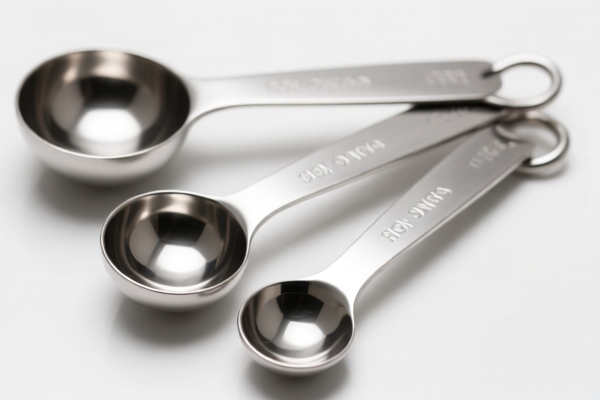
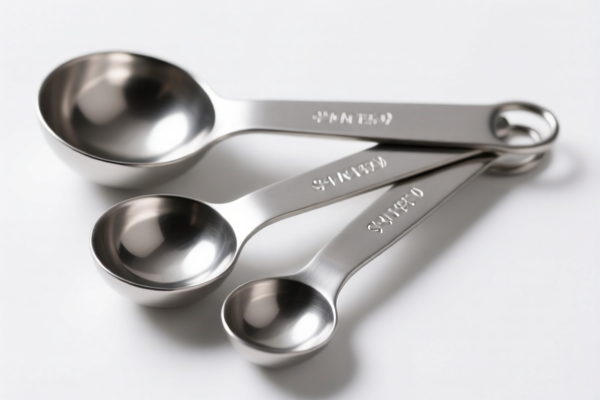
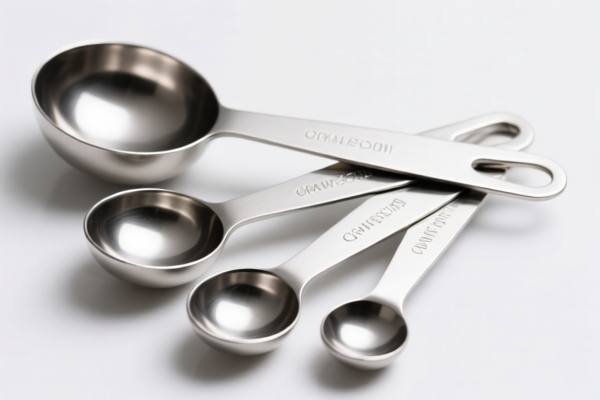
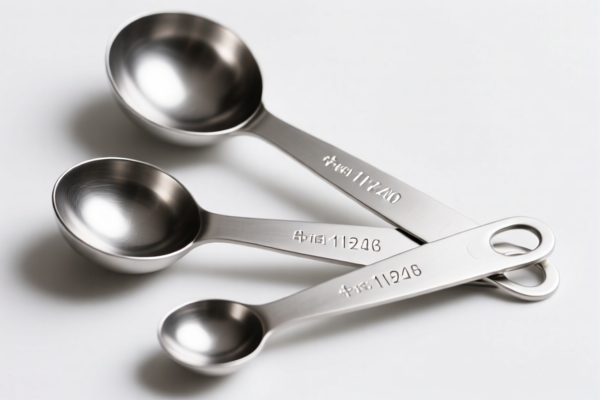
AI Analysis
🍳 Measuring Cup and Spoon Set (Kitchen Utensils)
🌐 HS Code Reference & Clearance Guide | 2026 Latest Tariff Analysis | Professional Customs Strategy for US Imports
📌 1. Product Definition & Classification: Do You Really Understand "Measuring Tools"?
Measuring cups and spoons are essential kitchenware used for precise ingredient measurement in cooking and baking. In international trade, their classification depends heavily on material composition and functional intent. They are not automatically grouped together; instead, they fall into two distinct tariff categories:
1. Kitchen Tableware (Stainless Steel/Aluminum/Copper): If the set is made primarily of stainless steel, aluminum, or copper and is intended for general kitchen use, it often falls under Chapter 73 (Articles of Iron or Steel) or Chapter 76/74.
2. Hand Tools (Other): If classified as "hand tools" (which can include certain measuring devices not specified elsewhere), they may fall under Chapter 82.
⚠️ Key Distinction Point:
- If the product is a standard kitchen utensil made of stainless steel →归入 7323.93.00 (Table, kitchen or other household articles and parts thereof, of iron or steel).
- If the product is classified as a general hand tool or "other" (less common for standard kitchen sets but possible in specific customs rulings) →归入 8205.51 (Hand tools... other).
- Crucial Note: The material (Stainless Steel) and use (Kitchen) drive the tax rate significantly differentially.
📦 2. HS Code Classification Details (2026 Latest Tariff Authority Comparison)
| HS Code | Product Description | Application Scenario | Material/Type | Total Tax Rate (Est.) |
|---|---|---|---|---|
8205.51.30.30 |
Stainless Steel Measuring Spoons/Cups | Kitchen Utensils, Iron/Steel Material | Stainless Steel (Classified as Hand Tools/Other) | 38.7% |
7323.93.00.45 |
Stainless Steel Measuring Spoons/Cups | Cooking & Kitchen Products, Other Category | Stainless Steel, Aluminum, Copper | 62.0% |
7323.93.00.60 |
Stainless Steel Measuring Spoons/Cups | Kitchen Utensils, Made of Stainless Steel | Stainless Steel | 62.0% |
8205.51.75.00 |
Stainless Steel Measuring Spoons/Cups | Household Tools, Other Hand Tools & Parts | Stainless Steel (Classified as Hand Tools) | 38.7% |
🔍 Important Reminder:
-8205.51(38.7% Total Tax) and7323.93(62.0% Total Tax) represent the two main battlegrounds for this product. - The 25% Section 301 tariff vs. 50% Steel/Aluminum/Copper tariff creates a massive $20+ difference per $100 value. - Do not guess! Customs brokers may interpret "measuring spoons" as either "hand tools" (Ch 82) or "household articles" (Ch 73). You must align your declaration with your product's specific design and marketing.
💰 3. 2026 Latest Tariff Rate Breakdown (Including Additional Duties & Policy Surcharges)
✅ Applicable Country: United States (US)
✅ Origin: China (CN)
✅ Effective Date: From 2025 onwards (Check current IEEPA/Section 301 status)
🎯 1. 8205.51.30.30 & 8205.51.75.00 —— Classified as "Hand Tools/Other"
| Item | Content |
|---|---|
| Base Duty Rate | 3.7% (ad valorem) |
| Section 301 Additional Tariff | +25.0% (From Section 301 of the Trade Act) |
| Section 122 Tariff (if applicable) | +10.0% (Specific to certain steel/iron products or policy clauses) |
| Total Tax Rate | 38.7% |
| Tax Calculation | CIF Value × 38.7% |
| De Minimis Exemption | ❌ Not Eligible (Deny De Minimis for Section 301 goods) |
| Legal Basis Path | HTS:8205.51 → Section 301: 9903.88.01 → Section 122: 10% |
📌 Explanation:
- The 3.7% base duty is relatively low. - The 25% Section 301 tariff is the primary cost driver. - The 10% Section 122 tariff is a specific surcharge for certain imported steel/iron goods under US law. - Total 38.7% is significantly lower than the Ch 73 alternative.
🎯 2. 7323.93.00.45 & 7323.93.00.60 —— Classified as "Table/Kitchen Articles of Iron/Steel"
| Item | Content |
|---|---|
| Base Duty Rate | 2.0% (ad valorem) |
| Section 301 Additional Tariff | 0.0% (Note: Base rate is low, but see below) |
| Steel/Aluminum/Copper Additional Tariff | +50.0% (From US Steel/Aluminum/Copper Provisions) |
| Section 122 Tariff (if applicable) | +10.0% |
| Total Tax Rate | 62.0% |
| Tax Calculation | CIF Value × 62.0% |
| De Minimis Exemption | ❌ Not Eligible |
| Legal Basis Path | HTS:7323.93 → Steel/Al/Cu Provisions: 50% → Section 122: 10% |
📌 Warning:
- Although the base duty is only 2.0%, the +50% additional tariff for "Steel, Aluminum, Copper Products" devastates the cost. - This makes the total tax 62.0%, which is 23.3 percentage points higher than the Ch 82 classification. - This is the critical risk point! Many importers mistakenly declare stainless steel kitchenware as Ch 73, triggering the 50% surcharge.
🛠️ 4. Clearance Operational Advice (Practical Pitfall Avoidance Guide)
✅ 1. Prepare Documentation Checklist (None Can Be Missing)
| Document | Must Provide | Explanation |
|---|---|---|
| ✅ Product Specifications | ✔️ | Material composition (e.g., 304 vs 430 Stainless Steel), dimensions, weight |
| ✅ Product Photos (With Labels) | ✔️ | Clear view of the set, any branding, and material markings |
| ✅ Commercial Invoice | ✔️ | Clearly state "Measuring Cup and Spoon Set" and "Stainless Steel" |
| ✅ Packing List | ✔️ | Detailed list of items per set |
| ✅ Certificate of Origin (CO) | ✔️ | If non-China origin, may avoid Section 301 tariffs |
| ✅ Declaration of Intent | ✔️ | Clarify if marketed as "Hand Tool" or "Kitchen Utensil" |
✅ 2. Declaration Strategy (Key Mnemonic)
🔥 "Material Matters, Chapter Choice Saves Millions!"
| Scenario | Correct HS Code | Wrong Approach | Consequence |
|---|---|---|---|
| Stainless Steel Measuring Set | 8205.51.xx.xx (38.7%) |
Misdeclare as 7323.93 |
+23.3% tax penalty (50% vs 25% surcharge) |
| Stainless Steel Measuring Set | 7323.93.xx.xx (62.0%) |
Misdeclare as 8205.51 |
Higher tax burden, potential audit for undervaluation |
| Non-Stainless (Plastic/Wood) | Check Ch 39/44/82 | Apply Steel Tariffs | Overpayment of tax |
✅ 3. Special Case Handling
| Situation | Handling Advice |
|---|---|
| Mixed Material Sets (e.g., Stainless + Wooden Handles) | Check if wooden part >50% value/weight. If not, still Ch 73/82. |
| Gift Sets (Includes non-measuring items) | Declare separately if possible to optimize tax for each item. |
| Custom Embossed Branding | Ensure no "Hand Tool" misinterpretation if marketed strictly as kitchenware. |
| OEM for US Brands | Provide brand authorization and product design sheets to support "Kitchen Utensil" classification. |
🌍 5. Global Market Clearance Comparison (2026 Latest)
| Country/Region | Recommended HS Code | Tariff | Certification | Notes |
|---|---|---|---|---|
| 🇺🇸 USA | 8205.51.xx.xx |
38.7% | No specific | Avoid 7323.93 due to 50% steel tariff |
| 🇨🇳 China | 8205.51.xx.xx |
~10-15% | N/A | Lower import duties, no Section 301 |
| 🇪🇺 EU | 8205.51.xx.xx |
~6% | CE (if applicable) | No US-style additional tariffs |
| 🇬🇧 UK | 8205.51.xx.xx |
~6% | UKCA | Post-Brexit standards |
📌 Conclusion:
- The US market is the most challenging due to Section 301 and Steel/Al/Cu tariffs. - Strategic Recommendation: Work with your customs broker to argue for8205.51(Hand Tools/Other) rather than7323.93(Household Articles) to save 23.3% in taxes, provided the product design supports this classification.
📌 6. Common Mistakes & Pitfall Guide (Blood-Teaching Lessons)
❌ Mistake 1: Declaring Stainless Steel Measuring Cups as 7323.93.00.60
👉 Consequence: Triggering 50% steel surcharge + 10% Section 122 = 62% total tax. Losing $23+ per $100 value!
❌ Mistake 2: Not specifying "Stainless Steel" in description
👉 Consequence: Customs may default to higher duty rates or require additional testing.
❌ Mistake 3: Assuming all "Kitchen Utensils" are the same
👉 Consequence: Mixing up Ch 82 (Hand Tools) and Ch 73 (Iron/Steel Articles). Different tax laws apply!
✅ Correct Action:
"Stainless Steel Measuring Cup and Spoon Set, for Kitchen Use, Model XYZ, 304 SS"
→ Aim for8205.51.30.30or8205.51.75.00→ 38.7% Total Tax.
🎯 7. Conclusion: Professional Declaration, Save Costs!
🎯 Remember the Mnemonic:
🔹 "Ch 82 saves 23%, Ch 73 costs 62%, Steel tariff is the key!"
🔹 "Don't let 'Stainless Steel' trigger the 50% penalty. Classify as 'Other Hand Tools' if possible!"
📌 Pro Tip:
- If your product is not made of steel/aluminum/copper (e.g., plastic, ceramic), the 50% surcharge does not apply.
- Always request a Pre-Ruling (Advance Ruling) from US Customs and Border Protection (CBP) to lock in the 8205.51 classification and avoid post-clearance audits.
📣 Immediate Action:
📞 Contact your customs broker → Provide product photos → Request classification as
8205.51→ Save 23.3% in tariffs!
🚀 Let your kitchenware clear customs smoothly, boost profits, and dominate the US market!
✨ Professional Clearance Starts with Accurate Classification!
💼 Every cent of tax saved is pure profit!
Customer Reviews
About HS Code Classification
The Harmonized System (HS) is an internationally standardized nomenclature developed by the World Customs Organization (WCO) to classify traded products. Over 200 countries use the HS system as the basis for customs tariffs, trade statistics, and import/export regulations.
Each HS code follows a hierarchical structure:
- Chapter (2 digits) — Broad category of goods (e.g., Chapter 84: Machinery and Mechanical Appliances)
- Heading (4 digits) — More specific grouping within the chapter
- Subheading (6 digits) — Internationally standardized breakdown, used by all WCO member countries
- National subdivisions (8-10 digits) — Country-specific extensions for further classification, such as US HTSUS 10-digit codes
Correct HS code classification is essential for smooth customs clearance, accurate duty payment, and compliance with trade regulations. Misclassification can lead to customs delays, overpayment of duties, or penalties.
When importing from CN to US, the applicable tariff rates may include:
- Most-Favored-Nation (MFN) rate — The standard duty rate applied to WTO members
- General rate — Applied to countries without trade agreements
- Trade remedy duties — Additional tariffs such as Section 301 (anti-dumping), Section 232 (national security), or countervailing duties
The information provided on this page is for reference purposes only. For official classification, please consult with your local customs authority or a licensed customs broker.