Measuring Instrument
CN → US| HS Code | Tariff Rate | Origin | Destination | Doc |
|---|---|---|---|---|
| 9031200000 | 36.7% | CN | US | Official Doc |
| 9025198060 | 35.0% | CN | US | Official Doc |
| 9025114000 | 10.0% | CN | US | Official Doc |
| 9017308000 | 38.9% | CN | US | Official Doc |
| 9031808085 | 35.0% | CN | US | Official Doc |
| 9017304000 | 40.8% | CN | US | Official Doc |
Product Images
AI Analysis
🔬 Measuring Instruments: The Precision Trade
🌐 HS Code Reference & Customs Clearance Guide | 2026 Latest Tariff Analysis | Professional Clearance Strategy
📌 I. Product Definition & Classification: Do You Really Understand "Measuring Instruments"?
Measuring instruments are the backbone of quality control, scientific research, and industrial automation. In international trade, they are not a single monolithic category but a diverse family of devices. The critical distinction lies in functionality, specificity, and technical capability.
General Purpose Instruments: Devices used for basic measurement (length, temperature, pressure) that do not fit into highly specialized scientific or medical categories.
Specialized/Dedicated Instruments: Devices designed for specific, narrow applications (e.g., only for gas analysis, only for medical diagnostics, or only for automatic data processing systems).
⚠️ Key Distinction Point:
- If the instrument is a general-purpose thermometer, barometer, or hydrometer → Often falls under Chapter 90 (specifically 9025).
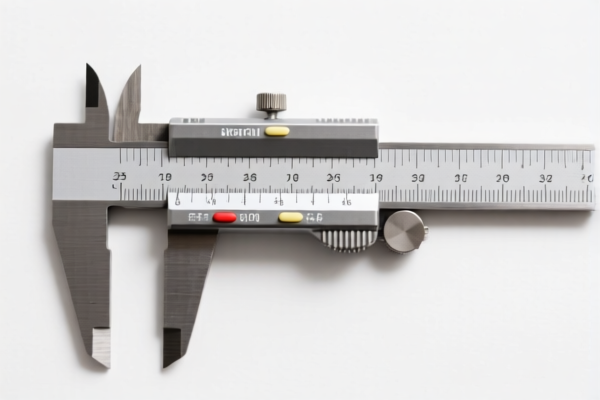
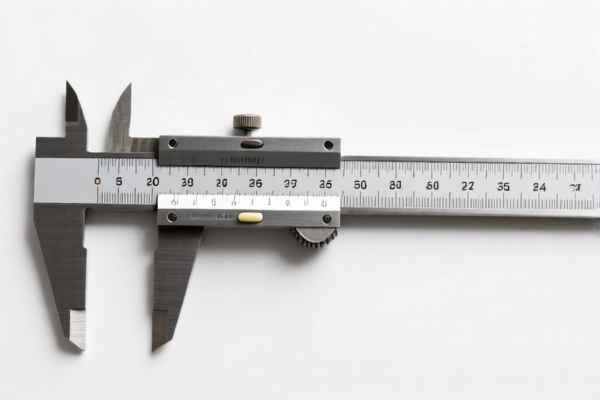
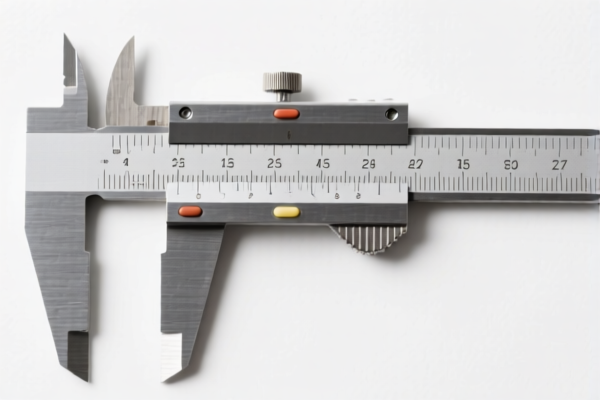
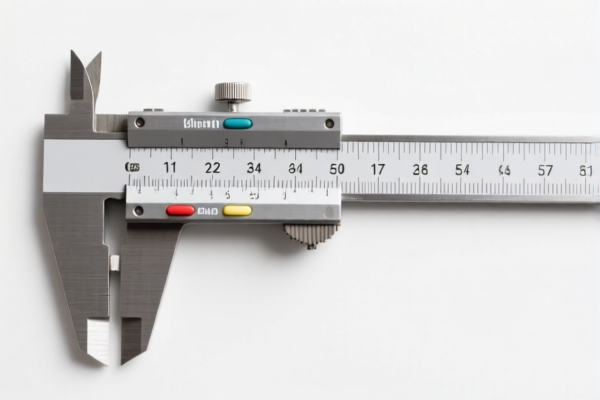
- If the instrument is a general-purpose length measurer (calipers, tapes) → Often falls under 9017.
- If the instrument is a generic "other" measuring device not specified elsewhere → Falls under 9031 (the "catch-all" for precision instruments).
📦 II. HS Code Classification Details (2026 Latest Tariff Authoritative Comparison)
Based on the provided data, here are the five most relevant HS Codes for "Measuring Instruments," along with their tax implications and logical classification.
| HS Code | Product Description | Logical Classification Reason | Total Tax Rate |
|---|---|---|---|
9031.20.00.00 |
Optical, photographic, cinematographic, measuring, checking, precision instruments... | High Functional Match: Explicitly covers "measuring or checking" instruments. No material or form conflict. It is the primary code for general precision measuring equipment. | 36.7% |
9025.19.80.60 |
Thermometers, pyrometers, and similar instruments | Broad Category Match: Classified under "General Thermometers." Since it lacks specific material constraints and conflicts with other narrow categories, it fits here as a general temperature-measuring device. | 35.0% |
9025.11.40.00 |
Thermometers, pyrometers... liquid-filled or metal-bimetallic | Functional Consistency: Matches the category of thermometers and barometers. No material or form conflicts. This is a specific subtype of thermometers. | 10.0% |
9017.30.80.00 |
Measuring instruments for length | Specific Use Match: Covers "hand-held length measuring instruments." No material conflict. Specifically for rulers, calipers, tape measures, etc. | 38.9% |
9031.80.80.85 |
Other measuring or checking instruments and machines | Catch-All Category: Perfectly matches "measuring or checking instruments" as a residual category. Used for instruments not specifically listed in other subheadings (e.g., flow meters, torque meters). | 35.0% |
🔍 Key Reminder:
-9031is the most common "safe" harbor for general precision measuring instruments (like laser distance meters, multimeters, sound level meters).
-9025is strictly for thermal and atmospheric pressure measurements (thermometers, barometers, hygrometers).
-9017is strictly for length measurements (rulers, calipers).
- Misclassification between these chapters can lead to severe duty discrepancies (e.g., 10% vs. 38.9%).
💰 III. 2026 Latest Tariff Rate Breakdown (Including Additional Taxes & Policy Surcharges)
✅ Applicable Country: United States (US)
✅ Origin: China (CN)
✅ Effective Time: Post-2025 Trade Policy Adjustments
🎯 1. 9031.20.00.00 —— General Precision Measuring Instruments
| Item | Content |
|---|---|
| Base Tariff | 1.7% |
| Section 301 Additional Tariff | +25.0% |
| Section 122 Tariff | +10.0% |
| Total Tax Rate | 36.7% |
| Tax Calculation | CIF Value × 36.7% |
| De Minimis Exemption | ❌ Not Eligible (High duty rate triggers stricter scrutiny) |
| Legal Basis Path | USITC:9031.20.00.00 → FOOTNOTE:301 → IEEPA:122 |
📌 Explanation:
- This is a high-cost entry point for general precision instruments.
- The 25% Section 301 tariff applies to most Chinese-made industrial and consumer electronics, including precision tools.
- The 10% Section 122 tariff (if applicable under current trade laws) adds further burden.
- Strategy: Justify this code only if the device is a general-purpose precision instrument (e.g., a general-purpose multimeter or laser measure).
🎯 2. 9025.19.80.60 —— General Thermometers (Liquid/Metal Bimetallic)
| Item | Content |
|---|---|
| Base Tariff | 0.0% |
| Section 301 Additional Tariff | +25.0% |
| Section 122 Tariff | +10.0% |
| Total Tax Rate | 35.0% |
| Tax Calculation | CIF Value × 35.0% |
| De Minimis Exemption | ❌ Not Eligible |
| Legal Basis Path | USITC:9025.19.80.60 → FOOTNOTE:301 → IEEPA:122 |
📌 Explanation:
- Even with a 0% base tariff, the additional tariffs push the total to 35.0%.
- This code is suitable for general-purpose thermometers (e.g., industrial dial thermometers, digital ambient temperature sensors).
- Warning: Do not use this for medical thermometers (which have different codes and exemptions).
🎯 3. 9025.11.40.00 —— Liquid-Filled or Bimetallic Thermometers
| Item | Content |
|---|---|
| Base Tariff | 0.0% |
| Section 301 Additional Tariff | 0.0% |
| Section 122 Tariff | +10.0% |
| Total Tax Rate | 10.0% |
| Tax Calculation | CIF Value × 10.0% |
| De Minimis Exemption | ❌ Not Eligible (Usually small value items may qualify, but high-value industrial ones won't) |
| Legal Basis Path | USITC:9025.11.40.00 → IEEPA:122 |
📌 Strategic Advantage:
- Lowest Tax Rate! Only 10%.
- This code applies to specific types of thermometers: those filled with liquid (alcohol/mercury) or bimetallic coils.
- Strategy: If your instrument is a simple dial thermometer or liquid-filled sensor, force classification under 9025.11.40.00 if technically accurate. This saves 25-28% in duties compared to other codes.
🎯 4. 9017.30.80.00 —— Hand-Held Length Measuring Instruments
| Item | Content |
|---|---|
| Base Tariff | 3.9% |
| Section 301 Additional Tariff | +25.0% |
| Section 122 Tariff | +10.0% |
| Total Tax Rate | 38.9% |
| Tax Calculation | CIF Value × 38.9% |
| De Minimis Exemption | ❌ Not Eligible |
| Legal Basis Path | USITC:9017.30.80.00 → FOOTNOTE:301 → IEEPA:122 |
📌 Explanation:
- Highest Tax Rate in this dataset (38.9%).
- Applies to hand-held length measurers (e.g., tape measures, calipers).
- Strategy: Avoid this code if the instrument is not hand-held or not for length. If it is a laser distance meter, it may fall under 9031 (36.7%), which is cheaper.
🎯 5. 9031.80.80.85 —— Other Measuring/Checking Instruments (Catch-All)
| Item | Content |
|---|---|
| Base Tariff | 0.0% |
| Section 301 Additional Tariff | +25.0% |
| Section 122 Tariff | +10.0% |
| Total Tax Rate | 35.0% |
| Tax Calculation | CIF Value × 35.0% |
| De Minimis Exemption | ❌ Not Eligible |
| Legal Basis Path | USITC:9031.80.80.85 → FOOTNOTE:301 → IEEPA:122 |
📌 Explanation:
- Used for specialized instruments not listed elsewhere (e.g., flow meters, torque testers, surface roughness testers).
- 35.0% is the standard rate for "other" precision instruments.
- Strategy: Use this when the instrument’s function is unique and doesn’t fit into thermometers (9025) or length measures (9017).
🛠️ IV. Customs Clearance Practical Advice (Battle-Tested Pitfall Guide)
✅ 1. Preparation Checklist (Non-Negotiable)
| Document | Required | Description |
|---|---|---|
| ✅ Product Specification Sheet | ✔️ | Must clearly state function, measurement range, and accuracy. |
| ✅ Technical Diagram | ✔️ | Essential to prove whether it is a thermometer (9025), length measurer (9017), or general instrument (9031). |
| ✅ Product Photos (with Label) | ✔️ | Show model number, brand, and any warning labels. |
| ✅ Commercial Invoice | ✔️ | Clearly describe the item as "Measuring Instrument" with specific type (e.g., "Digital Thermometer" vs. "Precision Caliper"). |
| ✅ Country of Origin Certificate | ✔️ | Critical for applying additional tariffs. |
✅ 2. Classification Strategy (The Golden Rules)
🔥 “Function First, Then Specificity, Then Catch-All!”
| Scenario | Recommended HS Code | Why? | Risk |
|---|---|---|---|
| Simple Dial Thermometer | 9025.11.40.00 |
Lowest tax (10%). Technically accurate for bimetallic/liquid types. | Low risk if truly simple. |
| Digital Industrial Thermometer | 9025.19.80.60 |
Falls under "Other thermometers." | Medium risk if deemed "precision electronic." |
| Laser Distance Meter | 9031.20.00.00 |
General precision instrument. Not strictly "hand-held length tool" in traditional sense. | Low risk. |
| Tape Measure / Caliper | 9017.30.80.00 |
Explicitly for hand-held length measures. | High risk if misclassified as 9031. |
| Flow Meter / Torque Tester | 9031.80.80.85 |
No specific code; uses "Other" catch-all. | Low risk. |
✅ 3. Special Case Handling
| Situation | Handling Advice |
|---|---|
| Multi-Function Device | If a device measures both temperature and length, classify based on primary function. If equal, use the higher duty code for safety or seek a ruling. |
| Medical Thermometer | ❌ Do NOT use 9025.19.80.60. Medical thermometers often have different codes (e.g., 9019 or 9025 with exemptions). Check medical device regulations. |
| OEM Custom Sensors | Provide design documents. If it’s a component rather than a finished instrument, it may fall under Chapter 90 Part II (parts) with different rates. |
| High-Precision Lab Equipment | Justify 9031.20.00.00 with lab use documentation. Avoid 9017 which is for industrial/consumer tools. |
🌍 V. Global Market Comparison (2026 Update)
| Market | Recommended HS Code | Est. Duty | Key Certifications | Note |
|---|---|---|---|---|
| 🇺🇸 USA | 9031.20.00.00 |
36.7% | FCC, UL (if electrical) | High tariffs due to Section 301. |
| 🇨🇳 China | 9031.20.00.00 |
~5-10% | CCC (if applicable) | Standard import duties. |
| 🇪🇺 EU | 9031.80 |
0-4.5% | CE, RoHS | No additional "Section 122" style tariffs. |
| 🇬🇧 UK | 9031.80 |
0-4.5% | UKCA | Post-Brexit alignment with EU. |
📌 Conclusion:
- USA is the most expensive market due to Section 301 and 122 tariffs.
- EU/UK are significantly cheaper, making them more attractive for high-value instruments.
- Cost Optimization: If your product is a simple thermometer, aim for 9025.11.40.00 (10% in US) to mitigate US tariffs.
📌 VI. Common Mistakes & Pitfalls (Blood-Tear Lessons)
❌ Mistake 1: Classifying a Laser Distance Meter as 9017.30.80.00 (38.9%) instead of 9031.20.00.00 (36.7%).
👉 Result: Overpayment of 2.2% duty. While small, it adds up with high volume. More importantly, misclassification can lead to audits.
❌ Mistake 2: Declaring a Digital Medical Thermometer as 9025.19.80.60.
👉 Result: Customs may reclassify as a medical device, triggering FDA registration requirements and potential detention.
❌ Mistake 3: Using "Measuring Instrument" as a generic description without technical specs.
👉 Result: Customs will assign the highest possible duty (often 9031.80 at 35% or higher) due to ambiguity.
✅ Correct Practice:
"Laser Distance Meter, 40m Range, Accuracy ±1.5mm, Digital Display, Model XYZ, for Construction Use."
→ Supports 9031.20.00.00.
🎯 VII. Conclusion: Precision Classification Saves Money
🎯 Remember the Mantra:
🔹 "Thermometers first (9025), Length second (9017), Precision General (9031)."
🔹 "Simple dial thermometers = 10% Lifesaver."
🔹 "Laser/General Tools = 36.7% Standard."
🔹 "Hand-held Tapes = 38.9% Expensive."
📌 Pro Tip:
For high-volume imports, apply for an Advance Ruling from US Customs and Border Protection (CBP) for complex instruments. A binding ruling protects you from retroactive duty changes.
📣 Immediate Action:
📞 Consult a Customs Broker + Provide Technical Datasheets + Apply for Pre-Ruling
🚀 Clear Your Goods Faster, Pay Less Duty, Export with Confidence!
✨ Professional Clearance Starts with Accurate Classification!
💼 Every Percentage Point of Duty Matters!
Customer Reviews
About HS Code Classification
The Harmonized System (HS) is an internationally standardized nomenclature developed by the World Customs Organization (WCO) to classify traded products. Over 200 countries use the HS system as the basis for customs tariffs, trade statistics, and import/export regulations.
Each HS code follows a hierarchical structure:
- Chapter (2 digits) — Broad category of goods (e.g., Chapter 84: Machinery and Mechanical Appliances)
- Heading (4 digits) — More specific grouping within the chapter
- Subheading (6 digits) — Internationally standardized breakdown, used by all WCO member countries
- National subdivisions (8-10 digits) — Country-specific extensions for further classification, such as US HTSUS 10-digit codes
Correct HS code classification is essential for smooth customs clearance, accurate duty payment, and compliance with trade regulations. Misclassification can lead to customs delays, overpayment of duties, or penalties.
When importing from CN to US, the applicable tariff rates may include:
- Most-Favored-Nation (MFN) rate — The standard duty rate applied to WTO members
- General rate — Applied to countries without trade agreements
- Trade remedy duties — Additional tariffs such as Section 301 (anti-dumping), Section 232 (national security), or countervailing duties
The information provided on this page is for reference purposes only. For official classification, please consult with your local customs authority or a licensed customs broker.