Measuring Instrument Parts
CN → US| HS Code | Tariff Rate | Origin | Destination | Doc |
|---|---|---|---|---|
| 9031200000 | 36.7% | CN | US | Official Doc |
| 9025198060 | 35.0% | CN | US | Official Doc |
| 9025114000 | 10.0% | CN | US | Official Doc |
| 9017308000 | 38.9% | CN | US | Official Doc |
| 9031808085 | 35.0% | CN | US | Official Doc |
Product Images
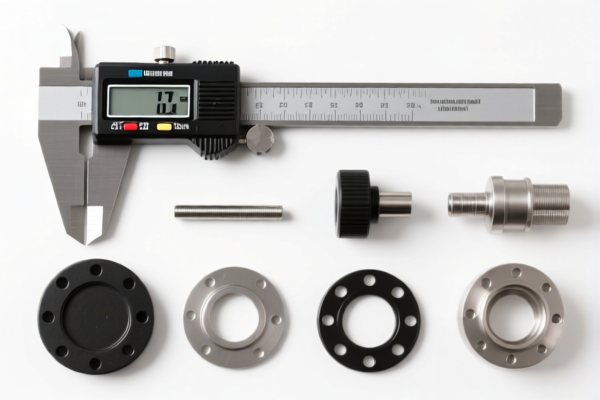
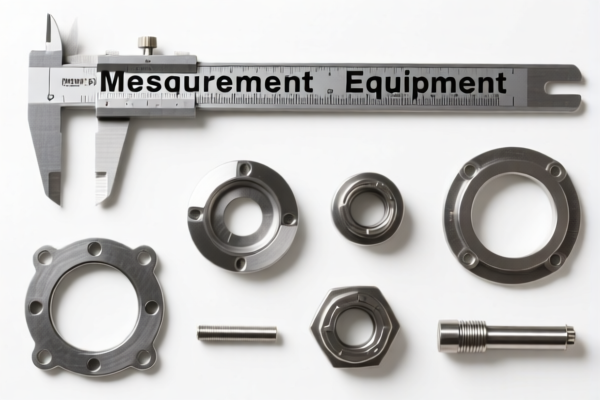
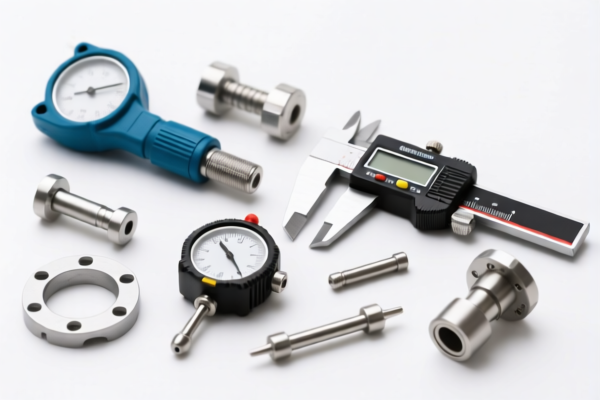
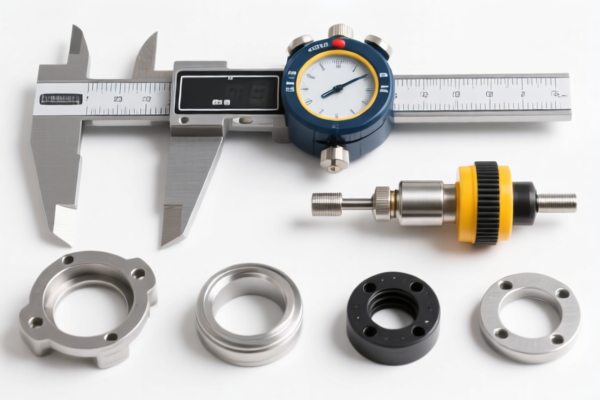
AI Analysis
📏 Measuring Instrument Parts (测量仪器部件)
🌐 HS Code Reference & Clearance Guide | 2026 Latest Tariff Analysis | Professional Entry Strategy
📌 I. Product Definition & Classification: What Exactly Are "Measuring Instrument Parts"?
"Measuring Instrument Parts" is a broad category in international trade, encompassing components, accessories, and sub-assemblies used for measuring, testing, or inspecting physical quantities (length, temperature, pressure, weight, etc.). Unlike finished goods, these parts often lack independent function unless integrated into a larger system.
Key Classification Challenges: 1. Function Over Form: Are they specialized for a specific instrument (e.g., a thermometer probe) or general-purpose (e.g., a generic screw for an caliper)? 2. Material Constraints: The provided notes "No material conflict," implying the classification relies primarily on function and instrument type, not the raw material (metal/plastic). 3. Specific vs. General: Are they listed under specific instrument chapters (like 9025 for Thermometers) or general "other measuring instruments" (9031)?
⚠️ Critical Distinction:
- If the part is specific to a thermometer/pressure gauge → Likely 9025.
- If the part is for a caliper/ruler → Likely 9017.
- If the part is for a general inspection machine or no specific category fits → Likely 9031.
📦 II. HS Code Classification Details (2026 Latest Tariff Authority Comparison)
Based on the provided data, here are the 5 potential HS Codes for "Measuring Instrument Parts," sorted by tax impact and specificity.
| HS Code | Product Description & Logic | Key Attributes |
|---|---|---|
9025.11.40.00 |
Parts of Thermometers & Pyrometers (Liquid-filled) | Lowest Tax (10%). Specific to liquid-in-glass or similar traditional thermometers/pressure gauges. ✅ Match: "Usage attributes consistent with thermometers/pressure gauges." |
9025.19.80.60 |
Parts of Other Thermometers/Pyrometers (Digital/Digital) | High Tax (35%). Covers electronic/digital temperature measurement components. ✅ Match: "Broadly belongs to thermometers/high-temperature gauges." |
9031.80.80.85 |
Other Measuring/Inspecting Instruments (General) | High Tax (35%). A catch-all for parts of instruments not elsewhere specified (e.g., complex optical or electronic testers). ✅ Match: "Usage fully matches measuring/inspecting instruments." |
9031.20.00.00 |
Parts of Measuring/Inspecting Instruments (General) | Highest Tax (36.7%). Specific parts for general measuring instruments. ✅ Match: "归类为测量或检验仪器,用途匹配且无材质冲突." |
9017.30.80.00 |
Parts of Handheld Length Measuring Instruments | Highest Tax (38.9%). Specific to calipers, micrometers, rulers. ✅ Match: "Belongs to handheld length measurement instruments." |
🔍 Key Insight:
-9025.11.40.00is the most favorable tax rate (10%) but is highly restrictive to specific types of thermometers/pressure gauges. -9017.30.80.00and9031.20.00.00carry the highest total tax rates (36.7% - 38.9%) due to higher base tariffs or specific classification nuances. - The term "No material conflict" confirms that the HS code selection is driven by instrument function, not whether the part is made of steel, plastic, or silicon.
💰 III. 2026 Latest Tariff Rate Breakdown (US Imports from China)
✅ Applicable Country: United States (US)
✅ Origin: China (CN)
✅ Effective Time: Current trade policies (Section 301 & IEEPA)
🎯 1. 9025.11.40.00 —— Thermometer/Pressure Gauge Parts (Liquid/Traditional)
⭐ Best Tax Rate Scenario (10%)
| Item | Content |
|---|---|
| Base Duty | 0.0% (Ad Valorem) |
| Section 301 Duty | 0.0% (Specific exclusion or low rate for this subheading) |
| IEEPA Surcharge | +10.0% (122 Clause Tariff) |
| Total Effective Rate | 10.0% |
| Tax Calculation | CIF Value × 10% |
| De Minimis Exemption | ❌ Not Applicable (Commercial entry) |
📌 Explanation:
- This is the only code in the dataset with a 0% base tariff and 0% Section 301 duty. - The 10% IEEPA surcharge is the only additional cost. - Strategy: If your parts are specifically for traditional liquid thermometers or pressure gauges, always aim for this code to save significant duty costs compared to others.
🎯 2. 9025.19.80.60 —— Other Thermometer/Pyrometer Parts (Digital/Electronic)
| Item | Content |
|---|---|
| Base Duty | 0.0% |
| Section 301 Duty | +25.0% |
| IEEPA Surcharge | +10.0% (122 Clause Tariff) |
| Total Effective Rate | 35.0% |
| Tax Calculation | CIF Value × 35% |
| De Minimis Exemption | ❌ Not Applicable |
📌 Explanation:
- Base duty is 0%, but the 25% Section 301 tariff applies. - Total cost is 3.5x higher than the9025.11.40.00category. - Strategy: Only use if the parts are explicitly for digital/electronic temperature sensors and cannot be classified under9025.11.
🎯 3. 9031.80.80.85 —— Parts of Other Measuring Instruments
| Item | Content |
|---|---|
| Base Duty | 0.0% |
| Section 301 Duty | +25.0% |
| IEEPA Surcharge | +10.0% (122 Clause Tariff) |
| Total Effective Rate | 35.0% |
| Tax Calculation | CIF Value × 35% |
| De Minimis Exemption | ❌ Not Applicable |
📌 Explanation:
- Similar tax structure to9025.19. - Strategy: Use as a fallback for instruments that don't fit into Thermometers (9025) or Length Measurement (9017).
🎯 4. 9031.20.00.00 —— Parts of Measuring Instruments
| Item | Content |
|---|---|
| Base Duty | 1.7% |
| Section 301 Duty | +25.0% |
| IEEPA Surcharge | +10.0% (122 Clause Tariff) |
| Total Effective Rate | 36.7% |
| Tax Calculation | CIF Value × 36.7% |
| De Minimis Exemption | ❌ Not Applicable |
📌 Explanation:
- Higher base duty (1.7%) pushes the total rate higher than9031.80. - Strategy: Avoid if9031.80is applicable, unless specific legal interpretations require9031.20.
🎯 5. 9017.30.80.00 —— Parts of Handheld Length Measuring Instruments
| Item | Content |
|---|---|
| Base Duty | 3.9% |
| Section 301 Duty | +25.0% |
| IEEPA Surcharge | +10.0% (122 Clause Tariff) |
| Total Effective Rate | 38.9% |
| Tax Calculation | CIF Value × 38.9% |
| De Minimis Exemption | ❌ Not Applicable |
📌 Explanation:
- Highest Total Tax Rate (38.9%). - Driven by the highest base duty (3.9%) among the options. - Strategy: This code is very specific to calipers, micrometers, and rulers. Only use if the parts are definitively for these handheld tools. Otherwise, the cost penalty is significant.
🛠️ IV. Clearance Practical Advice (Pitfall Avoidance Guide)
✅ 1. Documentation Checklist (Non-Negotiable)
| Document | Required | Explanation |
|---|---|---|
| ✅ Technical Specification Sheet | ✔️ | Must specify what instrument the part belongs to (e.g., "Probe for Type-X Thermometer"). |
| ✅ Product Photos | ✔️ | Clear images showing the part, connectors, and any labeling. |
| ✅ Bill of Lading / Commercial Invoice | ✔️ | Must clearly state "Parts of Measuring Instruments" and reference the end-product. |
| ✅ Country of Origin Certificate | ✔️ | Essential for proving Chinese origin and applying correct 122 Clause tariffs. |
| ✅ Function Description | ✔️ | Critical: Describe the function of the part, not just its material. E.g., "Temperature Sensor Probe" not "Metal Rod." |
✅ 2. Declaration Strategy (Key Mantra)
🔥 "Define Function First, Avoid Generic Terms, Match Instrument Type!"
| Scenario | Correct Declaration | Wrong Declaration | Consequence |
|---|---|---|---|
| Thermometer Probe | "Parts of Thermometer, HS 9025.11.40.00" | "Metal Sensor" | Misclassification → 10% vs 35%+ |
| Caliper Screw | "Parts of Handheld Length Measuring Instrument, HS 9017.30.80.00" | "Machine Part" | High Tax (38.9%) |
| General Tester Component | "Parts of Other Measuring Instrument, HS 9031.80.80.85" | "Electronic Component" | Risk of 36.7% or higher |
📌 Note:
- Do NOT use generic terms like "Sensor" or "Controller" without context.
- Do NOT try to hide the instrument type. If it's a thermometer part, declare it as such to potentially qualify for lower base duties (like 9025.11).
✅ 3. Special Case Handling
| Case | Recommendation |
|---|---|
| Parts Used in Multiple Instruments | If a part fits both thermometers and general testers, choose the one with the lowest total tax (likely 9025.11.40.00 if functionally compatible). |
| Digital vs. Analog | Analog/Liquid → 9025.11.40.00 (10%). Digital → 9025.19.80.60 (35%). Verify technology type! |
| Handheld vs. Benchtop | Handheld Length → 9017 (38.9%). Benchtop General → 9031 (35-36.7%). |
🌍 V. Global Market Comparison (2026 Update)
| Country/Region | Recommended HS Code | Total Tax (China Origin) | Key Certification | Notes |
|---|---|---|---|---|
| 🇺🇸 USA | 9025.11.40.00 |
10% | N/A | Best rate; avoid 9017/9031 if possible. |
| 🇨🇳 China | 9025.11.40.00 |
~0-1% | CCC (if applicable) | Low base duty; no Section 301. |
| 🇪🇺 EU | 9025.11.40.00 |
~2.7% | CE, RoHS | No IEEPA/Section 301 equivalents. |
| 🇬🇧 UK | 9025.11.40.00 |
~2.7% | UKCA, RoHS | Post-Brexit alignment with EU. |
| 🇯🇵 Japan | 9025.11.40.00 |
~0-3% | PSE (if electrical) | Generally low tariffs. |
📌 Conclusion:
- USA is the only market with punitive additional tariffs (Section 301 + IEEPA). - Tax Optimization is Critical: The difference between 10% and 38.9% is massive. - Action: Carefully map each part to its specific instrument type to find the lowest applicable HS Code.
📌 VI. Common Errors & Pitfalls (Blood-Lessons)
❌ Error 1: Declaring a Digital Thermometer Probe as 9025.11.40.00 (Traditional).
👉 Result: Customs may reject it as misclassification. You must use 9025.19.80.60 (35%).
✅ Fix: Check if the probe is for liquid-in-glass/analog systems or digital sensors.
❌ Error 2: Declaring a Caliper Spring as a general "Machine Part."
👉 Result: Might be caught and reassigned to 9017.30.80.00 (38.9%) with penalties.
✅ Fix: Declare explicitly as "Parts of Handheld Length Measuring Instruments."
❌ Error 3: Using "Measuring Instrument Parts" as the sole description without HS Code context.
👉 Result: CBP (US Customs) will use their best judgment, likely assigning the highest risk code (9031 or 9017).
✅ Fix: Provide precise technical data linking the part to a specific Chapter (9017, 9025, or 9031).
🎯 VII. Conclusion: Precision Saves Money!
🎯 Remember the Golden Rule:
🔹 "Function Dictates Code, Code Dictates Tax."
🔹 "Thermometer Parts? Check if Analog (10%) or Digital (35%)."
🔹 "Length Tools? Expect 38.9%."
🔹 "General Instruments? Aim for 35%, avoid 38.9%."
📌 Pro Tip:
If your parts are versatile (e.g., a generic sensor used in both thermometers and other devices), consult a customs broker before shipment. A Pre-Ruling or Advance Classification can lock in the lower 10% rate if functional arguments are strong.
📣 Immediate Action:
📞 Contact a Licensed Customs Broker + Provide Technical Specs + Apply for HS Code Pre-Ruling
🚀 Ensure Smooth Clearance, Maximize Profit, Minimize Tax!
✨ Professional Clearance Starts with Accurate Classification!
💼 Every percentage point matters in cross-border trade!
Customer Reviews
About HS Code Classification
The Harmonized System (HS) is an internationally standardized nomenclature developed by the World Customs Organization (WCO) to classify traded products. Over 200 countries use the HS system as the basis for customs tariffs, trade statistics, and import/export regulations.
Each HS code follows a hierarchical structure:
- Chapter (2 digits) — Broad category of goods (e.g., Chapter 84: Machinery and Mechanical Appliances)
- Heading (4 digits) — More specific grouping within the chapter
- Subheading (6 digits) — Internationally standardized breakdown, used by all WCO member countries
- National subdivisions (8-10 digits) — Country-specific extensions for further classification, such as US HTSUS 10-digit codes
Correct HS code classification is essential for smooth customs clearance, accurate duty payment, and compliance with trade regulations. Misclassification can lead to customs delays, overpayment of duties, or penalties.
When importing from CN to US, the applicable tariff rates may include:
- Most-Favored-Nation (MFN) rate — The standard duty rate applied to WTO members
- General rate — Applied to countries without trade agreements
- Trade remedy duties — Additional tariffs such as Section 301 (anti-dumping), Section 232 (national security), or countervailing duties
The information provided on this page is for reference purposes only. For official classification, please consult with your local customs authority or a licensed customs broker.