Measuring Spoon
CN → US| HS Code | Tariff Rate | Origin | Destination | Doc |
|---|---|---|---|---|
| 6912004810 | 19.8% | CN | US | Official Doc |
| 6912004890 | 19.8% | CN | US | Official Doc |
| 6914108000 | 44.0% | CN | US | Official Doc |
| 6911108010 | 38.3% | CN | US | Official Doc |
| 6914908000 | 40.6% | CN | US | Official Doc |
| 6911108090 | 38.3% | CN | US | Official Doc |
Product Images
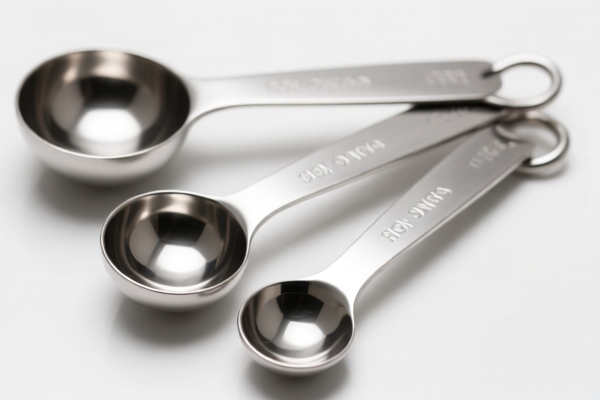
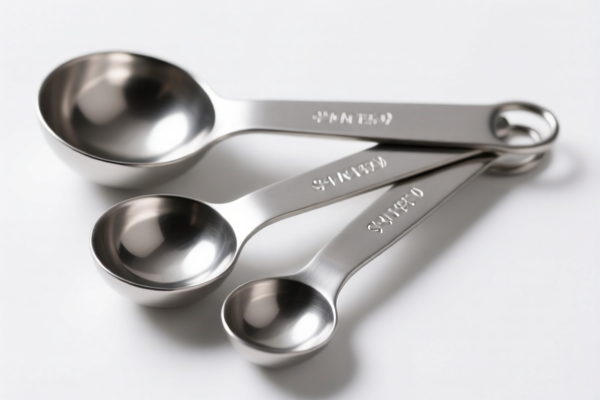
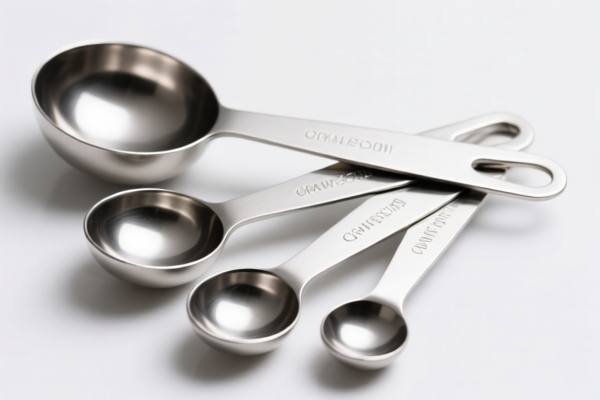
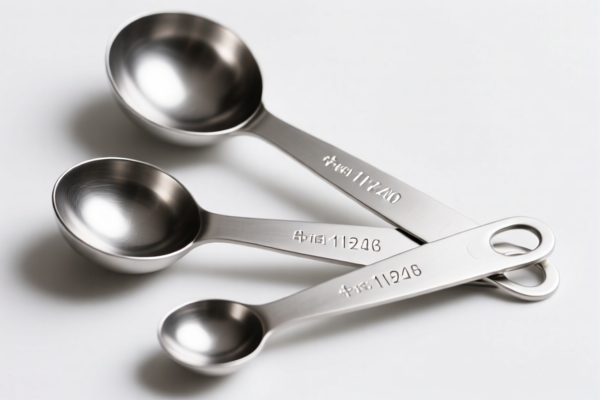
AI Analysis
🥄 Measuring Spoons (Ceramic Kitchen Utensils)
🌐 HS Code Reference & Customs Clearance Guide | 2026 Latest Tariff Analysis | Professional Compliance Strategy
📌 I. Product Definition & Classification: Do You Truly Understand "Ceramic Measuring Spoons"?
Measuring spoons are essential precision tools in culinary arts, food manufacturing, and laboratory settings. In international trade, ceramic measuring spoons are generally classified under Chapter 69 (Ceramics), specifically focusing on tableware, kitchenware, or other ceramic articles. The classification depends heavily on the specific shape, usage description, and whether they are considered "tableware" vs. "other ceramic goods."
⚠️ Key Distinction Points:
- If explicitly described as "Tableware/Kitchen Utensils" → Likely falls under 6912.00 (Ceramic Tableware/Kitchenware).
- If described broadly as "Other Ceramic Articles" without clear tableware designation → Likely falls under 6914.00 or 6911.00 (depending on specific sub-category nuances).
- Food Contact Safety: All items must comply with FDA (US) or equivalent food-safe standards, but this does not change HS code classification directly.
📦 II. HS Code Classification Details (2026 Latest Tariff Authority Mapping)
Based on the provided data, here are the specific HS Codes for Ceramic Measuring Spoons, along with their respective tax rates and descriptions.
| HS Code | Product Description | Key Characteristics | Total Tax Rate* |
|---|---|---|---|
6912.00.48.10 |
Ceramic Measuring Spoon, Material: Ceramic, Use: Tableware/Kitchen Utensils | Explicitly categorized as kitchen/tableware | 19.8% |
6912.00.48.90 |
Ceramic Measuring Spoon, Material: Ceramic, Form: Tableware/Kitchenware Category | General kitchenware classification | 19.8% |
6914.10.80.00 |
Ceramic Measuring Spoon, Material: Ceramic, Category: Other Ceramic Articles | Broader "other" category | 44.0% |
6911.10.80.10 |
Ceramic Measuring Spoon, Material: Ceramic, Use: Food Contact, Tableware/Kitchen Utensils | Food-contact specific tableware | 38.3% |
6914.90.80.00 |
Ceramic Measuring Spoon, Material: Ceramic, Category: Other Ceramic Articles | General "other" ceramic goods | 40.6% |
6911.10.80.90 |
Ceramic Measuring Spoon, Material: Ceramic, Use: Tableware/Kitchenware, Other Vessel Category | Miscellaneous tableware vessel | 38.3% |
Note: Tax rates include Base Tariff, Retaliatory/Additional Tariffs, and Section 301/122 Clause Duties for imports from China to the US (as inferred from the "122 Clause" and high total rates).
💰 III. 2026 Latest Tariff Rate Breakdown (Detailed Tax Clauses)
✅ Applicable Market: United States (US)
✅ Origin: China (CN)
✅ Effective Date: Current US Import Regulations (2025-2026)
🎯 1. The Most Cost-Effective Option: 6912.00.48.10 & 6912.00.48.90
Category: Ceramic Tableware/Kitchen Utensils
Total Tax Rate: 19.8%
| Component | Rate | Details |
|---|---|---|
| Base Tariff | 9.8% | Standard Most Favored Nation (MFN) rate for ceramic tableware. |
| Section 301/Additional Tariff | 0.0% | No additional 25% tariff applied in this specific sub-code classification. |
| Section 122 Clause Tariff | 10.0% | Specific additional duty applied. |
| Total Effective Rate | 19.8% | Lowest Risk/Cost Option |
📌 Explanation:
- This classification is optimal because it benefits from a 0% Additional Tariff under Section 301, despite the 10% Section 122 clause.
- Key Requirement: The product description must explicitly state "Tableware" or "Kitchen Utensils" to qualify for Chapter 6912.
🎯 2. The High-Tariff "Other Ceramic" Options: 6914.10.80.00 & 6914.90.80.00
Category: Other Ceramic Articles
Total Tax Rate: 44.0% / 40.6%
A. 6914.10.80.00 (Other Ceramic Articles)
- Base Tariff: 9.0%
- Section 301 Additional Tariff: 25.0%
- Section 122 Clause: 10.0%
- Total: 44.0%
B. 6914.90.80.00 (Other Ceramic Articles)
- Base Tariff: 5.6%
- Section 301 Additional Tariff: 25.0%
- Section 122 Clause: 10.0%
- Total: 40.6%
📌 Warning:
- Classifying measuring spoons as "Other Ceramic Articles" triggers the 25% Section 301 retaliatory tariff, which is NOT waived.
- This is significantly more expensive than the tableware classification (19.8%).
🎯 3. The "Food Contact/Tableware" Middle Ground: 6911.10.80.10 & 6911.10.80.90
Category: Ceramic Tableware (Food Contact)
Total Tax Rate: 38.3%
| Component | Rate | Details |
|---|---|---|
| Base Tariff | 20.8% | Higher base rate for specific ceramic tableware items. |
| Section 301 Additional Tariff | 7.5% | Partial additional tariff applied. |
| Section 122 Clause | 10.0% | Standard additional duty. |
| Total Effective Rate | 38.3% | Moderate-High Cost |
📌 Explanation:
- Even though these are "tableware," the base tariff (20.8%) and additional tariff (7.5%) make them more expensive than6912.00.48.10.
- Avoid this classification unless your product has unique features that disqualify it from6912.00.
🛠️ IV. Customs Clearance Practical Advice (Real-World Pitfall Avoidance)
✅ 1. Preparation Checklist (Non-Negotiable)
| Document | Required? | Purpose |
|---|---|---|
| ✅ Product Spec Sheet | ✔️ | Must clearly state: "Ceramic Measuring Spoon," "Food-Grade," "Kitchen Utensil." |
| ✅ Material Composition | ✔️ | Confirm 100% Ceramic (porcelain/stoneware). No metal handles. |
| ✅ Usage Declaration | ✔️ | Explicitly declare "For Kitchen/Tableware Use" to support 6912.00 classification. |
| ✅ FDA Compliance Certificate | ✔️ | Required for food-contact items (Ceramic Measuring Spoons). |
| ✅ Commercial Invoice | ✔️ | Value must match CIF (Cost, Insurance, Freight). |
| ✅ Packing List | ✔️ | Weight and dimensions for accurate duty calculation. |
✅ 2. Declaration Strategy (Crucial for Cost Savings)
🔥 Golden Rule:
"Classify as Tableware (6912), NOT Other Ceramics (6914/6911)!"
| Scenario | Recommended HS Code | Tax Rate | Why? |
|---|---|---|---|
| Standard Ceramic Spoon | 6912.00.48.10 |
19.8% | Lowest tax. Clear "Tableware" use. |
| Set of Ceramic Spoons | 6912.00.48.10 |
19.8% | Sets are still tableware. |
| Decorative Ceramic Spoon (Non-Functional) | 6914.10.80.00 |
44.0% | If not for measuring/food use, it's "other." Avoid if functional. |
| Ceramic Spoon with Non-Ceramic Handle | Depends on Handle | Varies | If handle is major value, may shift chapter. Check carefully. |
📌 Critical Tip:
- Do NOT declare as "Ceramic Ornament" or "Craft Item" if it is used for measuring. Customs may reclassify it to6914(44%) if usage is ambiguous.
- Explicitly state "Measuring Spoon for Kitchen Use" in the description to anchor it to6912.00.
✅ 3. Special Cases & Handling
| Situation | Advice |
|---|---|
| Mixed Sets (e.g., Spoons + Bowls) | Declare each item separately by its HS Code. Spoons → 6912.00.48.10, Bowls → 6912.00.xx.xx. |
| OEM Custom Designs | Provide design patents or molds to prove "tableware" intent. |
| High-Value Luxury Ceramic | Still classified as 6912.00.48.10 if functional tableware. Value doesn't change HS code, only duty amount. |
| Food-Safety Issues | If FDA inspection fails, goods may be detained. Ensure glaze is lead/cadmium-free. |
🌍 V. Global Market Comparison (2026)
| Country/Region | Recommended HS Code | Estimated Duty | Notes |
|---|---|---|---|
| 🇺🇸 USA | 6912.00.48.10 |
19.8% | Best option. Avoid 6914 (44%). |
| 🇨🇳 China | 6912.00.48.10 |
~9.8% | No Section 301 or 122 clauses. |
| 🇪🇺 EU | 6912.00.48.10 |
~12.5% | No additional retaliatory tariffs. |
| 🇬🇧 UK | 6912.00.48.10 |
~12.5% | Post-Brexit tariff alignment with EU. |
| 🇯🇵 Japan | 6912.00.48.10 |
~7.5% | Low duty, high quality standards. |
📌 Conclusion:
- The US market is the most challenging due to Section 301 and Section 122 clauses.
- Proper classification (6912.00.48.10) is critical to save ~24-25% in duties compared to misclassification.
📌 VI. Common Mistakes & Pitfalls (Blood Lessons)
❌ Mistake 1: Declaring as "Ceramic Craft" or "Home Decor"
👉 Consequence: Reclassified to 6914.10.80.00 → 44% Tax instead of 19.8%.
👉 Loss: Over 24% extra duty per item.
❌ Mistake 2: Omitting "Measuring" or "Kitchen Use" in Description
👉 Consequence: Customs may doubt functionality → Rejected or reassigned to higher-tax "Other Ceramic" codes.
👉 Loss: Delays, potential fines, or higher taxes.
❌ Mistake 3: Using 6911.10.80.10 unnecessarily
👉 Consequence: 38.3% Tax vs. 19.8%.
👉 Loss: 18.5% higher tax for no reason. Only use 6911 if product structure is unique and excluded from 6912.
✅ Correct Declaration Example:
"Ceramic Measuring Spoons, Kitchen Utensils, Food-Grade Glaze, Non-Stackable, Model XYZ, Origin: China"
🎯 VII. Conclusion: Precision Classification, Maximum Profit!
🎯 Remember the Golden Rules:
🔹 "6912 is King: 19.8% Tax vs. 44% Trap!"
🔹 "Always Declare 'Tableware' or 'Kitchen Utensil' to Avoid Section 301!"
🔹 "Don't Let 'Other Ceramics' Cost You 25% Extra!"
📌 Pro Tip:
If you are exporting to the US, always request a Pre-Ruling from CBP (U.S. Customs) for new product lines. This locks in the 6912.00.48.10 classification and protects you from retroactive reclassification.
📣 Immediate Action:
📞 Contact Your Customs Broker: Provide the exact product description.
📄 Update Your Invoice: Use "Ceramic Measuring Spoon, Tableware/Kitchen Utensil."
🚀 Save Costs: Secure the 19.8% rate instead of 44%.
✨ Professional Clearance Starts with Accurate Classification!
💼 Every Percent Saved is Pure Profit!
Customer Reviews
About HS Code Classification
The Harmonized System (HS) is an internationally standardized nomenclature developed by the World Customs Organization (WCO) to classify traded products. Over 200 countries use the HS system as the basis for customs tariffs, trade statistics, and import/export regulations.
Each HS code follows a hierarchical structure:
- Chapter (2 digits) — Broad category of goods (e.g., Chapter 84: Machinery and Mechanical Appliances)
- Heading (4 digits) — More specific grouping within the chapter
- Subheading (6 digits) — Internationally standardized breakdown, used by all WCO member countries
- National subdivisions (8-10 digits) — Country-specific extensions for further classification, such as US HTSUS 10-digit codes
Correct HS code classification is essential for smooth customs clearance, accurate duty payment, and compliance with trade regulations. Misclassification can lead to customs delays, overpayment of duties, or penalties.
When importing from CN to US, the applicable tariff rates may include:
- Most-Favored-Nation (MFN) rate — The standard duty rate applied to WTO members
- General rate — Applied to countries without trade agreements
- Trade remedy duties — Additional tariffs such as Section 301 (anti-dumping), Section 232 (national security), or countervailing duties
The information provided on this page is for reference purposes only. For official classification, please consult with your local customs authority or a licensed customs broker.