Measuring Spoon Set
CN → US| HS Code | Tariff Rate | Origin | Destination | Doc |
|---|---|---|---|---|
| 8205513030 | 38.7% | CN | US | Official Doc |
| 7323930045 | 62.0% | CN | US | Official Doc |
| 7323930060 | 62.0% | CN | US | Official Doc |
| 8205517500 | 38.7% | CN | US | Official Doc |
| 6912004890 | 19.8% | CN | US | Official Doc |
Product Images
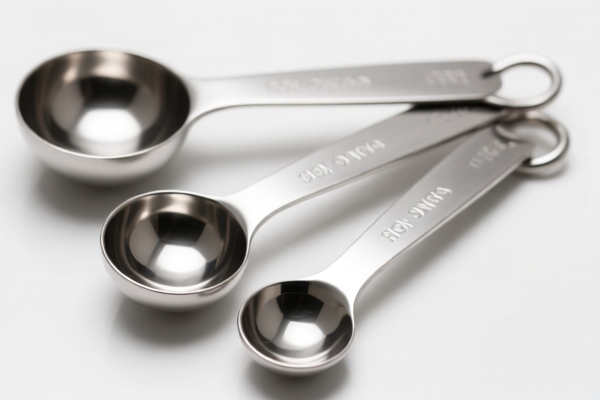
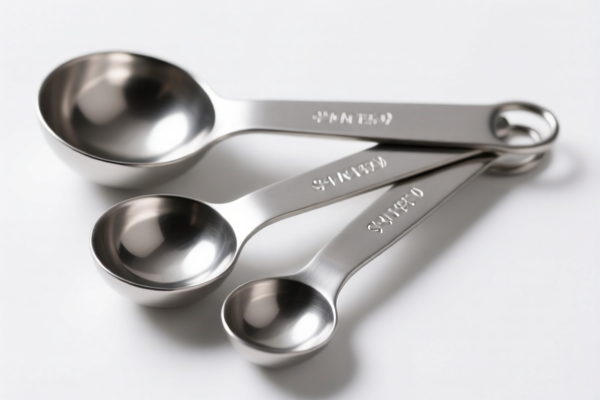
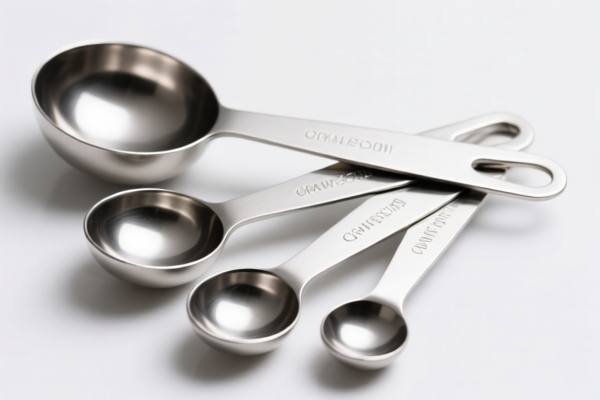
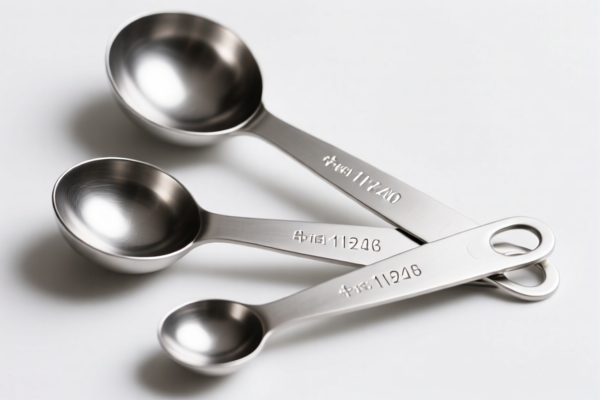
AI Analysis
🥄 Measuring Spoon Set (Stainless Steel & Ceramic Kitchen Tools)
🌐 HS Code Reference & Customs Clearance Guide | 2026 Latest Tariff Analysis | Strategic Clearance for Kitchenware
📌 I. Product Definition & Classification: What is a "Measuring Spoon Set"?
Measuring spoons and cups are essential tools for culinary precision, used in both domestic and commercial kitchens. In international trade, they are primarily classified as household utensils or tools, depending on their material and specific function. The classification hinges on two key factors: 1. Material: Stainless Steel, Aluminum, Copper, Ceramic, or Iron/Steel. 2. Functionality: Are they simple scoops (chapters 73 or 69) or classified as hand tools/utensils (chapters 82)?
⚠️ Key Distinction:
- Stainless Steel Sets: Often split between Chapter 73 (Articles of Iron/Steel) and Chapter 82 (Tools/Utensils). The distinction often lies in whether they are viewed as general "articles" or specific "hand tools/utensils." - Ceramic Sets: Strictly classified under Chapter 69 (Ceramic Products).
📦 II. HS Code Classification Details (2026 Latest Tariff Concordance)
Based on the provided data, here are the five possible HS Codes for a Measuring Spoon/Cup Set, along with their specific descriptions and tax implications.
| HS Code | Product Description | Material/Category | Total Tax Rate | Key Tax Components |
|---|---|---|---|---|
8205.51.30.30 |
Stainless Steel Measuring Spoon/Cup Set; Kitchen Utensils; Iron/Steel Material | Iron/Steel | 38.7% | Base: 3.7% + Section 301: 25.0% + Section 122: 10% |
7323.93.00.45 |
Stainless Steel Measuring Spoon/Cup Set; Cooking/Kitchen Supplies; Other Category | Stainless Steel | 62.0% | Base: 2.0% + Sec 301: 0% + Sec 122: 10% + Steel/Al/Cu Surcharge: 50% |
7323.93.00.60 |
Stainless Steel Measuring Spoon/Cup Set; Kitchen Utensils; Stainless Steel | Stainless Steel | 62.0% | Base: 2.0% + Sec 301: 0% + Sec 122: 10% + Steel/Al/Cu Surcharge: 50% |
8205.51.75.00 |
Stainless Steel Measuring Spoon/Cup Set; Household Tools; Other Hand Tools | Iron/Steel | 38.7% | Base: 3.7% + Section 301: 25.0% + Section 122: 10% |
6912.00.48.90 |
Ceramic Measuring Spoons; Tableware/Cookware; Ceramic Material | Ceramic | 19.8% | Base: 9.8% + Sec 301: 0% + Section 122: 10% |
🔍 Critical Insight:
- Stainless Steel sets face two divergent paths:
- Path A (Chapter 82): Lower total tax (38.7%). Classified as "Hand Tools" or "Utensils" (Iron/Steel).
- Path B (Chapter 73): Higher total tax (62.0%). Classified as general "Articles of Iron/Steel" (Other), but incurs a massive 50% surcharge on steel/aluminum/copper products.
- Ceramic sets offer the lowest tax burden (19.8%) but are limited to ceramic materials only.
💰 III. 2026 Latest Tariff Rate Breakdown (Detailed Policy Analysis)
✅ Applicable Country: United States (US)
✅ Origin: China (CN)
✅ Effective Date: 2025/2026 (Current Policy Framework)
🎯 1. 8205.51.30.30 & 8205.51.75.00 —— The "Lower Tax" Option (Chapter 82)
These codes classify measuring spoons as hand tools or kitchen utensils made of iron/steel.
| Item | Content |
|---|---|
| Base Tariff | 3.7% (Ad Valorem) |
| Section 301 Surcharge | +25.0% (Standard Trump/Biden era tariff on Chinese goods) |
| Section 122 Tariff | +10.0% (Specific provision for certain steel/iron articles) |
| Total Tax Rate | 38.7% |
| Tax Calculation | CIF Value × 38.7% |
| De Minimis Eligibility | ❌ No (Deny De Minimis for China-origin goods under Section 122/301) |
| Legal Basis Path | USITC:8205.51 → IEEPA:9903.01.25 → FOOTNOTE:122 |
📌 Explanation:
- These codes are favorable because they avoid the additional 50% steel surcharge found in Chapter 73.
- The 25% Section 301 tariff applies to almost all Chinese manufactured goods.
- Strategic Advantage: If your stainless steel spoons can be justified as "hand tools" or "utensils" (Chapter 82) rather than general "steel articles" (Chapter 73), you save 23.3% in tariffs.
🎯 2. 7323.93.00.45 & 7323.93.00.60 —— The "High Tax" Trap (Chapter 73)
These codes classify the items as articles of iron/steel (other), specifically stainless steel household items.
| Item | Content |
|---|---|
| Base Tariff | 2.0% (Ad Valorem) |
| Section 301 Surcharge | +0.0% (Note: Some sub-categories may have 0% Section 301, but see below) |
| Section 122 Tariff | +10.0% |
| Steel/Al/Cu Surcharge | +50.0% (Crucial!) |
| Total Tax Rate | 62.0% |
| Tax Calculation | CIF Value × 62.0% |
| De Minimis Eligibility | ❌ No |
| Legal Basis Path | USITC:7323.93 → FOOTNOTE:Steel/Al/Cu Surcharge |
📌 Warning:
- The 50% surcharge on steel, aluminum, and copper products is the primary driver of this high rate.
- Even though the base tariff is low (2.0%), the additional 50% makes this code extremely expensive.
- Why would you use this? Only if the product cannot be classified as a "tool" or "utensil" under Chapter 82. For example, if the measuring spoons are part of a larger, non-functional steel assembly.
🎯 3. 6912.00.48.90 —— The "Lowest Tax" Option (Ceramic)
For ceramic measuring spoons/cups.
| Item | Content |
|---|---|
| Base Tariff | 9.8% (Ad Valorem) |
| Section 301 Surcharge | +0.0% |
| Section 122 Tariff | +10.0% |
| Total Tax Rate | 19.8% |
| Tax Calculation | CIF Value × 19.8% |
| De Minimis Eligibility | ❌ No (Check specific de minimis rules for ceramics, but Section 122 often blocks it) |
| Legal Basis Path | USITC:6912.00 → FOOTNOTE:122 |
📌 Advantage:
- Ceramic products do not incur the 50% steel surcharge.
- They are not subject to the higher 25% Section 301 tariff (if applicable to ceramics, it might be 0% or lower).
- Best for cost optimization: If you can use ceramic materials, this is the most tax-efficient option.
🛠️ IV. Customs Clearance Practical Advice (Avoid Pitfalls)
✅ 1. Documentation Checklist (Non-negotiable)
| Document | Required | Details |
|---|---|---|
| ✅ Product Specification Sheet | ✔️ | Must specify material (Stainless Steel vs. Iron vs. Ceramic), dimensions, and weight. |
| ✅ Photos (Clear) | ✔️ | Show the set, any branding, and material texture. Distinguish between "shiny steel" (Stainless) and "matte steel" (Iron). |
| ✅ Commercial Invoice | ✔️ | Clearly state: "Measuring Spoon Set, Kitchen Utensil, [Material]." Avoid vague terms like "Kitchen Accessories." |
| ✅ Packing List | ✔️ | Detail each item in the set. If it's a mix (e.g., steel spoons + ceramic cup), split the shipment or declare accurately to avoid misclassification. |
| ✅ Material Declaration | ✔️ | Explicitly state "Stainless Steel" or "Ceramic." Customs may require Mill Certificates for steel claims. |
| ✅ Country of Origin | ✔️ | Must be marked "Made in China" on the product and packaging. |
✅ 2. Declaration Strategy (Key Tips)
🔥 "Classify as Tool, Not Article; Use Ceramic, Save Cash!"
| Scenario | Recommended HS Code | Tax Rate | Reasoning |
|---|---|---|---|
| Stainless Steel Spoons | 8205.51.30.30 or 8205.51.75.00 |
38.7% | Justify as "Hand Tools" or "Utensils" (Chapter 82) to avoid the 50% steel surcharge. |
| Stainless Steel Spoons (Misclassified) | 7323.93.00.45/60 |
62.0% | AVOID. Only use if Chapter 82 is legally invalid. The 50% surcharge is a cost killer. |
| Ceramic Spoons/Cups | 6912.00.48.90 |
19.8% | BEST OPTION. Lowest tax. Ensure material is 100% ceramic, not coated metal. |
| Mixed Set (Steel + Ceramic) | Split Declaration | N/A | Declare steel parts under 8205 and ceramic parts under 6912. Do not lump them into one HS code unless specifically allowed. |
✅ 3. Special Cases & Precautions
| Situation | Handling Advice |
|---|---|
| OEM Custom Sets | Provide design drawings. If the shape is unique, argue for "Hand Tool" classification under Chapter 82. |
| Coated Steel (e.g., Non-Stick) | Still classified as steel. Ensure the coating is thin enough not to change the material classification. |
| Set vs. Individual Items | If sold as a "Set," the entire set is classified under one HS code. The code is determined by the component that gives the set its essential character. Usually, this is the material (Stainless Steel) or the number of pieces. |
| De Minimis Risk | Section 122 and Section 301 tariffs generally deny de minimis (below $800) for Chinese-origin goods. Plan for full duties even on small samples. |
🌍 V. Global Market Comparison (2026 Latest)
| Country/Region | Recommended HS Code | Estimated Tax | Notes |
|---|---|---|---|
| 🇺🇸 USA | 8205.51.30.30 (Steel) |
38.7% | Best for steel. Avoid 7323 due to 50% surcharge. |
| 🇺🇸 USA | 6912.00.48.90 (Ceramic) |
19.8% | Best overall tax rate. |
| 🇨🇳 China | 8205.51.30.30 |
~10-13% | Lower base rates. No Section 301/122. |
| 🇪🇺 EU | 7323.93 or 8205 |
4.2% - 6.0% | No Section 301. Check for anti-dumping duties on steel kitchenware. |
| 🇬🇧 UK | 8205.51 |
~4.0% - 6.0% | Post-Brexit rules. Generally stable. |
📌 Conclusion:
- USA Market: Ceramic is the most tax-efficient material. For steel, Chapter 82 (8205) is critical to avoid the 50% surcharge.
- Other Markets: Generally lower taxes, but check for anti-dumping duties on steel products from China.
📌 VI. Common Errors & Pitfalls (Lessons Learned)
❌ Error 1: Classifying stainless steel spoons as 7323.93.00.45
👉 Consequence: Paying 62.0% tax instead of 38.7%. Loss of 23.3% margin!
👉 Fix: Argue for "Hand Tool/Utensil" classification under Chapter 82.
❌ Error 2: Mixing materials (e.g., steel spoons with wooden handles) without splitting
👉 Consequence: Customs may classify the entire set under the higher-risk material or reject the declaration.
👉 Fix: Split shipments or declare separately if materials are significantly different.
❌ Error 3: Using vague descriptions like "Kitchen Gadgets"
👉 Consequence: High risk of audit, detention, and reclassification by CBP.
👉 Fix: Use precise terms: "Stainless Steel Measuring Spoons, Kitchen Utensils."
✅ Best Practice:
"Material Matters: Steel? Use Chapter 82. Ceramic? Use Chapter 69. Avoid Chapter 73's 50% Surcharge!"
🎯 VII. Conclusion: Optimize Your Classification, Maximize Profit!
🎯 Key Takeaway:
🔹 For Stainless Steel: Aim for
8205.51.30.30or8205.51.75.00(38.7%) to avoid the 50% steel surcharge.
🔹 For Ceramic: Use6912.00.48.90(19.8%) for the lowest possible tax.
🔹 Never use7323.93.00.45or7323.93.00.60unless you have no choice. The 50% surcharge is a deal-breaker.
📌 Pro Tip:
If you are sourcing from China, consult a customs broker to confirm the "Essential Character" of your set. If the set includes multiple materials, ensure the dominant component is clearly declared. For stainless steel, emphasize the "Utensil" aspect (Chapter 82) over the "Article of Iron/Steel" aspect (Chapter 73).
📣 Action Plan:
📞 Contact: Professional Customs Broker
📄 Prepare: Material Certificates, Product Photos, Detailed Spec Sheets
🚀 Goal: Clear Customs Efficiently, Save 20%+ in Tariffs, Boost Profit Margins!
✨ Smart Classification = Smart Savings!
💼 Your Bottom Line Depends on the First Line of Your Invoice.
Customer Reviews
About HS Code Classification
The Harmonized System (HS) is an internationally standardized nomenclature developed by the World Customs Organization (WCO) to classify traded products. Over 200 countries use the HS system as the basis for customs tariffs, trade statistics, and import/export regulations.
Each HS code follows a hierarchical structure:
- Chapter (2 digits) — Broad category of goods (e.g., Chapter 84: Machinery and Mechanical Appliances)
- Heading (4 digits) — More specific grouping within the chapter
- Subheading (6 digits) — Internationally standardized breakdown, used by all WCO member countries
- National subdivisions (8-10 digits) — Country-specific extensions for further classification, such as US HTSUS 10-digit codes
Correct HS code classification is essential for smooth customs clearance, accurate duty payment, and compliance with trade regulations. Misclassification can lead to customs delays, overpayment of duties, or penalties.
When importing from CN to US, the applicable tariff rates may include:
- Most-Favored-Nation (MFN) rate — The standard duty rate applied to WTO members
- General rate — Applied to countries without trade agreements
- Trade remedy duties — Additional tariffs such as Section 301 (anti-dumping), Section 232 (national security), or countervailing duties
The information provided on this page is for reference purposes only. For official classification, please consult with your local customs authority or a licensed customs broker.