Measuring Spoon and Cup Set
CN → US| HS Code | Tariff Rate | Origin | Destination | Doc |
|---|---|---|---|---|
| 8205513030 | 38.7% | CN | US | Official Doc |
| 7323930045 | 62.0% | CN | US | Official Doc |
| 7323930060 | 62.0% | CN | US | Official Doc |
| 8205517500 | 38.7% | CN | US | Official Doc |
Product Images
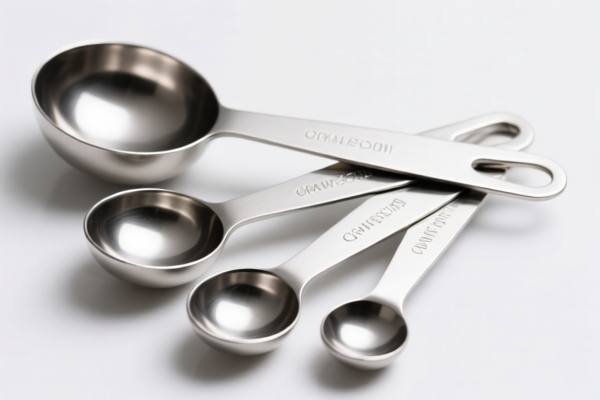
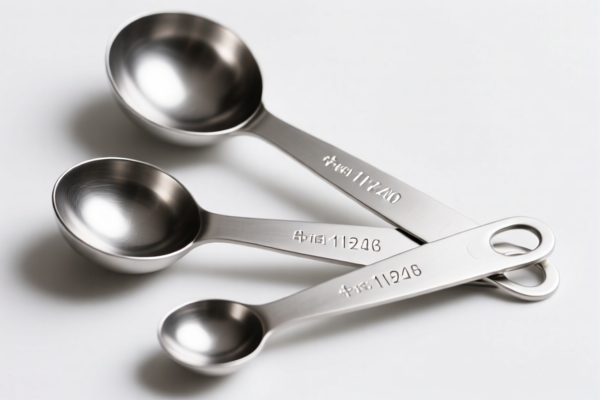
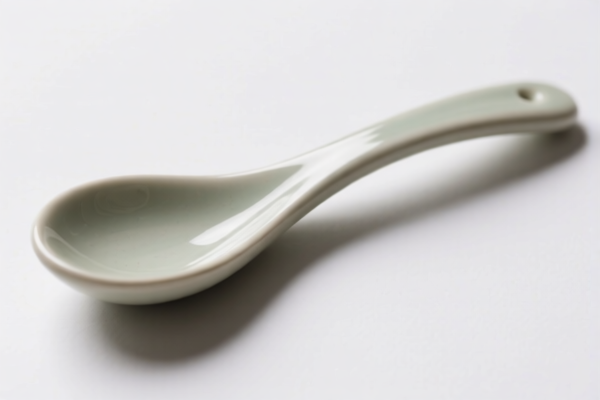

AI Analysis
🥄 Measuring Spoon and Cup Set (Kitchen Utensils)
🌐 HS Code Reference & US Customs Clearance Guide | 2026 Tax Analysis & Professional Strategy
📌 One, Product Definition & Classification: Do You Really Know Your "Measuring Set"?
Measuring Spoon and Cup Sets are essential tools in culinary arts, precision baking, and scientific cooking. In international trade, the classification strictly depends on the material composition and the specific manufacturing intent, leading to drastically different tax outcomes in the US market.
The data reveals two distinct classification paths:
Path A: "Stainless Steel" Kitchenware (General)
Material Focus: Classified under stainless steel articles of Tableware (Chapter 73).
* Risk: High tariffs due to specific "Steel/Aluminum/Copper" surcharges.
* HS Codes:* 7323.93.00.45, 7323.93.00.60.
Path B: "Steel/Iron" Tools (Hand Tools)
Material Focus: Classified under Iron/Steel tools or utensils often categorized under "Hand Tools" (Chapter 82).
* Benefit: Slightly lower base tariffs, though still subject to Section 301 and 122 tariffs.
* HS Codes:* 8205.51.30.30, 8205.51.75.00.
⚠️ Key Differentiation Point:
- If declared as "Tableware/Kitchen Utensils" (Stainless Steel, Chapter 73) → Total Tax: 62.0% (Heavy penalty on steel).
- If declared as "Hand Tools/General Tools" (Iron/Steel, Chapter 82) → Total Tax: 38.7% (Slightly lighter, but still high).
- CRITICAL WARNING: Misdeclaring a stainless steel kitchen tool as a "tool" to save tax is a customs fraud risk. The classification must match the physical description and intended use perfectly.
📦 Two, HS Code Classification Details (2026 US Tariff Authority)
| HS Code | Product Description | Material | Applicable Scenario |
|---|---|---|---|
8205.51.30.30 |
Stainless Measuring Spoon/Cup Set, Kitchen Utensils | Iron/Steel | Tools classified as "Hand Tools" or general iron/steel implements. |
8205.51.75.00 |
Stainless Measuring Spoon/Cup Set, Household Tools | Iron/Steel | "Other hand tools" category for general household use. |
7323.93.00.45 |
Stainless Measuring Spoon/Cup Set, Cooking/Kitchen Items | Stainless Steel | General tableware, "Other" category under stainless steel goods. |
7323.93.00.60 |
Stainless Measuring Spoon/Cup Set, Kitchen Utensils | Stainless Steel | Specific stainless steel kitchen utensils (High Tariff Group). |
🔍 Critical Note:
- Chapter 73 (7323.93...): These items attract the 50% "Steel, Aluminum, Copper" surcharge. This is the most expensive path.
- Chapter 82 (8205.51...): These items attract a 25% Section 301 surcharge (often), avoiding the specific 50% steel surcharge but incurring other penalties.
- Material Proof: The invoice and packing list must explicitly state the material. If it says "Stainless Steel" but you declare under Chapter 82 ("Iron/Steel"), you risk a customs audit.
💰 Three, 2026 US Tariff Rate Breakdown (Including Surcharges & Policies)
✅ Target Market: United States (US)
✅ Origin: China (CN)
✅ Effective Date: Current 2026 Trade Policy (Section 301, 122, Steel Surcharge)
🎯 1. Path A: The "High Risk" Route (Stainless Steel Tableware)
Codes: 7323.93.00.45 | 7323.93.00.60
| Item | Detail |
|---|---|
| Base Duty (MFN) | 2.0% (Standard ad valorem) |
| Section 301 / USITC | 0.0% (No specific Section 301 surcharge listed for this subheading in data) |
| Steel/Al/Cu Surcharge | 50.0% (Specific surcharge for Steel products under Footnote/Rule) |
| Section 122 Tariff | 10.0% (Retaliatory/Specific Section 122 duty) |
| 🔥 TOTAL TAX RATE | 62.0% |
| Tax Calculation | CIF Value × 62% |
| Legal Basis | Footnote: Steel/Al/Cu 50% + Section 122: 10% + Base: 2% |
📌 Explanation:
- The 50% surcharge is the killer. It applies specifically to "Steel, Aluminum, Copper products" under current US trade rules for this chapter.
- Even though Section 301 shows 0% here, the 50% steel tax + 10% Section 122 makes this the most expensive classification.
- Strategy: Avoid Classifying standard stainless steel measuring sets here unless the product is explicitly "stainless steel tableware" and no alternative exists.
🎯 2. Path B: The "Tool" Route (Iron/Steel General Tools)
Codes: 8205.51.30.30 | 8205.51.75.00
| Item | Detail |
|---|---|
| Base Duty (MFN) | 3.7% |
| Section 301 / USITC | 25.0% (Standard Section 301 surcharge for Chinese goods) |
| Steel/Al/Cu Surcharge | 0.0% (Not applicable for this specific tool classification in data) |
| Section 122 Tariff | 10.0% |
| 🔥 TOTAL TAX RATE | 38.7% |
| Tax Calculation | CIF Value × 38.7% |
| Legal Basis | Section 301: 25% + Section 122: 10% + Base: 3.7% |
📌 Explanation:
- By classifying under Chapter 82 (Hand Tools), you avoid the 50% steel surcharge.
- You instead face the 25% Section 301 tariff.
- Savings: 23.3% lower total tax compared to the Chapter 73 classification.
- Requirement: The product must be defensible as a "tool" or "utensil" rather than "tableware" to qualify for this lower bracket (e.g., emphasizing the "tool" aspect in documentation).
🛠️ Four, Customs Clearance Practical Advice (Avoiding Pitfalls)
✅ 1. Documentation Checklist (Non-Negotiable)
| Document | Requirement | Why It Matters |
|---|---|---|
| Commercial Invoice | Must specify: "Stainless Steel Measuring Set" OR "Iron/Steel Kitchen Tool" | Determines Chapter 73 vs. Chapter 82. Mismatch = Audit. |
| Material Declaration | Explicitly state % of Stainless Steel vs. Iron/Steel. | Crucial for applying the 50% Steel Surcharge or avoiding it. |
| Product Photos | Show the set in use (measuring flour/sugar) AND the raw material texture. | Proves "Kitchen Utensil" vs. "Industrial Tool". |
| Packing List | Clearly list "Set" (Spoon + Cup). Do not split if they are a single SKU. | Splitting sets can trigger "Parts" classification with higher taxes. |
| Function Statement | "For measuring dry/wet ingredients in cooking." | Supports "Kitchen Utensil" classification. |
✅ 2. Declaration Strategy (The "Tax Optimization" Game)
🔥 Golden Rule: "Material Defines Chapter, Intent Defines Subheading!"
| Scenario | Recommended HS Code | Tax Rate | Risk Level |
|---|---|---|---|
| Product is clearly Stainless Steel Tableware | 7323.93.00.60 |
62.0% | 🟢 Safe (Compliant) |
| Product is generic "Kitchen Tool" (Iron/Steel mix) | 8205.51.30.30 |
38.7% | 🟡 High Risk (Requires proof) |
| Product is "Stainless Steel" but declared as "Iron/Steel" | 8205.51.75.00 |
38.7% | 🔴 FRAUD RISK (False declaration) |
| Splitting the Set (Spoon vs. Cup separately) | N/A | Higher | 🔴 BAD PRACTICE |
Expert Tip:
- If your product is 100% Stainless Steel, you generally cannot escape the 62% tax if classified under Chapter 73.
- However, if your product contains significant iron/steel components or is marketed as a "General Kitchen Tool" rather than "Tableware", there is a legal argument to use8205.51codes to save 23.3%.
- DO NOT falsely declare "Stainless Steel" as "Iron" to get the 38.7% rate. Customs will seize the goods.
✅ 3. Special Circumstances & Section 122
| Situation | Advice |
|---|---|
| Section 122 Tariff (10%) | Applies to ALL Chinese-origin measuring sets regardless of Chapter 82 or 73. It is unavoidable. |
| Steel Surcharge (50%) | Only applies if the product is definitively "Stainless Steel" under Chapter 73 (7323.93). |
| Section 301 (25%) | Only applies if you successfully classify under Chapter 82 (8205.51). |
| De Minimis (Section 321) | ⚠️ WARNING: Measuring sets DO NOT QUALIFY for de minimis duty-free entry ($800) in the US. They are subject to the full tax rates calculated above. |
🌍 Five, Global Market Comparison (2026 Context)
| Region | Classification Style | Tax Rate (China Origin) | Note |
|---|---|---|---|
| 🇺🇸 USA | Strict (Chapter 73 vs 82) | 38.7% ~ 62.0% | Section 122 adds 10% on top. Steel surcharge is critical. |
| 🇪🇺 EU | Chapter 73 (Tableware) | ~10-15% | No 50% steel surcharge, but standard duties apply. |
| 🇨🇦 Canada | Chapter 73 | ~5-10% | CUSMA benefits may apply (check rules of origin). |
📌 Conclusion for US Market:
The US tariff structure is punitive for Chinese kitchenware. The 62% rate is the baseline for stainless steel tableware.
Savings Strategy: The only way to reduce this to 38.7% is to have a legally defensible case for classifying the item as a "Hand Tool" (Chapter 82) rather than "Tableware" (Chapter 73), while avoiding the 50% steel surcharge.
📌 Six, Common Mistakes & How to Avoid Them
❌ Mistake 1: Declaring "Stainless Steel Measuring Set" under 8205.51 (Iron/Steel) just to save tax.
👉 Result: Customs audits, seizure, 62% tax bill + penalties for false declaration.
❌ Mistake 2: Forgetting the Section 122 10% tariff in calculations.
👉 Result: Price miscalculation, losing the entire profit margin.
❌ Mistake 3: Splitting the set (Spoons in one box, Cups in another) to avoid "set" classification.
👉 Result:海关 (Customs) will still see them as a single set if shipped together or ordered together.
✅ Correct Approach:
"Declare accurately based on material composition. If the product is truly Stainless Steel Tableware, accept the 62% cost. If it can be legally classified as a 'Tool', prepare a detailed technical dossier to support the Chapter 82 classification."
🎯 Seven, Final Recommendation: Strategic Clearance
🎯 The Verdict:
- If 100% Stainless Steel: Expect 62.0% (Code: 7323.93.00.45 or 60). No escape from the 50% steel tax.
- If Mixed Material / "Tool" Design: Attempt 38.7% (Code: 8205.51.30.30 or 75). Only with strong justification.
🔹 Formula:
CIF Value × (Base + 25% [if Tool] or 50% [if Steel] + 10% [Section 122]) = Total Duty
📌 Pro Tip:
- Pre-Clearance: Submit a Binding Ruling Request to US Customs (CBP) before shipping if you are unsure whether your set qualifies as "Tableware" (73) or "Tool" (82). This can save you thousands in duties and prevent delays.
- Supplier Negotiation: If your supplier is in China, ask them to repackage or slightly alter the material description (if legally possible) to fit the "Tool" category.
📣 Action Plan:
1. Verify Material: Is it 100% Stainless? If yes, prepare for 62%.
2. Check Intent: Is it sold as a "Tool" or "Kitchenware"?
3. Calculate: Add 10% Section 122 to your base cost.
4. File: Use the correct HS Code based on the "Truth of the Product".
✨ Professional Clearance Starts with Accurate HS Codes!
💼 Don't let the 62% tax eat your profit. Optimize your declaration strategy today!
Customer Reviews
About HS Code Classification
The Harmonized System (HS) is an internationally standardized nomenclature developed by the World Customs Organization (WCO) to classify traded products. Over 200 countries use the HS system as the basis for customs tariffs, trade statistics, and import/export regulations.
Each HS code follows a hierarchical structure:
- Chapter (2 digits) — Broad category of goods (e.g., Chapter 84: Machinery and Mechanical Appliances)
- Heading (4 digits) — More specific grouping within the chapter
- Subheading (6 digits) — Internationally standardized breakdown, used by all WCO member countries
- National subdivisions (8-10 digits) — Country-specific extensions for further classification, such as US HTSUS 10-digit codes
Correct HS code classification is essential for smooth customs clearance, accurate duty payment, and compliance with trade regulations. Misclassification can lead to customs delays, overpayment of duties, or penalties.
When importing from CN to US, the applicable tariff rates may include:
- Most-Favored-Nation (MFN) rate — The standard duty rate applied to WTO members
- General rate — Applied to countries without trade agreements
- Trade remedy duties — Additional tariffs such as Section 301 (anti-dumping), Section 232 (national security), or countervailing duties
The information provided on this page is for reference purposes only. For official classification, please consult with your local customs authority or a licensed customs broker.