Meat Grinder
CN → US| HS Code | Tariff Rate | Origin | Destination | Doc |
|---|---|---|---|---|
| 8509400040 | 14.2% | CN | US | Official Doc |
| 8438500090 | 37.8% | CN | US | Official Doc |
| 8509400025 | 14.2% | CN | US | Official Doc |
| 8438500010 | 37.8% | CN | US | Official Doc |
| 8210000000 | 38.7% | CN | US | Official Doc |
Product Images
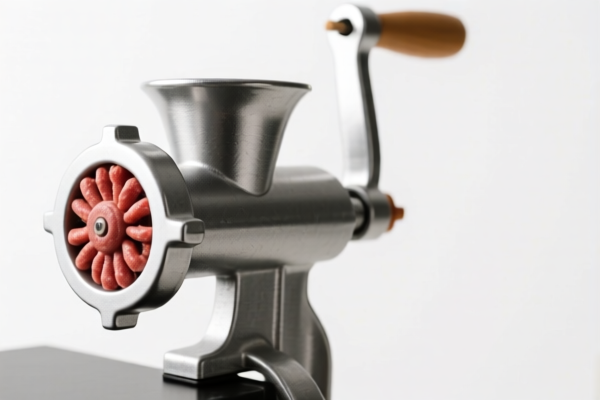
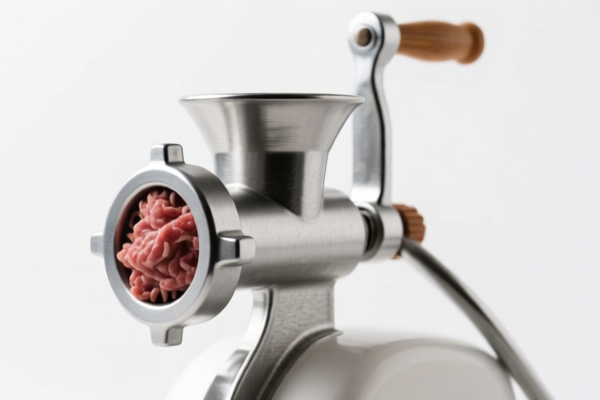
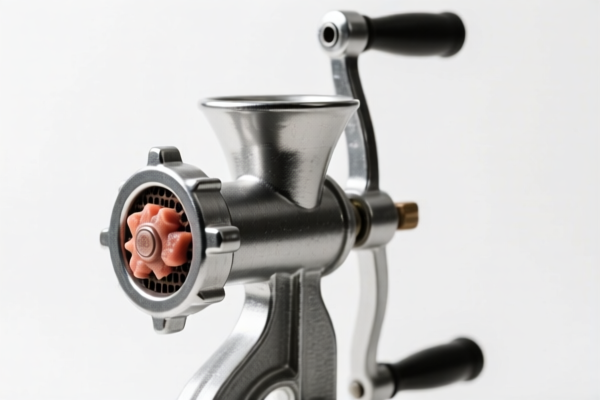

AI Analysis
🥩 Meat Grinder (Iron Food Grinder)
🌐 HS Code Reference & Customs Clearance Guide | 2026 Latest Tariff Analysis | Professional Clearance Strategy
📌 Part 1: Product Definition & Classification: Do You Really Understand the "Meat Grinder"?
The iron meat grinder is a ubiquitous tool in both household kitchens and industrial food processing. In international trade, its classification depends heavily on its power source and intended use. It is generally divided into two main categories:
- Household Electric Appliances (Home Use): Portable, low-power devices designed for personal or small-family food preparation. These fall under HS Chapter 85 (Electrical machinery).
- Industrial/Commercial Machinery: Larger, robust machines designed for bulk meat preparation in factories or commercial butcheries. These fall under HS Chapter 84 (Nuclear reactors, boilers, machinery).
- Manual Hand Tools: Non-electric, manually operated grinders. These fall under HS Chapter 82 (Articles of iron or steel).
⚠️ Key Distinction Point:
- If the device is electric and intended for household use → Likely 8509.40
- If the device is electric and intended for industrial/commercial meat preparation → Likely 8438.50
- If the device is non-electric (hand-crank) → Likely 8210.00
📦 Part 2: HS Code Classification Details (2026 Latest Tariff Authority Comparison)
Based on the provided data, here are the specific HS Codes for Iron Meat Grinders:
| HS Code | Product Description | Application Scenario | Power Source / Type |
|---|---|---|---|
8509.40.00.40 |
Iron Meat Grinder, for food grinding and processing, form: electrical household appliance | Home kitchens, small-scale household food prep | ✅ Electric (Household) |
8438.50.00.90 |
Iron Meat Grinder, for meat preparation, material: iron, fits meat preparation machinery classification | Industrial meat plants, commercial butcheries, high-volume processing | ✅ Electric (Industrial/Commercial) |
8509.40.00.25 |
Iron Meat Grinder, for grinding meat, falls under food grinding, processing & mixing equipment category | Household or small commercial use, general food processing | ✅ Electric (Household/General) |
8438.50.00.10 |
Iron Meat Grinder, for meat preparation machinery, material: iron, fits meat or poultry preparation machinery classification | Dedicated meat/poultry processing lines | ✅ Electric (Industrial/Commercial) |
8210.00.00.00 |
Iron Meat Grinder, for food preparation, form: mechanical utensil, material: iron, fits manual mechanical utensils classification | Manual hand-crank grinders, non-electric tools | ❌ Non-Electric (Manual) |
🔍 Critical Reminder:
- Electric vs. Manual: The single biggest determinant of the HS code is whether the machine is electric. Electric household units go to 8509; electric industrial units go to 8438; manual units go to 8210. - Capacity Matters: Even if electric, if the grinder is too large for household use and designed for industrial throughput, it must be classified under 8438, not 8509. Misclassification here can lead to severe penalties.
💰 Part 3: 2026 Latest Tariff Rate Breakdown (Including Surcharges & Policy Add-ons)
✅ Applicable Country: United States (US)
✅ Origin: China (CN)
✅ Effective Time: Current tariffs apply (including Section 122 and Section 301 measures)
🎯 1. 8509.40.00.40 & 8509.40.00.25 —— Household Electric Meat Grinders
These two codes are treated identically regarding tariff structure.
| Item | Content |
|---|---|
| Base Tariff | 4.2% (ad valorem) |
| Surtariff (Section 301) | 0.0% |
| Section 122 Tariff | 10.0% |
| Total Tariff Rate | 14.2% |
| Tax Calculation | CIF Value × 14.2% |
| De Minimis Eligibility | ❌ Not Eligible (Deny de minimis for Section 122 items) |
| Legal Basis Path | 122 Tariff: 10% → Base: 4.2% → Section 301: 0% |
📌 Explanation:
- The 14.2% total rate is significantly lower than industrial machinery. - The Section 122 tariff (10%) applies to certain electrical appliances from China. - No Section 301 (25%) surcharge applies to these specific household electrical codes in this dataset.
🎯 2. 8438.50.00.90 & 8438.50.00.10 —— Industrial/Commercial Meat Preparation Machinery
These codes apply to larger, electric meat processing machines.
| Item | Content |
|---|---|
| Base Tariff | 2.8% (ad valorem) |
| Surtariff (Section 301) | 25.0% |
| Section 122 Tariff | 10.0% |
| Total Tariff Rate | 37.8% |
| Tax Calculation | CIF Value × 37.8% |
| De Minimis Eligibility | ❌ Not Eligible |
| Legal Basis Path | 301 Tariff: 25% → 122 Tariff: 10% → Base: 2.8% |
📌 Explanation:
- The 37.8% total rate is very high, driven primarily by the 25% Section 301 tariff. - Even though the base rate is low (2.8%), the additional surcharges make this expensive to import. - Crucial: If you declare an industrial grinder under8509(14.2%) instead of8438(37.8%), customs will flag the discrepancy due to capacity/power ratings, leading to audits and penalties.
🎯 3. 8210.00.00.00 —— Manual Iron Meat Grinder
| Item | Content |
|---|---|
| Base Tariff | 3.7% (ad valorem) |
| Surtariff (Section 301) | 25.0% |
| Section 122 Tariff | 10.0% |
| Total Tariff Rate | 38.7% |
| Tax Calculation | CIF Value × 38.7% |
| De Minimis Eligibility | ❌ Not Eligible |
| Legal Basis Path | 301 Tariff: 25% → 122 Tariff: 10% → Base: 3.7% |
📌 Explanation:
- Manual grinders are subject to the full 25% Section 301 tariff plus the 10% Section 122 tariff. - Total 38.7% is the highest among all options. - Note: Some manual tools may qualify for exemptions if they are "hand tools for agriculture/industry," but general "iron utensils" do not.
🛠️ Part 4: Customs Clearance Practical Advice (Real-World Pitfall Guide)
✅ 1. Required Documentation Checklist (Missing Items = Delays)
| Document | Mandatory? | Notes |
|---|---|---|
| ✅ Product Specifications | ✔️ | Must specify: Power (Watts/Volts), Capacity (kg/hr), Material (Stainless/Iron), Voltage. |
| ✅ Photos (Labeled) | ✔️ | Clear shots of the nameplate, motor, and overall structure. |
| ✅ Commercial Invoice | ✔️ | Must clearly state: "Electric Meat Grinder" or "Manual Meat Grinder" and HS Code. |
| ✅ Packing List | ✔️ | List all parts (motor, blades, hopper, clamp) to avoid "missing parts" claims. |
| ✅ Energy Label (for Electric) | ✔️ | DOE (Department of Energy) compliance may be required for household appliances. |
| ✅ FCC Certification (for Electric) | ✔️ | Required for electrical interference compliance in the US market. |
✅ 2. Declaration Tips (Key Rules)
🔥 "Classify by Power & Purpose: Household=8509, Industrial=8438, Manual=8210!"
| Scenario | Correct HS Code | Wrong Practice | Consequence |
|---|---|---|---|
| Small home electric grinder (e.g., <1500W) | 8509.40.00.40 / .25 |
Declared as 8438 (Industrial) |
Overpaid tax (14.2% vs 37.8%) → Lost profit |
| Large commercial electric grinder (>1500W, industrial duty) | 8438.50.00.10 / .90 |
Declared as 8509 (Household) |
Audit Risk: Customs may reclassify and charge back ~23.6% + penalties |
| Hand-crank iron grinder | 8210.00.00.00 |
Declared as 8509 |
Audit Risk: No motor? Why electric code? → Delay + Fine |
| Stainless Steel Grinder | 8210 or 8438/8509 depending on power |
Declared as "Stainless" without HS code | Stainless steel has different base rates; misdeclaration leads to errors |
⚠️ Critical Warning:
- Do NOT try to classify an industrial machine as a household appliance to save taxes. Customs uses power consumption, throughput capacity, and motor type to verify. - If the machine has a plug and is electric, it is rarely8210. - If the machine is manual, it is rarely8509or8438.
✅ 3. Special Cases Handling
| Scenario | Handling Advice |
|---|---|
| Kit assembles (Parts Shipped Separately) | Declare as "Parts of Meat Grinders" if incomplete, or "Complete Machine" if ready-to-use. Incomplete kits may have different duty rates. |
| Stainless Steel vs. Iron | The description says "Iron," but if it's stainless, it doesn't change the HS code (8509/8438/8210) but may affect documentation (material certificate). |
| OEM/Private Label | Ensure the invoice matches the branded product. Customs may check against patent/trademark databases. |
| Food Contact Material Safety | For electric grinders, ensure materials meet FDA/USDA standards for food contact. This is not a tariff issue but a regulatory compliance issue. |
🌍 Part 5: Global Market Tariff Comparison (2026 Outlook)
| Country/Region | Recommended HS Code | Est. Tariff (China Origin) | Certification Requirements | Notes |
|---|---|---|---|---|
| 🇺🇸 USA | 8509.40 (Household) |
14.2% | FCC, DOE | High tariff for 8438/8210 |
| 🇺🇸 USA | 8438.50 (Industrial) |
37.8% | NSF, UL | Includes 25% Section 301 |
| 🇪🇺 EU | 8509.40 |
~5-7% | CE, RoHS, WEEE | No Section 301/122 equivalents |
| 🇨🇳 China | 8509.40 |
~10-15% (Import) | CCC | Varies by type |
| 🇬🇧 UK | 8509.40 |
~5-7% | UKCA | Post-Brexit rules apply |
📌 Conclusion:
- The US market is uniquely challenging due to Section 301 and Section 122 tariffs. - Household electric grinders (8509) are the most cost-effective for US import at 14.2%. - Industrial and manual grinders face tariffs >37%, significantly impacting profitability.
📌 Part 6: Common Errors & Pitfall Guide (Lessons Learned)
❌ Mistake 1: Declaring a 2000W electric industrial grinder as a "Household Appliance" (8509)
👉 Consequence: Customs audits find high power rating. Re-classifies to 8438. Back taxes ~23.6% + interest.
❌ Mistake 2: Declaring a hand-crank grinder as "Electric" (8509) to avoid Section 301
👉 Consequence: No plug/motor found. Shipment detained. Re-classified to 8210. Tariff jumps to 38.7%.
❌ Mistake 3: Ignoring "Section 122" (10%) for all electrical goods from China
👉 Consequence: Assuming only 301 applies. Underpayment by 10% on all electric items.
❌ Mistake 4: Using generic name "Food Grinder" without specifying power
👉 Consequence: Customs ambiguity. Delays of 2-4 weeks for additional documentation.
✅ Correct Practice:
"Electric Meat Grinder, 120V, 800W, Household Use, Model XYZ, FCC Certified"
OR
"Commercial Meat Grinder, 220V, 3HP, Industrial Use, Model ABC, UL Listed"
🎯 Part 7: Conclusion: Professional Declaration Saves Money!
🎯 Remember the Golden Rules:
🔹 "Household Electric = 8509 (14.2%)"
🔹 "Industrial Electric = 8438 (37.8%)"
🔹 "Manual Iron = 8210 (38.7%)"
🔹 "Power Source Dictates Code: No Plug = Not 8509/8438!"📌 Pro Tip:
If you are importing small, home-use grinders, ensure they are marketed and documented strictly as "Household Electrical Appliances" to qualify for the 14.2% rate.
For bulk industrial imports, budget for the 37.8% tariff or explore supply chain diversification.
📣 Immediate Action:
📞 Consult your customs broker with product specs.
📄 Request a Binding Tariff Ruling (BTR) from CBP if unsure.
🚀 Clearance is faster, cheaper, and safer when the HS Code is accurate!
✨ Professional clearance starts with precise classification!
💼 Your profit margin depends on getting the tax right!
Customer Reviews
About HS Code Classification
The Harmonized System (HS) is an internationally standardized nomenclature developed by the World Customs Organization (WCO) to classify traded products. Over 200 countries use the HS system as the basis for customs tariffs, trade statistics, and import/export regulations.
Each HS code follows a hierarchical structure:
- Chapter (2 digits) — Broad category of goods (e.g., Chapter 84: Machinery and Mechanical Appliances)
- Heading (4 digits) — More specific grouping within the chapter
- Subheading (6 digits) — Internationally standardized breakdown, used by all WCO member countries
- National subdivisions (8-10 digits) — Country-specific extensions for further classification, such as US HTSUS 10-digit codes
Correct HS code classification is essential for smooth customs clearance, accurate duty payment, and compliance with trade regulations. Misclassification can lead to customs delays, overpayment of duties, or penalties.
When importing from CN to US, the applicable tariff rates may include:
- Most-Favored-Nation (MFN) rate — The standard duty rate applied to WTO members
- General rate — Applied to countries without trade agreements
- Trade remedy duties — Additional tariffs such as Section 301 (anti-dumping), Section 232 (national security), or countervailing duties
The information provided on this page is for reference purposes only. For official classification, please consult with your local customs authority or a licensed customs broker.