Meat Tenderizer
CN → US| HS Code | Tariff Rate | Origin | Destination | Doc |
|---|---|---|---|---|
| 8509400040 | 14.2% | CN | US | Official Doc |
| 8509400025 | 14.2% | CN | US | Official Doc |
| 8210000000 | 38.7% | CN | US | Official Doc |
| 8210000000 | 38.7% | CN | US | Official Doc |
| 8205513030 | 38.7% | CN | US | Official Doc |
| 8205517500 | 38.7% | CN | US | Official Doc |
Product Images
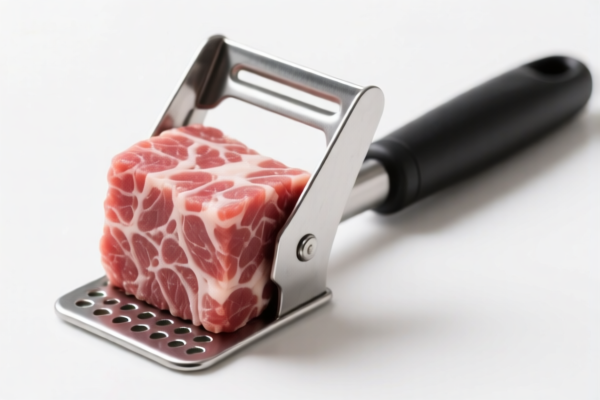
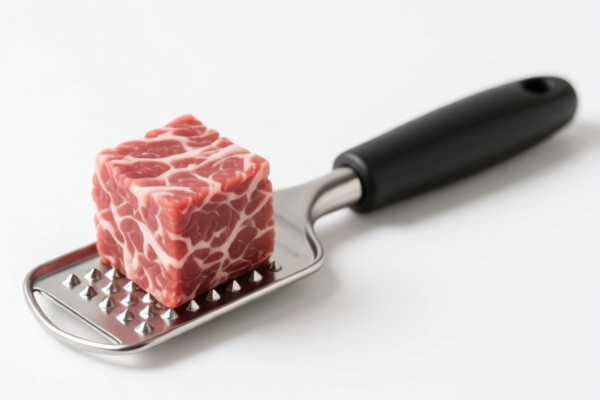
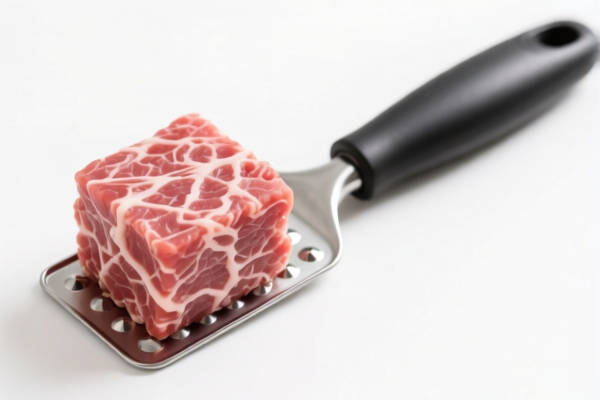
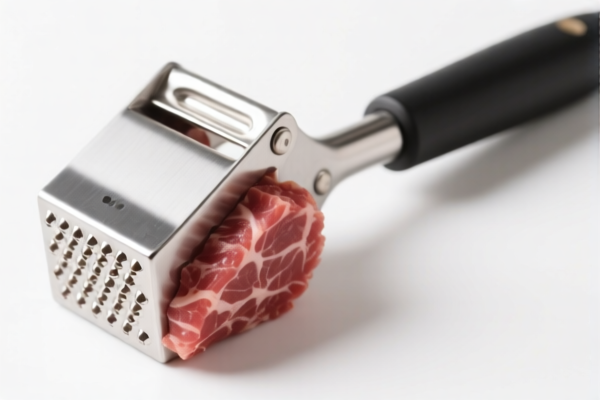
AI Analysis
🥩 Meat Tenderizer: Mechanical vs. Electric – The HS Code Split
🌐 HS Code Reference & Customs Clearance Guide | 2026 Latest Tariff Analysis | Professional-Level Entry Strategy
📌 I. Product Definition & Classification: Are You Blending or Chopping?
A "Meat Tenderizer" is a broad term that usually falls into two distinct categories in international trade, depending on its power source and function. Misclassification here can lead to significant duty discrepancies because the tariff rates differ based on whether it is a simple hand tool or an electromechanical appliance.
1. Hand-Operated Mechanical Appliances (Manual Tenderizers)
These are simple tools, often shaped like a hammer with a spiked head, or small manual choppers. They weigh 10 kg or less and require human force to operate. They are classified under Chapter 82 (Base Metal Hand Tools).
2. Electromechanical Domestic Appliances (Electric Food Processors/Mixers)
These are devices with a self-contained electric motor. They include electric meat grinders, food processors, and heavy-duty mixers used for grinding or tenderizing meat electronically. They are classified under Chapter 85 (Electrical Machinery and Equipment).
⚠️ Key Distinction Point:
- If it requires manual force and weighs <10kg →归入 8210.00.00.00
- If it has an electric motor and grinds/processes food → 归入 8509.40.xxxx
📦 II. HS Code Classification Details (2026 Latest Tariff Authority对照)
| HS Code | Product Description | Application Scenario | Power Source |
|---|---|---|---|
8210.00.00.00 |
Hand-operated mechanical appliances, weighing 10 kg or less, used in the preparation, conditioning or serving of food or drink | Manual spiked meat tenderizer hammers, manual garlic presses, simple choppers | ❌ Manual |
8509.40.00.40 |
Electromechanical domestic appliances with self-contained electric motor... Food grinders, processors and mixers; fruit or vegetable juice extractors | Electric meat grinders, food processors with meat-grinding attachments | ✅ Electric |
8509.40.00.25 |
Electromechanical domestic appliances with self-contained electric motor... Other food mixers | Electric food mixers (not specifically grinders/processors) | ✅ Electric |
8205.51.30.30 |
Base metal parts thereof: Household tools... Of iron or steel: Other (including parts) Kitchen and table implements | Note: This code is listed in data but is generally for parts or specific non-standard household tools. Standard manual tenderizers go to 8210. | N/A |
8205.51.75.00 |
Handtools... Other handtools... Household tools... Other | Note: General category for other hand tools. 8210 is more specific for food prep tools. | N/A |
🔍 Critical Reminder:
- Manual Hammer: Must be declared as8210.00.00.00. Do not declare as an appliance.
- Electric Grinder: Must be declared as8509.40.00.40(if it grinds) or8509.40.00.25(if it mixes).
- Parts Only: If you are importing only the blade or motor part, ensure it falls under the correct "parts" subheading, but typically whole units are preferred for clarity.
💰 III. 2026 Latest Tariff Rate Breakdown (Detailed Tax Clauses)
✅ Applicable Country: USA (US)
✅ Origin: China (CN)
✅ Effective Date: 2025/2026 Period (Based on provided data)
🎯 1. 8210.00.00.00 —— Hand-Operated Mechanical Appliances (Manual Tenderizer)
| Item | Content |
|---|---|
| Basic Tariff Rate | 3.7% (Ad Valorem) |
| Supplemental Tariff | 0.0% |
| Total Tax Rate | 3.7% |
| Tax Calculation | CIF Value × 3.7% |
| De Minimis Eligibility | ✅ Yes (If value < $800) |
| Legal Basis | Chapter 82: Base Metal Hand Tools |
📌 Explanation:
- This is a low-tariff category for simple, non-electric kitchen tools.
- The 3.7% rate applies to the entire CIF value.
- No Section 301 or IEEPA surcharges apply to this specific manual hand-tool code in the provided data.
🎯 2. 8509.40.00.40 & 8509.40.00.25 —— Electric Food Grinders/Processors/Mixers
| Item | Content |
|---|---|
| Basic Tariff Rate | 0.0% (Ad Valorem) |
| Supplemental Tariff | 0.0% |
| Total Tax Rate | 0.0% |
| Tax Calculation | CIF Value × 0.0% = $0 |
| De Minimis Eligibility | ✅ Yes (If value < $800) |
| Legal Basis | Chapter 85: Electromechanical Domestic Appliances |
📌 Explanation:
- Surprisingly, electric food processors/grinders often have 0% duty in this specific dataset.
- This makes them highly competitive for import compared to some other kitchen appliances.
- However, you must prove it is a "domestic appliance" with a "self-contained motor." Industrial-sized units may differ.
🎯 3. 8205.51.30.30 & 8205.51.75.00 —— Other Household Tools/Parts
| Item | Content |
|---|---|
| Basic Tariff Rate | 0.0% (for 8205.51.30.30) or 3.7% (for 8205.51.75.00) |
| Supplemental Tariff | 0.0% |
| Total Tax Rate | 0.0% or 3.7% |
| Tax Calculation | CIF Value × Rate |
| De Minimis Eligibility | ✅ Yes (If value < $800) |
📌 Note:
-8205.51.30.30(Kitchen implements of iron/steel) has 0% tax.
-8205.51.75.00(Other household tools) has 3.7% tax.
- These codes are less commonly used for standard meat tenderizers unless they are specific parts or non-standard tools. Stick to8210for manual tools and8509for electric ones for the most accurate clearance.
🛠️ IV. Customs Clearance Practical Advice (Avoid Pitfalls)
✅ 1. Preparation Checklist (Must-Haves)
| Document | Required | Description |
|---|---|---|
| ✅ Product Photos | ✔️ | Clear images showing power source (cord vs. no cord) and mechanism (blades/spikes). |
| ✅ Specification Sheet | ✔️ | Must state: "Manual" OR "Electric, [Voltage], [Wattage]". |
| ✅ Commercial Invoice | ✔️ | Description must match HS Code logic (e.g., "Manual Meat Tenderizer" vs. "Electric Food Processor"). |
| ✅ Packing List | ✔️ | Weight must be under 10kg for 8210 classification. |
✅ 2. Declaration Strategy (Key Tips)
🔥 "Manual is 8210, Electric is 8509. Don't Mix!"
| Scenario | Correct HS Code | Why? |
|---|---|---|
| Manual Spiked Hammer | 8210.00.00.00 |
Hand-operated, <10kg, base metal. |
| Electric Meat Grinder | 8509.40.00.40 |
Self-contained motor, grinds food. |
| Electric Food Mixer | 8509.40.00.25 |
Self-contained motor, mixes food. |
| Manual Chopper | 8210.00.00.00 |
Hand-operated food prep tool. |
| Industrial Heavy Grinder | Check Other Codes | If >10kg or not "domestic," Chapter 84 may apply. |
✅ 3. Special Situations
| Situation | Advice |
|---|---|
| Hybrid Tools (Manual Handle + Electric Motor) | Classified as Electric (8509). The motor defines the chapter. |
| Set with Multiple Blades | Declared as one unit under the main function (Grinder/Mixer). |
| Parts Only (Blade for Grinder) | May fall under 8509.90 (Parts of appliances), but check if listed as 8205 parts. Usually, whole units are easier to clear. |
| Plastic Handle with Metal Head | Still classified as Base Metal Hand Tool if the essential character is the metal tool part. |
🌍 V. Global Market Comparison (2026)
| Region | Recommended HS Code | Estimated Duty | Notes |
|---|---|---|---|
| 🇺🇸 USA | 8210.00.00.00 (Manual) |
3.7% | Low duty for manual tools. |
| 🇺🇸 USA | 8509.40.00.40 (Electric) |
0.0% | Zero Duty! Highly favorable. |
| 🇪🇺 EU | 8205/8509 | Varies | Check EU Combined Nomenclature; may have different subheadings. |
| 🇨🇳 China | 8210/8509 | Low/Zero | Generally low import duties for these items. |
📌 Conclusion:
- Electric models enjoy 0% duty in the US market for these specific codes.
- Manual models pay 3.7%.
- Ensure your invoice clearly distinguishes between "Manual" and "Electric" to avoid misclassification audits.
📌 VI. Common Mistakes & Pitfalls (Lessons Learned)
❌ Mistake 1: Declaring an Electric meat grinder as a Manual tool (8210)
👉 Consequence: Customs may detect the motor/weight mismatch → Penalty + Back Taxes.
❌ Mistake 2: Declaring a Manual hammer as an Appliance (8509)
👉 Consequence: Unnecessary complexity, possible rejection for missing FCC/UL certification (not required for manual tools).
❌ Mistake 3: Using vague terms like "Kitchen Tool" without specifying power source
👉 Consequence: Customs may ask for clarification → Clearance Delay.
✅ Correct Description Example:
For Manual: "Metal Spiked Meat Tenderizer Hammer, Hand-Operated, Iron Alloy, No Motor"
For Electric: "Electric Food Processor with Meat Grinding Attachment, 120V, 500W, Self-Contained Motor"
🎯 VII. Conclusion: Professional Declaration for Smooth Clearance
🎯 Remember:
🔹 "Manual = 8210 (3.7%), Electric = 8509 (0%)."
🔹 "Motor changes everything. If it plugs in, it's 8509."
🔹 "Clear description saves time. Specify 'Manual' or 'Electric' clearly."
📌 Pro Tip:
If you are importing both manual and electric versions, consider creating two separate SKUs with different HS Codes to optimize duty costs. The 0% duty on electric models makes them very attractive for competitive pricing.
📣 Immediate Action:
📞 Verify if your product has a self-contained motor.
📦 Label packages clearly: "Manual" or "Electric."
📝 Use the correct HS Code in your commercial invoice.
✨ Precision in Classification, Success in Customs!
💼 Don't let a simple misunderstanding cost you 3.7% or delay your shipment!
Customer Reviews
About HS Code Classification
The Harmonized System (HS) is an internationally standardized nomenclature developed by the World Customs Organization (WCO) to classify traded products. Over 200 countries use the HS system as the basis for customs tariffs, trade statistics, and import/export regulations.
Each HS code follows a hierarchical structure:
- Chapter (2 digits) — Broad category of goods (e.g., Chapter 84: Machinery and Mechanical Appliances)
- Heading (4 digits) — More specific grouping within the chapter
- Subheading (6 digits) — Internationally standardized breakdown, used by all WCO member countries
- National subdivisions (8-10 digits) — Country-specific extensions for further classification, such as US HTSUS 10-digit codes
Correct HS code classification is essential for smooth customs clearance, accurate duty payment, and compliance with trade regulations. Misclassification can lead to customs delays, overpayment of duties, or penalties.
When importing from CN to US, the applicable tariff rates may include:
- Most-Favored-Nation (MFN) rate — The standard duty rate applied to WTO members
- General rate — Applied to countries without trade agreements
- Trade remedy duties — Additional tariffs such as Section 301 (anti-dumping), Section 232 (national security), or countervailing duties
The information provided on this page is for reference purposes only. For official classification, please consult with your local customs authority or a licensed customs broker.