Meat or Poultry Processing Machinery
CN → US| HS Code | Tariff Rate | Origin | Destination | Doc |
|---|---|---|---|---|
| 8438500010 | 37.8% | CN | US | Official Doc |
| 8438500090 | 37.8% | CN | US | Official Doc |
| 8419899560 | 39.2% | CN | US | Official Doc |
| 8419819080 | 17.5% | CN | US | Official Doc |
| 8438500090 | 37.8% | CN | US | Official Doc |
Product Images
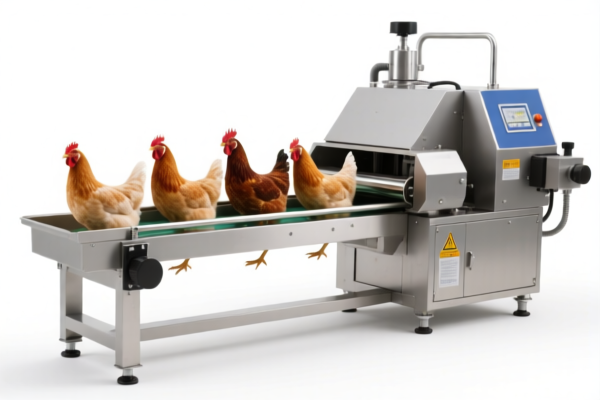
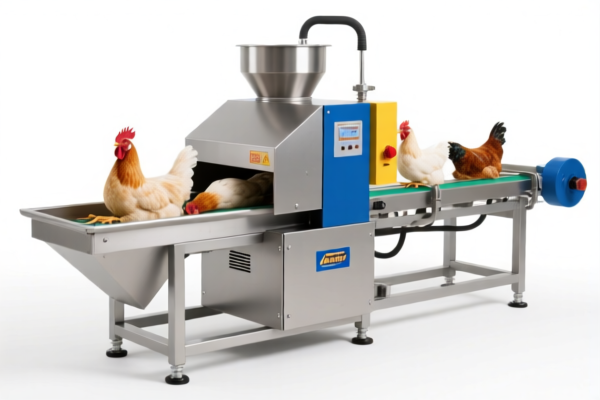
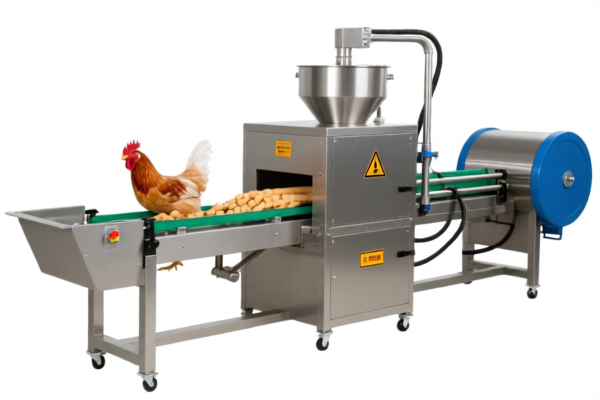

AI Analysis
🥩 Meat & Poultry Processing Machinery: The Ultimate HS Code & Tariff Guide (2026)
🌐 HS Code Reference & Customs Clearance Guide | 2026 Latest Tariff Analysis | Professional通关 Strategy
📌 1. Product Definition & Classification: Do You Really Understand "Meat Machinery"?
Meat and poultry processing machinery covers a wide range of industrial equipment used for slaughtering, cutting, grinding, mixing, and preparing meat and poultry products. In international trade, these machines are not simply grouped under one code. Their classification depends heavily on their specific function and technical mechanism.
There are two primary pathways for classification: * Processing Machinery (Chapter 84): Equipment designed for specific preparation steps (e.g., saws, grinders, mixers). * Thermal Processing Machinery (Chapter 84/8419): Equipment designed to heat, cook, or sterilize food products.
⚠️ Critical Distinction Point:
- If the machine is for mechanical preparation (cutting, grinding, mixing) → It falls under 8438.50.
- If the machine is for thermal treatment (cooking, heating, pasteurizing) → It may fall under 8419.89 or 8419.81.
📦 2. HS Code Classification Details (2026 Latest Tariff Authority Comparison)
Based on the provided data, here are the specific HS Codes and their precise applications:
| HS Code | Product Description | Application Scenario | Key Characteristic |
|---|---|---|---|
8438.50.00.10 |
Machinery for the preparation of meat or poultry | Meat saws, deboning machines, poultry pluckers | ✅ Mechanical Preparation |
8438.50.00.90 |
Other machinery for the preparation of meat or poultry | Grinders, mixers, slicers not specifically listed above | ✅ Mechanical Preparation |
8419.89.95.60 |
Machinery for heating or cooking food/drink (Other) | Industrial cookers, sterilizers, thermal processing lines | ✅ Thermal Processing |
8419.81.90.80 |
Other machinery for temperature change or cooking/heating | Specialized heating units, non-standard thermal equipment | ✅ Thermal/Heating Function |
🔍 Key Reminder:
- 8438.50 is the "Home Base" for standard meat/poultry processing equipment. If your machine cuts, grinds, or prepares raw meat, this is likely your code.
- 8419 codes apply ONLY if the primary function is heating, cooking, or changing temperature (e.g., a meat cooker or sterilizer). Do not misclassify mechanical cutters as thermal equipment.
💰 3. 2026 Latest Tariff Rate Breakdown (Including Surtaxes & Policy Add-ons)
✅ Applicable Country: United States (US)
✅ Country of Origin: China (CN)
✅ Effective Date: Current tariffs apply based on the 122-Clause and Section 301 rules.
🎯 1. 8438.50.00.10 & 8438.50.00.90 —— Meat or Poultry Preparation Machinery
These two codes share the same tariff structure in the provided data.
| Item | Details |
|---|---|
| Base Tariff | 2.8% (Ad Valorem) |
| Surtax (Section 301) | +25.0% |
| 122-Clause Tariff | +10.0% |
| Total Effective Rate | 37.8% |
| Tax Calculation | CIF Value × 37.8% |
| De Minimis Exemption | ❌ Not Eligible (High tariff risk) |
| Legal Basis | USMCA/Trade Act provisions; Section 301 Surtax; 122-Clause Specific Measure |
📌 Explanation:
- The 2.8% is the standard Most Favored Nation (MFN) base duty.
- The 25.0% is the Section 301 surtax on Chinese goods.
- The 10.0% is the specific "122-Clause" tariff (often related to strategic goods or specific trade remedies).
- Total: 37.8% is a significant cost factor. Accurate classification is crucial to avoid over-payment or audit penalties.
🎯 2. 8419.89.95.60 —— Machinery for Heating/Cooking Food & Drink
| Item | Details |
|---|---|
| Base Tariff | 4.2% (Ad Valorem) |
| Surtax (Section 301) | +25.0% |
| 122-Clause Tariff | +10.0% |
| Total Effective Rate | 39.2% |
| Tax Calculation | CIF Value × 39.2% |
| De Minimis Exemption | ❌ Not Eligible |
| Legal Basis | Same as above; higher base rate due to broader "other machinery" category |
📌 Note:
- This code applies to thermal processing equipment.
- The total rate (39.2%) is slightly higher than meat preparation machinery due to a higher base rate (4.2% vs 2.8%).
🎯 3. 8419.81.90.80 —— Other Machinery for Temperature Change/Cooking
| Item | Details |
|---|---|
| Base Tariff | 0.0% |
| Surtax (Section 301) | +7.5% |
| 122-Clause Tariff | +10.0% |
| Total Effective Rate | 17.5% |
| Tax Calculation | CIF Value × 17.5% |
| De Minimis Exemption | ❌ Not Eligible |
| Legal Basis | Specific subheading with lower surtax application |
📌 Opportunity:
- This code offers the lowest total tariff (17.5%).
- However, it is strictly for "Other machinery for temperature change" and does NOT apply to standard mechanical meat/poultry preparation. Misusing this code for a meat grinder is a high-risk customs violation.
🛠️ 4. Customs Clearance Practical Advice (Avoid Pitfalls)
✅ 1. Required Documentation Checklist
| Document | Mandatory? | Description |
|---|---|---|
| ✅ Product Specification Sheet | ✔️ | Must clearly state: Function (Cutting vs. Cooking), Capacity, Power, Materials. |
| ✅ Technical Drawings/Diagrams | ✔️ | To prove whether the machine has heating elements or is purely mechanical. |
| ✅ Product Photos (with Nameplate) | ✔️ | Show model number, brand, and voltage/input specs. |
| ✅ Commercial Invoice | ✔️ | Must accurately describe the goods (e.g., "Meat Slicer" not just "Machinery"). |
| ✅ Packing List | ✔️ | Detail all components (e.g., if sold with accessories). |
| ✅ Origin Certificate (CO) | ✔️ | Prove China origin to calculate accurate surtaxes. |
✅ 2. Declaration Strategy (Key Rules)
🔥 "Function Determines Code, Description Determines Compliance!"
| Scenario | Correct Declaration | Wrong Action |
|---|---|---|
| Meat Slicer/Grinder | 8438.50.00.10 or .90 |
Declare as "Cooker" → Audit Risk |
| Industrial Meat Cooker | 8419.89.95.60 |
Declare as "Slicer" → Classification Error |
| Special Heating Unit | 8419.81.90.80 |
If it’s just a standard meat processor, this is Wrong |
| Complete Meat Processing Line | Split components or main function | Do not lump everything into one vague code |
✅ 3. Special Considerations
| Situation | Handling Advice |
|---|---|
| OEM Machinery | Provide client contracts and design specs to prove specific use. |
| Dual-Function Machines | If a machine both cuts AND cooks, consult a customs broker. It may be classified by its primary function. |
| Used Machinery | Additional inspection may be required. Cleanliness and hygiene certificates may be needed. |
| Precision Claims | Ensure the declared HS code matches the actual mechanical/thermal nature. "Meat Machinery" is not a valid HS code description; you must specify the type. |
🌍 5. Global Market Comparison (2026 Latest)
| Country/Region | Recommended HS Code | Est. Tariff (China Origin) | Certification Requirements | Notes |
|---|---|---|---|---|
| 🇺🇸 USA | 8438.50 or 8419.89 |
37.8% - 39.2% | FDA (if contact surface), UL/ETL (Electrical) | High Surtax! |
| 🇨🇳 China | 8438.50 |
~5-10% | CCC (if electrical), GB Standards | No Section 301 surtax |
| 🇪🇺 EU | 8438.50 |
~4.5% + VAT | CE Mark, Machinery Directive, Food Safety | No trade war tariffs |
| 🇬🇧 UK | 8438.50 |
~4.5% + VAT | UKCA Mark, Food Safety Standards | Post-Brexit rules apply |
| 🇦🇺 Australia | 8438.50 |
~5% | RCM (Electrical), FSANZ (Food Safety) | Low base tariff |
📌 Conclusion:
- USA Tariffs are Significantly Higher due to Section 301 and 122-Clause taxes.
- For US imports, accurate classification is not just a compliance issue—it’s a profitability issue. A 1% difference in code can mean thousands in duty.
📌 6. Common Errors & Pitfalls (Lessons Learned)
❌ Error 1: Declaring a Meat Grinder as 8419.81.90.80 (Heating Machine) to get the lower 17.5% rate.
👉 Consequence: Customs audit → Penalty + Back Taxes + Potential seizure.
❌ Error 2: Using vague descriptions like "Food Machine" on the invoice.
👉 Consequence: Customs delays, additional inspection fees, and potential reclassification with higher duties.
❌ Error 3: Ignoring the 122-Clause Tariff.
👉 Consequence: Underpayment of 10% → Interest and penalties upon audit.
❌ Error 4: Misclassifying Thermal Cookers as Mechanical Preppers.
👉 Consequence: Wrong tariff rate (37.8% vs 39.2% or 17.5%) → Compliance risk.
✅ Correct Approach:
"Industrial Meat Slicer, Electric, Stainless Steel, Model XYZ, FDA Compliant, for Commercial Kitchen Use."
🎯 7. Conclusion: Professional Declaration, Cost Optimization
🎯 Remember This Rule:
🔹 "Mechanical = 8438 (37.8%) | Thermal = 8419 (17.5% - 39.2%) | Accuracy Saves Money!"
🔹 "HS Code is Life, Tariff is Death. One Mistake, Cost Explodes!"
📌 Pro Tip:
- If your machinery has dual functions (e.g., cuts and cooks), consult a licensed customs broker before shipping.
- Consider Advance Rulings from US Customs and Border Protection (CBP) to lock in the correct classification and duty rate.
- For US imports, factor in the 37.8%-39.2% cost into your pricing strategy immediately.
📣 Take Action Now:
📞 Contact a Professional Customs Broker
📄 Prepare Detailed Technical Specs
🚀 Ensure Smooth Clearance & Maximize Profit Margins!
✨ Professional Clearance Starts with Accurate Classification!
💼 Every Dollar Saved in Tariffs is a Dollar Earned!
Customer Reviews
About HS Code Classification
The Harmonized System (HS) is an internationally standardized nomenclature developed by the World Customs Organization (WCO) to classify traded products. Over 200 countries use the HS system as the basis for customs tariffs, trade statistics, and import/export regulations.
Each HS code follows a hierarchical structure:
- Chapter (2 digits) — Broad category of goods (e.g., Chapter 84: Machinery and Mechanical Appliances)
- Heading (4 digits) — More specific grouping within the chapter
- Subheading (6 digits) — Internationally standardized breakdown, used by all WCO member countries
- National subdivisions (8-10 digits) — Country-specific extensions for further classification, such as US HTSUS 10-digit codes
Correct HS code classification is essential for smooth customs clearance, accurate duty payment, and compliance with trade regulations. Misclassification can lead to customs delays, overpayment of duties, or penalties.
When importing from CN to US, the applicable tariff rates may include:
- Most-Favored-Nation (MFN) rate — The standard duty rate applied to WTO members
- General rate — Applied to countries without trade agreements
- Trade remedy duties — Additional tariffs such as Section 301 (anti-dumping), Section 232 (national security), or countervailing duties
The information provided on this page is for reference purposes only. For official classification, please consult with your local customs authority or a licensed customs broker.