Mechanical Bearing
CN → US| HS Code | Tariff Rate | Origin | Destination | Doc |
|---|---|---|---|---|
| 8483204080 | 39.5% | CN | US | Official Doc |
| 8482105004 | 44.0% | CN | US | Official Doc |
| 8482105012 | 44.0% | CN | US | Official Doc |
| 7326190080 | 87.9% | CN | US | Official Doc |
| 7326908688 | 87.9% | CN | US | Official Doc |
| 8482105068 | 44.0% | CN | US | Official Doc |
Product Images
AI Analysis
🛠️ Mechanical Bearings: HS Code Classification & Customs Clearance Guide (USA/China Trade)
🌐 HS Code Reference & Customs Strategy | 2026 Latest Tariff Analysis | Professional Clearance Guide
📌 I. Product Definition: What is a "Mechanical Bearing"?
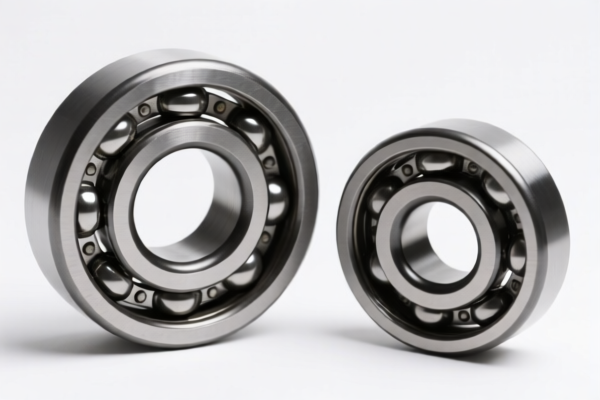
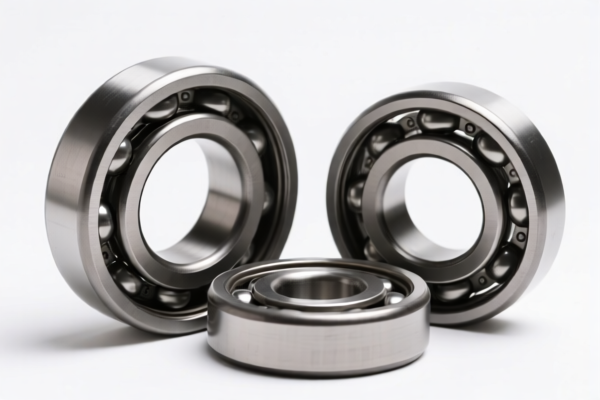
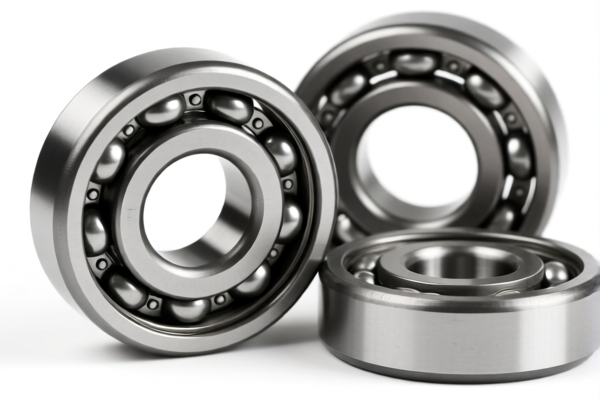
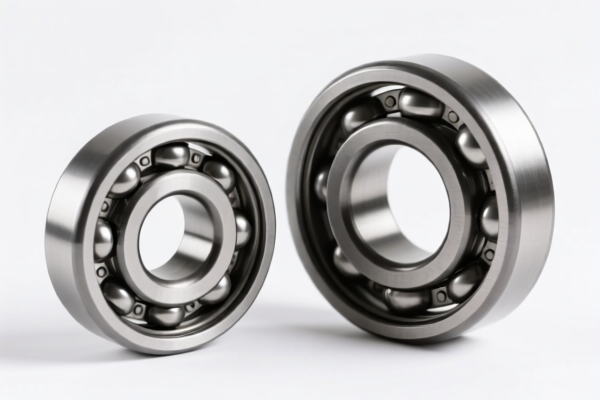
A Mechanical Bearing is a machine element that constrains relative motion to only the desired movement and reduces friction between moving parts. In international trade, the classification depends heavily on the specific type (e.g., ball, roller, sleeve) and whether it is considered a "part" of a specific machine or a general-purpose component.
⚠️ Key Distinction:
- General Purpose Bearings (Ball/Roller bearings) → Usually fall under Chapter 84 (Machinery parts).
- Bearing Units/Plummer Blocks (Housed bearings) → May fall under 8483.
- Raw Material/Parts without Specific Bearing Function → May mistakenly fall under Chapter 73 (Iron/Steel Articles), leading to massive tariff penalties.
📦 II. HS Code Classification Details (Based on Provided Data)
Based on the provided dataset, here are the 6 potential HS Codes for "Mechanical Bearings," along with the reasoning for each classification and the associated tax implications.
| HS Code | Classification Logic & Summary | Total Tax Rate | Tax Breakdown |
|---|---|---|---|
| 8483.20.40.80 | Housed Bearings / Bearing Units: Matches "Bearing" usage; fits "Bearing seats, bearings, and parts." No material conflict. | 39.5% | Base: 4.5% Section 301: 25.0% Section 122: 10% |
| 8482.10.50.04 | Ball Bearings: Core name "Ball Bearing" matches. As a spare part, no obvious conflict with "unground" status or material. | 44.0% | Base: 9.0% Section 301: 25.0% Section 122: 10% |
| 8482.10.50.12 | Ball Bearings (Fallback): Name matches. Since specific type is unclear, defaults to "Other/Fallback" category. | 44.0% | Base: 9.0% Section 301: 25.0% Section 122: 10% |
| 8482.10.50.68 | Ball Bearings (Other): Matches "Ball Bearing" core type. Defaults to "Other" category due to unspecified specs. | 44.0% | Base: 9.0% Section 301: 25.0% Section 122: 10% |
| 7326.19.00.80 | Steel Articles (Other): ⚠️ High Risk. Inferred as "Steel" due to material. Classified as "Other Steel Articles" because bearing type is unspecified. | 87.9% | Base: 2.9% Section 301: 25.0% Section 122: 10% Steel/Alu/Cu Surcharge: 50% |
| 7326.90.86.88 | Other Iron/Steel Articles (Other): ⚠️ High Risk. Based on "axle" feature, inferred as iron/steel. Classified as "Other" steel articles. | 87.9% | Base: 2.9% Section 301: 25.0% Section 122: 10% Steel/Alu/Cu Surcharge: 50% |
🔍 Critical Analysis:
- Codes 8482.xxxx are for true bearings (Ball/Roller). These are the correct classifications if the product is indeed a functional bearing.
- Codes 7326.xxxx are for general steel articles. Customs may assign these if the bearing is not clearly defined as a "bearing" or if it is considered a simple steel part/axle. This results in a 50% additional surcharge!
💰 III. 2026 Latest Tariff Rate Breakdown (USA Import from China)
✅ Applicable Country: United States (US)
✅ Origin: China (CN)
✅ Effective Date: Post-November 2025 (Current Trade Policy)
🎯 Category 1: Correct Bearing Classification (HS Code 8482)
Includes: 8482.10.50.04, 8482.10.50.12, 8482.10.50.68
| Item | Content |
|---|---|
| Base Duty Rate | 9.0% (ad valorem) |
| Section 301 Duty | +25.0% (USITC Footnote 9903.88.01) |
| Section 122 Duty | +10.0% (Bilateral Trade Agreement Surcharge) |
| Total Tax Rate | 44.0% |
| Calculation Basis | CIF Value × 44.0% |
| De Minimis Exemption | ❌ Not Eligible (Cannot use $800 de minimis for Section 301 goods) |
📌 Explanation:
- 9.0% Base: Standard MFN duty for ball bearings.
- 25% Section 301: Retaliatory tariff on Chinese goods.
- 10% Section 122: Additional surcharge based on recent bilateral trade terms.
- Total: 44%. This is the standard cost for properly declared bearings.
🎯 Category 2: Housed Bearings (HS Code 8483)
Includes: 8483.20.40.80
| Item | Content |
|---|---|
| Base Duty Rate | 4.5% (ad valorem) |
| Section 301 Duty | +25.0% |
| Section 122 Duty | +10.0% |
| Total Tax Rate | 39.5% |
| Calculation Basis | CIF Value × 39.5% |
| De Minimis Exemption | ❌ Not Eligible |
📌 Explanation:
- 4.5% Base: Lower base duty for bearing units/housings.
- Total: 39.5%. Slightly cheaper than general ball bearings, but only applies if the product includes the housing/seats.
🎯 Category 3: INCORRECT Classification (HS Code 7326)
Includes: 7326.19.00.80, 7326.90.86.88
| Item | Content |
|---|---|
| Base Duty Rate | 2.9% (ad valorem) |
| Section 301 Duty | +25.0% |
| Section 122 Duty | +10.0% |
| Steel/Alu/Cu Surcharge | +50.0% (Section 232 or similar metal surcharge) |
| Total Tax Rate | 87.9% |
| Calculation Basis | CIF Value × 87.9% |
| De Minimis Exemption | ❌ Not Eligible |
📌 ⚠️ WARNING:
- If you declare a bearing as "Steel Part" or "Axle" under Chapter 73, you trigger the 50% metal surcharge.
- Total Cost: 87.9%. This is double the cost of proper classification.
- Reason for Error: Customs sees "metal part" and assumes generic steel article, ignoring the functional "bearing" purpose.
🛠️ IV. Customs Clearance Practical Advice
✅ 1. Documentation Checklist (Mandatory)
| Document | Required | Purpose |
|---|---|---|
| ✅ Product Specification Sheet | ✔️ | Must clearly state: "Ball Bearing," dimensions, load capacity, type (e.g., Deep Groove). |
| ✅ Technical Drawings | ✔️ | Show internal structure (balls/rollers) to prove it's a bearing, not a simple shaft. |
| ✅ Product Photos | ✔️ | Clear images showing the inner/outer rings and rolling elements. |
| ✅ Commercial Invoice | ✔️ | Use precise terminology: "Ball Bearing" or "Bearing Unit," NOT "Steel Part" or "Mechanical Component." |
| ✅ Packing List | ✔️ | Itemize quantities and weights accurately. |
✅ 2. Declaration Strategy (Key Tips)
🔥 Golden Rule: "Function Defines Function, Material Defines Secondary."
| Scenario | Correct Declaration | Wrong Declaration | Consequence |
|---|---|---|---|
| Standard Ball Bearing | "Ball Bearing, 6205-2RS" | "Steel Part" or "Axle" | 87.9% Tax (vs 44%) |
| Housed Bearing | "Bearing Unit, SNL 516" | "Steel Housing" | 87.9% Tax (vs 39.5%) |
| Mixed Shipment | Separate lines for Bearings & Steel Parts | Mixed line | Customs audits whole shipment → High risk |
✅ 3. Avoiding the "Chapter 73" Trap
- Do NOT use generic terms like "Mechanical Part," "Steel Component," or "Axle" if the item is a functional bearing.
- DO include:
- HS Code: 8482.10.50.xx
- Description: "Deep Groove Ball Bearing, Type 6205, Open/Rubber Sealed"
- Material: "Steel (100Cr6)" – Mention material as secondary.
🌍 V. Global Market Comparison (2026)
| Country | HS Code | Base Duty | Section 301/122 | Total Est. Tax | Notes |
|---|---|---|---|---|---|
| 🇺🇸 USA | 8482.10.50.xx | 9.0% | +35% (301+122) | 44.0% | High cost. Avoid Ch. 73. |
| 🇺🇸 USA | 7326.90.86.xx | 2.9% | +85% (301+122+50%) | 87.9% | Penalty for misclassification. |
| 🇪🇺 EU | 8482.10.30 | 3.7% | 0% | 3.7% | No Section 301. |
| 🇨🇳 China | 8482.10.30 | 8.0% | 0% | 8.0% | Domestic/Re-export. |
📌 Conclusion:
- The USA is the most expensive market for Chinese bearings due to Section 301 and Section 122 tariffs.
- Misclassification into Chapter 73 is the most common and costly error, adding an extra 50% surcharge.
- Always declare as Chapter 84 (Machinery).
📌 VI. Common Errors & Pitfalls (Lessons Learned)
❌ Error 1: Declaring "Bearings" as "Steel Parts" to avoid high base duty.
👉 Result: Customs applies 50% steel surcharge → Total 87.9%.
👉 Fix: Always use 8482 for functional bearings.
❌ Error 2: Using "Mechanical Component" as the product name.
👉 Result: Customs agent guesses Chapter 73 → Delayed clearance + Penalty.
👉 Fix: Use specific names: "Ball Bearing," "Roller Bearing," "Bearing Unit."
❌ Error 3: Mixing Housed Bearings (8483) and Loose Bearings (8482) in one line.
👉 Result: Confusion on duty rate (39.5% vs 44%).
👉 Fix: Separate lines on invoice.
🎯 VII. Conclusion: Precision Saves Money
🎯 Remember the Formula:
Correct HS (8482) = 44%
Wrong HS (7326) = 87.9%
Difference = 43.9% SAVINGS!
📌 Pro Tip:
If you are importing large volumes, consider applying for an Advanced Ruling from CBP to confirm your HS Code and avoid future disputes. Also, verify if your supplier can provide a Certificate of Origin for any potential free trade agreements (though unlikely for China-US currently).
📣 Immediate Action:
📞 Contact your customs broker with the exact product specs.
📄 Update your invoice to include "Ball Bearing" and HS Code 8482.10.50.xx.
🚀 Avoid Chapter 73 at all costs unless you are shipping raw steel shafts, not bearings.
✨ Smart Classification, Lower Taxes, Faster Clearance!
💼 Don't let 50% surcharge eat your profits!
Customer Reviews
About HS Code Classification
The Harmonized System (HS) is an internationally standardized nomenclature developed by the World Customs Organization (WCO) to classify traded products. Over 200 countries use the HS system as the basis for customs tariffs, trade statistics, and import/export regulations.
Each HS code follows a hierarchical structure:
- Chapter (2 digits) — Broad category of goods (e.g., Chapter 84: Machinery and Mechanical Appliances)
- Heading (4 digits) — More specific grouping within the chapter
- Subheading (6 digits) — Internationally standardized breakdown, used by all WCO member countries
- National subdivisions (8-10 digits) — Country-specific extensions for further classification, such as US HTSUS 10-digit codes
Correct HS code classification is essential for smooth customs clearance, accurate duty payment, and compliance with trade regulations. Misclassification can lead to customs delays, overpayment of duties, or penalties.
When importing from CN to US, the applicable tariff rates may include:
- Most-Favored-Nation (MFN) rate — The standard duty rate applied to WTO members
- General rate — Applied to countries without trade agreements
- Trade remedy duties — Additional tariffs such as Section 301 (anti-dumping), Section 232 (national security), or countervailing duties
The information provided on this page is for reference purposes only. For official classification, please consult with your local customs authority or a licensed customs broker.