Mechanical Belt
CN → US| HS Code | Tariff Rate | Origin | Destination | Doc |
|---|---|---|---|---|
| 5910001030 | 39.0% | CN | US | Official Doc |
| 4010199100 | 38.3% | CN | US | Official Doc |
| 3926905500 | 40.1% | CN | US | Official Doc |
| 3926905900 | 37.4% | CN | US | Official Doc |
| 4010399000 | 38.3% | CN | US | Official Doc |
Product Images
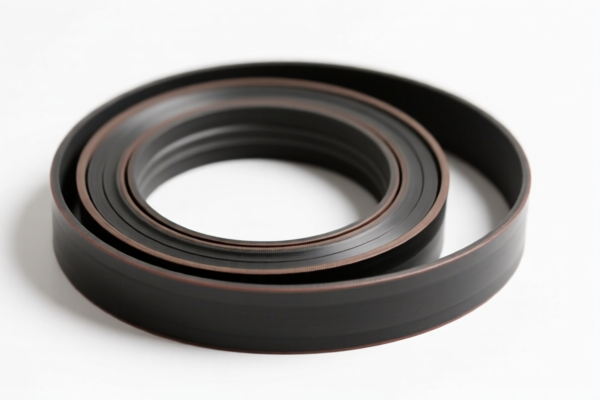
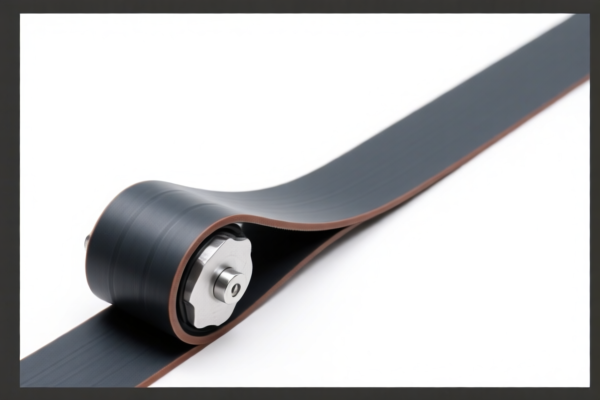


AI Analysis
🏭 Mechanical Belts (Industrial Transmission & Conveyance)
🌐 HS Code Reference & Customs Clearance Guide | 2026 Latest Tariff Analysis | Professional Customs Strategy
📌 I. Product Definition & Classification: Do You Really Know "Mechanical Belts"?
Industrial mechanical belts are critical components in manufacturing, used for power transmission (converting rotary motion to linear motion or transmitting torque) or material conveyance. In international trade, their classification heavily depends on the material composition and specific structure, leading to significantly different tariff outcomes.
Two Main Categories in Trade:
-
Rubber-Based Transmission Belts (Chapter 40):
Typically made of vulcanized rubber reinforced with textile or steel cords. These include V-belts, synchronous belts (timing belts), and flat belts made primarily of rubber.
Logical Inference: If the belt is elastic, flexible, and primarily rubber-based, it falls under Chapter 40. -
Textile/Plastic/Composite Belts (Chapters 39/59):
- Chapter 59: Belts made of textile materials coated with plastics or rubber, or belting made of other textile materials.
- Chapter 39: Belts made primarily of plastic materials or other polymer composites that do not fit the standard rubber definition.
⚠️ Key Distinction Point:
- If the belt is vulcanized rubber (flexible, elastic, rubber-dominated) → HS 4010
- If the belt is textile-based (woven, often coated) → HS 5910
- If the belt is plastic/composite (rigid, specific mechanical shapes not covered elsewhere) → HS 3926
📦 II. HS Code Classification Details (2026 Latest Tariff Authoritative Comparison)
| HS Code | Product Description | Application Scenario | Material Logic |
|---|---|---|---|
5910.00.10.30 |
Industrial mechanical belts, shaped as belts/straps, for transmission/conveyance. | Textile-based belting, coated with plastic/rubber. | ✅ Textile/Synthetic (Inferred as artificial fiber or synthetic material). |
4010.19.91.00 |
Industrial mechanical belts, shaped as strip products, made of vulcanized rubber. | Classic V-belts, flat rubber belts. | ✅ Vulcanized Rubber (Logical fit for rubber transmission belts). |
3926.90.55.00 |
Industrial mechanical belts, shaped as transmission belts/V-belts. | Plastic/rubber composites, mechanical use. | ⚠️ Composite/Plastic (Contains textile fibers or plastic/rubber mix). |
3926.90.59.00 |
Industrial mechanical belts, shaped as mechanical belts. | General mechanical belts, plastic/rubber composites. | ⚠️ Composite/Plastic (Contains textile fibers or plastic/rubber composites). |
4010.39.90.00 |
Industrial mechanical belts, shaped as transmission belts, made of rubber. | Rubber timing belts, conveyor belts. | ✅ Rubber (Logical fit for vulcanized rubber transmission belts). |
🔍 Key Reminder:
- Rubber vs. Plastic: The presence of vulcanization (chemical curing of rubber) usually pushes classification to Chapter 40.
- Textile Dominance: If the belt is essentially a textile fabric coated or impregnated, it goes to Chapter 59.
- Composite Ambiguity: If the material is a mix where plastic or non-rubber polymers are dominant, Chapter 39 may apply, often resulting in higher base tariffs.
💰 III. 2026 Latest Tariff Rate Breakdown (Including Surtaxes, Policy Add-ons)
✅ Applicable Country: United States (US)
✅ Country of Origin: China (CN)
✅ Effective Time: Ongoing (Includes Section 301 and IEEPA surcharges)
🎯 1. 5910.00.10.30 —— Industrial Mechanical Belts (Textile/Synthetic)
| Item | Content |
|---|---|
| Base Tariff | 4.0% (ad valorem) |
| Section 301 Surcharge | +25.0% (USITC Footnote 9903.88.01) |
| Section 122 / IEEPA Surcharge | +10.0% (针对中国/香港产品) |
| Total Tariff Rate | 39.0% |
| Tax Calculation | CIF Value × 39.0% |
| De Minimis Exemption? | ❌ No (Deny de minimis for China-origin goods under these sections) |
| Legal Basis Path | USITC:5910.00.10.30 → 301:25% → 122/IEEPA:10% |
📌 Explanation:
- "Base Tariff 4%" is the standard Most Favored Nation (MFN) rate for textile-based belting.
- "Section 301 25%" is the standard trade war tariff on many Chinese industrial goods.
- "Section 122 10%" (or IEEPA equivalent) is an additional levy on specific Chinese industrial inputs.
- Total 39% is significant but slightly lower than some plastic-based alternatives.
🎯 2. 4010.19.91.00 —— Vulcanized Rubber Belts (Strip Products)
| Item | Content |
|---|---|
| Base Tariff | 3.3% (ad valorem) |
| Section 301 Surcharge | +25.0% |
| Section 122 / IEEPA Surcharge | +10.0% |
| Total Tariff Rate | 38.3% |
| Tax Calculation | CIF Value × 38.3% |
| De Minimis Exemption? | ❌ No |
| Legal Basis Path | USITC:4010.19.91.00 → 301:25% → 122/IEEPA:10% |
📌 Note:
- This is often the most logical classification for standard V-belts and timing belts made of rubber.
- Slightly cheaper than textile belts (38.3% vs 39.0%) due to a lower base rate.
🎯 3. 4010.39.90.00 —— Rubber Transmission Belts
| Item | Content |
|---|---|
| Base Tariff | 3.3% (ad valorem) |
| Section 301 Surcharge | +25.0% |
| Section 122 / IEEPA Surcharge | +10.0% |
| Total Tariff Rate | 38.3% |
| Tax Calculation | CIF Value × 38.3% |
| De Minimis Exemption? | ❌ No |
| Legal Basis Path | USITC:4010.39.90.00 → 301:25% → 122/IEEPA:10% |
📌 Note:
- Fits "conveyor belts" or specific "transmission belts" made of rubber.
- Same tariff structure as4010.19.91.00.
🎯 4. 3926.90.59.00 —— Mechanical Belts (Plastic/Composite)
| Item | Content |
|---|---|
| Base Tariff | 2.4% (ad valorem) |
| Section 301 Surcharge | +25.0% |
| Section 122 / IEEPA Surcharge | +10.0% |
| Total Tariff Rate | 37.4% |
| Tax Calculation | CIF Value × 37.4% |
| De Minimis Exemption? | ❌ No |
| Legal Basis Path | USITC:3926.90.59.00 → 301:25% → 122/IEEPA:10% |
📌 Note:
- Lowest Base Rate (2.4%) among all options.
- Lowest Total Rate (37.4%).
- Risk: If the belt is actually rubber-based, classifying it here is misdeclaration, leading to penalties. Only use if the material is definitively plastic/composite.
🎯 5. 3926.90.55.00 —— Mechanical Belts (V-Belts/Transmission, Plastic/Composite)
| Item | Content |
|---|---|
| Base Tariff | 5.1% (ad valorem) |
| Section 301 Surcharge | +25.0% |
| Section 122 / IEEPA Surcharge | +10.0% |
| Total Tariff Rate | 40.1% |
| Tax Calculation | CIF Value × 40.1% |
| De Minimis Exemption? | ❌ No |
| Legal Basis Path | USITC:3926.90.55.00 → 301:25% → 122/IEEPA:10% |
📌 Note:
- Highest Total Rate (40.1%).
- Avoid this classification unless the product is specifically a plastic V-belt that doesn't fit rubber definitions. High cost impact.
🛠️ IV. Customs Clearance Practical Advice (Battle-Tested Pitfall Avoidance Guide)
✅ 1. Required Documentation Checklist (None Can Be Missing)
| Document | Required | Description |
|---|---|---|
| ✅ Product Specifications | ✔️ | Must detail material composition (e.g., "Vulcanized Rubber with Polyester Cord"). |
| ✅ Material Safety Data Sheet (MSDS) | ✔️ | If applicable, to confirm chemical composition (rubber vs. plastic). |
| ✅ Product Photos (Clear) | ✔️ | Show cross-section if possible, to identify reinforcement layers (textile/steel vs. solid plastic). |
| ✅ Bill of Lading / Invoice | ✔️ | Accurate description: e.g., "Vulcanized Rubber V-Belt, Size 3L250, for Industrial Motor." |
| ✅ Origin Certificate | ✔️ | To confirm China origin (subject to surcharges). |
| ✅ Declaration Statement | ✔️ | Explicitly state: "Made of Vulcanized Rubber" or "Made of Synthetic Textile." |
✅ 2. Declaration Tactics (Key Mantra)
🔥 "Material Dictates Code, Rubber is 40, Textile is 59, Plastic is 39!"
| Scenario | Correct Declaration | Incorrect Action |
|---|---|---|
| Standard V-Belt (Rubber) | 4010.19.91.00 or 4010.39.90.00 |
Misdeclare as plastic (3926) → Risk of penalty + back tax. |
| Timing Belt (Rubber) | 4010.19.91.00 |
Misdeclare as textile (5910) → Unnecessary higher base rate (38.3% vs 39.0% is small, but wrong is wrong). |
| Conveyor Belt (Textile Core) | 5910.00.10.30 |
Misdeclare as rubber → If core is textile, it may still be 59. Check construction. |
| Plastic/Polyurethane Belt | 3926.90.59.00 |
Misdeclare as rubber → If no vulcanization, it’s not rubber. |
✅ 3. Special Situation Handling
| Situation | Handling Advice |
|---|---|
| OEM Custom Belts | Provide customer design specs + material test reports. Avoid "general purpose" vague descriptions. |
| Multi-Layer Belts | If a belt has both rubber and textile, the principal character determines the code. Usually, rubber surface → Ch 40; textile core with rubber coating → Ch 59. Consult a broker. |
| Hybrid Belts | Some modern belts use thermoplastic polyurethane (TPU). These often fall under Ch 39. Ensure material certs support this. |
| Small Value Shipments | ❌ No De Minimis: Even small samples from China are subject to these tariffs. Do not use 88.01 exemptions. |
🌍 V. Global Market Comparison (2026 Latest)
| Country/Region | Recommended HS Code | Tariff (China Origin) | Certification Requirements | Notes |
|---|---|---|---|---|
| 🇺🇸 USA | 4010.19.91.00 / 5910.00.10.30 |
37.4% ~ 40.1% | None specific | High tariffs due to Section 301 + 122. |
| 🇨🇳 China | 4010.19.91.00 |
3.0% ~ 8.0% | None | Lower base rates. |
| 🇪🇺 EU | 4010.19.00 |
0% (Likely) | CE (if machinery part) | Generally lower tariffs for industrial belts. |
| 🇻🇳 Vietnam | N/A | See local rules | None | If transshipped, strict rules of origin apply. |
📌 Conclusion:
- USA is the most expensive market for mechanical belts due to layered surcharges.
- Rubber-based belts (Ch 40) are generally cheaper (38.3%) than textile-based (39.0%) or specific plastic V-belts (40.1%).
- Accurate material declaration is critical to avoid overpayment or underpayment penalties.
📌 VI. Common Errors & Pitfall Guide (Lessons Learned)
❌ Mistake 1: Declaring a Rubber Belt as a Plastic Part (3926) to seek lower base rate.
👉 Consequence: Customs inspection reveals vulcanization → Penalty for misdeclaration + Back Tax + 25% Surcharge Reassessment.
❌ Mistake 2: Using "Industrial Belt" as the description.
👉 Consequence: Customs refuses to classify → Delay in release, storage fees, potential return.
❌ Mistake 3: Ignoring Section 122/IEEPA.
👉 Consequence: Assuming only Section 301 applies → Unexpected 10% additional tax at customs.
❌ Mistake 4: Confusing Conveyor Belts (Ch 40/59) with Transmission Belts (Ch 40).
👉 Consequence: Both are often 4010, but sub-codes differ. Misclassification can lead to audit flags.
✅ Correct Approach:
"Vulcanized Rubber V-Belt, Reinforced with Polyester, Size A60, For Industrial Motors, HS 4010.19.91.00"
🎯 VII. Conclusion: Professional Declaration Saves Money!
🎯 Remember the Mantra:
🔹 "Rubber is 40, Textile is 59, Plastic is 39."
🔹 "38.3% is better than 40.1% – Know Your Material!"
🔹 "No De Minimis for China – All Taxes Apply!"
📌 Tips:
- If your belts are made in Vietnam, Mexico, or Thailand, you may be eligible for IEEPA/Section 301 Exemptions or lower tariffs.
- Apply for an Advance Ruling from US Customs and Border Protection (CBP) if the material composition is complex.
- Consult a Licensed Customs Broker for high-volume shipments to optimize HS Code selection within the logical bounds.
📣 Immediate Action:
📞 Contact your logistics provider + Provide Material Test Reports + Verify HS Code
🚀 Ensure smooth customs clearance, minimize tax burden, and maximize profit margins!
✨ Professional Clearance Starts with Accurate Classification!
💼 Every Percentage Point in Tax Counts!
Customer Reviews
About HS Code Classification
The Harmonized System (HS) is an internationally standardized nomenclature developed by the World Customs Organization (WCO) to classify traded products. Over 200 countries use the HS system as the basis for customs tariffs, trade statistics, and import/export regulations.
Each HS code follows a hierarchical structure:
- Chapter (2 digits) — Broad category of goods (e.g., Chapter 84: Machinery and Mechanical Appliances)
- Heading (4 digits) — More specific grouping within the chapter
- Subheading (6 digits) — Internationally standardized breakdown, used by all WCO member countries
- National subdivisions (8-10 digits) — Country-specific extensions for further classification, such as US HTSUS 10-digit codes
Correct HS code classification is essential for smooth customs clearance, accurate duty payment, and compliance with trade regulations. Misclassification can lead to customs delays, overpayment of duties, or penalties.
When importing from CN to US, the applicable tariff rates may include:
- Most-Favored-Nation (MFN) rate — The standard duty rate applied to WTO members
- General rate — Applied to countries without trade agreements
- Trade remedy duties — Additional tariffs such as Section 301 (anti-dumping), Section 232 (national security), or countervailing duties
The information provided on this page is for reference purposes only. For official classification, please consult with your local customs authority or a licensed customs broker.