Mechanical Device with Independent Function
CN → US| HS Code | Tariff Rate | Origin | Destination | Doc |
|---|---|---|---|---|
| 9032896075 | 36.7% | CN | US | Official Doc |
| 9032896085 | 36.7% | CN | US | Official Doc |
| 8479100060 | 35.0% | CN | US | Official Doc |
| 8479100040 | 35.0% | CN | US | Official Doc |
| 8543709860 | 37.6% | CN | US | Official Doc |
| 8543709810 | 37.6% | CN | US | Official Doc |
Product Images
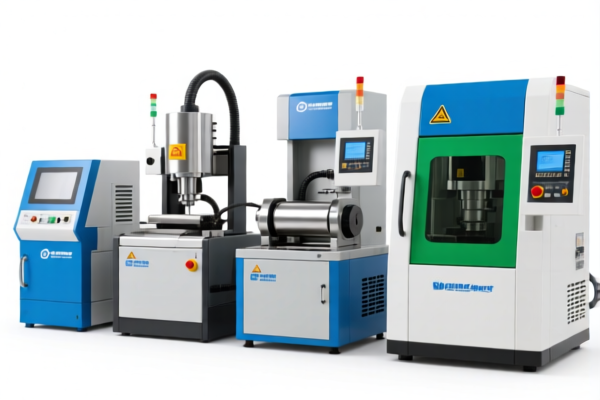
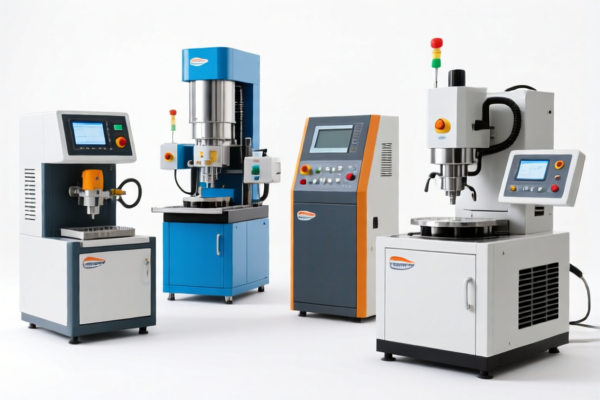
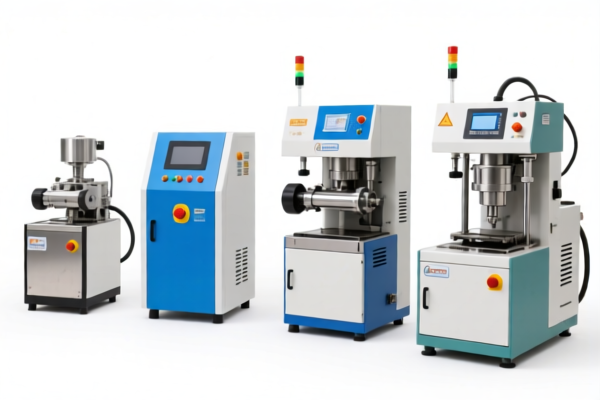
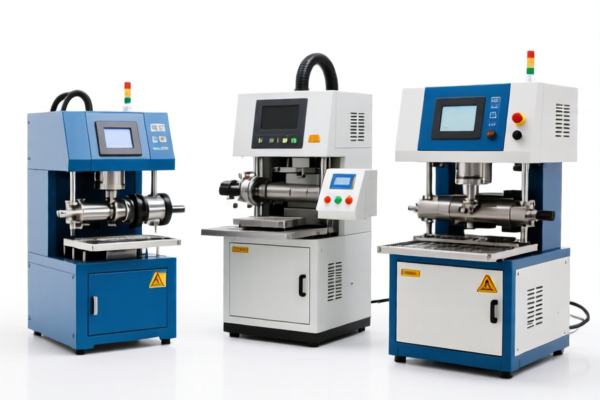
AI Analysis
🏗️ Mechanical Devices with Independent Functions (Custom Machinery & Process Control)
🌐 HS Code Reference & Customs Clearance Guide | 2026 Latest Tariff Analysis | Professional Compliance Strategy
📌 Part 1: Product Definition & Classification: What Exactly Is a "Device with Independent Function"?
In international trade, "Machines and mechanical appliances having individual functions" (Chapter 84) and "Electrical machines and apparatus, having individual functions" (Chapter 85) refer to equipment that performs a specific task but is not specifically listed in other more precise headings (like printing presses, sewing machines, or lifting machinery).
These devices are broadly categorized into two main groups for this analysis: 1. Civil/Construction Machinery (e.g., Asphalt/Concrete Pavers): Heavy-duty mechanical devices for public works. 2. Process Control & Electrical Appliances (e.g., Regulators, Amplifiers): Precision instruments, automation controllers, and specialized electrical components.
⚠️ Critical Distinction Point:
- If the machine is for paving roads (asphalt/concrete) → It falls under HS 8479.
- If the device is for industrial automation/regulation (sensors, controllers) → It falls under HS 9032.
- If the device is an electrical amplifier or generic electrical apparatus → It falls under HS 8543.
- Misclassification Risk: Declaring a "Concrete Paver" as a generic "Mixer" or an "Industrial Controller" as a "Consumer Appliance" will lead to severe penalties, back-tariffs, and shipment holds.
📦 Part 2: HS Code Classification Details (2026 Latest Tariff Authority Cross-Reference)
Based on the provided data, the products fall into three distinct categories. Below is the precise breakdown:
| HS Code | Product Description | Application Scenario | Key Characteristics |
|---|---|---|---|
9032.89.60.75 |
Automatic regulating instruments/apparatus; Other Process control instruments | Industrial Automation, HVAC Control, Chemical Processing | ✅ Precise regulation; Non-electrical/mechanical control systems |
9032.89.60.85 |
Automatic regulating instruments/apparatus; Other instruments and apparatus | General Industrial Regulation, Monitoring Systems | ✅ Regulatory function; Specific sub-category for "Other" |
8479.10.00.60 |
Machinery for public works: Pavers/Finishers/Spreaders for bituminous material | Road Construction, Asphalt Laying, Highway Maintenance | ✅ Mechanical only; Handles hot asphalt/bitumen |
8479.10.00.40 |
Machinery for public works: Pavers/Finishers/Spreaders for concrete | Bridge Construction, Concrete Pavement, Heavy Civil Works | ✅ Mechanical only; Handles wet concrete |
8543.70.98.60 |
Electrical machines having individual functions; Other: Other | Generic Industrial Electrical Equipment, Non-Amplifier Devices | ✅ Electrical; Specific function not listed elsewhere |
8543.70.98.10 |
Electrical machines having individual functions; Amplifiers | Signal Processing, Audio/Video Amplification, Sensor Signal Boosting | ✅ Electrical; Specifically designed to amplify signals |
🔍 Key Reminder:
- Construction Machinery (8479) is heavily targeted by trade wars. The 25% additional tariff is critical for US-bound shipments.
- Process Control (9032) and Electrical Devices (8543) currently have 0% or low base tariffs but face 25% additional tariffs if originating from China and entering the US under Section 301/IEEPA rules.
- "Amplifiers" (8543.70.98.10) are distinct from generic electrical devices. Ensure the device is truly an amplifier; otherwise, it may fall under8543.70.98.60.
💰 Part 3: 2026 Latest Tariff Rate Detail (Including Surcharges & Policy Add-ons)
✅ Applicable Country: United States (US)
✅ Origin: China (CN) (Note: Tariff rates apply specifically to Chinese-origin goods in this context)
✅ Effective Time: Current trade war measures (Section 301 & IEEPA)
🎯 1. 9032.89.60.75 & 9032.89.60.85 —— Automatic Regulating Instruments
| Item | Content |
|---|---|
| Base Tariff | 0.0% |
| Section 301 / Additional Tariff | 0.0% |
| Total Effective Tax Rate | 0.0% |
| Tax Calculation | CIF Value × 0.0% = $0 Duty |
| De Minimis Eligibility | ✅ Possible (if value <$800, subject to current regulations) |
| Legal Basis | HTSUS:9032.89.60 |
📌 Explanation:
- These process control instruments currently benefit from zero duty.
- This is a low-risk category for cost planning, assuming no sudden policy changes in 2026.
- Ensure the device is truly "automatic regulating" (e.g., PID controllers, flow regulators) to avoid being misclassified as a simple switch or sensor (which might have different rates).
🎯 2. 8479.10.00.60 (Bituminous Pavers) & 8479.10.00.40 (Concrete Pavers) —— Heavy Construction Machinery
| Item | Content |
|---|---|
| Base Tariff | 0.0% |
| Section 301 / Additional Tariff | +25.0% |
| Total Effective Tax Rate | 25.0% |
| Tax Calculation | CIF Value × 25.0% |
| De Minimis Eligibility | ❌ Not Applicable (High value, physical machinery) |
| Legal Basis | HTSUS:8479.10.00 + USITC Footnote: Section 301 List 4 |
📌 Explanation:
- Base duty is 0%, but the 25% additional tariff is substantial.
- This applies to asphalt spreaders (...60) and concrete finishers (...40).
- These are considered "strategic industrial equipment" and are fully exposed to US-China trade tensions.
- Cost Impact: A $100,000 paver incurs $25,000 in additional duties alone.
🎯 3. 8543.70.98.60 (Other Electrical) & 8543.70.98.10 (Amplifiers) —— Electrical Machines
| Item | Content |
|---|---|
| Base Tariff | 2.6% |
| Section 301 / Additional Tariff | +25.0% |
| Total Effective Tax Rate | 27.6% |
| Tax Calculation | CIF Value × 27.6% |
| De Minimis Eligibility | ❌ Not Applicable (Generally high value or commercial use) |
| Legal Basis | HTSUS:8543.70.98 + USITC Footnote: Section 301 List 4 |
📌 Explanation:
- Base duty is 2.6% (for generic electrical machines).
- Amplifiers (...10) and Other Electrical Devices (...60) both face the 25% surcharge.
- Total Rate = 27.6%. This is a high-cost category.
- Crucial: If the device is an amplifier, ensure it is declared as such (...10). If misdeclared as "Other" (...60), the rate is the same, but if declared incorrectly as a different HS code, penalties apply.
- Cost Impact: A $10,000 amplifier incurs $2,760 in duties.
🛠️ Part 4: Customs Clearance Operational Advice (Practical Pitfall Avoidance)
✅ 1. Documentation Checklist (Non-Negotiable)
| Document | Mandatory? | Description |
|---|---|---|
| ✅ Product Spec Sheet | ✔️ | Must detail "Independent Function" (e.g., "Controls temperature," "Paves concrete"). |
| ✅ Technical Manual | ✔️ | Proof of operation for process control or paving functions. |
| ✅ Commercial Invoice | ✔️ | Must explicitly state "Machinery for Public Works" or "Automatic Regulating Instrument." |
| ✅ Bill of Lading | ✔️ | Verify HS Code matches invoice. |
| ✅ FCC Certification | ✔️ | Required for all electrical devices (8543 series) entering the US. |
| ✅ Country of Origin Certificate | ✔️ | Critical for calculating Section 301 tariffs. |
✅ 2. Declaration Strategy (Key Mnemonic)
🔥 "Function First, Origin Second, Tariff Determined!"
| Scenario | Correct Declaration | Wrong Approach |
|---|---|---|
| Asphalt Paver | 8479.10.00.60 + "Bituminous Material Spreader" |
Generic "Road Machine" → Risk of reclassification & higher rates |
| Concrete Finisher | 8479.10.00.40 + "Concrete Paver/Finisher" |
"Concrete Mixer" → Wrong HS Code, penalties |
| PID Controller | 9032.89.60.75/85 + "Automatic Regulator" |
"Electrical Switch" → Wrong HS Code, duty evasion risk |
| Signal Amplifier | 8543.70.98.10 + "Amplifier" |
"Generic Electrical Part" → Misclassification, potential audit |
| Generic Electrical Box | 8543.70.98.60 + "Other Electrical Machine" |
Vague description → Customs delay |
✅ 3. Special Case Handling
| Scenario | Advice |
|---|---|
| OEM Custom Machinery | Provide original design drawings. If the machine has a unique function not listed elsewhere, argue for "Individual Function" under Chapter 84/85. |
| Used vs. New Machinery | Used paving equipment may require additional inspection for contamination (oil, concrete residue). Declare "Used" clearly. |
| Electrical Devices with Software | If the device is hardware-only but controls software, declare as Hardware (8543 or 9032). Do not separate software license unless required. |
| Mixed Shipment | If one container has both Pavers (8479) and Amplifiers (8543), must declare separately. Do not average the duties. |
🌍 Part 5: Global Market Clearance Comparison (2026 Latest)
| Country/Region | Recommended HS Code | Base Tariff | Additional Tariff (CN Origin) | Total Rate | Certification |
|---|---|---|---|---|---|
| 🇺🇸 USA | 8479.10.00.60 / 8543.70.98 / 9032.89 |
0% - 2.6% | +25% (Section 301) | 25% - 27.6% | FCC, UL (if applicable) |
| 🇨🇳 China | 8479.10.00.60 / 8543.70.98 / 9032.89 |
5% - 10% | 0% | 5% - 10% | CCC (if applicable) |
| 🇪🇺 EU | 8479.10.00 / 8543.70.98 / 9032.89 |
2.5% - 4.5% | 0% (Most Favored Nation) | 2.5% - 4.5% | CE, RoHS |
| 🇯🇵 Japan | 8479.10.00 / 8543.70.98 / 9032.89 |
0% - 2.0% | 0% | 0% - 2.0% | PSE, JIS |
📌 Conclusion:
- USA is the only major market imposing significant additional tariffs (25-27.6%) on these Chinese-origin goods.
- EU and Japan offer much more favorable rates (2-5%).
- Strategy: If exporting to the US, consider supply chain diversification (e.g., assembly in Vietnam/Mexico) or price negotiation to absorb the 25% tariff. For EU/Japan, focus on CE/PSE certification compliance.
📌 Part 6: Common Errors & Pitfall Avoidance (Lessons Learned)
❌ Error 1: Declaring an Asphalt Paver as a "Concrete Mixer"
👉 Consequence: Wrong HS Code (8479.10.00.20 vs 60). May be flagged for tariff evasion or misdeclaration. Fines apply.
❌ Error 2: Declaring an Amplifier as a "Generic Electrical Part" without specifying function
👉 Consequence: Customs may reclassify it, leading to delayed clearance and storage fees.
❌ Error 3: Ignoring FCC Certification for 8543 series devices
👉 Consequence: Seizure by CBP. No FCC ID = No entry for electrical devices in the US.
❌ Error 4: Using vague descriptions like "Machine" or "Device"
👉 Consequence: Customs officer assigns highest possible duty rate. Always specify function.
✅ Correct Practice:
"Bituminous Material Paver, Self-Propelled, Model ABC, FCC Certified, HTS 8479.10.00.60"
"Automatic Process Control Regulator, Digital, Model XYZ, HTS 9032.89.60.75"
🎯 Part 7: Conclusion: Precision Classification Saves Millions!
🎯 Remember the Golden Rule:
🔹 "Function Dictates Code, Origin Dictates Tariff, Documentation Dictates Speed!"
🔹 "25% Surcharge on Machinery is Real. Don't Gamble with Misclassification."
🔹 "Process Control (9032) is Safe (0%). Electrical (8543) is Expensive (27.6%). Pavers (8479) are Heavy (25%)."
📌 Pro Tip:
If your Electrical Devices (8543) or Pavers (8479) are not from China (e.g., assembled in Thailand, Germany, or USA), you avoid the 25% additional tariff.
🚀 Action:
📞 Engage a Licensed Customs Broker to verify the 8-digit HS Code.
📄 Prepare Technical Datasheets for all functional claims.
📉 Calculate Total Landed Cost including the 25-27.6% duty buffer for US-bound goods.
✨ Professional Clearance Starts with Accurate Classification!
💼 Your Bottom Line Depends on the First Line of Your Commercial Invoice!
Customer Reviews
About HS Code Classification
The Harmonized System (HS) is an internationally standardized nomenclature developed by the World Customs Organization (WCO) to classify traded products. Over 200 countries use the HS system as the basis for customs tariffs, trade statistics, and import/export regulations.
Each HS code follows a hierarchical structure:
- Chapter (2 digits) — Broad category of goods (e.g., Chapter 84: Machinery and Mechanical Appliances)
- Heading (4 digits) — More specific grouping within the chapter
- Subheading (6 digits) — Internationally standardized breakdown, used by all WCO member countries
- National subdivisions (8-10 digits) — Country-specific extensions for further classification, such as US HTSUS 10-digit codes
Correct HS code classification is essential for smooth customs clearance, accurate duty payment, and compliance with trade regulations. Misclassification can lead to customs delays, overpayment of duties, or penalties.
When importing from CN to US, the applicable tariff rates may include:
- Most-Favored-Nation (MFN) rate — The standard duty rate applied to WTO members
- General rate — Applied to countries without trade agreements
- Trade remedy duties — Additional tariffs such as Section 301 (anti-dumping), Section 232 (national security), or countervailing duties
The information provided on this page is for reference purposes only. For official classification, please consult with your local customs authority or a licensed customs broker.