Mechanical Parts
CN → US| HS Code | Tariff Rate | Origin | Destination | Doc |
|---|---|---|---|---|
| 8436990090 | 35.0% | CN | US | Official Doc |
| 8436990035 | 35.0% | CN | US | Official Doc |
| 8433905045 | 35.0% | CN | US | Official Doc |
| 8479899599 | 87.5% | CN | US | Official Doc |
Product Images
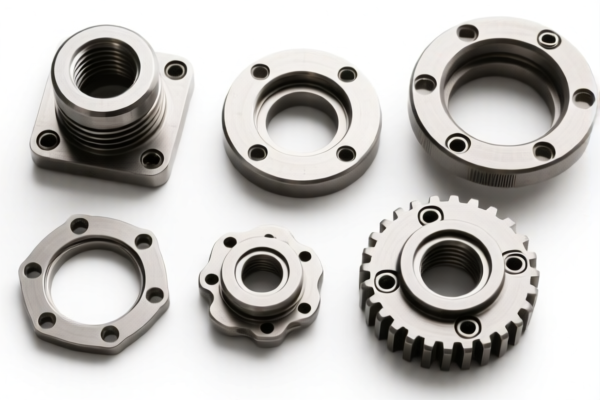
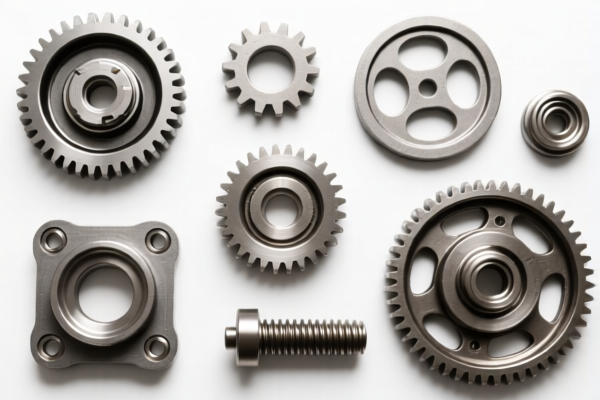
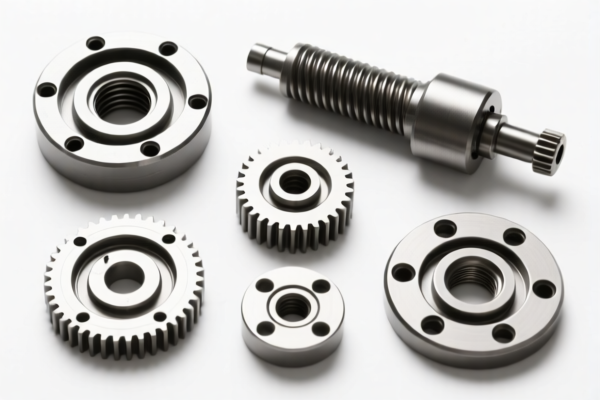
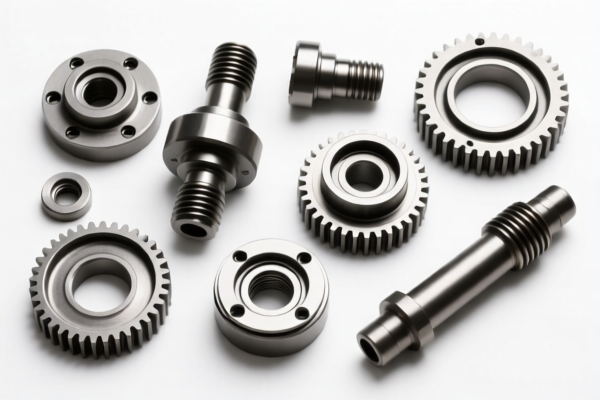
AI Analysis
🚜 Mechanical Parts: The Ultimate Classification & Tariff Guide (US Market)
🌐 HS Code Reference & Customs Clearance Guide | 2026 Latest Tariff Analysis | Professional Entry Strategy
📌 Important Disclaimer: This guide is strictly based on the provided <DATA> and <TAX> constraints. It covers specific agricultural and textile machinery parts subject to significant US tariffs (Section 301 & IEEPA).
📦 I. HS Code Classification Details
Below are the four specific HS Codes identified in the data, along with their summaries and tax details.
| HS Code | Product Description (Summary) | Category Type | Total Tax Rate |
|---|---|---|---|
8436.99.00.90 |
Agricultural Machinery Parts: Other parts of agricultural, horticultural, forestry, poultry-keeping, or beekeeping machinery. | "Other Parts" (Catch-all for general agri-machinery) | 35.0% |
8436.99.00.35 |
Agricultural Machinery Parts: Other agricultural machinery and parts (Catch-all category). | "Catch-all" for other agri-machinery | 35.0% |
8433.90.50.45 |
Agricultural Machinery Parts: Parts for harvesters, threshers, etc. (Catch-all category). | "Catch-all" for harvesters/threshers parts | 35.0% |
8479.89.95.99 |
Textile Machinery Parts: Other machines and mechanically operated appliances with individual functions (Catch-all category). | "Catch-all" for other machinery parts | 87.5% |
⚠️ Key Distinction: * Agricultural Parts (8436 & 8433): Generally fall under the 35.0% total tax bracket. * Textile/General Machinery Parts (8479): Fall under the 87.5% total tax bracket due to the inclusion of steel, aluminum, and copper product surcharges.
💰 II. 2026 Latest Tariff Rate Breakdown
✅ Applicable Country: USA (US)
✅ Origin: China (CN) (Implied by the specific "122 Clause" and high tariff structure typical of US-China trade tensions)
✅ Effective Time: Current (Based on provided data)
🎯 1. Agricultural Machinery Parts (8436.99.00.90, 8436.99.00.35, 8433.90.50.45)
These three codes share the same tax structure as per the provided data.
| Item | Detail |
|---|---|
| Basic Tariff | 0.0% |
| Section 301 Additional Tariff | 25.0% |
| "122 Clause" Tariff | 10.0% |
| Total Tax Rate | 35.0% |
| Tax Calculation | CIF Value × 35% |
| De Minimis Exemption | ❌ Not Applicable (High tariff rate excludes small package exemptions) |
| Legal Basis Path | Base: 0% → Section 301: +25% → 122 Clause: +10% → Total: 35% |
📌 Explanation: * The 25% Section 301 tariff is a standard additional duty on Chinese goods in this category. * The 10% "122 Clause" tariff is an additional levy specific to certain Chinese imports (often related to trade remedy measures or specific trade agreements). * Combined Total: 35%. This is a moderate-to-high tariff for industrial parts.
🎯 2. Textile/General Machinery Parts (8479.89.95.99)
This code has a significantly higher rate due to material-specific surcharges.
| Item | Detail |
|---|---|
| Basic Tariff | 2.5% |
| Section 301 Additional Tariff | 25.0% |
| "122 Clause" Tariff | 10.0% |
| Steel/Aluminum/Copper Surcharge | 50.0% |
| Total Tax Rate | 87.5% |
| Tax Calculation | CIF Value × 87.5% |
| De Minimis Exemption | ❌ Not Applicable |
| Legal Basis Path | Base: 2.5% → Section 301: +25% → 122 Clause: +10% → Metal Surcharge: +50% → Total: 87.5% |
📌 Critical Warning: * The 50% Steel/Aluminum/Copper Surcharge is the main driver for the high rate. * This applies if the part contains steel, aluminum, or copper. * Combined Total: 87.5%. This is an extremely high tariff that can erase profit margins.
🛠️ III. Customs Clearance Practical Advice
✅ 1. Preparation Checklist (Must-Haves)
| Document | Required | Notes |
|---|---|---|
| Product Specifications | ✔️ | Must clearly state material composition (Steel? Aluminum? Plastic?). Critical for 8479 classification. |
| Commercial Invoice | ✔️ | Must match the HS Code exactly. Do not generalize as "Mechanical Parts." |
| Packing List | ✔️ | Detail individual components if shipped separately. |
| Certificate of Origin | ✔️ | If not from China, tariff rates may differ. |
| Material Declaration | ✔️ | Specifically for 8479.89.95.99, declare if parts contain steel/aluminum/copper to avoid misdeclaration penalties. |
✅ 2. Declaration Strategy
🔥 "Classify by Function, Declare by Material, Pay by Rate!"
| Scenario | Recommended HS Code | Action |
|---|---|---|
| Part for a Harvester/Thresher | 8433.90.50.45 |
Ensure it's not for a different agri-machine (e.g., planting) which might go to 8436. |
| Part for General Agri-Machine | 8436.99.00.90 or 8436.99.00.35 |
Use 90 for general "other parts," 35 if it fits a broader "other agri-machinery" definition. |
| Part for Textile Machine | 8479.89.95.99 |
High Risk! Verify material. If non-metal, ensure documentation proves no steel/aluminum/copper. |
| Any Part with Metal Content | 8479.89.95.99 |
Expect 87.5% tax. Consider redesigning with non-metal components if possible. |
✅ 3. Special Considerations
- Material Composition is Key: For
8479.89.95.99, the 50% surcharge is triggered by the presence of steel, aluminum, or copper. If you can design parts using plastic, composite, or other materials, you might avoid this surcharge (but must confirm with customs). - No "De Minimis" Relief: Due to the high total tax rates (35% and 87.5%), small package exemptions (like Section 321) do not apply. All shipments will be assessed.
- Accurate Description: Avoid vague terms like "Mechanical Parts." Use specific terms like "Harvester Blade" or "Textile Machine Gear."
🌍 IV. Global Comparison (Brief)
| Market | Agricultural Parts (8436/8433) |
Textile/General Parts (8479) |
Notes |
|---|---|---|---|
| USA | 35.0% | 87.5% | High tariffs due to Section 301 & Metal Surcharges. |
| EU | Varies (Usually 0-5%) | Varies (Usually 0-5%) | No Section 301 or 122 Clause. Much lower costs. |
| China | Varies (Usually 0-7%) | Varies (Usually 0-7%) | Import duties are lower, but export restrictions may apply. |
📌 Conclusion: * US Market is Costly: Importing mechanical parts to the US from China faces steep tariffs. * Textile Parts are Prohibitively Expensive: The 87.5% rate on
8479.89.95.99requires careful cost-benefit analysis. * Agricultural Parts are Manageable: 35% is high but may be absorbable depending on product margin.
📌 V. Common Mistakes & Pitfalls
❌ Mistake 1: Classifying a steel textile part as 8479 without declaring material.
👉 Result: 50% surcharge applied retroactively + fines.
❌ Mistake 2: Assuming all "other parts" of agricultural machines go to the same code.
👉 Result: Misclassification between 8436 and 8433 may lead to delays.
❌ Mistake 3: Trying to use De Minimis for small shipments. 👉 Result: Seizure or forced payment of 35-87.5% tax.
🎯 VI. Final Recommendation
🔹 "Know Your Material, Choose Your Code, Calculate Your Cost!" 🔹 "Agricultural Parts: 35%. Textile/Metal Parts: 87.5%. Plan accordingly!"
📌 Pro Tip:
If you are importing parts for 8479.89.95.99, consider designing out metal components where possible to avoid the 50% surcharge. For agricultural parts, ensure precise functional description to avoid being misclassified into a higher-tariff subcategory.
📣 Immediate Action:
📞 Consult a Customs Broker to verify HS Code classification based on your specific product drawings and material composition. 🚀 Factor the 35-87.5% tariff into your pricing strategy to remain competitive in the US market.
✨ Professional Clearance Starts with Accurate Classification! 💼 Every Percent of Tariff Counts!
Customer Reviews
About HS Code Classification
The Harmonized System (HS) is an internationally standardized nomenclature developed by the World Customs Organization (WCO) to classify traded products. Over 200 countries use the HS system as the basis for customs tariffs, trade statistics, and import/export regulations.
Each HS code follows a hierarchical structure:
- Chapter (2 digits) — Broad category of goods (e.g., Chapter 84: Machinery and Mechanical Appliances)
- Heading (4 digits) — More specific grouping within the chapter
- Subheading (6 digits) — Internationally standardized breakdown, used by all WCO member countries
- National subdivisions (8-10 digits) — Country-specific extensions for further classification, such as US HTSUS 10-digit codes
Correct HS code classification is essential for smooth customs clearance, accurate duty payment, and compliance with trade regulations. Misclassification can lead to customs delays, overpayment of duties, or penalties.
When importing from CN to US, the applicable tariff rates may include:
- Most-Favored-Nation (MFN) rate — The standard duty rate applied to WTO members
- General rate — Applied to countries without trade agreements
- Trade remedy duties — Additional tariffs such as Section 301 (anti-dumping), Section 232 (national security), or countervailing duties
The information provided on this page is for reference purposes only. For official classification, please consult with your local customs authority or a licensed customs broker.