Mechanical Seal Paper Gasket
CN → US| HS Code | Tariff Rate | Origin | Destination | Doc |
|---|---|---|---|---|
| 8484900000 | 37.5% | CN | US | Official Doc |
| 8484200000 | 38.9% | CN | US | Official Doc |
| 4823906000 | 35.0% | CN | US | Official Doc |
| 4823908000 | 35.0% | CN | US | Official Doc |
| 8484900000 | 37.5% | CN | US | Official Doc |
Product Images
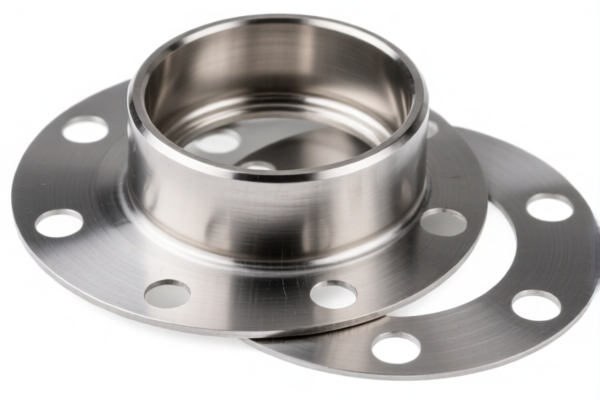
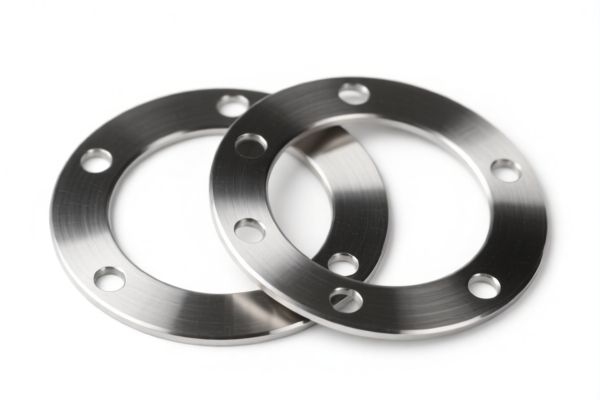
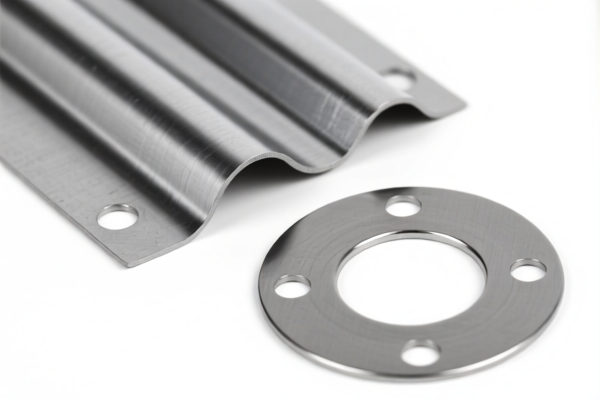
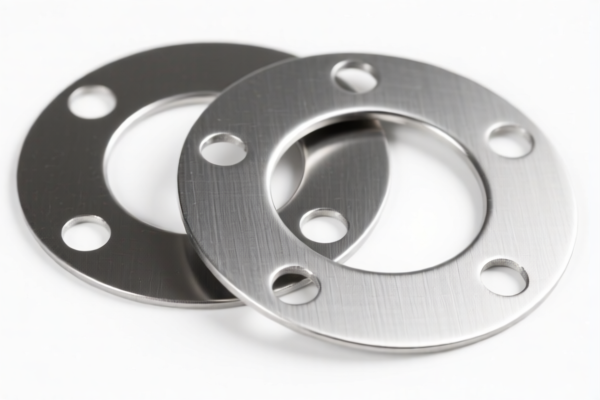
AI Analysis
🛠️ Mechanical Seal Paper Gasket (Paper Mechanical Seals)
🌐 HS Code Reference & Customs Clearance Guide | 2026 Latest Tariff Analysis | Strategic Clearance Strategy
📌 I. Product Definition & Classification: Do You Really Understand "Paper Gaskets"?
Paper mechanical seal gaskets are critical sealing components used in fluid and gas systems. In international trade, their classification depends on material composition and functional intent:
Category A: Pure Paper/Cardboard Materials (Chapter 48)
Gaskets made entirely of paper, coated paper, or cardboard, serving as static seals. These fall under heading 4823.
Category B: Mechanical Sealing Components (Chapter 84)
Gaskets specifically designed for mechanical seals (dynamic sealing devices like pumps or compressors), even if paper-based. These fall under heading 8484.
⚠️ Key Distinction:
- If the product is primarily a sheet/board of paper used as a general-purpose gasket → Classify under 4823.90.
- If the product is specifically identified as a mechanical seal component (part of a seal assembly) → Classify under 8484.90.
- Risk: Misclassification can lead to significant tariff differences and customs delays.
📦 II. HS Code Classification Details (2026 Latest Tariff Authority Comparison)
Based on the provided data, here are the four specific HS Codes with their summaries and tax implications:
| HS Code | Summary & Rationale | Total Tax Rate | Tax Details Breakdown |
|---|---|---|---|
8484.90.00.00 |
Mechanical Seal Category Falls under "Mechanical Seals," matching material and use. Fits the residual category for other sealing items. |
37.5% | Base Tariff: 2.5% Additional Tariff (Section 301): 25.0% Section 122 Tariff: 10% |
8484.20.00.00 |
Composite Mechanical Seal Belongs to mechanical seals made of other material combinations. Consistent usage. |
38.9% | Base Tariff: 3.9% Additional Tariff (Section 301): 25.0% Section 122 Tariff: 10% |
4823.90.60.00 |
Coated Paper/Cardboard Material is coated paper or cardboard. Application as gasket matches perfectly. |
35.0% | Base Tariff: 0.0% Additional Tariff (Section 301): 25.0% Section 122 Tariff: 10% |
4823.90.80.00 |
General Paper/Cardboard Material is paper or cardboard. Use as gasket, washer, and other sealing parts fully compliant. |
35.0% | Base Tariff: 0.0% Additional Tariff (Section 301): 25.0% Section 122 Tariff: 10% |
🔍 Key Reminder:
- The Chapter 84 options (8484.xx) carry a higher base tariff (2.5%–3.9%) but classify the item as a "Mechanical Seal Component."
- The Chapter 48 options (4823.xx) have a 0% base tariff, making them cheaper before additional tariffs, but must justify the material as pure paper/cardboard without advanced mechanical seal features.
- All options include a 25% Additional Tariff (likely Section 301) and a 10% Section 122 Tariff.
💰 III. 2026 Latest Tariff Rate Detailed Explanation (Including Add-ons & Policy Surcharges)
✅ Applicable Country: United States (US)
✅ Origin: China (CN) (Inferred from "Section 122" and high additional tariffs typical of US-China trade)
✅ Effective Time: Current rates as per 2026 tariff schedule
🎯 1. 8484.90.00.00 & 8484.20.00.00 —— Mechanical Seals (High Base)
| Item | Content |
|---|---|
| Base Rate | 2.5% (8484.90) / 3.9% (8484.20) (Ad Valorem) |
| USITC Additional Tariff (Section 301) | +25% |
| Section 122 Tariff | +10% |
| Total Rate | 37.5% (8484.90) / 38.9% (8484.20) |
| Tax Calculation | CIF Value × Total Rate |
| De Minimis Exemption | ❌ Not Available (Denied) |
| Legal Basis Path | USITC:8484.xx → Section 301: 25% → Section 122: 10% |
📌 Explanation:
- The 25% Additional Tariff is applied to mechanical parts and seals from China under Section 301.
- The 10% Section 122 Tariff is a recent policy addition affecting specific industrial goods.
- Total burden is high: ~37-39%. This reflects the higher base value of "mechanical seal components."
🎯 2. 4823.90.60.00 & 4823.90.80.00 —— Paper Gaskets (Low Base)
| Item | Content |
|---|---|
| Base Rate | 0.0% (Ad Valorem) |
| USITC Additional Tariff (Section 301) | +25% |
| Section 122 Tariff | +10% |
| Total Rate | 35.0% |
| Tax Calculation | CIF Value × 35% |
| De Minimis Exemption | ❌ Not Available (Denied) |
| Legal Basis Path | USITC:4823.xx → Section 301: 25% → Section 122: 10% |
📌 Note:
- While the base tariff is 0%, the additional tariffs still apply, bringing the total to 35%.
- This is 2.5%-3.9% cheaper than the Chapter 84 classification.
- Critical: You must prove the product is strictly "paper/cardboard" and not a specialized mechanical seal assembly to qualify for this lower rate.
🛠️ IV. Customs Clearance Practical Advice (Real-World Pitfall Avoidance)
✅ 1. Preparation Checklist (All Required)
| Document | Mandatory? | Description |
|---|---|---|
| ✅ Product Specifications | ✔️ | Detail material (e.g., "Arctic Paper," "Graphite-coated paper"), dimensions, pressure rating. |
| ✅ Material Composition Statement | ✔️ | Must explicitly state "100% Paper" or "Coated Paper" to justify Chapter 48, or "Component of Mechanical Seal" for Chapter 84. |
| ✅ Product Photos | ✔️ | Clear images showing the gasket shape, packaging, and any markings. |
| ✅ Commercial Invoice | ✔️ | Describe as "Paper Gasket for Industrial Use" or "Mechanical Seal Paper Gasket." Be consistent with HS Code. |
| ✅ Packing List | ✔️ | Confirm quantity and weight. |
| ✅ Third-Party Test Report | Optional but Recommended | Proves material grade and sealing performance, supporting the "Paper" classification. |
✅ 2. Declaration Strategy (Key Mnemonics)
🔥 “Material First, Function Second, Choose Low Base, But Prove It!”
| Scenario | Recommended HS Code | Reasoning |
|---|---|---|
| Simple paper cutouts used as static seals in flanges | 4823.90.60.00 or 4823.90.80.00 |
Material is paper; 0% base tariff saves ~3.5%. |
| Specialized gaskets labeled as part of a mechanical seal kit | 8484.90.00.00 |
Functional description overrides material. Higher base, but safer for "seal components." |
| Composite seals (paper + metal ring) | 8484.20.00.00 |
"Made of other materials" fits composite nature. |
⚠️ Warning:
- Do not arbitrarily choose Chapter 48 to save taxes if the product is clearly marketed as a "Mechanical Seal Part." Customs may reclassify it and apply penalties.
- Conversely, declaring a simple paper washer as8484.90unnecessarily increases your tax burden by ~2.5%.
✅ 3. Special Situations Handling
| Situation | Advice |
|---|---|
| OEM Custom Gaskets | Provide design drawings. If the design is generic paper cutout, use Chapter 48. If it’s engineered for a specific pump seal, use Chapter 84. |
| Mixed Shipments | If paper gaskets and mechanical seal assemblies are in the same container, separate them on the invoice. Mis-mixed declarations cause delays. |
| Origin Fraud Risk | Ensure the "China Origin" label is accurate. If sourced from Vietnam/Malaysia, verify rules of origin to potentially avoid Section 301 tariffs (if applicable under new agreements). |
🌍 V. Global Market Comparison (2026 Latest)
| Country/Region | Recommended HS Code | Est. Total Tariff | Notes |
|---|---|---|---|
| 🇺🇸 USA | 4823.90.80.00 |
35.0% | Lowest base rate. Includes 25% + 10% add-ons. |
| 🇺🇸 USA | 8484.90.00.00 |
37.5% | Higher base due to "Mechanical Seal" classification. |
| 🇨🇳 China (Import) | 4823.90.80.00 |
5.0% | Low import duty. No Section 301/122 applies. |
| 🇪🇺 EU | 4823.90.00 |
5.4% | Standard EU duty. No Section 122/301. |
| 🇦🇺 Australia | 4823.90.00 |
5.0% | Standard FTA/GST applies. |
📌 Conclusion:
- USA is the most expensive market due to layered additional tariffs.
- Chapter 48 is the optimal strategy for USA imports to minimize base costs.
- Documentation is key: Must prove "Paper" status to access the 0% base rate.
📌 VI. Common Errors & Pitfall Guide (Lessons Learned)
❌ Error 1: Declaring "Mechanical Seal Paper Gasket" as 8484.90 when it’s a simple paper washer.
👉 Consequence: Paying 2.5%-3.9% extra unnecessarily.
✅ Fix: Use 4823.90.80.00 for simple paper gaskets.
❌ Error 2: Declaring a composite mechanical seal (paper + graphite + metal) as 4823.
👉 Consequence: Customs rejects "Paper-only" claim. Re-classifies to 8484 + penalties.
✅ Fix: Use 8484.20.00.00 for composite/seal-specific items.
❌ Error 3: Ignoring Section 122 Tariff (10%).
👉 Consequence: Underpayment of duty. Customs assessment notices and interest.
✅ Fix: Always include the 10% add-on in cost calculations for US imports from China.
🎯 VII. Conclusion: Precision Classification, Cost Optimization!
🎯 Remember the Mnemonic:
🔹 “Paper Base Zero, Seal Base Three, Total Thirty-Five vs Thirty-Seven, Choose Wisely!”
🔹 “Prove Material, Avoid Penalty, Save 3.5% on Every Shipment!”
📌 Pro Tip:
If your gaskets are simple paper cutouts with no special mechanical seal engineering, always classify under
4823.90for the US market to save the base tariff differential.
For engineered seal components, use8484to ensure compliance.
📣 Immediate Action:
📞 Contact a licensed customs broker.
📎 Submit material composition sheets for pre-ruling.
🚀 Optimize your supply chain to reduce customs duties by up to 3.9% through accurate HS Code selection!
✨ Professional Clearance Starts with Accurate Classification!
💼 Every Dollar in Tariffs Saved is Pure Profit Added!
Customer Reviews
About HS Code Classification
The Harmonized System (HS) is an internationally standardized nomenclature developed by the World Customs Organization (WCO) to classify traded products. Over 200 countries use the HS system as the basis for customs tariffs, trade statistics, and import/export regulations.
Each HS code follows a hierarchical structure:
- Chapter (2 digits) — Broad category of goods (e.g., Chapter 84: Machinery and Mechanical Appliances)
- Heading (4 digits) — More specific grouping within the chapter
- Subheading (6 digits) — Internationally standardized breakdown, used by all WCO member countries
- National subdivisions (8-10 digits) — Country-specific extensions for further classification, such as US HTSUS 10-digit codes
Correct HS code classification is essential for smooth customs clearance, accurate duty payment, and compliance with trade regulations. Misclassification can lead to customs delays, overpayment of duties, or penalties.
When importing from CN to US, the applicable tariff rates may include:
- Most-Favored-Nation (MFN) rate — The standard duty rate applied to WTO members
- General rate — Applied to countries without trade agreements
- Trade remedy duties — Additional tariffs such as Section 301 (anti-dumping), Section 232 (national security), or countervailing duties
The information provided on this page is for reference purposes only. For official classification, please consult with your local customs authority or a licensed customs broker.