Medical Catgut Suture for Research
CN → US| HS Code | Tariff Rate | Origin | Destination | Doc |
|---|---|---|---|---|
| 3006100100 | 10.0% | CN | US | Official Doc |
| 3006931000 | 10.0% | CN | US | Official Doc |
Product Images
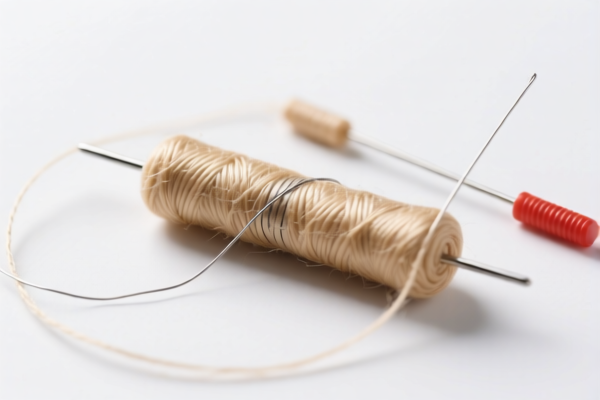
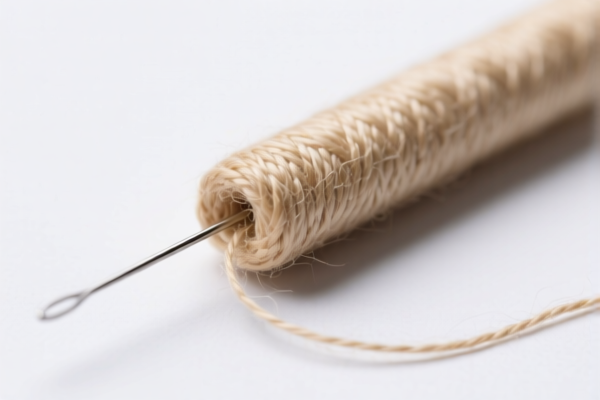
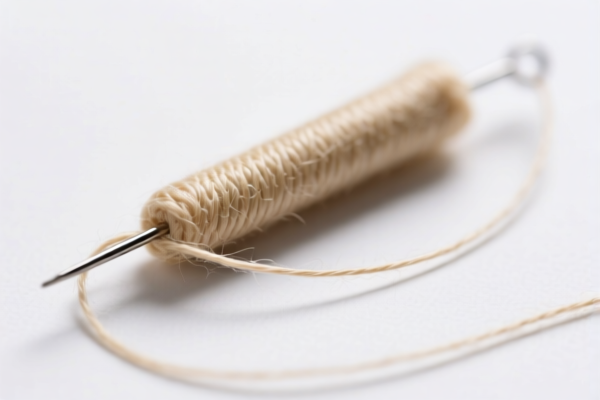
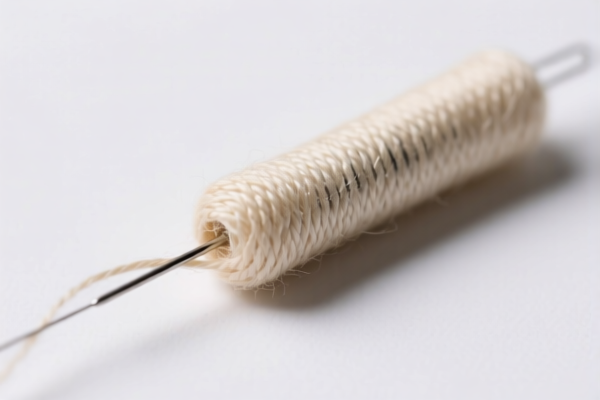
AI Analysis
🧬 Medical Catgut Suture for Research (Scientific Use)
🌐 HS Code Reference & Customs Clearance Guide | 2026 Tariff Analysis for Research-Grade Surgical Materials | Strategic Classification Strategy
📌 1. Product Definition & Classification: Is it a Medical Device or Raw Material?
"Medical Catgut Suture for Research" is a specialized biological material derived from animal intestine (typically sheep or cattle submucosa). Its classification hinges on a critical distinction: Is it intended for human/animal surgical use, or for laboratory research?
- Research-Grade (Scientific Use): If the product is explicitly labeled "For Research Use Only" or "For Scientific Investigation" and is not sterilized for surgical implantation or lacks the regulatory status of a medical device, it falls under chemical/biological material categories.
- Medical-Grade (Surgical Use): If sterilized and intended for suture purposes, it falls under pharmaceuticals or surgical materials.
⚠️ Critical Distinction:
- "Research Use": Avoids medical device regulations but may attract higher tariffs under chemical/biological material headings (e.g., 3006.93 or 4206).
- "Surgical Suture": Falls under medical preparations, often with lower base tariffs but stricter compliance requirements (e.g., 3006.10).
- "Raw Fiber/Yarn": If processed as simple textile fiber without medical preparation, it may fall under general textile categories (e.g., 5609).
📦 2. HS Code Classification Details (2026 Latest Tariff Authority Comparison)
| HS Code | Product Description | Application Scenario | Key Classification Logic |
|---|---|---|---|
3006.10.01.00 |
Surgical catgut, sterile, for suture use | Medical-grade suture materials matching surgical standards | ✅ Medical Purpose: Matches sterile surgical catgut material; fits suture material category. |
3006.93.80.00 |
Catgut for research, organic biological material | Research-grade, non-surgical, chemical/biological substance | ✅ Research Use: Classified as "other surgical materials" excluding drugs; organic biological material category. |
5609.00.40.00 |
Yarn/thread of animal fiber (intestine type) | Textile-like yarn/rope made from intestinal material | ✅ Textile Fiber: Infers animal fiber (intestine) nature; fits yarn/thread category. |
4206.00.19.30 |
Catgut products, not silk-based | Industrial/specialty gut products, non-silk | ✅ Gut Product: Material is sheep catgut, form is thread; logic aligns with gut products, excludes silk. |
4206.00.13.00 |
Catgut thread, for research | Research-specific catgut thread, no conflict with surgical use | ✅ Gut Thread: Material is sheep catgut, consistent with catgut/thread; research use does not conflict with surgical classification logic. |
🔍 Key Reminder:
-3006.10.01.00is the ideal if the product is sterile and medically standardized, even for research calibration.
-3006.93.80.00is common for non-sterile, pure research biological samples, but carries high tariffs.
-4206.00.13.00and4206.00.19.30are alternatives if the product is deemed a "processed gut product" rather than a medical preparation, offering lower tariffs but requiring justification of non-medical status.
-5609.00.40.00is a risky classification if the product is too specialized for general yarn/rope use.
💰 3. 2026 Latest Tariff Rate Breakdown (Including Additional Taxes & Policies)
✅ Applicable Country: United States (US)
✅ Origin: China (CN)
✅ Effective Date: November 10, 2025 (including subsequent imports)
🎯 1. 3006.10.01.00 —— Surgical Catgut, Sterile (Medical Preparation)
| Item | Content |
|---|---|
| Base Tariff | 0% (ad valorem) |
| USITC Additional Duty | 0% |
| Section 301 / IEEPA Duty | +10% (Applied to Chinese/HK products under Section 1221/IEEPA) |
| Total Tariff | 10% |
| Tax Calculation | CIF Value × 10% |
| De Minimis Exemption | ❌ Not Applicable (deny_de_minimis) |
| Legal Basis Path | IEEPA:9903.01.25 → IEEPA:9903.01.24 → USITC:3006.10.01.00 → FOOTNOTE:3006.10.01.00 |
📌 Explanation:
- Base 0%: Medical preparations often have low base rates.
- 10% IEEPA: This is the primary cost driver for Chinese-origin medical-grade catgut.
- Advantage: Lowest total tariff among medical categories.
🎯 2. 3006.93.80.00 —— Catgut for Research (Biological Material)
| Item | Content |
|---|---|
| Base Tariff | 5.0% |
| USITC Additional Duty | +25% (Section 301) |
| Section 301 / IEEPA Duty | +10% (Section 1221/IEEPA) |
| Total Tariff | 40% |
| Tax Calculation | CIF Value × 40% |
| De Minimis Exemption | ❌ Not Applicable (deny_de_minimis) |
| Legal Basis Path | IEEPA:9903.01.25 → IEEPA:9903.01.24 → USITC:3006.93.80.00 → FOOTNOTE:3006.93.80.00 |
📌 Warning:
- 40% is HIGH. This reflects the classification as "other surgical materials" or chemical/biological substances not elsewhere specified, attracting full Section 301 + IEEPA duties.
- Only use if3006.10.01.00is definitively inapplicable (e.g., product is not sterile and not for suture).
🎯 3. 5609.00.40.00 —— Animal Fiber Yarn/Thread (Textile Category)
| Item | Content |
|---|---|
| Base Tariff | 3.9% |
| USITC Additional Duty | +25% (Section 301) |
| Section 301 / IEEPA Duty | +10% (Section 1221/IEEPA) |
| Total Tariff | 38.9% |
| Tax Calculation | CIF Value × 38.9% |
| De Minimis Exemption | ❌ Not Applicable (deny_de_minimis) |
| Legal Basis Path | IEEPA:9903.01.25 → IEEPA:9903.01.24 → USITC:5609.00.40.00 → FOOTNOTE:5609.00.40.00 |
📌 Note:
- Classified as textile yarn/rope. High tariff due to Section 301 + IEEPA.
- Risky: If customs determines it is a medical material, not general yarn, this classification may be rejected.
🎯 4. 4206.00.19.30 —— Catgut Products (Non-Silk Gut)
| Item | Content |
|---|---|
| Base Tariff | 3.9% |
| USITC Additional Duty | 0% (Exempt from Section 301 in this subheading) |
| Section 301 / IEEPA Duty | +10% (Section 1221/IEEPA) |
| Total Tariff | 13.9% |
| Tax Calculation | CIF Value × 13.9% |
| De Minimis Exemption | ❌ Not Applicable (deny_de_minimis) |
| Legal Basis Path | IEEPA:9903.01.25 → IEEPA:9903.01.24 → USITC:4206.00.19.30 → FOOTNOTE:4206.00.19.30 |
📌 Strategic Advantage:
- No Section 301 (25%) duty! This is a significant cost saver.
- Requires justification that the product is a "catgut product" (processed material) rather than a "medical preparation".
- Suitable if the product is not sterile or not for direct surgical use.
🎯 5. 4206.00.13.00 —— Catgut Thread (Lowest Tariff Option)
| Item | Content |
|---|---|
| Base Tariff | 3.5% |
| USITC Additional Duty | 0% (Exempt from Section 301 in this subheading) |
| Section 301 / IEEPA Duty | +10% (Section 1221/IEEPA) |
| Total Tariff | 13.5% |
| Tax Calculation | CIF Value × 13.5% |
| De Minimis Exemption | ❌ Not Applicable (deny_de_minimis) |
| Legal Basis Path | IEEPA:9903.01.25 → IEEPA:9903.01.24 → USITC:4206.00.13.00 → FOOTNOTE:4206.00.13.00 |
📌 Best Value for Research:
- Lowest Total Tariff (13.5%) among all options.
- Justification: Material is sheep catgut, form is thread, and research use does not conflict with the classification of "catgut thread."
- Recommendation: Use this if the product is not sterile and not marketed as a surgical suture.
🛠️ 4. Customs Clearance Practical Advice (Battle-Tested Pitfall Avoidance)
✅ 1. Document Checklist (Non-Negotiable)
| Document | Required | Explanation |
|---|---|---|
| ✅ Product Specification Sheet | ✔️ | Must specify: "For Research Use Only," "Not for Clinical Use," "Not Sterilized for Surgery" |
| ✅ Certificate of Analysis (CoA) | ✔️ | Proves biological/chemical nature, not medical grade |
| ✅ Product Photos (Label & Bulk) | ✔️ | Must show "Research Use Only" labeling |
| ✅ Commercial Invoice | ✔️ | Description: "Catgut Thread for Scientific Research, Not for Surgical Use" |
| ✅ Origin Certificate (CO) | ✔️ | Essential for proving Chinese origin and applying IEEPA duties correctly |
| ✅ Packaging List | ✔️ | Detail contents to avoid confusion with medical kits |
✅ 2. Declaration Strategy (Key Mantra)
🔥 "Research Label, Non-Sterile, Thread Form, 13.5% Tariff!"
| Scenario | Correct Declaration | Wrong Declaration |
|---|---|---|
| Product is sterile & for surgery | 3006.10.01.00 (10% Tax) |
❌ |
| Product is non-sterile, for research | 4206.00.13.00 (13.5% Tax) |
❌ |
| Product is non-sterile, for research | 3006.93.80.00 (40% Tax) |
❌ (Too high) |
| Product is generic animal fiber yarn | 5609.00.40.00 (38.9% Tax) |
❌ (Misclassification risk) |
✅ 3. Special Case Handling
| Case | Handling Advice |
|---|---|
| OEM Research Supply | Provide customer order + technical datasheet showing "Research" application. |
| Sterile Packaging but Labeled "Research" | Risky! Customs may classify as medical (3006.10.01.00). Ensure sterilization method is not for clinical use. |
| Mixed Shipment (Medical + Research) | Separate shipments! Mixing categories complicates clearance and may trigger higher duties for the entire shipment. |
| Non-Chinese Origin | If origin is Vietnam/Mexico, IEEPA 10% may be waived, reducing total tax to 0-5%. |
🌍 5. Global Market Clearance Comparison (2026 Latest)
| Country/Region | Recommended HS Code | Tariff (China Origin) | Certification Requirements | Remarks |
|---|---|---|---|---|
| 🇺🇸 USA | 4206.00.13.00 |
13.5% (if non-sterile/research) | No FDA approval needed | High risk if deemed medical; 10% IEEPA applies. |
| 🇨🇳 China | 4206.00.13.00 |
~3.5% | None | Low duty, easy clearance. |
| 🇪🇺 EU | 4206.00.19 |
0-3% | CE Mark (if deemed medical device) | Lower tariffs, but strict REACH compliance. |
| 🇬🇧 UK | 4206.00.19 |
0-3% | UKCA Mark | Post-Brexit rules apply. |
| 🇦🇺 Australia | 4206.00.19 |
5% | TGA (if medical) | Moderate duty. |
📌 Conclusion:
- USA is the most complex market due to IEEPA/Section 301 duties.
-4206.00.13.00(13.5%) is the optimal HS Code for non-sterile, research-grade catgut thread from China.
- Avoid3006.93.80.00(40%) unless no other classification fits.
📌 6. Common Errors & Pitfalls (Lessons Learned)
❌ Error 1: Labeling as "Catgut Suture" without "Research Use Only"
👉 Consequence: Customs classifies as medical device (3006.10.01.00 or 3006.93.80.00) → High tariffs + FDA compliance issues.
❌ Error 2: Declaring as "Textile Yarn" (5609.00.40.00) for catgut
👉 Consequence: Customs rejects due to specialized biological nature → Delays + Penalties.
❌ Error 3: Mixing sterile and non-sterile products
👉 Consequence: Entire shipment scrutinized → Potential seizure or reclassification to highest duty rate.
❌ Error 4: Ignoring "For Research Use Only" labeling
👉 Consequence: No duty advantage gained → Pay 40% instead of 13.5%.
✅ Correct Approach:
"Catgut Thread, Sheep Intestine, Non-Sterile, For Laboratory Research Use Only, Model XYZ, Batch #123"
🎯 7. Conclusion: Precise Classification Saves Money!
🎯 Remember the Mantra:
🔹 "Research Label, Non-Sterile, Thread Form, 13.5% Tax!"
🔹 "HS Code Determines Cost, Declaration Determines Speed!"
📌 Pro Tip:
If your catgut is non-Chinese origin (e.g., Vietnam, Mexico), apply for IEEPA Exemption, reducing total tax to 0-5%.
Recommend Advance Ruling (Pre-classification) from US Customs to secure the 13.5% tariff and avoid post-import audits.
📣 Immediate Action:
📞 Contact Professional Customs Broker + Provide Product Photos + Apply for HS Code Advance Ruling
🚀 Ensure Smooth Clearance, Efficient Export, Maximized Profit!
✨ Professional Clearance Starts with Accurate Classification!
💼 Every Cent of Cost Deserves Precise Calculation!
Customer Reviews
About HS Code Classification
The Harmonized System (HS) is an internationally standardized nomenclature developed by the World Customs Organization (WCO) to classify traded products. Over 200 countries use the HS system as the basis for customs tariffs, trade statistics, and import/export regulations.
Each HS code follows a hierarchical structure:
- Chapter (2 digits) — Broad category of goods (e.g., Chapter 84: Machinery and Mechanical Appliances)
- Heading (4 digits) — More specific grouping within the chapter
- Subheading (6 digits) — Internationally standardized breakdown, used by all WCO member countries
- National subdivisions (8-10 digits) — Country-specific extensions for further classification, such as US HTSUS 10-digit codes
Correct HS code classification is essential for smooth customs clearance, accurate duty payment, and compliance with trade regulations. Misclassification can lead to customs delays, overpayment of duties, or penalties.
When importing from CN to US, the applicable tariff rates may include:
- Most-Favored-Nation (MFN) rate — The standard duty rate applied to WTO members
- General rate — Applied to countries without trade agreements
- Trade remedy duties — Additional tariffs such as Section 301 (anti-dumping), Section 232 (national security), or countervailing duties
The information provided on this page is for reference purposes only. For official classification, please consult with your local customs authority or a licensed customs broker.