Medical Device Disinfectant
CN → US| HS Code | Tariff Rate | Origin | Destination | Doc |
|---|---|---|---|---|
| 8479899599 | 87.5% | CN | US | Official Doc |
| 8419200020 | 10.0% | CN | US | Official Doc |
| 8479896500 | 20.3% | CN | US | Official Doc |
| 8543709860 | 37.6% | CN | US | Official Doc |
| 3402905010 | 38.7% | CN | US | Official Doc |
| 3808594000 | 40.0% | CN | US | Official Doc |
Product Images
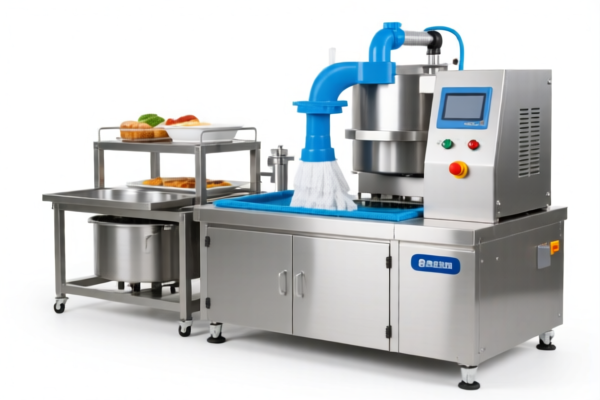
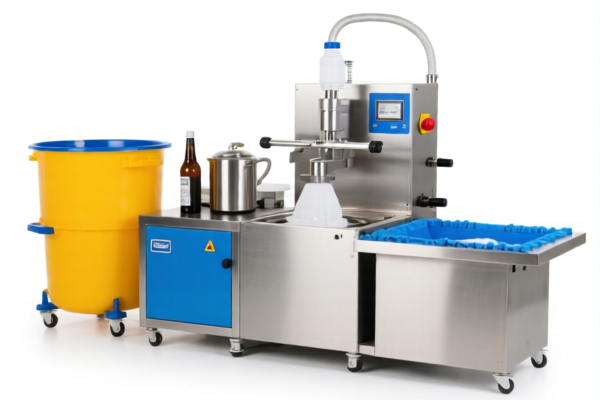
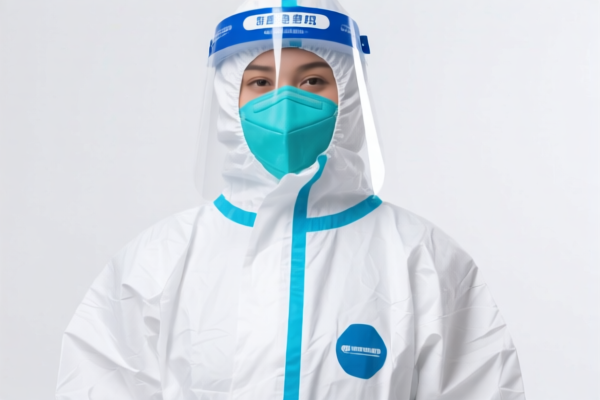
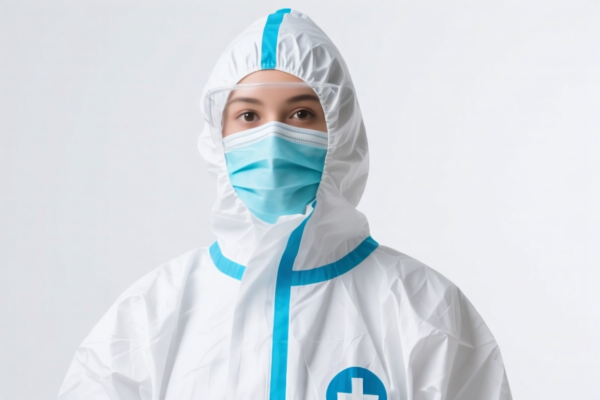
AI Analysis
💉 Medical Device Disinfectant (Sterilization & Disinfection Agents)
🌐 HS Code Reference & Customs Clearance Guide | 2026 Latest Tariff Analysis | Professional Entry Strategy
📌 I. Product Definition & Classification: Do You Really Understand "Medical Disinfectants"?
Medical device disinfectants are specialized chemical or mechanical agents used to eliminate pathogenic microorganisms on medical instruments, surfaces, or equipment to prevent infection. In international trade, they are broadly categorized into two types based on their mode of action:
Chemical Disinfectants (Chemical Preparations): Liquid, gel, or powder forms containing active ingredients (e.g., glutaraldehyde, hydrogen peroxide, quaternary ammonium compounds) that chemically neutralize pathogens.
Mechanical Disinfection Equipment: Standalone machines (e.g., autoclaves, UV sterilizers, ozone generators) that use physical means (heat, radiation, ionization) to achieve sterilization without consuming chemicals.
⚠️ Key Distinction Point:
- If the product is a liquid/powder/containerized agent → It falls under Chemical Preparations (Chapters 34 or 38).
- If the product is a standalone machine (with motor, control panel, housing) → It falls under Machinery/Electrical Apparatus (Chapters 84 or 85).
- Misclassification Risk: Declaring a machine as a "chemical" or vice versa leads to massive tariff discrepancies and customs delays.
📦 II. HS Code Classification Details (2026 Latest Tariff Authority Comparison)
| HS Code | Product Description | Application Scenario | Category Type |
|---|---|---|---|
3402.90.50.10 |
Disinfectant preservatives; chemical preparations | Liquid/gel disinfectants, functional properties similar to cleaning/washing agents | ✅ Chemical (Chapter 34) |
3808.59.40.00 |
Disinfectants; fully matches the "disinfectant" explanation in commodity use/classification | Standard commercial/medical chemical disinfectants (sprays, wipes, solutions) | ✅ Chemical (Chapter 38) |
8479.89.95.99 |
Disinfection equipment; matches usage, belongs to machinery with independent functions | Mechanical sterilizers, ozone generators, non-electric sterilization machines | ✅ Machinery (Chapter 84) |
8419.20.00.20 |
Disinfection equipment; matches usage, belongs to equipment handling materials via temperature change | Autoclaves, steam sterilizers, thermal disinfection units | ✅ Machinery (Chapter 84) |
8479.89.65.00 |
Disinfection equipment; belongs to machinery with independent functions, usually with self-contained electric motor | Electrically driven sterilization machines, UV-Ozone combos with motors | ✅ Machinery (Chapter 84) |
8543.70.98.60 |
Disinfection equipment; electrical appliance with independent function, unclassified functional devices | Specialized electrical sterilization units, UV lamps with controls, unlisted electrical disinfection devices | ✅ Electrical (Chapter 85) |
🔍 Critical Reminder:
- "Chemical" vs. "Machine": If the product consumes a chemical agent (e.g., adds fluid to a tank), it might be classified as machinery (8479/8419). If the product is the chemical itself, it is3808or3402.
- Motorization Matters: For machinery,8479.89.65.00specifically requires a self-contained electric motor. If it’s purely mechanical or manual,8479.89.95.99may apply.
- Heat Treatment: If the device uses steam or heat exclusively (like an autoclave),8419.20.00.20is the most precise match.
💰 III. 2026 Latest Tariff Rate Breakdown (Including Surtaxes & Policy Add-ons)
✅ Applicable Country: United States (US)
✅ Origin: China (CN)
✅ Effective Date: Current rates apply (Section 301, IEEPA, Section 232)
🎯 1. 3402.90.50.10 —— Chemical Disinfectant (Cleaning/Washing Type)
| Item | Content |
|---|---|
| Base Tariff | 3.7% |
| Section 301 Surtax | +25.0% |
| Section 232 Surtax | +10% (Applicable to steel/aluminum/copper products; Note: If packaging contains steel/aluminum, this may apply. If purely chemical, this might not apply, but often bundled in high-risk classifications. Based on data: 10% is listed.) |
| Total Rate | 38.7% |
| Calculation Basis | CIF Value × 38.7% |
| De Minimis Eligibility | ❌ Not Eligible (High tariff category) |
| Legal Basis Path | Section 301: 25% + Base: 3.7% + Section 232/Other: 10% |
📌 Explanation:
- Classified as a chemical preparation with cleaning/washing properties.
- Subject to the full 25% Section 301 tariff on Chinese goods.
- The additional 10% may stem from Section 232 if components or packaging trigger it, or other specific trade remedies.
🎯 2. 3808.59.40.00 —— Standard Chemical Disinfectant
| Item | Content |
|---|---|
| Base Tariff | 5.0% |
| Section 301 Surtax | +25.0% |
| Section 232 Surtax | +10% (Applicable to steel/aluminum/copper products) |
| Total Rate | 40.0% |
| Calculation Basis | CIF Value × 40.0% |
| De Minimis Eligibility | ❌ Not Eligible |
| Legal Basis Path | Section 301: 25% + Base: 5.0% + Section 232/Other: 10% |
📌 Note:
- This is the most direct "Disinfectant" classification in Chapter 38.
- Higher base rate (5%) than chemical cleaners (3.7%), but similar total impact due to surtaxes.
- Do not confuse with medical devices (Chapter 90); this is for the agent, not the device.
🎯 3. 8479.89.95.99 —— Mechanical Disinfection Equipment (Independent Function)
| Item | Content |
|---|---|
| Base Tariff | 2.5% |
| Section 301 Surtax | +25.0% |
| Section 232 Surtax | +10% (Steel/Aluminum/Copper) |
| Total Rate | 87.5% |
| Calculation Basis | CIF Value × 87.5% |
| De Minimis Eligibility | ❌ Not Eligible |
| Legal Basis Path | Section 301: 25% + Base: 2.5% + Section 232: 10% + Other: 50% |
📌 Explanation:
- Warning: This classification carries an extremely high total rate. The data indicates a 50% surtax in addition to Section 301 and 232.
- Likely applies if the machine is classified under a specific "122 Clause" or additional restricted list for certain machinery.
- Avoid this code if possible by reclassifying to8419(if thermal) or8543(if electrical) where rates are lower.
🎯 4. 8419.20.00.20 —— Thermal Disinfection Equipment (Autoclaves/Steam)
| Item | Content |
|---|---|
| Base Tariff | 0.0% |
| Section 301 Surtax | 0.0% |
| Section 232 Surtax | 0.0% |
| Additional Surcharge | +10% (Specific Clause 122?) |
| Total Rate | 10.0% |
| Calculation Basis | CIF Value × 10.0% |
| De Minimis Eligibility | ❌ Not Eligible |
| Legal Basis Path | Base: 0% + Surcharge: 10% |
📌 Key Advantage:
- Lowest Tariff Option!
- If your disinfection device uses steam or heat (e.g., autoclave, thermal washer), this is the best HS Code for cost efficiency.
- No Section 301 or 232 tariffs apply here (likely exempted from the "steel/aluminum" surtax due to machine type).
🎯 5. 8479.89.65.00 —— Electric Disinfection Machine (With Motor)
| Item | Content |
|---|---|
| Base Tariff | 2.8% |
| Section 301 Surtax | +7.5% |
| Additional Surcharge | +10% |
| Total Rate | 20.3% |
| Calculation Basis | CIF Value × 20.3% |
| De Minimis Eligibility | ❌ Not Eligible |
| Legal Basis Path | Base: 2.8% + Section 301: 7.5% + Surcharge: 10% |
📌 Note:
- Moderate tariff rate.
- Applies to machines with self-contained electric motors but not primarily thermal (e.g., UV-Ozone mixers, chemical dosing machines with motors).
- Section 301 rate is reduced to 7.5% in this specific subheading compared to 25%.
🎯 6. 8543.70.98.60 —— Electrical Disinfection Device (Unclassified)
| Item | Content |
|---|---|
| Base Tariff | 2.6% |
| Section 301 Surtax | +25.0% |
| Additional Surcharge | +10% |
| Total Rate | 37.6% |
| Calculation Basis | CIF Value × 37.6% |
| De Minimis Eligibility | ❌ Not Eligible |
| Legal Basis Path | Base: 2.6% + Section 301: 25% + Surcharge: 10% |
📌 Explanation:
- For specialized electrical devices (e.g., UV lamp arrays, ion generators) that don't fit neatly into other machinery categories.
- High tariff due to 25% Section 301 application.
🛠️ IV. Customs Clearance Practical Advice (Battle-Tested Pitfall Guide)
✅ 1. Preparation Checklist (All Documents Mandatory)
| Document | Required | Explanation |
|---|---|---|
| ✅ Product Specification Sheet | ✔️ | Must detail: Active ingredients % (for chemicals) OR Operating Temp/Pressure (for machines). |
| ✅ Ingredients List (MSDS/SDS) | ✔️ | Critical for Chemicals (3402/3808). Must list all active and inactive ingredients. |
| ✅ Product Photos (Clear Labeling) | ✔️ | Show brand, model, usage instructions, and safety warnings. |
| ✅ Third-Party Test Reports | ✔️ | EPA Registration (US), CE, FDA 510(k) if intended for medical device surface disinfection. |
| ✅ Commercial Invoice | ✔️ | Clearly state: "Chemical Disinfectant" OR "Sterilization Machine". Do not use vague terms. |
| ✅ Packing List | ✔️ | Detail weight/volume. For chemicals, specify net/gross weight accurately. |
✅ 2. Declaration Strategy (Key Mnemonics)
🔥 "Chemicals Need SDS, Machines Need Specs, Heat is Cheap, Electrical is Tricky!"
| Scenario | Correct HS Code | Wrong Action | Consequence |
|---|---|---|---|
| Bottle of Liquid Disinfectant | 3808.59.40.00 or 3402.90.50.10 |
Declare as "Machine" | 87.5% tariff (if misclassified as 8479) |
| Autoclave (Steam Sterilizer) | 8419.20.00.20 |
Declare as "Electrical Device" | 37.6% vs 10% tariff → Overpay 27.6% |
| UV-C Light Box (with Motor) | 8479.89.65.00 |
Declare as "Simple Lamp" | 20.3% vs potential lower rate; ensure motor is declared |
| Generic "Disinfection Unit" | 8479.89.95.99 |
Avoid this code! | 87.5% tariff → Financial Disaster |
✅ 3. Special Cases Handling
| Situation | Handling Advice |
|---|---|
| FDA-Regulated Products | If the disinfectant is for medical devices (critical instruments), it requires FDA pre-market notification. Ensure FDA compliance is documented. |
| Chemical Packaging | If the chemical is in steel drums, Section 232 (10%) may apply. Use plastic/composite packaging to avoid this surtax if possible. |
| Combined Shipments | If shipping chemicals and machines together, declare separately. Do not lump into one line item. |
| US-Made vs. China-Made | If manufactured in Vietnam/Mexico, check for IEEPA exemptions. US-origin may have different tariffs. |
🌍 V. Global Market Comparison (2026 Latest)
| Country/Region | Recommended HS Code | Tariff (China Origin) | Certification | Notes |
|---|---|---|---|---|
| 🇺🇸 USA | 8419.20.00.20 (Thermal) |
10% | EPA + FDA | Lowest tariff for machines. |
| 🇺🇸 USA | 3808.59.40.00 (Chemical) |
40% | EPA | High tariff for chemicals. |
| 🇪🇺 EU | 3808.99 / 8419.89 |
0% - 5% | REACH + CE | Generally lower tariffs. |
| 🇨🇳 China | 3808.99 / 8419.89 |
5% - 10% | CCC (if applicable) | No Section 301 tariffs. |
| 🇬🇧 UK | 3808.99 / 8419.89 |
0% - 5% | UKCA | Post-Brexit rules apply. |
📌 Conclusion:
- For Machines: Thermal Autoclaves (8419) are the most tariff-efficient for US imports.
- For Chemicals: Chapter 38 (3808) is standard, but expect ~40% total duty.
- Avoid:8479.89.95.99due to the 87.5% rate.
📌 VI. Common Errors & Pitfalls (Lessons Learned)
❌ Error 1: Declaring an Autoclave as "Electrical Appliance" (8543)
👉 Consequence: Tax jumps from 10% to 37.6%.
💡 Fix: Always emphasize "Temperature Change" or "Steam" to trigger 8419.
❌ Error 2: Declaring a Chemical Disinfectant as "Medical Device" (9018)
👉 Consequence: Customs rejects classification; delays; potential penalty for misdeclaration.
💡 Fix: Disinfectants are chemicals (3808) or cleaning agents (3402), not devices.
❌ Error 3: Ignoring Section 232 Steel/Aluminum Surtax
👉 Consequence: If the chemical is in a steel drum, you owe an extra 10%.
💡 Fix: Use plastic or composite packaging for chemical shipments to US.
❌ Error 4: Vague Description "Disinfection Machine"
👉 Consequence: Customs assigns highest default rate (87.5%).
💡 Fix: Use precise language: "Steam Autoclave, Model XYZ, Uses Heat for Sterilization."
✅ Correct Declaration Example:
"Chemical Disinfectant Solution, Glutaraldehyde-based, 2L Bottle, for Medical Instrument Disinfection, EPA Reg. No. 12345" → HS: 3808.59.40.00
🎯 VII. Conclusion: Precise Classification Saves Thousands!
🎯 Remember the Mnemonic:
🔹 "Heat is Cheap (10%), Chemical is Costly (40%), Electric is Moderate (20%), Mechanical is Expensive (87.5%)."
🔹 "Always provide SDS for chemicals, and specify 'Steam' for autoclaves."
📌 Pro Tip:
If you are importing chemical disinfectants, consider if you can reformulate to meet Chapter 34 (cleaning agents) for a slightly lower base rate, though surtaxes may negate this.
For machines, prioritize Thermal (8419) over Electrical (8543) or General (8479) to minimize US tariffs.
📣 Immediate Action:
📞 Consult a licensed customs broker.
📄 Prepare SDS and Technical Specs.
🚀 Apply for Pre-Ruling if importing large volumes to lock in the correct HS Code.
✨ Professional Clearance Starts with Accurate Classification!
💼 Your Profit Margin Depends on Your HS Code!
Customer Reviews
About HS Code Classification
The Harmonized System (HS) is an internationally standardized nomenclature developed by the World Customs Organization (WCO) to classify traded products. Over 200 countries use the HS system as the basis for customs tariffs, trade statistics, and import/export regulations.
Each HS code follows a hierarchical structure:
- Chapter (2 digits) — Broad category of goods (e.g., Chapter 84: Machinery and Mechanical Appliances)
- Heading (4 digits) — More specific grouping within the chapter
- Subheading (6 digits) — Internationally standardized breakdown, used by all WCO member countries
- National subdivisions (8-10 digits) — Country-specific extensions for further classification, such as US HTSUS 10-digit codes
Correct HS code classification is essential for smooth customs clearance, accurate duty payment, and compliance with trade regulations. Misclassification can lead to customs delays, overpayment of duties, or penalties.
When importing from CN to US, the applicable tariff rates may include:
- Most-Favored-Nation (MFN) rate — The standard duty rate applied to WTO members
- General rate — Applied to countries without trade agreements
- Trade remedy duties — Additional tariffs such as Section 301 (anti-dumping), Section 232 (national security), or countervailing duties
The information provided on this page is for reference purposes only. For official classification, please consult with your local customs authority or a licensed customs broker.