Medical Device Label Paper
CN → US| HS Code | Tariff Rate | Origin | Destination | Doc |
|---|---|---|---|---|
| 4911996000 | 17.5% | CN | US | Official Doc |
| 4823908680 | 35.0% | CN | US | Official Doc |
| 4823906700 | 35.0% | CN | US | Official Doc |
| 4821104000 | 35.0% | CN | US | Official Doc |
| 4821904000 | 35.0% | CN | US | Official Doc |
| 4911998000 | 17.5% | CN | US | Official Doc |
Product Images


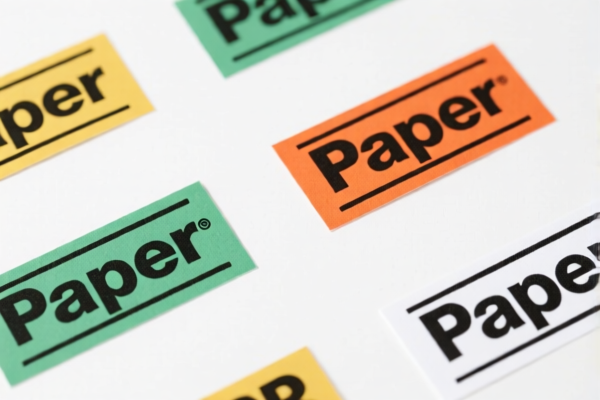

AI Analysis
🏥 Medical Device Paper Labels: HS Code Classification & US Customs Clearance Strategy | 2026 Tariff Deep Dive
🌐 HS Code Reference & Customs Guide | 2026 Latest Tariff Analysis | Professional Clearance Strategy
📌 Product Definition: What is a "Medical Device Paper Label"?
In the global medical device supply chain, Paper Labels are critical components used for product identification, regulatory compliance (FDA/CE), and user instructions. They are distinct from the device itself.
Key Characteristics: - Material: Paper (often coated for durability). - Function: Identification, warning, dosage instructions. - Form: Printed sheets, rolls, or die-cut stickers. - Regulatory Status: Generally considered a component or packaging, not the medical device itself (unless integral to the device's function in a non-paper medium, but here we focus on paper).
⚠️ Critical Distinction:
- Paper Labels fall under Chapter 48 (Paper) or Chapter 49 (Printed Books/Articles).
- Electronic/Smart Labels (with chips/circuits) would fall under Chapter 85.
- Vinyl/Plastic Labels would fall under Chapter 39.This guide strictly addresses Paper Labels as per the provided data.
📦 Section I: HS Code Classification Matrix (2026 US HTSUS)
Based on the provided data, there are 6 potential HS Codes for "Medical Device Paper Labels." The selection depends on the specific paper type (coated vs. uncoated) and whether it is classified as a general "printed article" or a "paper product."
| HS Code | Classification Description | Key Matching Logic from Data | Total Tariff Rate (US/CN) |
|---|---|---|---|
| 4911.99.60.00 | Other Printed Articles | Explicitly mentions "paper material" ("印在纸上"). Classified as a printed article. | 17.5% |
| 4911.99.80.00 | Other Printed Articles (General) | "Paper" material + "Label" form. Uses the "other printed articles" catch-all logic. | 17.5% |
| 4823.90.86.80 | Other Paper Articles | Paper material; fits "other paper products" category. No material conflict. | 35.0% |
| 4823.90.67.00 | Coated Paper Products | "Paper" material; fits "coated paper/cardboard products" category. | 35.0% |
| 4821.10.40.00 | Paper Labels (Printed) | Material: Paper; Use: Label. Matches "printed paper labels" characteristics. | 35.0% |
| 4821.90.40.00 | Other Paper Labels | "Paper" material. "Label" use. Fits "other" catch-all logic for paper labels. | 35.0% |
🔍 Key Insight:
- 4911.xxxx codes offer a significantly lower tariff (17.5%) compared to 482x.xxxx codes (35.0%).
- The lower rate applies if the label is considered a "printed article" (general printing) rather than a "paper product" or "specific paper label."
- 4821.10.40.00 is the most precise fit for labels, but it carries the higher 35% rate.
- Strategic Choice: If customs allows, argue for 4911 classification to save 17.5% in duties.
💰 Section II: 2026 US Tariff Breakdown (China Origin)
✅ Country of Origin: United States (US)
✅ Product Origin: China (CN)
✅ Effective Date: Post-November 10, 2025
🎯 1. The "Low Tariff" Path: 4911.99.60.00 & 4911.99.80.00
Total Duty: 17.5%
| Component | Rate | Legal Basis |
|---|---|---|
| Base Duty | 0.0% | Ad Valorem |
| Section 301 Duty | +7.5% | USITC Footnote (List 4B) |
| IEEPA Duty | +10% | Executive Order on China (2025) |
| Total | 17.5% |
📌 Explanation:
- These codes are classified under Chapter 49 (Printed Books/Newspapers/ Pictures).
- The Section 301 rate is 7.5% (not 25%) because these items may fall under a lower-listed category in Section 301.
- IEEPA 10% applies to all Chinese-origin goods subject to recent executive orders.
🎯 2. The "High Tariff" Path: 4823, 4821, 4823 Codes
Total Duty: 35.0%
| Code Example | Base Duty | Section 301 | IEEPA | Total |
|---|---|---|---|---|
| 4823.90.86.80 | 0.0% | +25.0% | +10% | 35.0% |
| 4823.90.67.00 | 0.0% | +25.0% | +10% | 35.0% |
| 4821.10.40.00 | 0.0% | +25.0% | +10% | 35.0% |
| 4821.90.40.00 | 0.0% | +25.0% | +10% | 35.0% |
📌 Explanation:
- These codes fall under Chapter 48 (Paper and Paperboard).
- The Section 301 rate is 25% (List 4A or higher tier).
- IEEPA 10% still applies.
- Result: You pay double the duty compared to the 4911 classification.⚠️ Financial Impact Example:
On a $10,000 shipment:
- Using 4911: Duty = $1,750
- Using 4821/4823: Duty = $3,500
- Savings: $1,750 by choosing the correct HS Code!
🛠️ Section III: Customs Clearance Strategy & Pitfalls
✅ 1. Documentation Requirements (Must-Haves)
| Document | Purpose | Note |
|---|---|---|
| Commercial Invoice | Declare "Paper Labels for Medical Devices" | Clearly state material (Paper) and use. |
| Product Specification | Confirm material is Paper, not Vinyl/Plastic | If mixed materials, customs may reject 48/49 codes. |
| Label Mockup/Photo | Show printed content | Proves it is a "printed article" (supports 4911 argument). |
| Origin Certificate | Prove CN Origin | Triggers IEEPA + Section 301. |
| FDA Pre-Market Notification | (If applicable) | While labels aren't devices, ensure no device-specific claims. |
✅ 2. Classification Strategy: How to Get 17.5% Instead of 35%
🔥 Pro Tip: Argue for "Printed Article" (4911) over "Paper Product" (482x)
| Argument | For 4911 (17.5%) | Against 482x (35%) |
|---|---|---|
| Primary Character | The value is in the printing/content, not the paper substrate. | The value is in the paper material itself. |
| Customs Precedent | Labels are often treated as printed matter if they carry information. | Labels are seen as specific paper products. |
| Key Phrase to Use | "Printed paper labels carrying regulatory information." | "Uncoated paper sheets cut to size." |
📌 Recommendation:
- Attempt HS Code 4911.99.60.00 first.
- Justification: "The primary function is the printed information (labels), not the paper itself. The paper is merely the substrate."
- Backup: If challenged, use 4821.10.40.00 (specific to labels) but be prepared for 35% duty.
✅ 3. Common Mistakes & Risks
❌ Mistake 1: Declaring as "Medical Device Parts" (e.g., 9018/9021)
👉 Risk: Customs will reject it. Labels are not medical devices. They are components/packaging.
👉 Consequence: Seizure, penalty, or reclassification.
❌ Mistake 2: Declaring as "Vinyl Labels" (Chapter 39) when they are Paper
👉 Risk: Misdescription of material.
👉 Consequence: False declaration fines.
❌ Mistake 3: Ignoring IEEPA 10%
👉 Risk: Underpayment of duties.
👉 Consequence: Interest and penalties from CBP.
✅ Correct Declaration Example:
"Paper Labels, Printed, for Medical Device Identification, Coated Paper, Cut to Size, CN Origin"
HS Code: 4911.99.60.00
🌍 Section IV: Global Market Comparison
| Market | HS Code | Tariff (China Origin) | Notes |
|---|---|---|---|
| 🇺🇸 USA | 4911.99.60.00 | 17.5% | Best rate. Requires strong justification for "printed article." |
| 🇪🇺 EU | 4911.99.60.00 | ~2-3% + VAT | No Section 301. Lower overall cost. |
| 🇨🇳 China | 4821.10.40.00 | 5% | Import duty only. No high US-style surcharges. |
| 🇨🇦 Canada | 4911.99.60.00 | 0-5% | Check CUSMA eligibility if not CN origin. |
📌 Conclusion:
- The US is the most expensive market due to Section 301 + IEEPA.
- Classification is critical: 17.5% vs. 35% is a massive difference.
📌 Section V: Final Recommendations & Action Plan
🎯 Step 1: Confirm Material
Ensure labels are 100% Paper. If they have a plastic backing or adhesive layer that makes them "plastic labels," they may fall under Chapter 39 (different duties).
🎯 Step 2: Prepare for Customs Debate
- Primary Claim: HS Code 4911.99.60.00 (17.5%).
- Justification: "These are printed articles (labels) where the printing conveys critical information. The paper is incidental."
- Supporting Docs: Provide photos of the printed content to emphasize the "printed article" nature.
🎯 Step 3: Calculate Landed Cost
- If 4911: Add 17.5% to CIF value.
- If 4821/4823: Add 35.0% to CIF value.
- Buffer: Include 1-2% for potential customs examination delays.
🎯 Step 4: Avoid Pitfalls
- Do not claim "Medical Device" exemption. Labels do not qualify.
- Do not under-declare value. CBP audits paper labels for value underreporting.
🎯 Conclusion: Precision Saves Money!
🎯 Key Takeaway:
🔹 Classify as 4911.99.60.00 to achieve 17.5% duty instead of 35%.
🔹 Justify based on "Printed Article" status, not just "Paper Product."
🔹 Document the printed content to support the classification.
💼 Your Bottom Line:
On a $100,000 shipment of paper labels:
- Wrong Code (4821): Pay $35,000 in duties.
- Right Code (4911): Pay $17,500 in duties.
- Savings: $17,500 (17.5% of shipment value).
📣 Immediate Action:
📞 Engage a Customs Broker to file a Post Summary Correction or Pre-Import Ruling if necessary.
🚀 Optimize Your Supply Chain by classifying correctly from day one.
✨ Professional Clearance, Starting with the Right HS Code!
💼 Every Percentage Point Counts in Global Trade!
Customer Reviews
About HS Code Classification
The Harmonized System (HS) is an internationally standardized nomenclature developed by the World Customs Organization (WCO) to classify traded products. Over 200 countries use the HS system as the basis for customs tariffs, trade statistics, and import/export regulations.
Each HS code follows a hierarchical structure:
- Chapter (2 digits) — Broad category of goods (e.g., Chapter 84: Machinery and Mechanical Appliances)
- Heading (4 digits) — More specific grouping within the chapter
- Subheading (6 digits) — Internationally standardized breakdown, used by all WCO member countries
- National subdivisions (8-10 digits) — Country-specific extensions for further classification, such as US HTSUS 10-digit codes
Correct HS code classification is essential for smooth customs clearance, accurate duty payment, and compliance with trade regulations. Misclassification can lead to customs delays, overpayment of duties, or penalties.
When importing from CN to US, the applicable tariff rates may include:
- Most-Favored-Nation (MFN) rate — The standard duty rate applied to WTO members
- General rate — Applied to countries without trade agreements
- Trade remedy duties — Additional tariffs such as Section 301 (anti-dumping), Section 232 (national security), or countervailing duties
The information provided on this page is for reference purposes only. For official classification, please consult with your local customs authority or a licensed customs broker.