Medical Devices
CN → US| HS Code | Tariff Rate | Origin | Destination | Doc |
|---|---|---|---|---|
| 9021908100 | 10.0% | CN | US | Official Doc |
| 9018195500 | 35.0% | CN | US | Official Doc |
| 9018907520 | 35.0% | CN | US | Official Doc |
| 9021908100 | 10.0% | CN | US | Official Doc |
| 9018195500 | 35.0% | CN | US | Official Doc |
Product Images

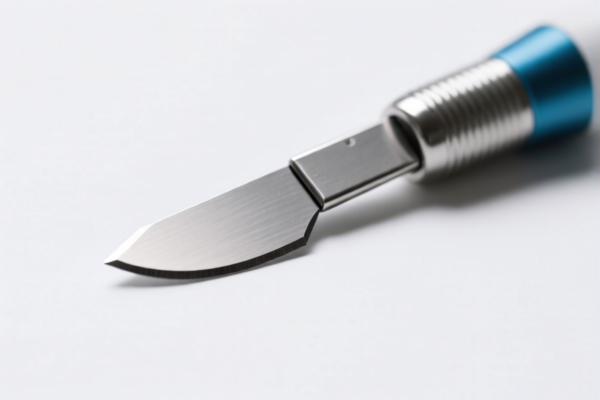
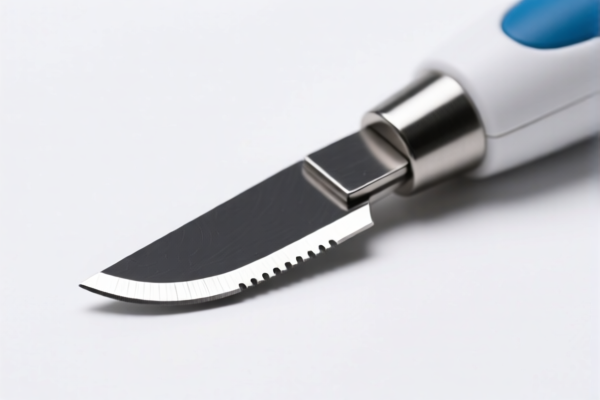
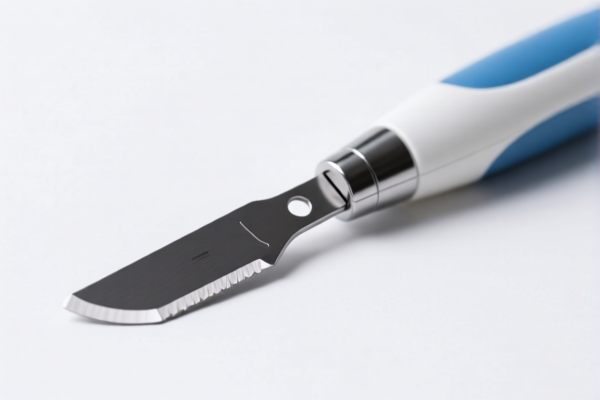
AI Analysis
🏥 Medical Devices & Equipment
🌐 HS Code Reference & Customs Clearance Guide | 2026 Latest Tariff Analysis | Professional-Level Entry Strategy
📌 I. Product Definition & Classification: Do You Truly Understand "Medical Devices"?
Medical Devices and Equipment represent a broad category of instruments, apparatuses, and accessories used for the diagnosis, prevention, monitoring, treatment, or alleviation of disease. In international trade, these goods are primarily classified under Chapter 90 of the Harmonized System (HS), specifically heading 90.18 (Instruments and apparatus for medical, surgical, dental or veterinary sciences) and 90.21 (Orthopedic appliances, artificial parts, etc.).
⚠️ Key Classification Distinction:
- Specific Instruments/Diagnostic Tools → Often fall under 9018.xx (e.g., X-ray machines, ECGs, surgical instruments).
- Orthopedic/Compensatory Devices & Accessories → Often fall under 9021.xx (e.g., artificial joints, hearing aids, surgical braces).
- General/Undefined Medical Equipment → May fall under "Other" (Residual) subheadings within 9018 or 9021 when specific features are not detailed.
📦 II. HS Code Classification Details (Based on Provided Data)
| HS Code | Product Description / Summary Match | Tax Rate | Key Matching Logic |
|---|---|---|---|
9021.90.81.00 |
Orthopedic/Compensatory Devices | 10.0% | Matches "Medical Devices" with "Orthopedic appliances, artificial parts, hearing aids, etc." High fit due to functional alignment; classified as "Other" residual category. |
9018.19.55.00 |
Medical/Surgical/Dental Instruments | 35.0% | Perfect functional match: "Instruments and apparatus for medical, surgical, dental or veterinary sciences." |
9018.90.75.20 |
Other Medical Instruments | 35.0% | Broad category for medical devices not elsewhere specified. Based on "Other/Residual" principle, deemed possible match due to lack of material conflict. |
9018.90.75.80 |
Parts & Accessories for Medical Devices | 35.0% | Matches function (Medical Device) + Form (Parts/Accessories). Default tendency to match parts exists; no obvious material/form conflict with medical device parts. |
🔍 Critical Insight:
-9021.90.81.00is the lowest tax option but requires the device to be categorized as an orthopedic, artificial, or compensatory device (e.g., prosthetics, braces, hearing aids).
-9018.19.55.00/9018.90.75.20/9018.90.75.80are classified under medical instruments and apparatus, carrying a 35% total tariff. This is typical for general diagnostic, surgical, or monitoring equipment.
- The distinction between 9018 (Instruments) and 9021 (Orthopedic/Artificial Parts) is critical for cost optimization.
💰 III. 2026 Latest Tariff Rate Breakdown (Including Surtaxes)
✅ Applicable Country: United States (US)
✅ Origin: China (CN)
✅ Effective Date: Post-2025 Importations
🎯 1. 9021.90.81.00 — Orthopedic Appliances & Artificial Parts
| Item | Detail |
|---|---|
| Base Duty | 0.0% |
| Section 301 Surtax | 0.0% |
| Section 122 Surtax | +10.0% |
| Total Duty Rate | 10.0% |
| Calculation | CIF Value × 10% |
| De Minimis Exemption | ❌ Not Eligible (High risk of scrutiny) |
| Legal Basis | Section 122 (Trade Facilitation and Enforcement Act) |
📌 Explanation:
- This code benefits from 0% Section 301 tariffs, making it significantly cheaper than general medical instruments.
- However, the Section 122 tariff (10%) still applies.
- Eligibility: Only for devices classified as orthopedic, artificial, or compensatory (e.g., artificial limbs, surgical braces, hearing aids). General diagnostic machines do NOT qualify.
🎯 2. 9018.19.55.00 — Other Medical Instruments (Surgical/Dental/Vet)
| Item | Detail |
|---|---|
| Base Duty | 0.0% |
| Section 301 Surtax | +25.0% |
| Section 122 Surtax | +10.0% |
| Total Duty Rate | 35.0% |
| Calculation | CIF Value × 35% |
| De Minimis Exemption | ❌ Not Eligible |
| Legal Basis | Section 301 (USITC Footnote) + Section 122 |
📌 Explanation:
- Standard rate for most general medical instruments not specifically exempted.
- Subject to both Section 301 (25%) and Section 122 (10%).
- Risk: High classification scrutiny. Must prove use in medical, surgical, dental, or veterinary sciences.
🎯 3. 9018.90.75.20 & 9018.90.75.80 — Other Medical Instruments & Parts
| Item | Detail |
|---|---|
| Base Duty | 0.0% |
| Section 301 Surtax | +25.0% |
| Section 122 Surtax | +10.0% |
| Total Duty Rate | 35.0% |
| Calculation | CIF Value × 35% |
| De Minimis Exemption | ❌ Not Eligible |
📌 Explanation:
-9018.90.75.20: For "Other" medical instruments not elsewhere specified.
-9018.90.75.80: Specifically for parts and accessories of medical instruments.
- Note: If shipping spare parts for medical devices,9018.90.75.80is the correct code. Ensure parts are specifically designed for medical use. Misclassifying commercial machine parts as medical parts can lead to penalties.
🛠️ IV. Customs Clearance Practical Advice (Avoiding Pitfalls)
✅ 1. Essential Documentation Checklist
| Document | Required | Notes |
|---|---|---|
| Product Specification Sheet | ✔️ | Must detail intended use (e.g., "for surgical use," "for orthopedic support"). |
| Usage Declaration | ✔️ | Explicit statement: "Intended for medical diagnosis/treatment/orthopedic support." |
| FDA Registration Number (if applicable) | ✔️ | For most medical devices imported into the US, FDA compliance is mandatory. |
| Commercial Invoice | ✔️ | Clear description: e.g., "Surgical Scalpel Set, Stainless Steel" or "Hearing Aid Components." |
| Material Composition List | ✔️ | To prove no conflict with "orthopedic" vs. "instrument" classifications. |
| Proof of Destination | ✔️ | To show device is for licensed medical use, not retail/home use. |
✅ 2. Classification Strategy (Key Mnemonic)
🔥 “Function First, Form Second. Orthopedic vs. Instrument.”
| Scenario | Recommended HS Code | Why? |
|---|---|---|
| Prosthetic Limb, Artificial Hip, Brace | 9021.90.81.00 |
Falls under "Orthopedic/Artificial Parts." Lowest Tax (10%). |
| X-Ray Machine, Ultrasound, Endoscope | 9018.19.55.00 |
Falls under "Medical/Surgical Instruments." 35% Tax. |
| Spare Parts for Surgical Robot | 9018.90.75.80 |
Classified as "Parts/Accessories." 35% Tax. |
| General Lab Equipment (Not strictly medical) | ⚠️ Risk | May not qualify as "Medical." Check FDA status. |
✅ 3. Special Considerations
| Situation | Advice |
|---|---|
| OEM Medical Devices | Ensure the brand owner is registered with FDA if required. Custom labels must match the HS Code description. |
| Mixed Shipments (Devices + Parts) | Declare separately! Do not lump parts into the device HS code if they have different classifications. Use 9018.90.75.80 for parts. |
| Home-Use Medical Devices (e.g., BP Monitor) | Often still classified under 9018. Verify if FDA Class I/II/III requirements apply. |
| Orthopedic "Wearables" (Smart Braces) | If they have electronic components, classification may shift to 9018 (35%) unless purely mechanical/orthopedic. |
🌍 V. Global Market Comparison (2026 Outlook)
| Country/Region | Recommended HS Code | Base Duty | Surtaxes | Total Rate | Notes |
|---|---|---|---|---|---|
| 🇺🇸 USA | 9021.90.81.00 |
0% | 10% (Sect. 122) | 10% | Best for orthopedic/compensatory devices. |
| 🇺🇸 USA | 9018.xx |
0% | 35% (Sect. 301+122) | 35% | Standard for most medical instruments. |
| 🇪🇺 EU | 9021 / 9018 | 0-4.5% | None | 0-4.5% | No Section 122/301 equivalent. MDR/CE marking required. |
| 🇨🇳 China | 9021 / 9018 | 0-10% | None | 0-10% | Import duties vary. NMPA registration required. |
| 🇬🇧 UK | 9021 / 9018 | 0-4.5% | None | 0-4.5% | UKCA marking required post-Brexit. |
📌 Conclusion:
- USA has the highest tariffs for medical devices due to Section 301 and Section 122.
- EU/UK/China are significantly cheaper for import duties but have strict regulatory compliance (CE, UKCA, NMPA).
- Optimization Tip: If your device can be legally classified as an orthopedic or artificial part (9021), you save 25% in tariffs compared to general instruments (9018).
📌 VI. Common Mistakes & Pitfalls (Lessons Learned)
❌ Mistake 1: Classifying a surgical tool as a general tool to avoid HS scrutiny.
👉 Result: Customs seizure, fines, and FDA action for unregistered medical devices.
❌ Mistake 2: Misclassifying parts as finished devices.
👉 Result: Incorrect duty calculation and potential rejection if the "device" doesn't exist in customs records.
❌ Mistake 3: Assuming all medical devices get 0% duty.
👉 Result: Unexpected 35% or 10% bill at customs. Section 122 and 301 apply broadly.
❌ Mistake 4: Using vague descriptions like "Healthcare Product."
👉 Result: Customs delays, requests for additional information, and potential reclassification.
✅ Correct Practice:
"Stainless Steel Surgical Forceps, Intended for Human Use in Surgical Procedures, Model XYZ, FDA Registered"
→ HS Code:9018.19.55.00(35%)"Artificial Hip Joint Replacement, Titanium Alloy, Model ABC"
→ HS Code:9021.90.81.00(10%)
🎯 VII. Conclusion: Precision Classification Saves Money!
🎯 Remember:
🔹 "Orthopedic = 10%, Instrument = 35%."
🔹 "Parts are not Devices."
🔹 "FDA Compliance is Non-Negotiable in the US."
📌 Pro Tip:
If you are exporting orthopedic devices (e.g., braces, prosthetics) to the US, ensure your product description emphasizes "Orthopedic," "Artificial," or "Compensatory" to qualify for 9021.90.81.00. This can save you 25% in duties compared to general medical instruments.
📣 Immediate Action:
📞 Consult with a licensed customs broker to verify FDA status and HS Code alignment.
📄 Prepare detailed Usage Declarations and Product Specifications.
🚀 Optimize your classification strategy to reduce landed costs by up to 25%!
✨ Professional Customs Clearance Starts with Accurate Classification!
💼 Your profit margin depends on these details!
Customer Reviews
About HS Code Classification
The Harmonized System (HS) is an internationally standardized nomenclature developed by the World Customs Organization (WCO) to classify traded products. Over 200 countries use the HS system as the basis for customs tariffs, trade statistics, and import/export regulations.
Each HS code follows a hierarchical structure:
- Chapter (2 digits) — Broad category of goods (e.g., Chapter 84: Machinery and Mechanical Appliances)
- Heading (4 digits) — More specific grouping within the chapter
- Subheading (6 digits) — Internationally standardized breakdown, used by all WCO member countries
- National subdivisions (8-10 digits) — Country-specific extensions for further classification, such as US HTSUS 10-digit codes
Correct HS code classification is essential for smooth customs clearance, accurate duty payment, and compliance with trade regulations. Misclassification can lead to customs delays, overpayment of duties, or penalties.
When importing from CN to US, the applicable tariff rates may include:
- Most-Favored-Nation (MFN) rate — The standard duty rate applied to WTO members
- General rate — Applied to countries without trade agreements
- Trade remedy duties — Additional tariffs such as Section 301 (anti-dumping), Section 232 (national security), or countervailing duties
The information provided on this page is for reference purposes only. For official classification, please consult with your local customs authority or a licensed customs broker.