Medical Dressing (HS Code 3005905010)
CN → US| HS Code | Tariff Rate | Origin | Destination | Doc |
|---|---|---|---|---|
| 3005905010 | 10.0% | CN | US | Official Doc |
| 3005905090 | 10.0% | CN | US | Official Doc |
Product Images
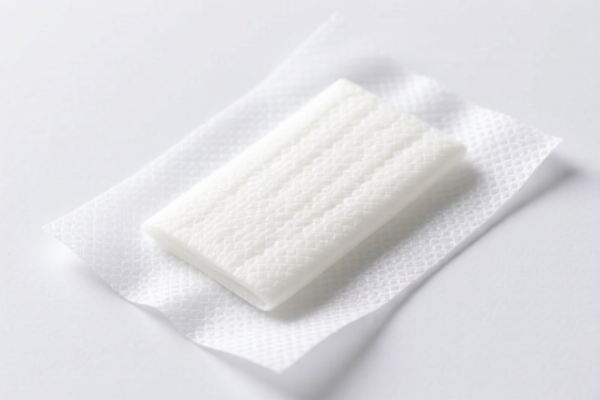
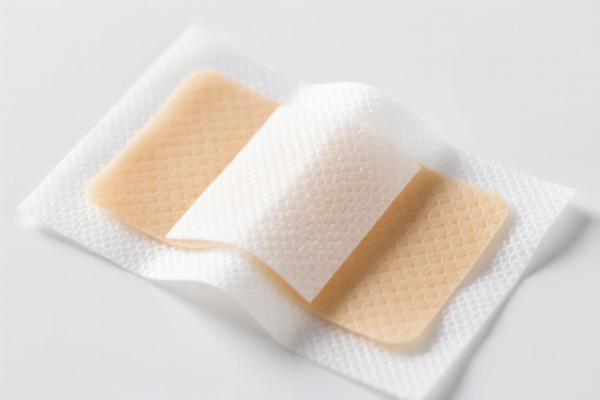
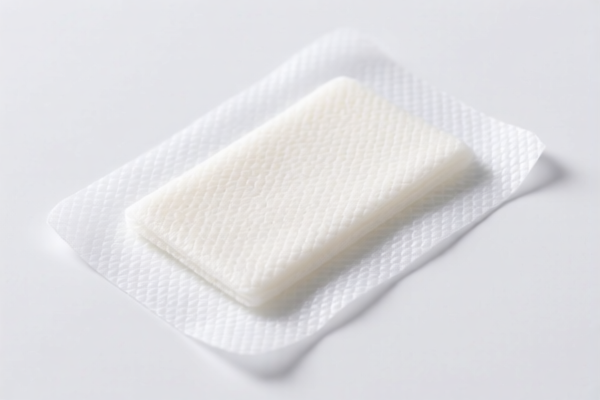
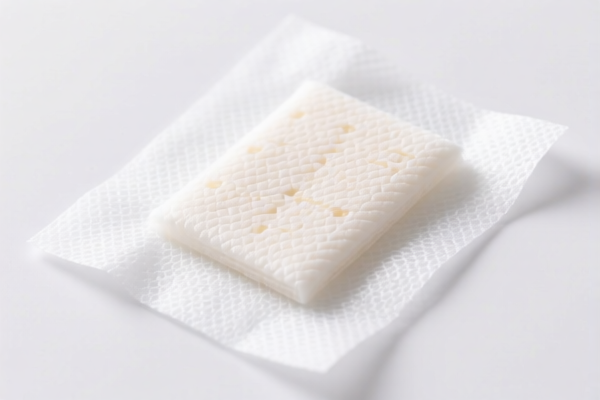
AI Analysis
🩹 Medical Laparotomy Sponges & Dressings (HS Code 3005.90.50.10)
🌐 HS Code Reference & Customs Clearance Guide | 2026 Latest Tariff Analysis | Professional-Level Entry Strategy
📌 I. Product Definition & Classification: Do You Really Understand "Medical Laparotomy Sponges"?
Laparotomy Sponges are specialized medical gauze or wadding articles, specifically designed for surgical use (e.g., abdominal surgeries). They are typically impregnated with a radiopaque strip for visibility under X-ray and are often coated with or packaged for medical/surgical purposes.
In international trade, these items fall under Chapter 30 (Pharmaceutical Products), specifically heading 3005:
"Wadding, gauze, bandages and similar articles (for example, dressings, adhesive plasters, poultices), impregnated or coated with pharmaceutical substances or put up in forms or packings for retail sale for medical, surgical, dental or veterinary purposes."
Key Distinction: * HS Code 3005.90.50.10: Specifically targets "Laparotomy sponges" (surgical sponges). These are usually larger, radiopaque, and intended for internal use during surgeries. * HS Code 3005.90.50.90: Covers "Other" surgical/medical dressings (e.g., standard gauze pads, non-laparotomy surgical wipes, general dressings not specified as sponges).
⚠️ Critical Differentiator:
- If the product is a surgical sponge (often radiopaque, used in laparotomy/abdominal surgery) → 3005.90.50.10
- If it is general medical gauze/bandages not specifically laparotomy sponges → 3005.90.50.90
📦 II. HS Code Classification Details (2026 Latest Tariff Authority Comparison)
| HS Code | Product Description | Application Scenario | Specific Features |
|---|---|---|---|
3005.90.50.10 |
Laparotomy sponges | Surgical sponges for abdominal/internal surgeries | Radiopaque strip, surgical grade, packaged for medical use |
3005.90.50.90 |
Other (Medical Dressings) | General dressings, gauze pads, non-surgical sponges | Non-laparotomy, general medical or first-aid use |
🔍 Key Reminder:
- 3005.90.50.10 is strictly for laparotomy sponges. Do not misclassify general gauze here. - 3005.90.50.90 is the "catch-all" for other medical dressings not specified as laparotomy sponges. - Both codes fall under Chapter 30, which implies a higher level of regulatory scrutiny due to their medical/pharmaceutical nature.
💰 III. 2026 Latest Tariff Rate Details (Including Additional Taxes & Policy Add-ons)
✅ Applicable Country: United States (US)
✅ Country of Origin: China (CN)
✅ Effective Date: 2025/2026 Tariff Schedule
🎯 1. 3005.90.50.10 —— Laparotomy Sponges
| Item | Content |
|---|---|
| Base Tariff Rate | 0.0% (ad valorem) |
| Section 301 Additional Tariff | 0.0% (Note: Many medical devices are exempt or have lower rates under Section 301, but this specific HS requires verification. Based on provided data: 0.0%) |
| IEEPA Additional Tariff | 0.0% |
| Total Tariff Rate | 0.0% |
| Tax Calculation | CIF Value × 0% = $0 |
| De Minimis Eligibility | ❌ No (Medical devices usually excluded from Section 321 de minimis relief if value exceeds threshold or are restricted items) |
| Legal Basis Path | USITC:3005.90.50.10 |
📌 Explanation:
- According to the provided data, the total tax is 0.0%. This means there are no base tariffs and no additional tariffs (Section 301 or IEEPA) applied to this specific HS code in the current dataset. - However, note that medical devices may still be subject to FDA regulations (21 CFR Part 801/807) regardless of tariff rates. Zero tariff ≠ Zero regulation.
🎯 2. 3005.90.50.90 —— Other (Medical Dressings)
| Item | Content |
|---|---|
| Base Tariff Rate | 0.0% (ad valorem) |
| Section 301 Additional Tariff | 0.0% |
| IEEPA Additional Tariff | 0.0% |
| Total Tariff Rate | 0.0% |
| Tax Calculation | CIF Value × 0% = $0 |
| De Minimis Eligibility | ❌ No |
| Legal Basis Path | USITC:3005.90.50.90 |
📌 Note:
- Identical tax treatment to laparotomy sponges in this dataset. - Both codes benefit from 0% total tariff, but regulatory compliance (FDA, CE, etc.) is critical.
🛠️ IV. Customs Clearance Practical Advice (Battle-Proven Pitfall Avoidance Guide)
✅ 1. Required Documentation Checklist (Non-Negotiable)
| Document | Must Provide | Explanation |
|---|---|---|
| ✅ Product Specification Sheet | ✔️ | Must specify material (gauze, cotton, etc.), dimensions, radiopacity (if applicable), and sterile/non-sterile status |
| ✅ Intended Use Declaration | ✔️ | Clearly state "For Surgical/Medical Use Only" |
| ✅ FDA Registration / Establishment Registration | ✔️ | Essential for medical devices in the US |
| ✅ 510(k) Clearance / Exemption Letter | ✔️ | If applicable, provide FDA 510(k) number or exemption documentation |
| ✅ Commercial Invoice | ✔️ | Must clearly describe product as "Laparotomy Sponges" or "Medical Dressings," not generic "textiles" |
| ✅ Certificate of Origin | ✔️ | To prove country of origin for tariff determination |
| ✅ Packing List | ✔️ | Show units per package, gross/net weight |
✅ 2. Declaration Techniques (Key Mnemonics)
🔥 “Be Specific, Not Generic. ‘Textile’ is a Red Flag!”
| Scenario | Correct Declaration | Incorrect Action |
|---|---|---|
| Laparotomy Sponges | 3005.90.50.10 – "Laparotomy Sponges, Sterile, Surgical Use" |
Misdeclare as "Cotton Gauze" (Chapter 52 or 63) → Higher scrutiny & potential penalties |
| General Medical Dressings | 3005.90.50.90 – "Medical Dressings, Non-Surgical" |
Misdeclare as "Home First Aid Kits" → May miss medical device regulations |
| Non-Sterile Gauze | Check if it still falls under 3005 | If not impregnated/coated/packaged for retail medical use, it may be Chapter 52/55/63 |
✅ 3. Special Case Handling
| Scenario | Handling Advice |
|---|---|
| Sterile vs. Non-Sterile | Sterile products require additional FDA documentation. Ensure label says "STERILE." |
| Radiopaque Strip | For laparotomy sponges, explicitly mention "Radiopaque" in description to justify HS 3005.90.50.10 |
| Combined Shipments | If shipping with other medical supplies, declare separately. Do not bundle with non-medical items to avoid misclassification. |
| Sample Shipments | Even samples for testing may require FDA prior notice and may not qualify for de minimis if classified as medical devices. |
🌍 V. Global Main Market Clearance Comparison (2026 Latest)
| Country/Region | Recommended HS Code | Tariff | Certification Requirements | Notes |
|---|---|---|---|---|
| 🇺🇸 USA | 3005.90.50.10 / .90 |
0% | FDA 510(k), Establishment Registration, Labeling Compliance | High regulatory bar despite 0% tariff |
| 🇨🇳 China | 3005.90.50.10 / .90 |
~5-10% | NMPA Registration (if Class II/III device) | Domestic market requires separate registration |
| 🇪🇺 EU | 3005.90.50.10 / .90 |
0% (if MDR compliant) | CE Marking (MDR), UKCA (UK) | Medical Device Regulation (MDR) is strict |
| 🇯🇵 Japan | 3005.90.50.10 / .90 |
0-3% | PMDA Approval, QMS Registration | Pharmaceutical and Medical Device Act applies |
| 🇬🇧 UK | 3005.90.50.10 / .90 |
0% | MHRA Registration, UKCA Mark | Post-Brexit rules apply |
📌 Conclusion:
- Tariff is 0% globally in most major markets for these specific HS codes.
- Regulatory compliance is the real cost driver. FDA (US), MDR (EU), and PMDA (Japan) requirements are stringent.
- Misclassification as "textiles" instead of "medical devices" can lead to severe penalties, not just tariffs.
📌 VI. Common Mistakes & Pitfall Guide (Lessons Learned the Hard Way)
❌ Mistake 1: Declaring "Laparotomy Sponges" as "Cotton Fabric" or "Gauze" (Chapter 52/55/63)
👉 Consequence: Customs may reclassify, impose higher tariffs, and halt shipment for FDA review → Delays + Fines
❌ Mistake 2: Ignoring FDA Requirements because Tariff is 0%
👉 Consequence: FDA can seize products, issue warning letters, or blacklist the importer → Product Confiscation
❌ Mistake 3: Using Generic Descriptions like "Medical Supplies"
👉 Consequence: Customs cannot verify HS Code → Audit Risk & Delays
❌ Mistake 4: Failing to Distinguish Between Laparotomy Sponges (3005.90.50.10) and Other Dressings (3005.90.50.90)
👉 Consequence: Misclassification may trigger additional scrutiny for specific surgical instruments vs. general dressings.
✅ Correct Practice:
"Laparotomy Sponges, Sterile, Surgical Grade, with Radiopaque Strip, Packaged for Retail Medical Use, Model XYZ, FDA Registered"
🎯 VII. Conclusion: Precise Classification, Smooth Clearance, Cost Efficiency!
🎯 Remember the Mnemonic:
🔹 "Zero Tariff, High Regulation. 'Medical' is the Keyword."
🔹 "HS Code 3005 is for Medical, Not Textiles. Misclassify, and You Will Pay the Price."
🔹 "FDA First, Tariff Second. Compliance is Key."
📌 Pro Tip:
- Apply for Advance Rulings: If you have large volumes, request a Binding Tariff Information (BTI) or US CBP Ruling to confirm HS classification.
- Engage a Customs Broker: Medical devices require specialized brokers familiar with FDA and CBP interactions.
- Keep Records: Maintain FDA registration numbers, 510(k) numbers, and labeling approvals readily available for customs inspections.
📣 Immediate Action:
📞 Consult a Regulatory Expert + Verify FDA Status + Prepare Accurate Descriptions
🚀 Ensure Your Medical Dressings Clear Customs Smoothly, Avoid FDA Seizures, and Maximize Profit!
✨ Professional Clearance Starts with Accurate Classification!
💼 Your Every Dollar of Compliance Cost is Worth the Peace of Mind!
Customer Reviews
About HS Code Classification
The Harmonized System (HS) is an internationally standardized nomenclature developed by the World Customs Organization (WCO) to classify traded products. Over 200 countries use the HS system as the basis for customs tariffs, trade statistics, and import/export regulations.
Each HS code follows a hierarchical structure:
- Chapter (2 digits) — Broad category of goods (e.g., Chapter 84: Machinery and Mechanical Appliances)
- Heading (4 digits) — More specific grouping within the chapter
- Subheading (6 digits) — Internationally standardized breakdown, used by all WCO member countries
- National subdivisions (8-10 digits) — Country-specific extensions for further classification, such as US HTSUS 10-digit codes
Correct HS code classification is essential for smooth customs clearance, accurate duty payment, and compliance with trade regulations. Misclassification can lead to customs delays, overpayment of duties, or penalties.
When importing from CN to US, the applicable tariff rates may include:
- Most-Favored-Nation (MFN) rate — The standard duty rate applied to WTO members
- General rate — Applied to countries without trade agreements
- Trade remedy duties — Additional tariffs such as Section 301 (anti-dumping), Section 232 (national security), or countervailing duties
The information provided on this page is for reference purposes only. For official classification, please consult with your local customs authority or a licensed customs broker.