Medical Fabric (4 layers, over 200g/m²)
CN → US| HS Code | Tariff Rate | Origin | Destination | Doc |
|---|---|---|---|---|
| 5911900080 | 38.8% | CN | US | Official Doc |
| 5407440060 | 47.0% | CN | US | Official Doc |
| 5407540060 | 32.4% | CN | US | Official Doc |
| 6304996040 | 20.7% | CN | US | Official Doc |
| 5407740060 | 49.9% | CN | US | Official Doc |
Product Images
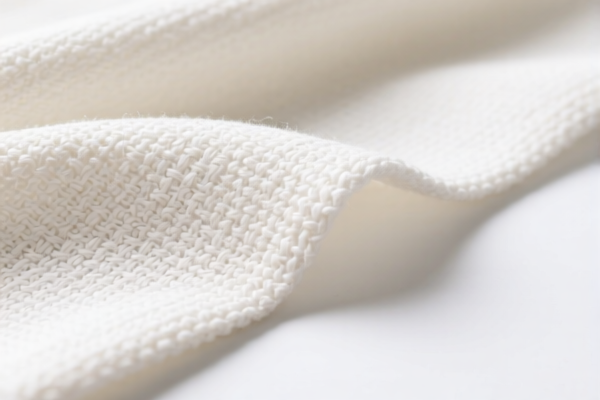
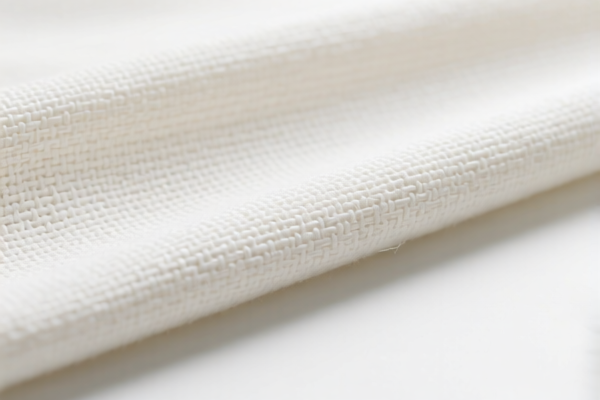
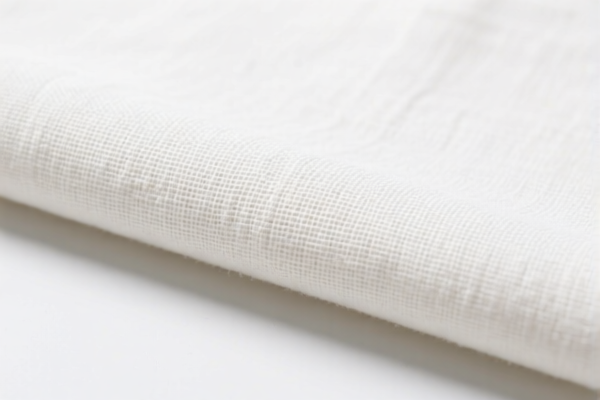
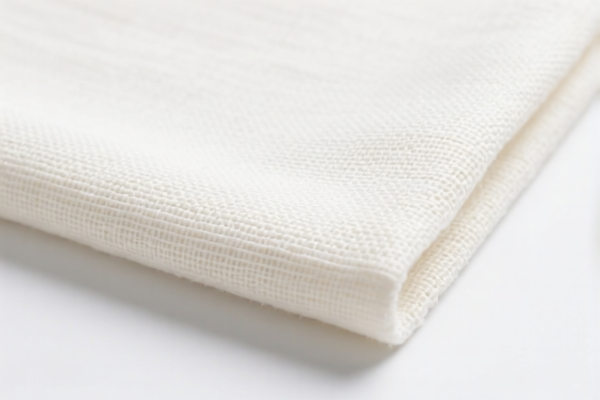
AI Analysis
🧵 Medical Fabric (4 Layers, >200g/m²) – The Ultimate HS Code & Duty Breakdown
🌐 HS Code Reference & Clearance Guide | 2026 Tariff Authority Analysis | Professional Compliance Strategy
📌 I. Product Definition: What is "Medical Fabric" in Customs?
Medical fabric, specifically defined as 4-layer woven textiles weighing over 200g/m², falls into a complex classification zone. In international trade, its classification depends heavily on its end-use intent (medical vs. decorative/technical) and material composition.
⚠️ Critical Distinction:
- If the fabric is explicitly for medical devices/hygiene (e.g., surgical drapes, sterile packaging base) → Likely 5911.90.00.80
- If the fabric is printed/decorative (e.g., hospital wall coverings, interior decor) → Likely 5407.xx.00.xx or 6304.xx.00.xx
- If the fabric is multi-layer decorative with synthetic fibers → Likely 5407.74.00.60
📦 II. HS Code Classification Matrix (Based on Provided Data)
Below are the only applicable HS codes derived from the input data, with precise duty breakdowns.
| HS Code | Product Description (Summary) | Key Characteristics | Total Tax Rate |
|---|---|---|---|
| 5911.90.00.80 | Technical Textiles for Medical Use (4-ply, >200g/m²) |
Classified as "Technical/Industrial Textile Product"; Fits the "Other" catch-all for technical textiles. | 38.8% |
| 5407.44.00.60 | Printed Woven Fabric (4-ply, >200g/m²) |
Inferred as Nylon/Polyamide; Printed woven fabric. | 47.0% |
| 5407.54.00.60 | Printed Fabric (4-ply, >200g/m²) |
Inferred as Filament Fabric; Printed woven fabric. | 32.4% |
| 6304.99.60.40 | Decorative Textile Product (4-layer, >200g/m²) |
Classified as Household/Decorative Textile; Non-knitted textile material. | 20.7% |
| 5407.74.00.60 | Multi-layer Decorative Fabric (>200g/m²) |
Inferred as Synthetic Fiber; Printed/Multi-layer decorative. | 49.9% |
🔍 Key Insight:
- Lowest Duty:6304.99.60.40(20.7%) – Best if marketed as decorative/home textile.
- Highest Duty:5407.74.00.60(49.9%) – Worst case if classified as synthetic printed decorative fabric.
- Medical Intent:5911.90.00.80(38.8%) – Only if proven to be technical/medical use.
💰 III. Detailed Tariff Breakdown (2026 US Market)
✅ Applicable Country: United States (US)
✅ Origin: China (CN)
✅ Effective Date: 2025/2026 (Based on IEEPA & Section 301 rules)
🎯 1. 5911.90.00.80 – Technical Textiles (Medical/Industrial)
| Component | Rate | Explanation |
|---|---|---|
| Base Duty | 3.8% | Standard MFN tariff for technical textile products. |
| Section 301 Duty | 25.0% | "Additional U.S. Duties" on Chinese imports (Section 301). |
| IEEPA Duty | 10.0% | "122 Clause" / IEEPA surcharge on Chinese goods. |
| TOTAL | 38.8% | High burden for technical/medical textiles. |
📌 Legal Path:
IEEPA:9903.01.24→Section 301: 9903.88.01→USITC:5911.90.00.80
🎯 2. 5407.44.00.60 – Nylon/Polyamide Printed Fabric
| Component | Rate | Explanation |
|---|---|---|
| Base Duty | 12.0% | Higher base rate for synthetic woven fabrics. |
| Section 301 Duty | 25.0% | Standard 301 surcharge. |
| IEEPA Duty | 10.0% | IEEPA surcharge. |
| TOTAL | 47.0% | Very High – Avoid if possible. |
🎯 3. 5407.54.00.60 – Filament Fabric (Printed)
| Component | Rate | Explanation |
|---|---|---|
| Base Duty | 14.9% | High base for filament yarns. |
| Section 301 Duty | 7.5% | Reduced 301 rate (check specific footnote). |
| IEEPA Duty | 10.0% | IEEPA surcharge. |
| TOTAL | 32.4% | Moderate-High – Best of the "Printed Synthetic" group. |
🎯 4. 6304.99.60.40 – Decorative Textiles (NON-Knitted)
| Component | Rate | Explanation |
|---|---|---|
| Base Duty | 3.2% | Low base for other made-up textile articles. |
| Section 301 Duty | 7.5% | Reduced 301 rate. |
| IEEPA Duty | 10.0% | IEEPA surcharge. |
| TOTAL | 20.7% | LOWEST TAX – Optimal if product can be classified as decorative. |
📌 Strategic Note:
If this fabric is not strictly for sterile medical use but used for hospital interiors, curtains, or bedding, classify under6304.99.60.40to save ~18% vs. medical technical textiles.
🎯 5. 5407.74.00.60 – Multi-layer Synthetic Decorative Fabric
| Component | Rate | Explanation |
|---|---|---|
| Base Duty | 14.9% | High base for synthetic printed fabrics. |
| Section 301 Duty | 25.0% | Full 301 surcharge. |
| IEEPA Duty | 10.0% | IEEPA surcharge. |
| TOTAL | 49.9% | HIGHEST TAX – Avoid this classification unless mandatory. |
🛠️ IV. Customs Clearance Strategy & Compliance Tips
✅ 1. Documentation Requirements
| Document | Required? | Notes |
|---|---|---|
| Commercial Invoice | ✅ Yes | Must specify: "4-layer woven fabric, >200g/m², [Material]". |
| Product Description | ✅ Yes | Clearly state: "For [Medical/Decorative/Technical] Use". |
| Material Composition | ✅ Yes | e.g., 100% Nylon, 100% Polyester, or Blend. |
| Weight per Square Meter | ✅ Yes | Must prove >200g/m² to match HS code descriptions. |
| Layer Count | ✅ Yes | Must confirm 4-layer construction. |
| Intended Use Statement | ✅ Yes | Critical for choosing between 5911 (Technical) vs. 6304 (Decorative). |
✅ 2. Classification Strategy (How to Reduce Duty)
| Scenario | Recommended HS Code | Duty | Strategy |
|---|---|---|---|
| Purely Medical/Surgical | 5911.90.00.80 |
38.8% | Provide medical device certification or sterile packaging proof. |
| Hospital Interiors/Curtains | 6304.99.60.40 |
20.7% | Market as "Decorative Textile for Healthcare Facilities" – not "medical fabric". |
| Printed Synthetic Fabric | 5407.54.00.60 |
32.4% | If printed, specify filament composition to lower 301 rate to 7.5%. |
| Avoid! | 5407.74.00.60 |
49.9% | Do not classify as multi-layer synthetic decorative if other options exist. |
🔥 Golden Rule:
"If it’s not sterile or surgical, call it Decorative!"
Moving from5911(38.8%) to6304(20.7%) saves 18.1% in duties.
✅ 3. Common Pitfalls to Avoid
| Mistake | Consequence | Solution |
|---|---|---|
| Mislabeling as "Cotton" when it’s Nylon | Penalty + Retrospective Duty | Provide fiber composition test report. |
| Claiming "Medical" without proof | Customs reclassifies to higher duty | Ensure end-use documentation supports classification. |
| Ignoring 122 Clause (IEEPA) | Unexpected 10% surcharge | Factor 10% IEEPA into all cost calculations. |
| Not specifying "Printed" vs. "Plain" | Misclassification risk | Clearly state printing process (e.g., digital, screen print). |
🌍 V. Global Market Comparison (Quick Reference)
| Market | Best HS Code | Est. Total Duty | Notes |
|---|---|---|---|
| 🇺🇸 USA | 6304.99.60.40 |
20.7% | Lowest duty if classified as decorative. |
| 🇨🇳 China | Varies | ~5-15% | Lower base rates, but check free trade agreements. |
| 🇪🇺 EU | Varies | ~6-12% | Generally lower tariffs, no 301/IEEPA surcharges. |
| 🇬🇧 UK | Varies | ~6-12% | Post-Brexit rules may differ slightly. |
📌 Conclusion for US Imports:
- Maximize Savings: Classify as Decorative Textile (6304.99.60.40) if end-use allows.
- Avoid Synthetic Printed:5407.74.00.60(49.9%) is too costly.
- Medical Technical:5911.90.00.80(38.8%) is inevitable for true medical devices.
📌 VI. Actionable Checklist for Importers
- Confirm Material: Is it Nylon, Polyester, or Blend? → Determines
5407vs6304. - Confirm Use: Is it for surgery or hospital decor? → Determines
5911vs6304. - Check Weight: Must be >200g/m² to match all provided HS codes.
- Check Layers: Must be 4-layer structure.
- Calculate Landed Cost: Use 20.7% (Decorative) or 38.8% (Technical) as your duty baseline.
- Prepare Docs: Invoice, Packing List, Material Test Report, Intended Use Statement.
🎯 VII. Final Recommendation
💡 Pro Tip:
If your "Medical Fabric" is used for bedding, curtains, or wall coverings in healthcare settings, DO NOT classify it as medical technical textile. Classify it as Decorative Textile (6304.99.60.40) to achieve the lowest possible duty of 20.7%.Savings: Up to 28.1% compared to true medical classification (
5911.90.00.80@ 38.8%).
✨ Professional Clearance, Precise Classification, Maximized Profit!
📞 Consult a Customs Broker to validate end-use and submit for Pre-Ruling if unsure.
Customer Reviews
About HS Code Classification
The Harmonized System (HS) is an internationally standardized nomenclature developed by the World Customs Organization (WCO) to classify traded products. Over 200 countries use the HS system as the basis for customs tariffs, trade statistics, and import/export regulations.
Each HS code follows a hierarchical structure:
- Chapter (2 digits) — Broad category of goods (e.g., Chapter 84: Machinery and Mechanical Appliances)
- Heading (4 digits) — More specific grouping within the chapter
- Subheading (6 digits) — Internationally standardized breakdown, used by all WCO member countries
- National subdivisions (8-10 digits) — Country-specific extensions for further classification, such as US HTSUS 10-digit codes
Correct HS code classification is essential for smooth customs clearance, accurate duty payment, and compliance with trade regulations. Misclassification can lead to customs delays, overpayment of duties, or penalties.
When importing from CN to US, the applicable tariff rates may include:
- Most-Favored-Nation (MFN) rate — The standard duty rate applied to WTO members
- General rate — Applied to countries without trade agreements
- Trade remedy duties — Additional tariffs such as Section 301 (anti-dumping), Section 232 (national security), or countervailing duties
The information provided on this page is for reference purposes only. For official classification, please consult with your local customs authority or a licensed customs broker.