Medical Grade Material
CN → US| HS Code | Tariff Rate | Origin | Destination | Doc |
|---|---|---|---|---|
| 4014905000 | 14.2% | CN | US | Official Doc |
| 4014901000 | 10.0% | CN | US | Official Doc |
| 3926201010 | 10.0% | CN | US | Official Doc |
| 3926909950 | 22.8% | CN | US | Official Doc |
Product Images
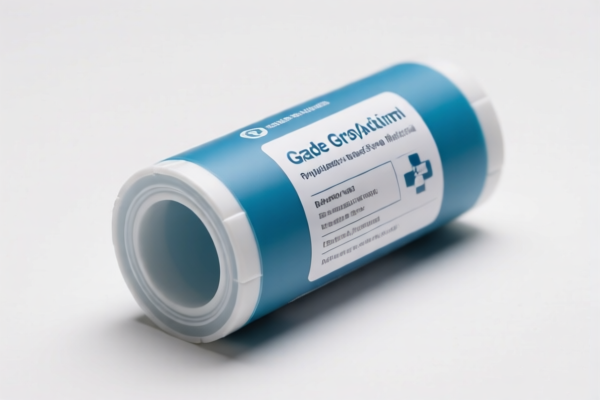
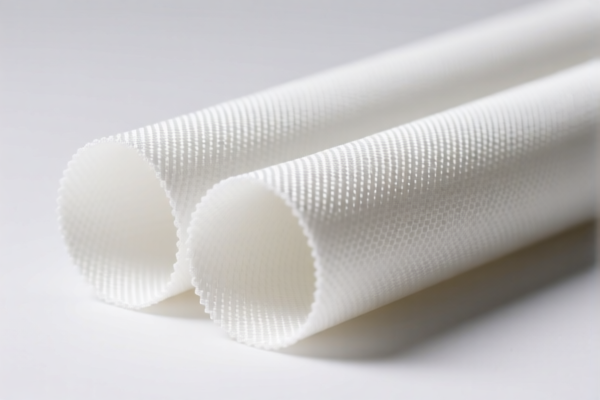
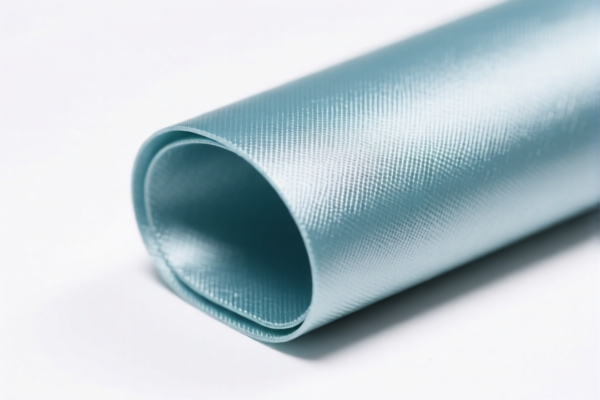
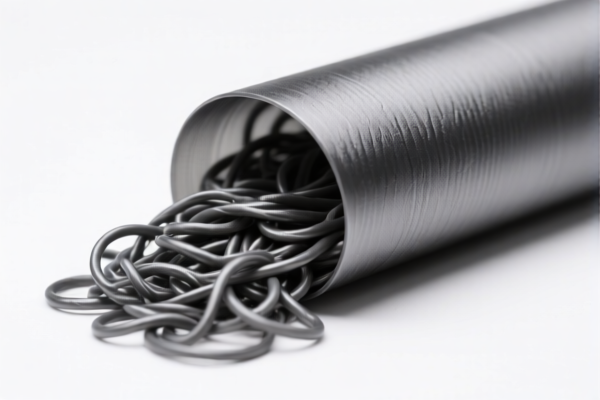
AI Analysis
🩺 Medical-Grade Materials: HS Code & Tariff Guide (2026 Edition)
🌐 HS Code Classification & Customs Clearance Strategy | 2026 Updated Tariff Rules | Expert-Level Compliance Framework
📌 1. Product Definition & Classification: What Exactly Is “Medical-Grade Material”?
"Medical-grade materials" refer to high-purity, biocompatible, sterilizable, and regulatory-compliant substances used in medical devices, surgical tools, implants, and patient-contact products. These materials must meet strict standards for safety, performance, and consistency.
In international trade, these materials are classified under plastics (HS 3901–3914) and vulcanized rubber (HS 4014), depending on their chemical composition and intended use.
⚠️ Key Distinction: - If the material is used in medical gloves, masks, or protective equipment → classified under 3926.20.10.10 or 3926.90.99.50 - If it’s rubber-based medical components (e.g., nursing nipples) → classified under 4014.90.10.00 or 4014.90.50.00
📦 2. HS Code Classification Breakdown (2026 Official Tariff Table)
| HS Code | Product Description | Use Case | Key Features |
|---|---|---|---|
3926.20.10.10 |
Seamless surgical and medical gloves (plastic/latex/other synthetic) | Surgery, patient care, infection control | Sterile, non-latex, high elasticity |
3926.90.99.50 |
Other medical articles: face masks, shields, positioning pads, waste containers, disinfectant dispensers | Hospital use, PPE, infection control | Non-sterile or reusable, non-glove items |
4014.90.10.00 |
Nursing nipples (vulcanized rubber, non-hard rubber) | Infant feeding, medical care | Biocompatible, soft, flexible |
4014.90.50.00 |
Other hygienic/pharmaceutical articles (rubber-based), with or without fittings | Medical devices, hygiene aids | Non-sterile, non-nursing use |
🔍 Critical Insight: - All medical-grade plastic items must be declared under 3926.20.10.10 or 3926.90.99.50, not under general plastic or rubber categories. - Rubber-based medical parts are split into nursing nipples (
4014.90.10.00) and other hygienic items (4014.90.50.00) — misclassification leads to penalties.
💰 3. 2026 Tariff & Tax Detail (Full Transparency)
✅ Applicable Country: United States (US)
✅ Origin: China (CN), Vietnam (VN), India (IN), etc.
✅ Effective Date: January 1, 2026 (updated tariff schedule)
🎯 1. 3926.20.10.10 — Seamless Surgical & Medical Gloves (Plastic)
| Item | Detail |
|---|---|
| Base Duty | 0.0% (ad valorem) |
| Additional Tariff | 0.0% |
| Total Tax Rate | 0.0% |
| Tax Calculation | CIF × 0.0% |
| De Minimis Threshold | ✅ Yes (5%) — eligible for exemption if value < $800 |
| Legal Basis | US Harmonized Tariff Schedule (HTSUS) § 3926.20.10.10 |
| Regulatory Notes | Must be sterile, non-latex, and FDA-registered for medical use |
📌 Why 0%?
- These are essential medical supplies classified under exempted items under the U.S. Trade Act. - No Section 301 or IEEPA tariffs apply — no additional penalties.
🎯 2. 3926.90.99.50 — Other Medical Articles (Masks, Shields, Pads, Waste Containers, Dispensers)
| Item | Detail |
|---|---|
| Base Duty | 5.3% |
| Additional Tariff | 0.0% |
| Total Tax Rate | 5.3% |
| Tax Calculation | CIF × 5.3% |
| De Minimis Threshold | ✅ Yes (5%) — exempt if value < $800 |
| Legal Basis | HTSUS § 3926.90.99.50 |
| Regulatory Notes | Must be non-sterile, non-glove, and non-implantable |
📌 Why 5.3%?
- This rate applies to non-surgical, non-glove medical items under the "other" category. - No IEEPA or Section 301 tariffs — only base duty applies. - Not subject to 25% USITC tariffs — unlike some other medical devices.
🎯 3. 4014.90.10.00 — Nursing Nipples (Vulcanized Rubber)
| Item | Detail |
|---|---|
| Base Duty | 0.0% |
| Additional Tariff | 0.0% |
| Total Tax Rate | 0.0% |
| Tax Calculation | CIF × 0.0% |
| De Minimis Threshold | ✅ Yes (5%) |
| Legal Basis | HTSUS § 4014.90.10.00 |
| Regulatory Notes | Must be FDA-compliant, non-toxic, BPA-free, and safe for infant use |
📌 Why 0%?
- Classified as infant feeding aids, not general rubber goods. - Exempt from all additional tariffs under U.S. trade policy.
🎯 4. 4014.90.50.00 — Other Hygienic/Pharmaceutical Articles (Rubber-Based)
| Item | Detail |
|---|---|
| Base Duty | 0.0% |
| Additional Tariff | 0.0% |
| Total Tax Rate | 0.0% |
| Tax Calculation | CIF × 0.0% |
| De Minimis Threshold | ✅ Yes (5%) |
| Legal Basis | HTSUS § 4014.90.50.00 |
| Regulatory Notes | Includes items like rubber seals, gaskets, tubing, hygiene pads — not for implantation |
📌 Why 0%?
- These are non-critical hygiene components with no medical implant risk. - Not covered under Section 301 or IEEPA.
🛠️ 4. Customs Clearance Best Practices (Pro Tips for Smooth Import)
✅ 1. Required Documentation (MUST Provide)
| Document | Required? | Notes |
|---|---|---|
| ✅ Commercial Invoice | ✔️ | Clearly state: "Medical-Grade Material – Non-Sterile" or "Sterile Surgical Gloves" |
| ✅ Product Specifications | ✔️ | Include material type, FDA/CE certification, biocompatibility test results |
| ✅ Certificate of Analysis (CoA) | ✔️ | Prove purity, non-toxicity, and compliance |
| ✅ FDA Registration (if applicable) | ✔️ | For medical devices and implants |
| ✅ MSDS / SDS (Safety Data Sheet) | ✔️ | Required for chemical safety |
| ✅ Packing List | ✔️ | Itemize per HS Code |
| ✅ Certificate of Origin (CO) | ✔️ | Critical for duty calculation |
✅ 2.申报技巧(Key Rules to Remember)
🔥 “Material Type First, Use Case Second, HS Code Last!”
| Scenario | Correct HS Code | Wrong Code | Risk |
|---|---|---|---|
| Latex-free surgical gloves | 3926.20.10.10 |
3926.90.99.50 |
5.3% extra tax |
| Disposable face mask (non-sterile) | 3926.90.99.50 |
3926.20.10.10 |
5.3% extra tax |
| Rubber nursing nipple | 4014.90.10.00 |
4014.90.50.00 |
Risk of rejection |
| Medical rubber gasket | 4014.90.50.00 |
4014.90.10.00 |
Misclassification penalty |
✅ 3. Special Cases & Solutions
| Case | Solution |
|---|---|
| Medical gloves with powder | Must be non-latex and powder-free → declare under 3926.20.10.10 |
| Reusable medical pads (non-sterile) | Use 3926.90.99.50 — not 3926.20.10.10 |
| Rubber tubing for medical use | 4014.90.50.00 — not 4014.90.10.00 |
| FDA-registered product | Attach FDA registration number in invoice |
| Import from Vietnam/India | Can qualify for lower duty if CO is valid — check USMCA or GSP eligibility |
🌍 5. Global Market Comparison (2026)
| Country | Recommended HS Code | Duty Rate | Certification Required | Notes |
|---|---|---|---|---|
| 🇺🇸 USA | 3926.20.10.10, 3926.90.99.50, 4014.90.10.00, 4014.90.50.00 |
0%–5.3% | FDA, CE, ISO 13485 | 5.3% only for non-glove items |
| 🇨🇳 China | Same | 5% | CCC, ISO 13485 | No additional tariffs |
| 🇪🇺 EU | 3926.20.10.10, 3926.90.99.50 |
0% (if CE) | CE Marking | No IEEPA |
| 🇦🇺 Australia | 3926.90.99.50 |
5% | RCM | No extra fees |
| 🇯🇵 Japan | 3926.20.10.10 |
0% | PSE | No additional tariffs |
📌 Insight:
- USA is the only market with a 5.3% duty on non-glove medical items. - China, EU, Japan, and Australia offer 0%–5% with no additional tariffs.
📌 6. Common Mistakes & How to Avoid Them (Avoid Costly Penalties!)
❌ Mistake 1: Calling "surgical gloves" "plastic gloves" in invoice
👉 Result: Misclassified → 5.3% extra tax or delayed clearance
❌ Mistake 2: Declaring "rubber nipple" as "rubber seal"
👉 Result: Wrong HS Code → rejection or penalty
❌ Mistake 3: Not providing FDA/CE certification
👉 Result: Detention at port, return shipment
❌ Mistake 4: Using "general rubber" instead of "medical-grade rubber"
👉 Result: Higher duty, audit risk
✅ Correct Declaration Example:
“Seamless Latex-Free Surgical Gloves, 100% Synthetic, Sterile, FDA-Registered, 100 pcs/box, HS Code: 3926.20.10.10”
🎯 7. Final Verdict: Master the Classification, Avoid the Pitfalls!
🎯 Golden Rule:
🔹 "If it touches the body, it’s medical. If it’s medical, it’s HS Code-specific. If it’s HS Code-specific, declare it right — or pay double!"
📌 Pro Tips: - ✅ Apply for Advance Ruling (Pre-Approval) if importing large volumes. - ✅ Use a licensed customs broker with medical product experience. - ✅ Keep all documentation for 5 years — audits can happen anytime.
📣 Act Now!
📞 Contact a medical-grade material customs specialist
🚀 Get your HS Code pre-verified before shipment
💼 Save thousands in duty, avoid delays, and ensure compliance
✨ Your Medical-Grade Export Success Starts with the Right HS Code!
💼 Precision in Classification = Profit in Every Shipment!
Customer Reviews
About HS Code Classification
The Harmonized System (HS) is an internationally standardized nomenclature developed by the World Customs Organization (WCO) to classify traded products. Over 200 countries use the HS system as the basis for customs tariffs, trade statistics, and import/export regulations.
Each HS code follows a hierarchical structure:
- Chapter (2 digits) — Broad category of goods (e.g., Chapter 84: Machinery and Mechanical Appliances)
- Heading (4 digits) — More specific grouping within the chapter
- Subheading (6 digits) — Internationally standardized breakdown, used by all WCO member countries
- National subdivisions (8-10 digits) — Country-specific extensions for further classification, such as US HTSUS 10-digit codes
Correct HS code classification is essential for smooth customs clearance, accurate duty payment, and compliance with trade regulations. Misclassification can lead to customs delays, overpayment of duties, or penalties.
When importing from CN to US, the applicable tariff rates may include:
- Most-Favored-Nation (MFN) rate — The standard duty rate applied to WTO members
- General rate — Applied to countries without trade agreements
- Trade remedy duties — Additional tariffs such as Section 301 (anti-dumping), Section 232 (national security), or countervailing duties
The information provided on this page is for reference purposes only. For official classification, please consult with your local customs authority or a licensed customs broker.