Medical Grade M² Material
CN → US| HS Code | Tariff Rate | Origin | Destination | Doc |
|---|---|---|---|---|
| 3926201010 | 10.0% | CN | US | Official Doc |
| 3926204010 | 16.5% | CN | US | Official Doc |
Product Images
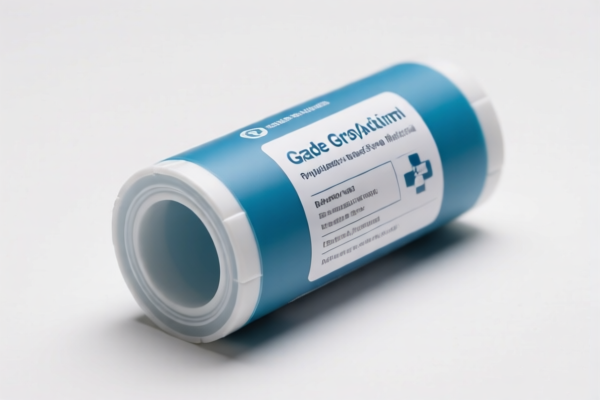


AI Analysis
🏥 Medical Grade M² Material: Plastic Gloves & Mitts (Surgical/Medical vs. Disposable)
🌐 HS Code Reference & Customs Clearance Guide | 2026 Latest Tariff Analysis | Professional Compliance Strategy 📌 I. Product Definition & Classification: What is "M² Material"?
In the context of medical plastics and customs classification, "M² Material" typically refers to medical-grade polyethylene or latex-free plastic materials used for the production of gloves, mittens, and mitts. These products fall under Chapter 39 (Plastics and articles thereof).
The critical distinction in customs clearance lies in the intended use and sterility: * Surgical/Medical Gloves (Sterile/Non-Sterile): High-precision, often sterile, used in hospitals for invasive or sterile procedures. * Disposable Gloves (General Purpose): Lower cost, non-sterile, used for general hygiene, food handling, or cleaning.
⚠️ Key Distinction Point:
- If the gloves are specifically designed for surgical or medical procedures (often sterile, higher quality control) → Classified under 3926.20.10.10
- If the gloves are general-purpose disposable (cleaning, general medical aid, non-sterile) → Classified under 3926.20.40.10
📦 II. HS Code Classification Details (2026 Latest Tariff Alignment)
| HS Code | Product Description | Application Scenario | Sterility/Usage |
|---|---|---|---|
3926.20.10.10 |
Seamless Surgical and Medical Gloves/Mitts | Hospital surgeries, sterile procedures, medical examinations | ✅ Surgical/Medical Grade |
3926.20.40.10 |
Other Disposable Gloves/Mitts | General cleaning, food service, non-sterile medical tasks, household use | ❌ General Disposable |
🔍 Important Note:
- Both codes fall under 3926.20 (Gloves, mittens and mitts of plastics).
- The 10-digit suffix determines the specific duty rate.
- "M² Material" does not change the HS Code; it is the end-use (Surgical vs. Disposable) that dictates the classification.
💰 III. 2026 Tariff Rate Details (China to USA Import)
✅ Applicable Country: USA (US)
✅ Origin: China (CN)
✅ Effective Date: 2025/2026 Import Period
🎯 1. 3926.20.10.10 —— Seamless Surgical and Medical Gloves
| Item | Detail |
|---|---|
| Base Tariff | 0.0% |
| Additional Tariff (Section 301/IEEPA) | 0.0% |
| Total Tax Rate | 0.0% |
| Tax Calculation | CIF Value × 0% = $0 |
| Legal Basis | HTSUS 3926.20.10.10 |
📌 Explanation:
- Surgical and medical gloves enjoy a 0% total tariff rate.
- This is a significant cost advantage for high-value medical supplies.
- No additional Section 301 or IEEPA taxes apply to this specific medical-grade classification.
🎯 2. 3926.20.40.10 —— Other Disposable Gloves
| Item | Detail |
|---|---|
| Base Tariff | 6.5% |
| Additional Tariff (Section 301/IEEPA) | 0.0% |
| Total Tax Rate | 6.5% |
| Tax Calculation | CIF Value × 6.5% |
| Legal Basis | HTSUS 3926.20.40.10 |
📌 Explanation:
- General disposable gloves are subject to a 6.5% total tariff.
- While lower than some other plastic goods, this is 6.5% higher than surgical gloves.
- No additional Section 301 taxes apply, but the base rate is significant for bulk shipments.
🛠️ IV. Customs Clearance Practical Advice (Avoid Pitfalls)
✅ 1. Documentation Checklist (Must-Have)
| Document | Required? | Notes |
|---|---|---|
| ✅ Product Specification Sheet | ✔️ | Must clearly state: Material (e.g., Nitrile, PE, PVC), Sterility Status (Sterile/Non-Sterile), Intended Use (Surgical vs. General) |
| ✅ Certificate of Analysis (COA) | ✔️ | Proves medical-grade quality if claiming 3926.20.10.10 |
| ✅ FDA Registration (if applicable) | ✔️ | For medical devices in the US, ensure FDA 510(k) or General Control registration |
| ✅ Commercial Invoice | ✔️ | Clearly describe as "Surgical Gloves" or "Disposable Gloves" — do not use vague terms like "Plastic Gloves" |
| ✅ Packing List | ✔️ | Itemize quantities and weights accurately |
✅ 2. Classification Strategy (Key Tips)
🔥 “Surgical = 0%, Disposable = 6.5%!”
| Scenario | Correct HS Code | Risk of Misclassification |
|---|---|---|
| Sterile gloves for surgery | 3926.20.10.10 |
✅ Low Tax (0%) |
| Non-sterile exam gloves for clinics | 3926.20.10.10 or 3926.20.40.10? → If used for medical examination, can argue for surgical/medical classification. Consult legal counsel. |
⚠️ Medium Risk |
| Cleaning/grocery store gloves | 3926.20.40.10 |
❌ Higher Tax (6.5%) |
| Generic "M²" material gloves without clear use | 3926.20.40.10 |
❌ Conservative Classification (6.5%) |
📌 Advice:
- If your "M² Material" gloves are sterile and intended for medical use, insist on3926.20.10.10.
- Provide FDA documentation and sterilization certificates to support the claim.
- If they are non-sterile and for general use, classify as3926.20.40.10.
✅ 3. Common Mistakes to Avoid
❌ Mistake 1: Using "Plastic Gloves" as the description
👉 Result: Customs may classify as general disposable (3926.20.40.10) → 6.5% tax.
❌ Mistake 2: Claiming surgical status without proof
👉 Result: Customs audit → Delay, fines, or forced reclassification → Back taxes + penalties.
❌ Mistake 3: Ignoring FDA requirements
👉 Result: Goods held at border if FDA registration is missing → Supply chain disruption.
✅ Best Practice:
"Sterile Nitrile Surgical Gloves, Medical Grade, FDA Registered, Box of 100"
🌍 V. Global Market Comparison (2026)
| Country/Region | Recommended HS Code | Tariff Rate (China Origin) | Key Requirement |
|---|---|---|---|
| 🇺🇸 USA | 3926.20.10.10 (Surgical) |
0.0% | FDA Registration, Sterility Proof |
| 🇺🇸 USA | 3926.20.40.10 (Disposable) |
6.5% | General Compliance |
| 🇪🇺 EU | 3926.20.00 | 0% (General) | CE Marking, Medical Device Regulation (MDR) |
| 🇨🇳 China | 3926.20.00 | 6.5% | No additional tariffs |
📌 Conclusion:
- USA offers 0% tariff for surgical gloves, making it highly competitive.
- EU and China have uniform rates for gloves of plastics, but US distinguishes between surgical and disposable.
📌 VI. Final Recommendations
- Confirm Sterility: If sterile, document it thoroughly to claim 0% duty.
- FDA Compliance: Ensure your products are FDA-registered if marketed as medical devices.
- Precise Description: Use "Surgical Gloves" vs. "Disposable Gloves" in all documents.
- Consult Customs Broker: For large volumes, request a binding ruling from US Customs to confirm classification.
🎯 Remember:
🔹 "Surgical = 0% | Disposable = 6.5%"
🔹 "Proof of Sterility = Proof of Duty Savings!"
📣 Action Step:
📞 Contact your customs broker to verify FDA documentation and classification.
🚀 Optimize your supply chain by leveraging the 0% duty for medical-grade gloves.
✨ Precision Classification = Lower Costs = Higher Profits!
💼 Every percentage point counts in global trade!
Customer Reviews
About HS Code Classification
The Harmonized System (HS) is an internationally standardized nomenclature developed by the World Customs Organization (WCO) to classify traded products. Over 200 countries use the HS system as the basis for customs tariffs, trade statistics, and import/export regulations.
Each HS code follows a hierarchical structure:
- Chapter (2 digits) — Broad category of goods (e.g., Chapter 84: Machinery and Mechanical Appliances)
- Heading (4 digits) — More specific grouping within the chapter
- Subheading (6 digits) — Internationally standardized breakdown, used by all WCO member countries
- National subdivisions (8-10 digits) — Country-specific extensions for further classification, such as US HTSUS 10-digit codes
Correct HS code classification is essential for smooth customs clearance, accurate duty payment, and compliance with trade regulations. Misclassification can lead to customs delays, overpayment of duties, or penalties.
When importing from CN to US, the applicable tariff rates may include:
- Most-Favored-Nation (MFN) rate — The standard duty rate applied to WTO members
- General rate — Applied to countries without trade agreements
- Trade remedy duties — Additional tariffs such as Section 301 (anti-dumping), Section 232 (national security), or countervailing duties
The information provided on this page is for reference purposes only. For official classification, please consult with your local customs authority or a licensed customs broker.