Medical Grade Natural Cork Washers
CN → USProduct Images
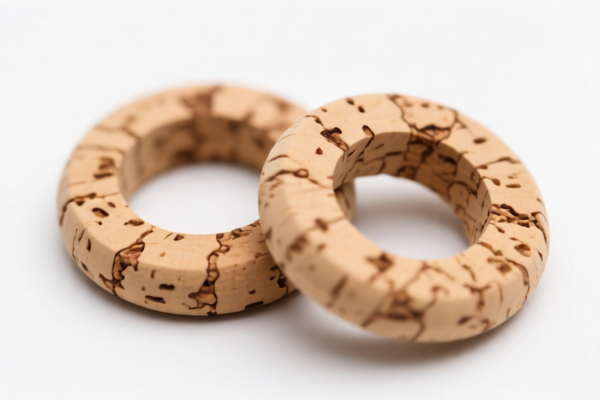
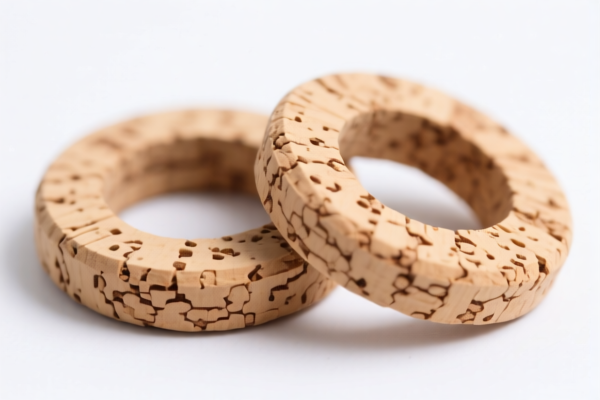
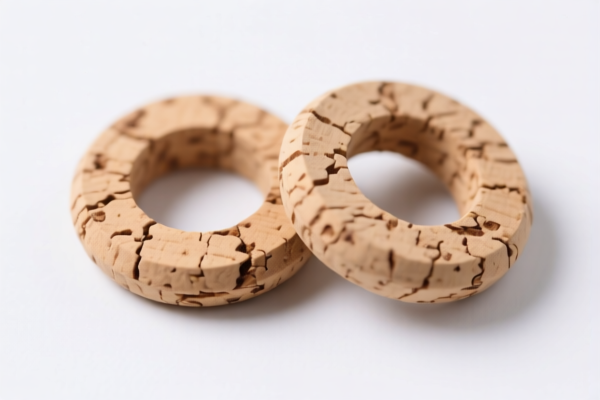
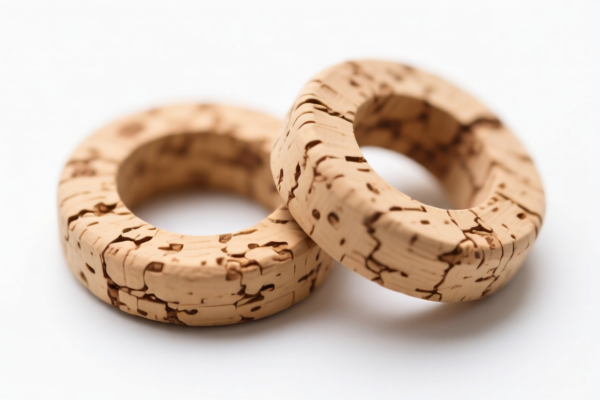
AI Analysis
🌿 Medical Grade Natural Cork Washers (Sealing Components)
🌐 HS Code Reference & Customs Clearance Guide | 2026 Latest Tariff Analysis | Professional Compliance Strategy
📌 Part I: Product Definition & Classification: Do You Truly Understand “Medical Grade Cork”?
Natural cork washers are specialized sealing gaskets derived from the bark of the Quercus suber (cork oak) tree. In international trade, their classification hinges strictly on their processing level and intended use. Unlike industrial rubber gaskets, cork is a natural cellular material.
Key Classification Distinction: Raw/Basic Cork Products: Simply cut, shaped, or pressed without being further processed into finished medical devices or impregnated with complex synthetic resins beyond basic binding. → Chapter 45 (Cork and Manufactures of Cork). Impregnated/Prepared Cork: Cork that has been treated, impregnated, or supported with other materials to enhance durability or sterility for specific medical applications. → Often still Chapter 45 if the essential character remains cork, but requires careful verification.
⚠️ Critical Distinction Point:
- If the washer is simple, unimpregnated, or lightly bound cork cut into shape → Classified under 4504.
- If it is integrated into a finished medical device (e.g., a pump assembly), it may be classified with the device. However, sold as a standalone component for medical use, it generally falls under 4504.
- Note: Do not classify as Chapter 30 (Pharmaceuticals) or Chapter 90 (Medical Instruments) unless it is an integral part of a larger machine or a drug delivery system. As a standalone washer/gasket, it is a "manufacture of cork."
📦 Part II: HS Code Classification Details (2026 Latest Tariff Authority对照)
| HS Code | Product Description | Application Scenario | Processing Level |
|---|---|---|---|
4504.10.00.00 |
Cork granules, dust and waste | Raw material supply, not finished washers | ❌ Not applicable (Raw) |
4504.90.00.00 |
Manufactures of cork other than granules, dust and waste | Includes cut, shaped, and pressed cork washers/gaskets | ✅ Yes (Finished/Prepared) |
3926.90.97.90 |
Other articles of plastics | If cork is heavily impregnated with plastic/resin and loses essential character | ❌ Incorrect (Unless specified) |
4016.93.00.00 |
Gaskets, washers and other seals of vulcanized rubber | If the product is rubber-cork composite | ⚠️ Verify Material |
🔍 Key Reminder:
- The standard HS Code for Natural Cork Washers/Gaskets is4504.90.00.00.
- Do not classify under 4016 (Rubber) or 3926 (Plastics) unless the product is fundamentally a rubber or plastic part with cork additives. The essential character of natural cork washers is cork.
- "Medical Grade" implies compliance with biocompatibility standards (ISO 10993) but does not change the HS Code unless it is part of a larger device.
💰 Part III: 2026 Latest Tariff Rate Details (Including Additional Taxes & Policies)
✅ Applicable Country: United States (US)
✅ Country of Origin: China (CN)
✅ Effective Date: From November 10, 2025 (inclusive)
🎯 1. 4504.90.00.00 —— Manufactures of Cork (Including Washers/Gaskets)
| Item | Content |
|---|---|
| Base Duty Rate | 0% (ad valorem) |
| USITC Additional Duty | +25% (Under USITC Footnote 9903.90.00.00) |
| IEEPA Additional Duty | +10% (On China/HK products, effective Nov 10, 2025) |
| Total Duty Rate | 35% |
| Calculation Method | CIF Value × 35% |
| De Minimis Exemption | ❌ Not Eligible (deny_de_minimis) |
| Legal Basis Path | IEEPA:9903.01.25 → IEEPA:9903.01.24 → USITC:4504.90.00.00 → FOOTNOTE:9903.90.00.00 |
📌 Explanation:
- The 25% USITC duty is part of the Section 301 duties on specific Chinese imports, now extended to cork manufactures.
- The 10% IEEPA duty applies to all Chinese-origin goods unless exempted.
- Total 35% is a significant cost factor. Unlike electronics, cork products are not exempt from these additional tariffs.
- No "De Minimis" (Section 321) exemption: Values under $800 cannot bypass these duties if shipped from China.
🛠️ Part IV: Practical Customs Clearance Advice (Real-World Pitfall Guide)
✅ 1. Documentation Checklist (Mandatory)
| Document | Required | Description |
|---|---|---|
| ✅ Product Specification Sheet | ✔️ | Must specify: Material (Natural Cork), Diameter, Thickness, Grade (Medical/Biocompatible), Sterilization method (if any). |
| ✅ Certificate of Origin (CO) | ✔️ | Crucial for proving China origin. If from Portugal/Morocco, may qualify for lower duties. |
| ✅ Letter of Guarantee / Intended Use | ✔️ | Confirm it is a "Component/Gasket" and not a "Medical Device" itself, to avoid FDA classification delays. |
| ✅ Biocompatibility Certificate (ISO 10993) | ✔️ | Recommended to prove "Medical Grade" status, though not strictly for HS classification, it aids customs in verifying value and nature. |
| ✅ Commercial Invoice | ✔️ | Clear description: "Natural Cork Washers, Medical Grade, for use in Pharmaceutical Packaging Equipment." |
| ✅ Packing List | ✔️ | Detail net/gross weight, number of units. |
✅ 2. Declaration Techniques (Key Mnemonic)
🔥 “Material is Key, Use is Secondary. Don’t Mix with Rubber!”
| Scenario | Correct Declaration | Wrong Practice |
|---|---|---|
| Natural Cork Washers | 4504.90.00.00 |
Misdeclare as 4016.93 (Rubber) → Higher risk of reclassification |
| Cork-Rubber Composite | Verify Essential Character. If >50% rubber, may be 4016 |
Blindly declare as 4504 if rubber is dominant |
| Cork Powder/Granules | 4504.10.00.00 |
Declare as washers → Incorrect value/processing level |
| Imported from Portugal | 4504.90.00.00 |
Same HS, but 0% Additional Duty if preferential rules apply (check FTAs) |
✅ 3. Special Situations
| Situation | Handling Advice |
|---|---|
| Sterilized Cork | If ethylene oxide or gamma sterilized, ensure invoice mentions "Sterile" to avoid bio-hold queries, but HS remains 4504.90.00.00. |
| Impregnated Cork | If impregnated with medical-grade resin, still usually 4504.90.00.00 as long as cork is essential character. Provide technical data to support. |
| Small Samples (<$800) | ❌ No De Minimis: Even small shipments from China are subject to 35% duty + brokerage fees. Consider consolidating or using a bonded warehouse. |
| Non-Chinese Origin | If sourced from Portugal (largest cork producer), apply for General System of Preferences (GSP) if applicable, or enjoy 0% USITC if eligible under specific trade rules (verify current GSP status for China vs. EU). |
🌍 Part V: Global Market Comparison (2026 Latest)
| Country/Region | Recommended HS Code | Tariff (China Origin) | Certification Required | Notes |
|---|---|---|---|---|
| 🇺🇸 USA | 4504.90.00.00 |
35% (25% + 10%) | FDA (if device), ISO 13485 | High duty cost. |
| 🇨🇳 China | 4504.90.00.00 |
0-5% (Export Duty may apply) | CE, ISO 10993 | Low export tax, focus on quality. |
| 🇪🇺 EU | 4504.90.00 |
0% | CE, REACH, ISO 10993 | No Additional Tariffs. Best market for cost efficiency. |
| 🇯🇵 Japan | 4504.90.00 |
0-3% | PSE, ISO 13485 | Low tariffs, strict quality control. |
| 🇸🇬 Singapore | 4504.90.00 |
0% | HSA, ISO 13485 | Zero duty hub for Asia-Pacific. |
📌 Conclusion:
- The US market is the most expensive for Chinese cork due to the 35% aggregate duty.
- EU, Japan, and Singapore are cost-effective with 0-3% tariffs.
- Strategy: If selling to the US, consider value-add processing in a non-China country (e.g., cut/press in Portugal) to change origin, though "Substantial Transformation" rules are strict. Alternatively, absorb the cost or negotiate price sharing with buyers.
📌 Part VI: Common Errors & Pitfalls (Lessons Learned)
❌ Mistake 1: Declaring as "Rubber Gaskets" (4016)
👉 Consequence: Customs may reclassify to 4504 and assess penalties for misdeclaration, plus you lose the chance to appeal incorrectly.
❌ Mistake 2: Ignoring the 35% US Duty
👉 Consequence: Shipment held at port until duty payment. Buyer refuses delivery if not prepaid.
❌ Mistake 3: Claiming "De Minimis" for samples under $800
👉 Consequence: Confiscation or forced return because cork from China is not exempt from Section 301/IEEPA duties.
❌ Mistake 4: Confusing "Medical Grade" with "Medical Device" HS
👉 Consequence: Incorrect declaration leads to FDA inspection delays. Clarify it is a component, not the device itself.
✅ Correct Approach:
“Cork Washers, Natural, Medical Grade, ISO 10993 Compliant, Cut to Shape, Not Impregnated with Synthetic Resins, For Pharmaceutical Equipment, Origin: China”
🎯 Part VII: Conclusion: Precision in Classification Saves Costs!
🎯 Remember the Mnemonic:
🔹 “Cork is 4504, Not 4016. US Duty 35%, No De Minimis. Origin Matters, Portugal is Key!”
🔹 “HS Code Defines Cost, Tariff Difference 35 Points, Misdeclaration Costs Thousands!”
📌 Pro Tip:
If your cork washers are sourced from Portugal, Spain, or Morocco, you may qualify for 0% USITC Additional Duty (check current GSP or FTAs).
Suggestion:
- Apply for Advance Ruling from CBP if the product is a composite (cork-rubber).
- Negotiate DDP Terms with US buyers to include the 35% duty in the price.
- Consider Exporting to EU/Japan for better margin protection.
📣 Immediate Action:
📞 Contact your customs broker + Provide Material Safety Data Sheet (MSDS) + Verify Origin Certificate
🚀 Ensure your medical grade claim is backed by ISO 10993 to prevent FDA holds!
✨ Professional Clearance Starts with Accurate Classification!
💼 Every Percentage Point of Tariff Counts!
Customer Reviews
About HS Code Classification
The Harmonized System (HS) is an internationally standardized nomenclature developed by the World Customs Organization (WCO) to classify traded products. Over 200 countries use the HS system as the basis for customs tariffs, trade statistics, and import/export regulations.
Each HS code follows a hierarchical structure:
- Chapter (2 digits) — Broad category of goods (e.g., Chapter 84: Machinery and Mechanical Appliances)
- Heading (4 digits) — More specific grouping within the chapter
- Subheading (6 digits) — Internationally standardized breakdown, used by all WCO member countries
- National subdivisions (8-10 digits) — Country-specific extensions for further classification, such as US HTSUS 10-digit codes
Correct HS code classification is essential for smooth customs clearance, accurate duty payment, and compliance with trade regulations. Misclassification can lead to customs delays, overpayment of duties, or penalties.
When importing from CN to US, the applicable tariff rates may include:
- Most-Favored-Nation (MFN) rate — The standard duty rate applied to WTO members
- General rate — Applied to countries without trade agreements
- Trade remedy duties — Additional tariffs such as Section 301 (anti-dumping), Section 232 (national security), or countervailing duties
The information provided on this page is for reference purposes only. For official classification, please consult with your local customs authority or a licensed customs broker.