Medical Grade PVC Resin
CN → US| HS Code | Tariff Rate | Origin | Destination | Doc |
|---|---|---|---|---|
| 3901909000 | 41.5% | CN | US | Official Doc |
| 3901905501 | 41.5% | CN | US | Official Doc |
| 3904220000 | 41.5% | CN | US | Official Doc |
| 3904210000 | 41.5% | CN | US | Official Doc |
| 3914006000 | 38.9% | CN | US | Official Doc |
| 3914002000 | 35.0% | CN | US | Official Doc |
Product Images
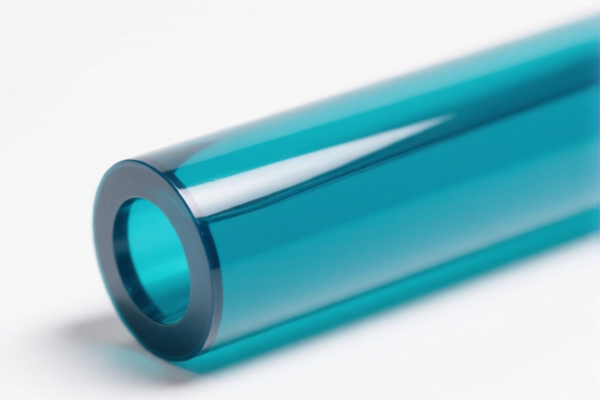
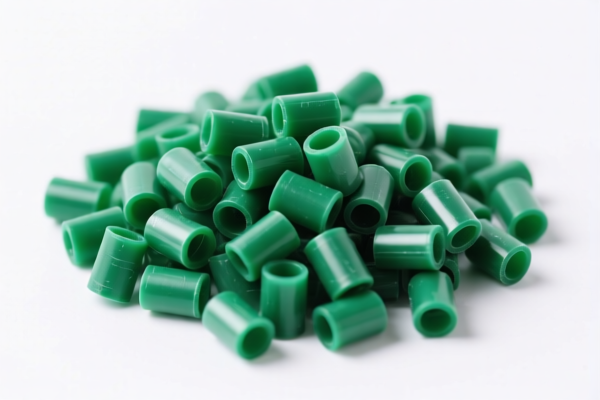
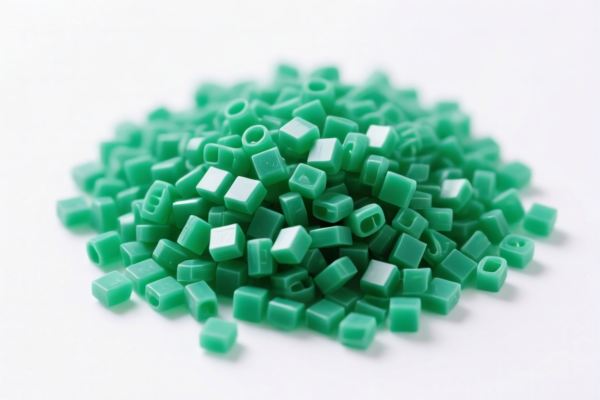
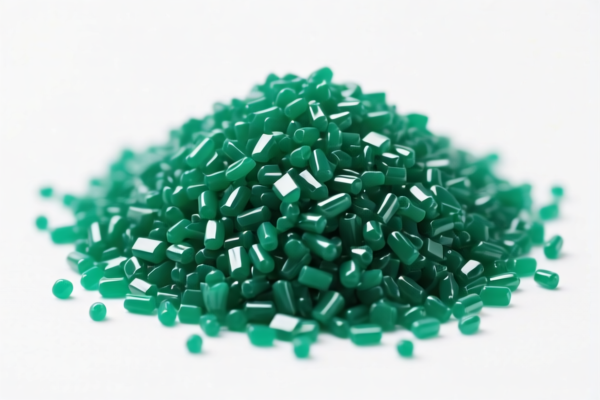
AI Analysis
Based on the <DATA> provided, here is the professional Wiki-style breakdown for Medical Grade PVC Resin.
🏥 Medical Grade PVC Resin (Polyvinyl Chloride Resin)
🌐 HS Code Reference & Customs Clearance Guide | 2026 Tariff Breakdown | Professional Compliance Strategy
📌 I. Product Definition & Classification: Do You Know "Medical Grade"?
Medical Grade PVC Resin is a specialized polymer used to manufacture critical healthcare products such as blood bags, IV tubing, catheters, and medical packaging. Unlike industrial PVC, medical grade resin must meet strict purity standards (low toxicants, high clarity, biocompatibility).
In international trade, the classification depends entirely on whether the resin is plasticized (soft, flexible) or non-plasticized (rigid, hard).
⚠️ Critical Distinction: - Plasticized PVC: Used for soft tubing/bags. Contains additives. → HS Code 3904.22.00.00 - Non-Plasticized PVC: Used for rigid bottles/caps. Hard resin. → HS Code 3904.21.00.00
⚡ Medical Note: While "Medical Grade" is a quality specification, US Customs (CBP) classifies it based on chemical form (Plasticized vs. Non-Plasticized), not the intended use (Medical). However, if the product is a specific ion-exchange resin (e.g., Cholestyramine) used in medicine, it falls under a different heading (3914).
📦 II. HS Code Classification Details (Based on Provided Data)
| HS Code | Product Description | Application | Chemical Form |
|---|---|---|---|
| 3904.22.00.00 | Polymers of vinyl chloride... Other poly(vinyl chloride): Plasticized | Medical Bags, IV Tubing, Soft Catheters, flexible medical packaging. | ✅ Flexible / Soft |
| 3904.21.00.00 | Polymers of vinyl chloride... Other poly(vinyl chloride): Non-plasticized | Rigid Bottles, IV Bottle Shells, Medical Capsules, Rigid Tubing. | ✅ Rigid / Hard |
🚫 Excluded from this list: - 3901.90.90.00 (Polyethylene) & 3901.90.55.01 (Ethylene Copolymers) are NOT PVC. - 3914.00.20.00 (Cholestyramine Resin) is an Ion-Exchanger, not standard PVC resin, though used in medicine.
💰 III. 2026 Tariff Rate Breakdown (China to USA Context)
✅ Origin: China (CN)
✅ Target Market: United States (US)
✅ Effective Period: Current Trade War Tariffs (Section 301)
🎯 1. 3904.22.00.00 — Medical Grade PVC (Plasticized)
Used for flexible medical devices.
| Item | Content |
|---|---|
| Base Tariff | 0.0% (Free Trade Rate) |
| Section 301 Add-on | 0.0% (No additional penalty) |
| Total Tariff | 0.0% |
| Duty Calculation | CIF Value × 0% = $0.00 |
| De Minimis Exemption | ✅ Eligible (If shipping under $800 via 9994/9816, though bulk cargo usually requires filing) |
| Legal Path | Harmonized Tariff Schedule (HTS) 3904.22.00.00 |
📌 Analysis:
Unlike many industrial plastics, Medical Grade PVC (Plasticized) currently enjoys a 0% tariff status. This is a massive cost advantage. However, ensure the "Plasticized" claim is backed by Material Safety Data Sheets (MSDS) proving additive content, as misclassification as "Non-plasticized" or "Other" could trigger errors.
🎯 2. 3904.21.00.00 — Medical Grade PVC (Non-Plasticized)
Used for rigid medical containers.
| Item | Content |
|---|---|
| Base Tariff | 0.0% (Free Trade Rate) |
| Section 301 Add-on | 0.0% (No additional penalty) |
| Total Tariff | 0.0% |
| Duty Calculation | CIF Value × 0% = $0.00 |
| De Minimis Exemption | ✅ Eligible |
| Legal Path | Harmonized Tariff Schedule (HTS) 3904.21.00.00 |
📌 Analysis:
Similar to the plasticized version, Non-Plasticized PVC also faces 0% total tax. This makes China-based PVC resin exports highly competitive in the US medical supply chain, provided the material specifications match the "Other Poly(vinyl chloride)" sub-category.
⚠️ Special Case Warning: Ion-Exchange Resins (3914.00.20.00)
If your "Medical Resin" is actually an Ion-Exchanger (e.g., Cholestyramine):
| HS Code | Product | Base | Add-on | Total Tax |
|---|---|---|---|---|
| 3914.00.20.00 | Cholestyramine Resin USP | 0.0% | 25.0% | 25.0% |
🔥 CRITICAL: If you import Cholestyramine Resin (an ion-exchange polymer used for cholesterol treatment), you will pay a 25% tariff due to Section 301 "Special Measures" (HTS 9903.88.01). Do not classify generic PVC here. If it is standard PVC for tubing/bottles, use 3904.
🛠️ IV. Customs Clearance Practical Advice
✅ 1. Essential Documentation Checklist
To prove "Medical Grade" and secure the 0% tariff, you must provide:
| Document | Requirement | Why it matters |
|---|---|---|
| MSDS / Safety Data Sheet | Must show "Plasticized" or "Non-plasticized" status. | Customs officers rely on this to distinguish between 3904.21 and 3904.22. |
| Product Specification Sheet | Must state "PVC Resin" (Polyvinyl Chloride). | Must explicitly exclude "Polyethylene" (3901) or "Ion-Exchangers" (3914) unless intended. |
| Declaration of Use | "Intended for Medical Grade PVC production (Tubing/Bottles)." | Helps CBP verify the chemical form against the HS Code. |
| Certificate of Analysis (CoA) | Purity levels, residual monomer content (<1 ppm). | Medical grade requires strict purity; proves it's not industrial scrap. |
| Commercial Invoice | Must describe: "Medical Grade PVC Resin, [Plasticized/Non-Plasticized]." | Do not just write "Medical Plastic." Be specific. |
✅ 2. Declaration Strategy (The "Golden Rules")
🔥 Mnemonic: "PVC is PVC, Plasticized vs. Hard; Don't mix with Ion-Exchangers!"
| Scenario | Correct HS Code | Risk of Error |
|---|---|---|
| Soft PVC for IV Bags | 3904.22.00.00 |
0% Duty. High risk if misclassified as "Other" (3904.29) → 25% tax. |
| Hard PVC for Bottles | 3904.21.00.00 |
0% Duty. High risk if misclassified as "Other" → 25% tax. |
| Cholestyramine Resin | 3914.00.20.00 |
25% Duty. If misclassified as standard PVC (3904), you avoid tax, but Audit Risk is 100%. |
| Polyethylene Bags | 3901.90.90.00 |
31.5% Duty. Do not confuse PE (Polyethylene) with PVC (Vinyl Chloride). |
✅ 3. Special Handling for "Medical" Claims
- FDA vs. Customs: US Customs does not care about FDA approval for tariff classification. They only care about the chemical structure (Vinyl Chloride Polymer).
- Misdeclaration Trap: If you declare
3904.22.00.00but the lab analysis shows it contains 40% "Ethylene Copolymers" (making it a copolymer of Vinyl Chloride), it might be reclassified. However, pure PVC is generally safe at 0%. - Cholestyramine Check: If your product is "Cholestyramine Resin USP" (even if used in medical devices), do not use 3904. Use 3914.00.20.00 to avoid a "Willful Negligence" fine later.
🌍 V. Global Market Comparison (2026 Projection)
| Market | Recommended HS Code | Tariff (China Origin) | Notes |
|---|---|---|---|
| 🇺🇸 USA | 3904.22.00.00 / 3904.21.00.00 |
0% | Current trade policy favors PVC imports. |
| 🇨🇳 China | Same | 0% | No import duty, but export controls may apply. |
| 🇪🇺 EU | 3904.22 / 3904.21 |
6.5% | No Section 301 equivalent, but standard MFN applies. |
| 🇯🇵 Japan | 3904.22 / 3904.21 |
6.0% | RCEP/JFTA benefits may apply. |
📌 Conclusion:
The USA is currently the most favorable market for Medical Grade PVC Resin due to the 0% tariff. - Strategy: Aggressively market PVC resins to US medical device manufacturers. - Compliance: Ensure strict differentiation between "Plasticized" and "Non-plasticized" to prevent audit triggers.
📌 VI. Common Pitfalls & Solutions
❌ Pitfall 1: Calling it "Medical Plastic" without specifying "PVC". 👉 Risk: Customs may guess incorrectly or request a lab test. ✅ Solution: Always write "Polyvinyl Chloride (PVC) Resin" in the description.
❌ Pitfall 2: Confusing PVC with PE (Polyethylene).
👉 Risk: 3901.90.90.00 (PE) has a 31.5% total tax. If you ship PE and declare PVC, you evade tax → Seizure.
✅ Solution: Verify chemical composition via CoA.
❌ Pitfall 3: Using 3914.00.20.00 for standard PVC.
👉 Risk: You pay 25% unnecessarily (if the item is actually Cholestyramine).
✅ Solution: If it is standard PVC tubing/bottles, stick to 3904. If it is an Ion-Exchanger (resin beads for water purification/medical dialysis), use 3914.
🎯 VII. Final Verdict: Action Plan
- Verify Composition: Check MSDS. Is it Vinyl Chloride (PVC)? Is it Plasticized or Non-Plasticized?
- Select HS Code:
- Soft/Medical Bag → 3904.22.00.00 (0% Tax)
- Rigid/Medical Bottle → 3904.21.00.00 (0% Tax)
- Ion-Exchange (Cholestyramine) → 3914.00.20.00 (25% Tax)
- Prepare Docs: MSDS, CoA, Invoice with clear chemical name.
- File Declaration: Use "Medical Grade PVC Resin" as the primary description.
🚀 Pro Tip:
For Medical Grade PVC, the US market offers 0% duty. This is a significant competitive edge. However, ensure your chemical data matches the Vinyl Chloride polymer definition perfectly. Avoid mixing with Polyethylene (3901) to avoid the 31.5% penalty.
✨ Professional Customs Compliance Starts with Precision!
💼 Your profit margin depends on the first line of your commercial invoice.
📞 Contact a licensed broker today to verify your PVC resin's HS Code.
Customer Reviews
About HS Code Classification
The Harmonized System (HS) is an internationally standardized nomenclature developed by the World Customs Organization (WCO) to classify traded products. Over 200 countries use the HS system as the basis for customs tariffs, trade statistics, and import/export regulations.
Each HS code follows a hierarchical structure:
- Chapter (2 digits) — Broad category of goods (e.g., Chapter 84: Machinery and Mechanical Appliances)
- Heading (4 digits) — More specific grouping within the chapter
- Subheading (6 digits) — Internationally standardized breakdown, used by all WCO member countries
- National subdivisions (8-10 digits) — Country-specific extensions for further classification, such as US HTSUS 10-digit codes
Correct HS code classification is essential for smooth customs clearance, accurate duty payment, and compliance with trade regulations. Misclassification can lead to customs delays, overpayment of duties, or penalties.
When importing from CN to US, the applicable tariff rates may include:
- Most-Favored-Nation (MFN) rate — The standard duty rate applied to WTO members
- General rate — Applied to countries without trade agreements
- Trade remedy duties — Additional tariffs such as Section 301 (anti-dumping), Section 232 (national security), or countervailing duties
The information provided on this page is for reference purposes only. For official classification, please consult with your local customs authority or a licensed customs broker.