Medical Grade Polyamide Raw Material
CN → US| HS Code | Tariff Rate | Origin | Destination | Doc |
|---|---|---|---|---|
| 9021908100 | 10.0% | CN | US | Official Doc |
| 3908907000 | 41.5% | CN | US | Official Doc |
| 3921190090 | 41.5% | CN | US | Official Doc |
| 9021100090 | 10.0% | CN | US | Official Doc |
Product Images
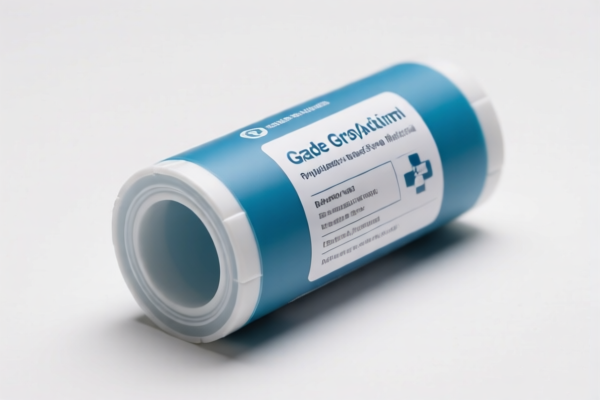
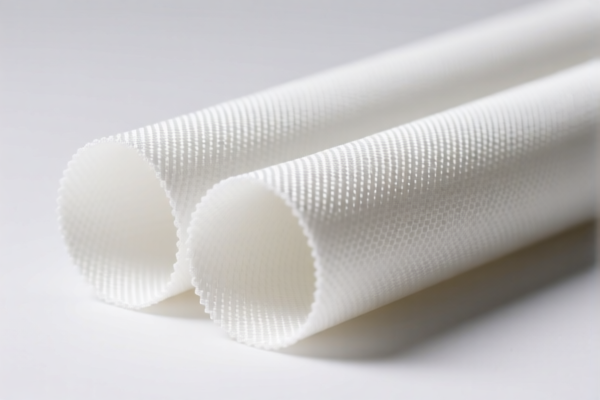
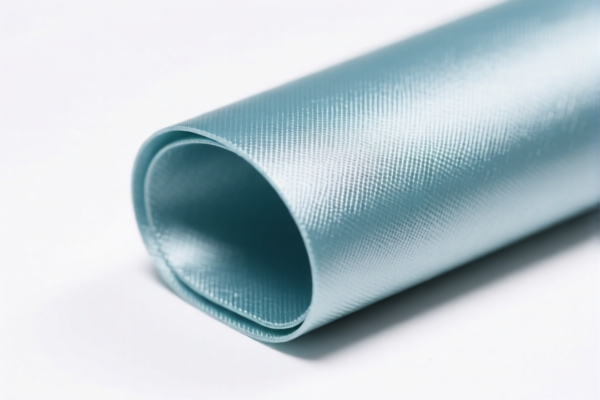
AI Analysis
🏥 Medical Grade Polyamide Raw Material (Polyamide Plates/Sheets)
🌐 HS Code Reference & Customs Clearance Guide | 2024/2025 Latest Tariff Analysis | Professional Customs Strategy
📌 I. Product Definition & Classification: What Exactly is "Medical Grade Polyamide"?
Polyamide (PA), commonly known as Nylon, is a versatile engineering plastic. When classified as "Medical Grade," it implies specific purity, biocompatibility, and sterilization resistance standards. In international trade, the classification hinges not just on the material itself, but on its form (raw vs. finished) and its intended use (medical device component vs. general industrial plastic).
Key Distinction: * Medical Device Components (Finished/Intermediate): If the polyamide is shaped into plates/sheets specifically for making orthopedic implants, prosthetics, or orthotic devices, it falls under Chapter 90 (Medical Instruments). * General Plastic Material (Raw/Intermediate Form): If the polyamide is in its basic plate/sheet form, intended for further manufacturing or general industrial use, it falls under Chapter 39 (Plastics).
⚠️ Critical Differentiator:
- If the product is specifically designed for orthopedic surgery, fracture fixation, or corrective devices (even if in plate form for further shaping) → Classify under HS 9021.
- If the product is generic polyamide plate/sheet without specific medical device certification or intended for general industrial use (even if high-quality) → Classify under HS 3908 or HS 3921.
📦 II. HS Code Classification Details (2024/2025 Latest Tariff Mapping)
| HS Code | Product Description | Applicable Scenario | Tax Category |
|---|---|---|---|
9021.90.81.00 |
Medical-grade polyamide plates, used for plastic/corrective devices, classified as medical instruments. | Orthopedic implants, prosthetic parts, surgical guides | ✅ Medical Device |
9021.10.00.90 |
Medical-grade polyamide plates, intermediate form for orthopedic surgery or fracture appliances. | Semi-finished orthopedic components, fracture plates | ✅ Medical Device |
3908.90.70.00 |
Polyamide primary form plates, classified under other categories of polyamide materials. | Raw polyamide plates, general industrial nylon sheets | ❌ General Plastic |
3921.19.00.90 |
Polyamide plastic plates, classified under other plastic boards, sheets, films, foils, and strips. | General-purpose plastic polyamide sheets | ❌ General Plastic |
🔍 Key Reminder:
- Products under 9021.90.81.00 and 9021.10.00.90 are considered medical devices/components, attracting lower base tariffs but still subject to specific surcharges.
- Products under 3908 and 3921 are considered general plastics, attracting higher base tariffs and full application of additional duties.
💰 III. 2024/2025 Latest Tariff Rate Details (Including Surcharges & Policy Add-ons)
✅ Applicable Country: United States (US)
✅ Origin: China (CN)
✅ Effective Time: Current tariff schedule (including Section 301 and IEEPA surcharges)
🎯 1. 9021.90.81.00 & 9021.10.00.90 — Medical Grade Polyamide Plates (Medical Device Category)
| Item | Content |
|---|---|
| Base Tariff | 0.0% (ad valorem) |
| Section 301 Surcharge | +0.0% (Note: Some medical items may have exclusions, but generally low base helps) |
| IEEPA Surcharge (Section 122/EO) | +10.0% (Targeted at Chinese products under specific emergency powers) |
| Total Effective Tax Rate | 10.0% |
| Tax Calculation | CIF Value × 10% |
| De Minimis Eligibility | ❌ Not Applicable (De Minimis ($800) does not apply to formal imports of this nature; even if it did, 10% would still apply if declared formally) |
| Legal Basis Path | IEEPA:9903.01.24 → USITC:9021.90.81.00 / 9021.10.00.90 |
📌 Explanation:
- The 0% base rate reflects the US policy to encourage import of medical supplies and devices.
- The 10% IEEPA surcharge is the key cost driver here, applied specifically to Chinese-origin goods under current executive orders.
- Total 10% is significantly lower than the general plastic categories.
🎯 2. 3908.90.70.00 & 3921.19.00.90 — General Polyamide Plates (General Plastic Category)
| Item | Content |
|---|---|
| Base Tariff | 6.5% (ad valorem) |
| Section 301 Surcharge | +25.0% (From USITC Footnote 9903.88.01) |
| IEEPA Surcharge (Section 122/EO) | +10.0% (Targeted at Chinese products) |
| Total Effective Tax Rate | 41.5% |
| Tax Calculation | CIF Value × 41.5% |
| De Minimis Eligibility | ❌ Not Eligible |
| Legal Basis Path | IEEPA:9903.01.24 → IEEPA:9903.01.25 → USITC:3908.90.70.00 / 3921.19.00.90 → FOOTNOTE:9903.88.01 |
📌 Explanation:
- The 6.5% base rate is standard for many plastic articles.
- The 25% Section 301 tariff is a major cost factor for Chinese plastics.
- The 10% IEEPA surcharge adds further burden.
- Total 41.5% is extremely high, making this classification costly for medical manufacturers if misclassified.
🛠️ IV. Customs Clearance Practical Advice (Real-World Pitfall Guide)
✅ 1. Required Documentation Checklist (Non-Negotiable)
| Document | Mandatory? | Purpose |
|---|---|---|
| ✅ Product Specification Sheet | ✔️ | Must explicitly state "Medical Grade," biocompatibility standards (e.g., ISO 10993), and intended use (orthopedic/surgical). |
| ✅ Statement of Intended Use | ✔️ | A letter from the manufacturer stating the product is for "manufacturing medical devices" or "orthopedic implants." |
| ✅ Third-Party Test Reports | ✔️ | Biocompatibility, sterilization resistance, and material safety reports. |
| ✅ Commercial Invoice | ✔️ | Must clearly describe as "Medical Grade Polyamide Plate for Orthopedic Use" if claiming 9021 classification. |
| ✅ Origin Certificate (CO) | ✔️ | To prove China origin and apply correct surcharges. |
| ✅ Packing List | ✔️ | To ensure no mixed shipments (e.g., mixing medical-grade with general-grade polyamide). |
✅ 2. Declaration Strategy (Key Mnemonics)
🔥 “Medical Intent, Chapter 90; General Form, Chapter 39. Misclassification Costs 30% More!”
| Scenario | Correct Declaration | Wrong Practice |
|---|---|---|
| Polyamide plates for orthopedic implants | 9021.90.81.00 or 9021.10.00.90 |
Declaring as 3908 or 3921 → Overpaying 31.5% |
| Polyamide plates for general industrial use | 3908.90.70.00 or 3921.19.00.90 |
Declaring as 9021 → Misdeclaration Penalty + Back Taxes |
| Mixed shipment (Medical + General) | Split Declaration | Mixed declaration → Seizure or Audit |
✅ 3. Special Case Handling
| Situation | Handling Advice |
|---|---|
| OEM Custom Medical Plates | Provide client’s medical device design specs to justify 9021 classification. |
| Polyamide with Additives | If additives are for biocompatibility, still claim 9021 with proof. If for industrial strength, claim 3908/3921. |
| Sterilized vs. Non-Sterilized | Sterilization does not change HS Code, but certification documents are crucial for 9021. |
| Partial Processing | If plates are cut to shape for a specific device, they may still be 9021 if intended for medical use. |
🌍 V. Global Market Comparison (2024/2025)
| Country/Region | Recommended HS Code | Tariff Rate (China Origin) | Certification Requirements | Remarks |
|---|---|---|---|---|
| 🇺🇸 USA | 9021.90.81.00 |
10.0% (with IEEPA) | FDA 510(k) if device | High cost for 3908/3921 (41.5%) |
| 🇨🇳 China | 9021.90.81.00 |
10.0% | NMPA Registration | No Section 301 |
| 🇪🇺 EU | 9021.90 |
0% (if MDR compliant) | CE Mark + MDR | No IEEPA surcharges |
| 🇬🇧 UK | 9021.90 |
0% | UKCA Mark | Post-Brexit alignment with EU |
| 🇦🇺 Australia | 9021.90 |
5.0% | TGA Registration | Lower base rate |
📌 Conclusion:
- USA is the most critical market for tariff optimization. Misclassifying medical polyamide as general plastic results in a 31.5% higher tax burden.
- EU and UK offer 0% base tariffs for medical instruments, but compliance with MDR/UKCA is strict.
📌 VI. Common Errors & Pitfall Guide (Lessons Learned)
❌ Error 1: Declaring "Medical Grade" polyamide under 3908 or 3921
👉 Consequence: Paying 41.5% instead of 10.0% → Overpayment of $31,500 per $100k shipment!
❌ Error 2: Declaring general polyamide plates as 9021 without medical device proof
👉 Consequence: Customs audit, penalties, and back taxes for misdeclaration.
❌ Error 3: Not providing biocompatibility test reports for 9021 classification
👉 Consequence: Customs rejects medical classification, reclassifies to 3908/3921.
❌ Error 4: Mixing medical and non-medical polyamide in one shipment
👉 Consequence: Whole shipment may be audited, causing delays and potential fines.
✅ Correct Approach:
"Medical Grade Polyamide Plate, ISO 10993 Compliant, for Orthopedic Implants, Model XYZ, FDA-Registered Material"
🎯 VII. Conclusion: Professional Classification Saves Millions!
🎯 Remember the Mantra:
🔹 "Medical Intent, Chapter 90 (10%); General Form, Chapter 39 (41.5%). Misclassification is Expensive!"
🔹 "HS Code Determines Tax, Tax Determines Profit. Declare Correctly, Avoid 31.5% Penalty!"
📌 Pro Tip:
- If your polyamide plates are originally from Vietnam, Mexico, or Thailand, you may avoid IEEPA surcharges, reducing total tax to 0%~6.5%.
- Consider Advance Rulings (Pre-classification) with US Customs and Border Protection (CBP) to secure 9021 classification certainty.
📣 Immediate Action:
📞 Contact a licensed customs broker + Provide Product Specs + Apply for HS Code Advance Ruling
🚀 Ensure your medical polyamide clears customs smoothly, minimizes costs, and maximizes profit!
✨ Professional Classification Starts with Precise Coding!
💼 Every Percent of Tariff Saved is Pure Profit!
Customer Reviews
About HS Code Classification
The Harmonized System (HS) is an internationally standardized nomenclature developed by the World Customs Organization (WCO) to classify traded products. Over 200 countries use the HS system as the basis for customs tariffs, trade statistics, and import/export regulations.
Each HS code follows a hierarchical structure:
- Chapter (2 digits) — Broad category of goods (e.g., Chapter 84: Machinery and Mechanical Appliances)
- Heading (4 digits) — More specific grouping within the chapter
- Subheading (6 digits) — Internationally standardized breakdown, used by all WCO member countries
- National subdivisions (8-10 digits) — Country-specific extensions for further classification, such as US HTSUS 10-digit codes
Correct HS code classification is essential for smooth customs clearance, accurate duty payment, and compliance with trade regulations. Misclassification can lead to customs delays, overpayment of duties, or penalties.
When importing from CN to US, the applicable tariff rates may include:
- Most-Favored-Nation (MFN) rate — The standard duty rate applied to WTO members
- General rate — Applied to countries without trade agreements
- Trade remedy duties — Additional tariffs such as Section 301 (anti-dumping), Section 232 (national security), or countervailing duties
The information provided on this page is for reference purposes only. For official classification, please consult with your local customs authority or a licensed customs broker.