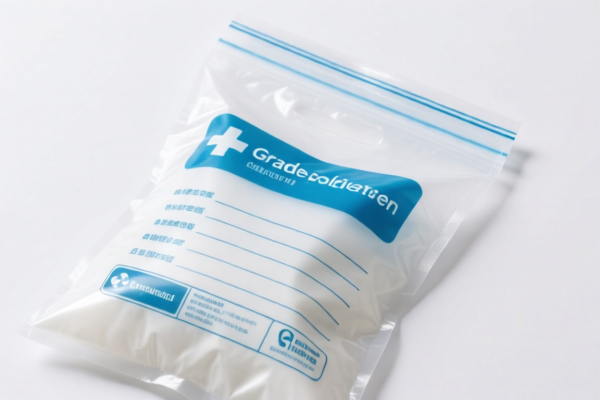
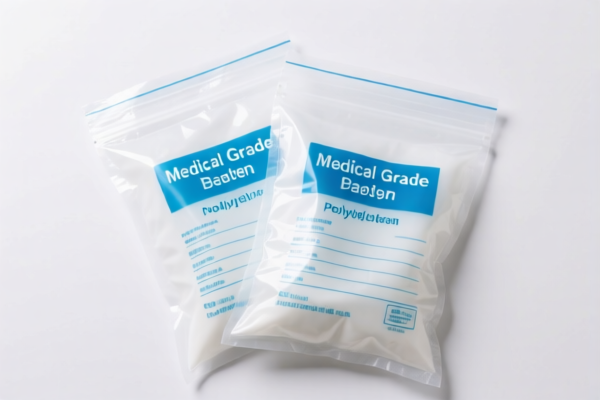
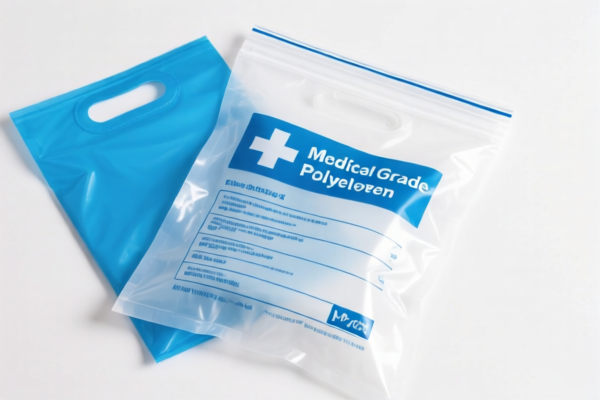
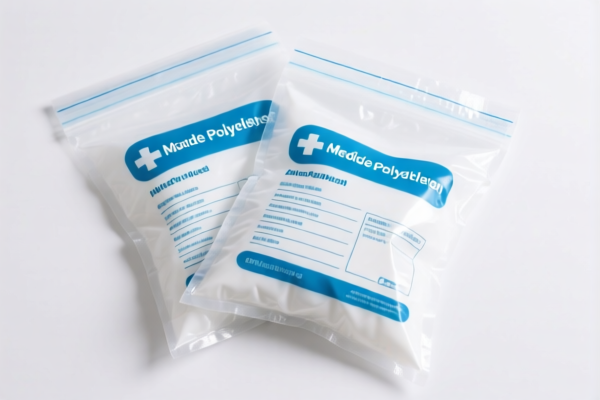
Medical Grade Polyethylene Bag
CN → US| HS Code | Tariff Rate | Origin | Destination | Doc |
|---|---|---|---|---|
| 3923210095 | 38.0% | CN | US | Official Doc |
| 3923290000 | 38.0% | CN | US | Official Doc |
| 3005905090 | 10.0% | CN | US | Official Doc |
| 3005901000 | 10.0% | CN | US | Official Doc |
Product Images
AI Analysis
🩺 Medical-Grade Polyethylene Bag
🌐 HS Code Reference & Customs Clearance Guide | 2026 Latest Tariff Analysis | Professional Import Strategy
📌 One, Product Definition & Classification: What Exactly Is a "Medical-Grade Polyethylene Bag"?
A medical-grade polyethylene bag is a specialized plastic packaging product designed for the safe containment, transport, and storage of medical materials, pharmaceuticals, sterile supplies, or biological specimens. It is manufactured under strict quality control standards to meet healthcare safety requirements.
⚠️ Key Distinguishing Features: - Made from polyethylene (PE) — specifically high-density (HDPE) or low-density (LDPE) polymers; - Used in medical, surgical, dental, or veterinary applications; - May be sterile, non-sterile, or pre-sterilized; - Often used for disposable items, waste containment, fluid collection, or drug packaging; - Not intended for food contact unless explicitly certified.
🔍 Critical Clarification: - If the bag is used solely for medical purposes and not for food or general goods, it falls under medical packaging; - If it is impregnated or coated with pharmaceutical substances, it may be classified differently (e.g., 3005.90.10.00).
📦 Two, HS Code Classification Details (2026 Official Tariff Match)
| HS Code | Product Description | Applicable Use Case | Tax Status |
|---|---|---|---|
3923.21.00.95 |
Articles for the conveyance or packing of goods, of plastics; stoppers, lids, caps and other closures, of plastics: Sacks and bags (including cones): Of polymers of ethylene (e.g., HDPE, LDPE), Other | Medical-grade polyethylene bags used for sterile packaging, specimen collection, or surgical waste; not coated or impregnated with drugs | ✅ High Tax |
3923.29.00.00 |
Sacks and bags (including cones): Of other plastics (e.g., PP, PVC, PET) | Bags made from non-ethylene plastics; not applicable to PE bags | ✅ No Duty |
3005.90.10.00 |
Wadding, gauze, bandages, dressings, adhesive plasters, poultices: Coated or impregnated with pharmaceutical substances | If the bag is treated with drugs (e.g., antimicrobial coating), it falls here | ✅ No Duty |
3005.90.50.90 |
Other: Other, not coated/impregnated | If the bag is used in medical settings but not drug-impregnated, this may apply | ✅ No Duty |
📌 Important Note:
- Only3923.21.00.95applies to medical-grade polyethylene bags made from ethylene polymers (e.g., HDPE/LDPE) and not impregnated with drugs; - If the bag is coated with a drug (e.g., antiseptic, antibiotic), it must be classified under 3005.90.10.00 — not under 3923.21.00.95.
💰 Three, 2026 Latest Tariff Breakdown (With附加 Taxes & Policy Rules)
✅ Applicable Country: United States (US)
✅ Origin: China (CN)
✅ Effective Date: November 10, 2025 (and ongoing)
🎯 1. 3923.21.00.95 — Polyethylene Bags (Medical Use, Not Drug-Impregnated)
| Item | Detail |
|---|---|
| Base Tariff | 3.0% (ad valorem) |
| Additional Tariff (Section 301) | +25.0% (from USITC Footnote 9903.88.01) |
| Total Effective Tariff | 28.0% |
| Tax Calculation | CIF Value × 28.0% |
| De Minimis Threshold | ❌ Not applicable (denied under US law) |
| Legal Basis Path | USITC:3923.21.00.95 → FOOTNOTE:9903.88.01 → IEEPA:9903.01.25 |
📌 Explanation: - The 25% additional tariff is imposed under Section 301 of the U.S. Trade Act due to China’s alleged unfair trade practices; - The 3% base tariff applies to all polyethylene bags; - No exemption — even if the bag is medical-grade, the 28% total applies; - No de minimis relief — even if value is under $800, you must pay full 28%.
🎯 2. 3923.29.00.00 — Sacks & Bags of Other Plastics (e.g., PP, PVC)
| Item | Detail |
|---|---|
| Base Tariff | 0.0% |
| Additional Tariff | 0.0% |
| Total Effective Tariff | 0.0% |
| Tax Calculation | CIF × 0.0% |
| De Minimis Threshold | ✅ Yes — eligible for $800 de minimis exemption |
| Legal Basis Path | 3923.29.00.00 → No additional tariffs |
📌 Note: - This code does NOT apply to polyethylene bags; - Only for non-ethylene plastics — e.g., polypropylene (PP), PVC, PET; - Zero tariff, eligible for de minimis — ideal for small shipments.
🎯 3. 3005.90.10.00 — Coated/Impregnated with Pharmaceutical Substances
| Item | Detail |
|---|---|
| Base Tariff | 0.0% |
| Additional Tariff | 0.0% |
| Total Effective Tariff | 0.0% |
| Tax Calculation | CIF × 0.0% |
| De Minimis Threshold | ✅ Yes — eligible for $800 de minimis |
| Legal Basis Path | 3005.90.10.00 → No additional tariffs |
📌 Critical Rule: - Only applies if the bag is actually coated or impregnated with a drug (e.g., antimicrobial, antiseptic, antibiotic); - If the bag is only used in medical settings but not chemically treated, do NOT use this code; - Misclassification → penalties, delays, or seizure.
🛠️ Four, Customs Clearance Best Practices (Pro Tips to Avoid Penalties)
✅ 1. Required Documentation (Must-Have Checklist)
| Document | Required? | Why It Matters |
|---|---|---|
| ✅ Commercial Invoice | ✔️ | Must clearly state: "Medical-Grade Polyethylene Bag, Non-Drug Impregnated, for Surgical Use" |
| ✅ Product Specifications | ✔️ | Include material (HDPE/LDPE), thickness, dimensions, sterilization status |
| ✅ Certificate of Analysis (CoA) | ✔️ | Prove material compliance (e.g., USP, ISO 13485, FDA-regulated) |
| ✅ Sterility Certificate (if applicable) | ✔️ | Required for sterile medical packaging |
| ✅ Packing List | ✔️ | Show quantity, weight, and packaging type |
| ✅ Bill of Lading / Air Waybill | ✔️ | For customs tracking |
| ✅ Certificate of Origin (CO) | ✔️ | If origin is China, 28% tariff applies; if from Vietnam/Mexico, may qualify for exemption |
✅ 2.申报技巧 (Key Rules for Accurate Classification)
🔥 "Material First, Use Second, Drug Last — Wrong Code = 28% Penalty!"
| Scenario | Correct HS Code | Wrong Code | Risk |
|---|---|---|---|
| Medical PE bag, not drug-treated, made from ethylene polymer | 3923.21.00.95 |
3923.29.00.00 |
28% tariff applied → underpayment |
| PE bag coated with antiseptic | 3005.90.10.00 |
3923.21.00.95 |
Wrong classification → fines, seizure |
| PP bag used in hospital | 3923.29.00.00 |
3923.21.00.95 |
Unnecessary 28% tax → cost waste |
| Small shipment (<$800), non-PE bag | 3923.29.00.00 |
3923.21.00.95 |
De minimis applies — no need to pay |
✅ 3. Special Cases & Solutions
| Situation | Recommended Action |
|---|---|
| Bag is sterile but not drug-impregnated | Use 3923.21.00.95 — 28% tariff applies |
| Bag is antimicrobial-coated | Use 3005.90.10.00 — 0% tariff, but must prove coating |
| Shipment from Vietnam/Mexico | Request CO origin — may qualify for IEEPA/Section 301 exemption |
| Small parcel (<$800) | If not PE-based, use 3923.29.00.00 — $800 de minimis applies |
| Re-imported used bags | May be subject to antique or used goods rules — consult customs |
🌍 Five, Global Market Comparison (2026 Update)
| Country/Region | Recommended HS Code | Tariff | Certification Required | Notes |
|---|---|---|---|---|
| 🇺🇸 United States | 3923.21.00.95 |
28% (China origin) | FDA, ISO 13485, USP | No de minimis |
| 🇨🇳 China | 3923.21.00.95 |
5% | CCC, ISO 13485 | No additional tariffs |
| 🇪🇺 European Union | 3923.21.00.95 |
0% (if CE) | CE, ISO 13485 | No additional tariffs |
| 🇦🇺 Australia | 3923.21.00.95 |
5% | RCM | No additional tariffs |
| 🇯🇵 Japan | 3923.21.00.95 |
0% | PSE | No additional tariffs |
📌 Key Insight:
- The U.S. is the only market with a 28% tariff on medical-grade PE bags from China; - All other major markets have 0–5% tariffs; - Shift production to Vietnam/Mexico to avoid 28% tariff.
📌 Six, Common Mistakes & Risk Warnings (Avoid These!)
❌ Mistake 1: Using 3923.29.00.00 for a polyethylene bag
👉 Result: Underpayment of 28% → penalties + interest + seizure
❌ Mistake 2: Declaring a drug-coated bag as 3923.21.00.95
👉 Result: Misclassification → fines, recall, legal action
❌ Mistake 3: Not providing material proof (e.g., CoA, specs)
👉 Result: Customs may reject classification → delayed release
❌ Mistake 4: Assuming de minimis applies to PE bags
👉 Result: $800 exemption does NOT apply to 3923.21.00.95 — must pay 28%
✅ Correct Declaration Example:
"Medical-Grade Polyethylene Bag, HDPE, 100µm thickness, non-sterile, for specimen transport, not impregnated with pharmaceuticals, Model XYZ, CoA & ISO 13485 Certified"
🎯 Seven, Conclusion: Precision in Classification = Profit Protection!
🎯 Remember the Golden Rule:
🔹 "If it's PE, not drug-coated, and from China → 28% tariff!"
🔹 "If it's coated → 0% tariff, but prove it!"
🔹 "If it's not PE → 0% tariff, and de minimis applies!"
📌 Pro Tip:
✅ Apply for an Advance Ruling (Pre-Clearance) with U.S. Customs before shipment — avoid disputes and lock in the correct HS Code.
📣 Take Action Now:
📞 Contact a licensed customs broker + provide product specs + CoA
🚀 Apply for HS Code pre-ruling → avoid 28% surprise
🌐 Consider relocating production to Vietnam/Mexico to avoid Section 301 tariffs
✨ Professional Clearance Starts with Accurate Classification!
💼 Your next shipment could save you thousands — if you get the HS Code right!
Customer Reviews
About HS Code Classification
The Harmonized System (HS) is an internationally standardized nomenclature developed by the World Customs Organization (WCO) to classify traded products. Over 200 countries use the HS system as the basis for customs tariffs, trade statistics, and import/export regulations.
Each HS code follows a hierarchical structure:
- Chapter (2 digits) — Broad category of goods (e.g., Chapter 84: Machinery and Mechanical Appliances)
- Heading (4 digits) — More specific grouping within the chapter
- Subheading (6 digits) — Internationally standardized breakdown, used by all WCO member countries
- National subdivisions (8-10 digits) — Country-specific extensions for further classification, such as US HTSUS 10-digit codes
Correct HS code classification is essential for smooth customs clearance, accurate duty payment, and compliance with trade regulations. Misclassification can lead to customs delays, overpayment of duties, or penalties.
When importing from CN to US, the applicable tariff rates may include:
- Most-Favored-Nation (MFN) rate — The standard duty rate applied to WTO members
- General rate — Applied to countries without trade agreements
- Trade remedy duties — Additional tariffs such as Section 301 (anti-dumping), Section 232 (national security), or countervailing duties
The information provided on this page is for reference purposes only. For official classification, please consult with your local customs authority or a licensed customs broker.