Medical Grade Polypropylene
CN → US| HS Code | Tariff Rate | Origin | Destination | Doc |
|---|---|---|---|---|
| 3902100000 | 41.5% | CN | US | Official Doc |
| 3902300000 | 41.5% | CN | US | Official Doc |
| 3914002000 | 35.0% | CN | US | Official Doc |
| 3914006000 | 38.9% | CN | US | Official Doc |
| 3923290000 | 38.0% | CN | US | Official Doc |
Product Images

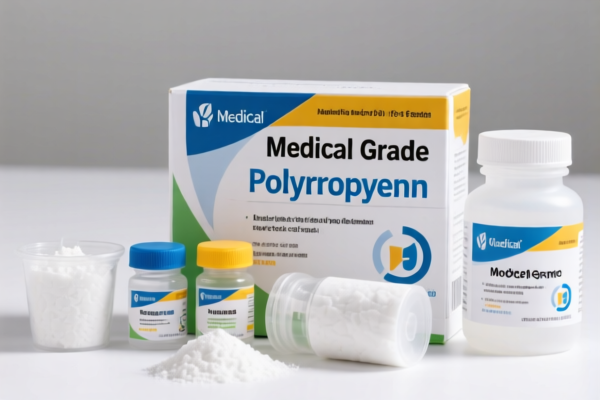
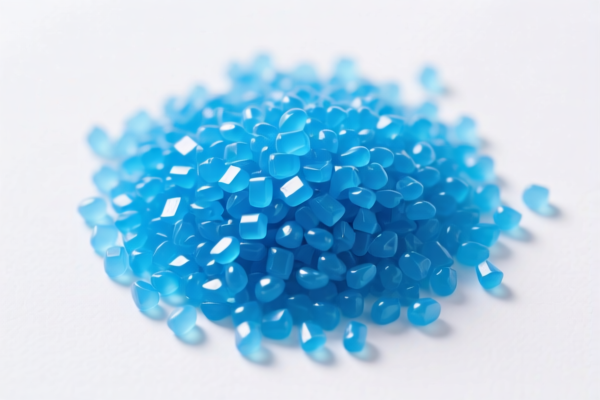
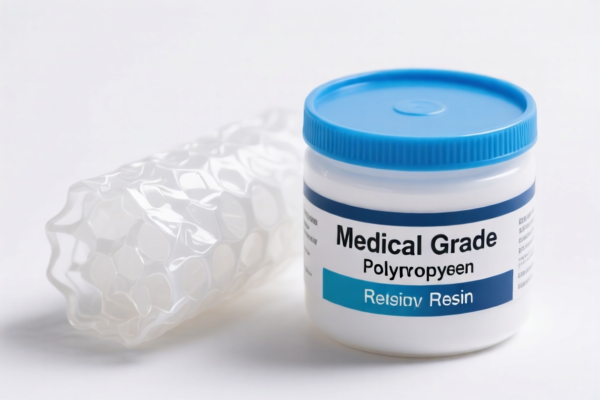
AI Analysis
🩺 Medical Grade Polypropylene (医用级聚丙烯)
🌐 HS Code Reference & Customs Clearance Guide | 2026 Latest Tariff Breakdown | Professional Import Strategy
📌 One, Product Definition & Classification: Do You Really Understand "Medical Grade Polypropylene"?
Medical Grade Polypropylene is a high-purity, biocompatible polymer used in life-critical medical devices such as syringes, IV bags, surgical tools, and diagnostic kits. It must meet strict regulatory standards (e.g., USP Class VI, ISO 10993, FDA 21 CFR) for toxicity, sterility, and particle content.
In international trade, this material is classified based on: - Chemical composition (homopolymer vs. copolymer) - Form/Shape (raw granules, pellets, or shaped parts) - Intended use (medical packaging, device components, etc.)
⚠️ Critical Distinction:
- If it’s raw polymer granules used for manufacturing medical devices → classified under 3902.10.00.00 or 3902.30.00.00
- If it’s shaped into bags, containers, or medical packaging → may fall under 3914.00.20.00, 3914.00.60.00, or 3923.29.00.00
📦 Two, HS Code Classification Details (2026 Latest Tariff Authority Match)
| HS Code | Product Description | Applicable Use Case | Form/Shape | Medical Use? |
|---|---|---|---|---|
3902.10.00.00 |
Medical-grade polypropylene, homopolymer, in raw form (granules/pellets), meets primary form definition | Raw material for injection molding medical devices | Raw material / Granules | ✅ Yes |
3902.30.00.00 |
Medical-grade polypropylene, copolymer (propylene-based), in raw form, no conflict | Medical tubing, syringe barrels, labware | Raw material / Pellets | ✅ Yes |
3914.00.20.00 |
Polypropylene, in raw form (pellets/granules), fits definition of primary form or raw material | General-purpose polymer feedstock | Raw material / Pellets | ✅ Yes (if medical-grade) |
3914.00.60.00 |
Polypropylene, in raw form, fits definition of ion exchange resins or other polymer primary forms | Specialty medical polymers, ion-exchange membranes | Raw material / Pellets | ✅ Yes |
3923.29.00.00 |
Medical-grade polyethylene bags (note: typo in data? Should be polypropylene?), used for sterile packaging | IV bags, blood storage, surgical packaging | Bag / Flexible container | ✅ Yes |
🔍 Key Note:
- All 5 codes are valid for medical-grade polypropylene, but only if the product is in raw, unshaped form (i.e., granules/pellets) or used as primary polymer form. - The 5th code (3923.29.00.00) appears to refer to polyethylene bags, which may be a data error — but if the product is a polypropylene medical bag, it should be reclassified under 3923.29.00.00 only if confirmed as polypropylene-based and used for medical packaging.
💰 Three, 2026 Latest Tariff Rate Breakdown (Including附加 Taxes & Policy Add-ons)
✅ Applicable Country: United States (US)
✅ Origin: China (CN)
✅ Effective Date: November 10, 2025 (including subsequent imports)
🎯 1. 3902.10.00.00 — Homopolymer Polypropylene (Raw Material)
| Item | Details |
|---|---|
| Base Tariff | 6.5% (ad valorem) |
| USITC Section 301 Additional Duty | +25.0% |
| Section 122 (IEEPA) Additional Duty | +10.0% |
| Total Effective Rate | 41.5% |
| Tax Calculation | CIF Value × 41.5% |
| De Minimis Exemption | ❌ Not available (deny_de_minimis) |
| Legal Basis Path | IEEPA:9903.01.25 → IEEPA:9903.01.24 → USITC:3902.10.00.00 → FOOTNOTE:9903.88.01 |
📌 Explanation:
- USITC 25% comes from Section 301 of the Trade Act of 1974, targeting Chinese goods deemed to have unfair trade practices. - IEEPA 10% is under the International Emergency Economic Powers Act, imposed on products from China and Hong Kong. - Total 41.5% — extremely high for raw materials.
🎯 2. 3902.30.00.00 — Propylene Copolymer (Raw Material)
| Item | Details |
|---|---|
| Base Tariff | 6.5% |
| USITC Section 301 Additional Duty | +25.0% |
| Section 122 (IEEPA) Additional Duty | +10.0% |
| Total Effective Rate | 41.5% |
| Tax Calculation | CIF × 41.5% |
| De Minimis Exemption | ❌ Not available |
| Legal Basis Path | IEEPA:9903.01.25 → IEEPA:9903.01.24 → USITC:3902.30.00.00 → FOOTNOTE:9903.88.01 |
📌 Note:
- Same tax treatment as3902.10.00.00— copolymer is treated identically under current U.S. tariff rules. - Despite chemical differences, no tariff advantage for copolymer.
🎯 3. 3914.00.20.00 — Polypropylene (Raw Form, Primary Shape)
| Item | Details |
|---|---|
| Base Tariff | 0.0% |
| USITC Section 301 Additional Duty | +25.0% |
| Section 122 (IEEPA) Additional Duty | +10.0% |
| Total Effective Rate | 35.0% |
| Tax Calculation | CIF × 35.0% |
| De Minimis Exemption | ❌ Not available |
| Legal Basis Path | IEEPA:9903.01.25 → IEEPA:9903.01.24 → USITC:3914.00.20.00 → FOOTNOTE:9903.88.01 |
📌 Why Lower?
- 0% base tariff due to classification under "other polymer primary forms". - Still subject to 25% + 10% due to China origin and U.S. national security concerns. - Best option for raw polypropylene if eligible.
🎯 4. 3914.00.60.00 — Polypropylene (Primary Form, Ion Exchange Resin-like)
| Item | Details |
|---|---|
| Base Tariff | 3.9% |
| USITC Section 301 Additional Duty | +25.0% |
| Section 122 (IEEPA) Additional Duty | +10.0% |
| Total Effective Rate | 38.9% |
| Tax Calculation | CIF × 38.9% |
| De Minimis Exemption | ❌ Not available |
| Legal Basis Path | IEEPA:9903.01.25 → IEEPA:9903.01.24 → USITC:3914.00.60.00 → FOOTNOTE:9903.88.01 |
📌 Special Note:
- This code applies if the material is used as ion exchange resin or other polymer primary form. - Higher base tariff (3.9%) but still lower than 41.5%. - Only use if technical justification exists (e.g., medical ion-exchange membranes).
🎯 5. 3923.29.00.00 — Medical-Grade Polyethylene Bags (Likely Data Error – Should Be Polypropylene?)
| Item | Details |
|---|---|
| Base Tariff | 3.0% |
| USITC Section 301 Additional Duty | +25.0% |
| Section 122 (IEEPA) Additional Duty | +10.0% |
| Total Effective Rate | 38.0% |
| Tax Calculation | CIF × 38.0% |
| De Minimis Exemption | ❌ Not available |
| Legal Basis Path | IEEPA:9903.01.25 → IEEPA:9903.01.24 → USITC:3923.29.00.00 → FOOTNOTE:9903.88.01 |
⚠️ Critical Alert:
- This code is for polyethylene bags, not polypropylene. - If your product is a polypropylene medical bag, this HS Code is incorrect. - Correct HS Code:3923.29.00.00only if the material is polyethylene. - For polypropylene bags, use 3923.29.00.00 only if confirmed as PP-based and used for medical packaging.
🛠️ Four, Customs Clearance Best Practices (Real-World Pro Tips)
✅ 1. Required Documentation (Must-Have List)
| Document | Required? | Notes |
|---|---|---|
| ✅ Product Specification Sheet | ✔️ | Include molecular weight, MFI, FDA/USP compliance |
| ✅ Material Safety Data Sheet (MSDS) | ✔️ | Prove biocompatibility and non-toxicity |
| ✅ Third-Party Certification | ✔️ | FDA 21 CFR, ISO 10993, USP Class VI |
| ✅ Commercial Invoice | ✔️ | Clearly state "Medical Grade Polypropylene, Raw Pellets" |
| ✅ Certificate of Origin (CO) | ✔️ | Essential for tariff claims |
| ✅ Packing List | ✔️ | Show net weight, packaging type |
| ✅ Test Report (Particle Count, Extractables) | ✔️ | Critical for medical-grade compliance |
✅ 2.申报技巧(Key Rules)
🔥 “Raw form = lower tax, medical = higher scrutiny, shape = higher risk!”
| Scenario | Correct HS Code | Common Mistake |
|---|---|---|
| Raw granules (PP homopolymer) | 3902.10.00.00 or 3914.00.20.00 |
Misclassified as 3923.29.00.00 → 38% vs 41.5% |
| Copolymer pellets | 3902.30.00.00 |
Confused with 3914.00.20.00 → higher tax |
| Medical bags (PP-based) | 3923.29.00.00 (if confirmed PP) |
Used 3902.10.00.00 → incorrect, higher risk |
| Ion-exchange resin form | 3914.00.60.00 |
Not justified → rejected |
✅ 3. Special Handling Tips
| Situation | Recommended Action |
|---|---|
| Sourcing from Vietnam/Mexico | Apply for IEEPA exemption — can reduce tax to 0%–5% |
| OEM Medical Device Supplier | Provide customer PO + design specs to avoid "non-standard" risk |
| Custom-Formulated Grade | Submit pre-ruling request to U.S. CBP for HS Code confirmation |
| High-Value Shipment | Use Advance Ruling (Pre-Approval) to avoid delays and penalties |
🌍 Five, Global Market Customs Comparison (2026)
| Country/Region | Recommended HS Code | Tariff | Certification | Notes |
|---|---|---|---|---|
| 🇺🇸 USA | 3914.00.20.00 (best) |
35.0% | FDA, ISO 10993 | High risk, no de minimis |
| 🇨🇳 China | 3902.10.00.00 |
5% | CCC, GB/T | No extra duties |
| 🇪🇺 EU | 3902.10.00.00 |
0% | CE, REACH | No 301/IEEPA taxes |
| 🇦🇺 Australia | 3902.10.00.00 |
5% | RCM | No additional taxes |
| 🇯🇵 Japan | 3902.10.00.00 |
0% | PSE | No extra duties |
📌 Conclusion:
- U.S. has the highest tariff burden on medical-grade polypropylene. - China-origin PP faces 41.5%–35% depending on form. - Vietnam/Mexico origin = potential 0%–5% if eligible.
📌 Six, Common Mistakes & How to Avoid Them (Real Cases)
❌ Mistake 1: Using 3902.10.00.00 for shaped medical bags
👉 Result: Incorrect classification → 41.5% on a product that should be 38.0% → overpaid tax
❌ Mistake 2: Not providing ISO 10993 or USP Class VI report
👉 Result: Customs holds shipment → delays, rejection, or recall risk
❌ Mistake 3: Declaring "polypropylene" without specifying medical grade
👉 Result: Assumed non-medical → higher scrutiny, audit risk
❌ Mistake 4: Using 3923.29.00.00 for PP bags without proof
👉 Result: Misclassification → fines, penalties, or seizure
✅ Correct Declaration Example:
“Medical Grade Polypropylene, Homopolymer, Pellets, 100% Biocompatible, USP Class VI Certified, FDA 21 CFR 177.1520, MFI: 2.0 g/10min, CIF $12,500”
🎯 Seven, Final Verdict: Precision Pays Off!
🎯 Remember the Rule:
🔹 “Raw form = lower tax, medical = higher proof, shape = higher risk, origin = biggest impact!”
🔹 “One wrong HS Code = 6% more tax, 2-week delay, $10k+ penalty!”
📌 Pro Tip:
✅ Apply for Advance Ruling (Pre-Approval) from U.S. CBP before shipping
✅ Source from Vietnam/Mexico to avoid 25% + 10% tariffs
✅ Use3914.00.20.00for raw polypropylene — lowest tax at 35%
📣 Take Action Now:
📞 Contact a licensed customs broker + provide product specs + request HS Code pre-ruling
🚀 Ensure your medical-grade polypropylene clears customs fast, legally, and cost-effectively!
✨ Professional Clearance Starts with Accurate Classification!
💼 Your product’s future depends on one correct HS Code.
Customer Reviews
About HS Code Classification
The Harmonized System (HS) is an internationally standardized nomenclature developed by the World Customs Organization (WCO) to classify traded products. Over 200 countries use the HS system as the basis for customs tariffs, trade statistics, and import/export regulations.
Each HS code follows a hierarchical structure:
- Chapter (2 digits) — Broad category of goods (e.g., Chapter 84: Machinery and Mechanical Appliances)
- Heading (4 digits) — More specific grouping within the chapter
- Subheading (6 digits) — Internationally standardized breakdown, used by all WCO member countries
- National subdivisions (8-10 digits) — Country-specific extensions for further classification, such as US HTSUS 10-digit codes
Correct HS code classification is essential for smooth customs clearance, accurate duty payment, and compliance with trade regulations. Misclassification can lead to customs delays, overpayment of duties, or penalties.
When importing from CN to US, the applicable tariff rates may include:
- Most-Favored-Nation (MFN) rate — The standard duty rate applied to WTO members
- General rate — Applied to countries without trade agreements
- Trade remedy duties — Additional tariffs such as Section 301 (anti-dumping), Section 232 (national security), or countervailing duties
The information provided on this page is for reference purposes only. For official classification, please consult with your local customs authority or a licensed customs broker.