Medical Grade Polystyrene Resin
CN → USProduct Images


AI Analysis
🧪 Medical Grade Polystyrene Resin (Medical-Grade PS Resin)
🌐 HS Code Reference & Customs Clearance Guide | 2026 Latest Tariff Analysis | Professional Logistics Strategy
📌 I. Product Definition & Classification: What is "Medical Grade PS"?
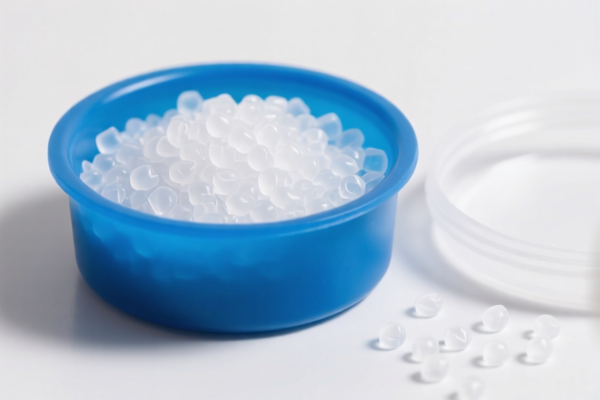
Medical Grade Polystyrene Resin refers to high-purity, transparent, rigid thermoplastic polymers specifically manufactured to meet stringent biocompatibility and purity standards for the medical industry. Unlike general-purpose polystyrene (GPPS), this resin is free from harmful plasticizers (like BPA), heavy metals, and excessive volatile organic compounds.
It is primarily used to manufacture disposable medical devices, including: 1. Blood Collection Tubes & Vacuum Tubes (e.g., purple/green tops). 2. Petri Dishes & Culture Plates. 3. IV Fluid Bottles & Bags (rigid components). 4. Diagnostic Device Components (cuvettes, sample holders).
⚠️ Key Distinction Point:
- If the product is raw resin pellets/granules → It falls under Chapter 39 (Plastics and Articles Thereof).
- If the product is finished medical devices (e.g., a pre-filled syringe) → It falls under Chapter 90 (Optical, Medical, Surgical Instruments).
- Crucial: This guide focuses on the Resin Material itself. If you are shipping finished medical devices, do NOT use the HS codes below; see Section IV for alternative codes.
📦 II. HS Code Classification Details (2026 Latest Tariff Alignment)
| HS Code | Product Description | Application Scenario | Medical Certification Required? |
|---|---|---|---|
3903.11.00.00 |
Polystyrene, in primary forms, non-cellular | Raw pellets for extrusion/molding of rigid medical parts | ✅ Yes (ISO 10993, USP Class VI) |
3903.90.00.00 |
Polystyrene, in primary forms, other (including cellular/expansible PS) | EPS foam for packaging medical devices or specialized insulated containers | ❌ Less strict, but still needs purity proof |
3907.20.00.00 |
Polyoxymethylene (POM) – Common Mistake! | Incorrect for PS. POM is used for syringe barrels. Do not confuse! | N/A |
🔍 Key Reminder:
-3903.11.00.00is the most common code for General Purpose Polystyrene (GPPS) used in medical clear tubes.
-3903.30.00.00is for High Impact Polystyrene (HIPS), also used in medical packaging, but less common for direct patient-contact tubing.
- Medical Grade is not a separate HS code; it is defined by the purity standard attached to the3903.11classification. Customs may require a Certificate of Analysis (CoA) proving compliance with USP Class VI or ISO 10993.
💰 III. 2026 Latest Tariff Rate Details (Including Surcharges & Policy Adjustments)
✅ Applicable Country: United States (US)
✅ Country of Origin: China (CN)
✅ Effective Date: November 10, 2025 onwards (subject to Section 301 and IEEPA)
🎯 1. 3903.11.00.00 —— Polystyrene, Non-Cellular (Medical Grade Raw Resin)
| Item | Content |
|---|---|
| Base Tariff Rate | 5.3% (Ad Valorem) |
| USITC Additional Tariff (Section 301) | +25% (Footnote 9903.88.01 covers many plastics) |
| IEEPA Additional Tariff | +10% (Targeting Chinese origin products, effective Nov 2025) |
| Total Tariff Rate | ~40.3% |
| Tax Calculation | CIF Value × 40.3% |
| De Minimis Eligibility | ❌ Not Eligible (Plastics are excluded from $800 de minimis exemption under current restrictions) |
| Legal Basis Path | IEEPA:9903.01.25 → USITC:3903.11.00.00 → FOOTNOTE:9903.88.01 |
📌 Interpretation:
- While the base rate is moderate (5.3%), the Section 301 tariff (+25%) and IEEPA surcharge (+10%) significantly increase the landed cost.
- Total effective duty is approximately 40.3%, making it expensive to import raw medical-grade resin from China to the US.
🎯 2. 3903.90.00.00 —— Other Polystyrene (e.g., Expandable PS for Packaging)
| Item | Content |
|---|---|
| Base Tariff Rate | 5.3% |
| USITC Additional Tariff (Section 301) | +25% |
| IEEPA Additional Tariff | +10% |
| Total Tariff Rate | ~40.3% |
| De Minimis Eligibility | ❌ Not Eligible |
| Legal Basis Path | IEEPA:9903.01.25 → USITC:3903.90.00.00 → FOOTNOTE:9903.88.01 |
📌 Note:
- Expandable Polystyrene (EPS) used for packaging medical devices faces the same high tariffs.
- If the EPS is used for insulation of vaccines, ensure the final product classification is correct (see Section IV).
🛠️ IV. Customs Clearance Practical Advice (Real-World Pitfall Avoidance)
✅ 1. Required Documentation Checklist (Non-Negotiable)
| Document | Must Provide | Explanation |
|---|---|---|
| ✅ Certificate of Analysis (CoA) | ✔️ Critical | Must prove USP Class VI, ISO 10993-5/10, and BPA-Free status. Customs may request this to verify "Medical Grade" claims and ensure no hazardous additives. |
| ✅ Product Specification Sheet | ✔️ | Includes Melt Flow Index (MFI), density, transparency, and intended use (e.g., "For Blood Tubes"). |
| ✅ Commercial Invoice | ✔️ | Clearly state: "Medical Grade Polystyrene Resin, Non-Cellular, Raw Pellets." Avoid vague terms like "Plastic Chips." |
| ✅ Bill of Lading (B/L) | ✔️ | Ensure package count and gross weight match the CoA. |
| ✅ FDA Prior Notice (if applicable) | ✔️ | If the resin is considered a "food contact material" or "drug packaging," FDA Prior Notice may be required under the Bioterrorism Act. |
| ✅ Letter of Intent / Purchase Agreement | ✔️ | Proves commercial transaction and final destination (medical device manufacturing). |
✅ 2. Declaration Tips (Key Mnemonic)
🔥 “Raw Resin = Chapter 39, Not Chapter 90! Purity Proof is Key!”
| Scenario | Correct Declaration | Wrong Approach |
|---|---|---|
| Raw Pellets for Blood Tubes | 3903.11.00.00 + CoA for USP Class VI |
Declare as "Finished Medical Device" → Wrong Chapter |
| EPS Foam for Vaccine Boxes | 3903.90.00.00 |
Declare as "Insulation Material" → Misclassification |
| Finished Syringes (POM/PS) | 9018.39.90.85 |
Use 3903 code → 40%+ tariff vs. 0-2% for devices |
| Plastic Bags for IV Fluids (PE) | 3926.90.97.80 |
Use 3903 code → Wrong material |
📌 Critical Distinction:
- Resin → Chapter 39 (Plastics).
- Medical Device (e.g., syringe, test tube, petri dish) → Chapter 90 (Medical Instruments).
- Error Risk: Shipping finished medical devices under3903codes may result in seizure for violating FDA regulations, as medical devices require 510(k) clearance, not just plastic purity.
✅ 3. Special Cases Handling
| Scenario | Handling Advice |
|---|---|
| Medical Device with PS Components | If you are shipping finished devices (e.g., IV bags made of PE/PS laminates), use 9018.39.90.85 (Syringes) or 9018.90.85.80 (Other medical devices). Tariffs may be 0% (if from countries with FTA) or low, but FDA clearance is mandatory. |
| BPA-Free Certification | Always attach a BPA-Free Certificate. EU and US customs increasingly inspect for hazardous substances. |
| Recycled Medical-Grade PS | If using recycled PS, it may fall under 3902.10.00.00 (Polypropylene) or specific recycled codes. Note: Recycled medical-grade resin is rare due to contamination risks. |
| Antibacterial PS | If PS is compounded with silver ions or antibacterial agents, it may be classified as a chemical product (3808) or still 3903, but requires EPA/FDA registration for the additive. |
🌍 V. Global Market Customs Comparison (2026 Latest)
| Country/Region | Recommended HS Code | Tariff Rate (China Origin) | Certification Requirements | Notes |
|---|---|---|---|---|
| 🇺🇸 USA | 3903.11.00.00 |
~40.3% (incl. 301 & IEEPA) | USP Class VI, FDA Prior Notice | High tariff; ensure BPA-Free proof |
| 🇪🇺 EU | 3903.11.00 |
0% (Most countries) | REACH, RoHS, ISO 10993 | Lower duty, but strict REACH compliance |
| 🇬🇧 UK | 3903.11.00 |
0% | UKCA, REACH-UK | Post-Brexit rules apply; REACH-UK mandatory |
| 🇨🇳 China | 3903.11.00.00 |
5.5% | CCC (if specific uses), GB Standards | Import duty moderate; VAT 13% applies |
| 🇯🇵 Japan | 3903.11.00.00 |
0% | JIS, PSE (if electronic parts) | Free trade; strict quality control |
📌 Conclusion:
- USA is the most expensive market for medical-grade PS resin due to Section 301 & IEEPA tariffs.
- EU/UK/Japan offer 0% tariff but have strict chemical regulations (REACH, RoHS).
- China Origin Resin benefits from 0% tariff in Japan and EU, making these markets more attractive for high-purity materials.
📌 VI. Common Mistakes & Pitfall Guide (Lessons Learned)
❌ Mistake 1: Declaring finished medical devices (e.g., syringes) as raw resin (3903).
👉 Consequence: Seizure by FDA, fines for unregistered medical devices, and back-tariffs.
✅ Correct: Declare as 9018.39.90.85 with FDA 510(k) number.
❌ Mistake 2: Ignoring BPA-Free certification for medical-grade PS.
👉 Consequence: Customs inspection delay, potential rejection under Toxic Substances Control Act (TSCA) in the US.
✅ Correct: Always attach a BPA-Free Certificate and Material Safety Data Sheet (MSDS).
❌ Mistake 3: Confusing Polystyrene (PS) with Polypropylene (PP) or Polyethylene (PE) in IV bags.
👉 Consequence: Wrong HS code (3901 or 3902), leading to tariff miscalculation.
✅ Correct: Verify material type. PS is rigid/clear (tubes, dishes); PP/PE is flexible (bags).
❌ Mistake 4: Shipping recycled medical-grade PS without proper cleaning proof.
👉 Consequence: Rejected by FDA for cross-contamination risks.
✅ Correct: Provide cleaning process documentation and recycling stream proof.
✅ Correct Declaration Example:
"Medical Grade Polystyrene Resin, Non-Cellular, Raw Pellets, BPA-Free, USP Class VI Compliant, for Manufacturing Blood Collection Tubes. Model: PS-MED-001. HS Code: 3903.11.00.00."
🎯 VII. Conclusion: Professional Clearance, Cost Efficiency, and Compliance!
🎯 Remember the Mnemonic:
🔹 "Raw Resin = 3903, Finished Device = 9018!"
🔹 "Medical Grade = BPA-Free + USP Class VI, No Proof = No Entry!"
🔹 "USA Tariff = 40%, EU = 0%, But REACH is Hard!"
📌 Pro Tip:
If you are importing finished medical devices made from PS, do not use the resin codes above. Use
9018.39.90.85(Syringes) or9018.90.85.80(Other medical instruments).
For raw resin, consider supply chain diversification (e.g., sourcing from Korea, Taiwan, or Europe) to avoid Section 301 tariffs in the US.
📣 Immediate Action:
📞 Contact your customs broker before shipment.
📄 Prepare CoA, MSDS, and BPA-Free Certificate.
🚀 Ensure FDA Prior Notice is filed if applicable.
💼 Professional clearance starts with accurate classification and documentation!
✨ Expert Customs Clearance, Starting with Precise Classification!
💼 Every dollar of duty you save is a dollar of profit you keep!
Customer Reviews
About HS Code Classification
The Harmonized System (HS) is an internationally standardized nomenclature developed by the World Customs Organization (WCO) to classify traded products. Over 200 countries use the HS system as the basis for customs tariffs, trade statistics, and import/export regulations.
Each HS code follows a hierarchical structure:
- Chapter (2 digits) — Broad category of goods (e.g., Chapter 84: Machinery and Mechanical Appliances)
- Heading (4 digits) — More specific grouping within the chapter
- Subheading (6 digits) — Internationally standardized breakdown, used by all WCO member countries
- National subdivisions (8-10 digits) — Country-specific extensions for further classification, such as US HTSUS 10-digit codes
Correct HS code classification is essential for smooth customs clearance, accurate duty payment, and compliance with trade regulations. Misclassification can lead to customs delays, overpayment of duties, or penalties.
When importing from CN to US, the applicable tariff rates may include:
- Most-Favored-Nation (MFN) rate — The standard duty rate applied to WTO members
- General rate — Applied to countries without trade agreements
- Trade remedy duties — Additional tariffs such as Section 301 (anti-dumping), Section 232 (national security), or countervailing duties
The information provided on this page is for reference purposes only. For official classification, please consult with your local customs authority or a licensed customs broker.