Medical Imaging Film
CN → US| HS Code | Tariff Rate | Origin | Destination | Doc |
|---|---|---|---|---|
| 3701996060 | 35.0% | CN | US | Official Doc |
| 3701100030 | 38.7% | CN | US | Official Doc |
| 3705000000 | 35.0% | CN | US | Official Doc |
| 3702320130 | 38.7% | CN | US | Official Doc |
| 2914691000 | 40.5% | CN | US | Official Doc |
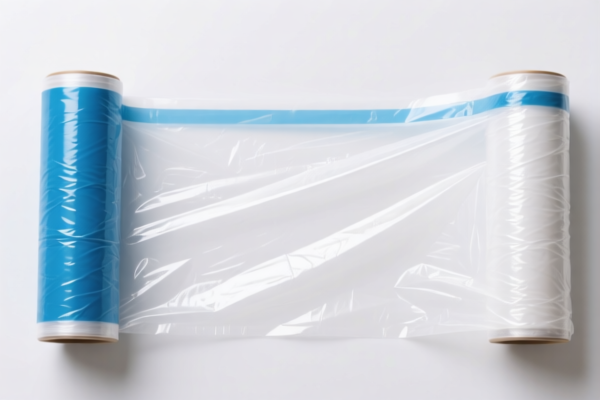
Product Images



AI Analysis
🎞️ Medical Imaging Microfilm (Photographic Film for Medical Use)
🌐 HS Code Reference & Customs Clearance Guide | 2026 Updated Tariff Analysis | Professional Level通关 Strategy
📌 Part 1: Product Definition & Classification: Do You Really Understand "Medical Imaging Film"?
Medical imaging microfilm refers to unexposed or exposed photographic film specifically used for recording, storing, and displaying medical diagnostic images (such as X-rays, CT scans, MRI, etc.). In international trade, it is primarily classified under Chapter 37 (Photographic or Cinematographic Goods).
The classification depends heavily on the physical state (unexposed vs. exposed) and the technical composition (silver halide emulsion, intermediate chemical intermediate, etc.).
⚠️ Key Distinction Point: - Unexposed Film: New, raw materials not yet used for imaging → Classified under 3701 (Photographic plates/film in the raw) or 3702 (Photographic film in strips). - Exposed/Developed Film: Already contains the medical image → Classified under 3705 (Photographic plates/film, exposed and developed). - Chemical Intermediate: If sold as a liquid/film substrate for manufacturing other chemicals → Classified under 2914 (Organic chemicals).
📦 Part 2: HS Code Classification Details (2026 Latest Tariff Authoritative Comparison)
Based on the provided data, here is the precise mapping of product states to HS Codes:
| HS Code | Product Description | Application Scenario | Key Characteristics | Total Tax |
|---|---|---|---|---|
3701.99.60.60 |
Medical Imaging Microfilm (Raw/Unexposed) | Raw materials, non-paper/textile, categorized under "other photographic plates/film" | Unexposed, generic classification for specific non-standard raw films | 35.0% |
3701.10.00.30 |
Medical Imaging Microfilm (Raw/Unexposed) | High-spec medical use, specific raw material classification | Unexposed, precise sub-category for medical-grade raw film | 38.7% |
3705.00.00.00 |
Medical Imaging Microfilm (Exposed/Developed) | Archived medical records, diagnostic reports, library storage | Already exposed and developed; contains the actual image | 35.0% |
3702.32.01.30 |
Medical Imaging Microfilm (Raw/Unexposed) | Silver-halide emulsion film, high-sensitivity medical imaging | Unexposed, specific sub-category for silver-halide strip film | 38.7% |
2914.69.10.00 |
Medical Film Intermediate (Chemical Product) | Intermediate product for film manufacturing, organic chemical with oxygen functional groups | NOT photographic film; sold as a chemical intermediate/raw organic compound | 40.5% |
🔍 Critical Note: - If the film is already used to record a patient's X-ray, it MUST be classified under
3705.00.00.00. Misclassifying exposed film as raw film (3701or3702) is a common customs error that leads to penalties. - If the product is a chemical coating or substrate not yet formed into standard photographic film, it might be classified under2914, but this is rare for final medical imaging products.
💰 Part 3: 2026 Latest Tariff Rate Details (Including Surcharges & Policy Add-ons)
✅ Applicable Country: United States (US)
✅ Origin: China (CN)
✅ Effective Date: November 10, 2025 (and subsequent imports)
🎯 1. 3701.99.60.60 & 3705.00.00.00 —— Unexposed & Exposed Medical Film (Standard Category)
| Item | Content |
|---|---|
| Base Tariff | 0% (ad valorem) |
| Section 301 Surcharge | +25% (USITC Footnote applicable to Chapter 37 goods from China) |
| IEEPA Surcharge | +10% (China/Hong Kong products, effective Nov 10, 2025) |
| Total Tax Rate | 35.0% |
| Calculation | CIF Value × 35% |
| De Minimis Exemption | ❌ Not Eligible (deny_de_minimis) |
| Legal Basis Path | USITC:3701.99.60.60 / USITC:3705.00.00.00 → FOOTNOTE:301 → IEEPA:9903.01.25 |
📌 Explanation: - The 0% base rate reflects the standard MFN (Most Favored Nation) duty for most photographic goods. - The 25% Section 301 tariff is applied due to trade tensions with China. - The 10% IEEPA tariff is an additional levy specifically targeting Chinese-origin goods under the International Emergency Economic Powers Act. - Total 35% is the fixed burden for these HS codes.
🎯 2. 3701.10.00.30 & 3702.32.01.30 —— High-Spec/Raw Medical Film (Specific Sub-categories)
| Item | Content |
|---|---|
| Base Tariff | 3.7% |
| Section 301 Surcharge | +25% |
| IEEPA Surcharge | +10% |
| Total Tax Rate | 38.7% |
| Calculation | CIF Value × 38.7% |
| De Minimis Exemption | ❌ Not Eligible (deny_de_minimis) |
| Legal Basis Path | USITC:3701.10.00.30 / USITC:3702.32.01.30 → FOOTNOTE:301 → IEEPA:9903.01.25 |
📌 Note: - These sub-categories have a 3.7% base tariff instead of 0%, resulting in a higher total rate. - This often applies to more specific or specialized raw film formats that are not covered by the general "other" category.
🎯 3. 2914.69.10.00 —— Chemical Intermediate (Organic Chemical)
| Item | Content |
|---|---|
| Base Tariff | 5.5% |
| Section 301 Surcharge | +25% |
| IEEPA Surcharge | +10% |
| Total Tax Rate | 40.5% |
| Calculation | CIF Value × 40.5% |
| De Minimis Exemption | ❌ Not Eligible (deny_de_minimis) |
| Legal Basis Path | USITC:2914.69.10.00 → FOOTNOTE:301 → IEEPA:9903.01.25 |
📌 Note: - This is the highest tax rate among the options. - This classification should only be used if the product is not a finished photographic film but a chemical raw material. Using this for finished film is a misdeclaration.
🛠️ Part 4: Customs Clearance Practical Advice (Combat Pitfalls Guide)
✅ 1. Document Preparation Checklist (All Required)
| Document | Required | Description |
|---|---|---|
| ✅ Product Specification Sheet | ✔️ | Must detail: Exposed vs. Unexposed, dimensions, sensitivity (D-max), emulsion type. |
| ✅ Photos of Product & Packaging | ✔️ | Clear labels showing "Medical Imaging Film," expiration date, and batch number. |
| ✅ Commercial Invoice | ✔️ | Must explicitly state "Medical Imaging Microfilm" and correct HS Code. Avoid vague terms like "Film Roll." |
| ✅ Certificate of Origin (CO) | ✔️ | Crucial for determining origin-based surcharges (China origin triggers +10% IEEPA). |
| ✅ FDA Registration Documentation | ✔️ | If classified as a medical device component, FDA pre-market notification may be required. |
| ✅ Declaration of Exposed/Unexposed Status | ✔️ | Critical: Explicitly state if the film is blank or already contains medical images. |
✅ 2. Declaration Tips (Key Mantras)
🔥 "Exposed vs. Raw, HS Code Changes Rate; Don't Mix, Or Face the Late Fee!"
| Scenario | Correct Declaration | Incorrect Action | Consequence |
|---|---|---|---|
| Blank Medical Film | 3701.10.00.30 or 3702.32.01.30 (38.7%) |
Declare as 3705 |
Underpayment of tax → Penalty |
| Blank Generic Film | 3701.99.60.60 (35.0%) |
Declare as 3701.10.00.30 |
Overpayment of tax (3.7% extra) |
| Already Developed X-rays | 3705.00.00.00 (35.0%) |
Declare as 3701 (Raw) |
High Risk: Customs may reject as "used goods" or misdeclaration |
| Chemical Coating Material | 2914.69.10.00 (40.5%) |
Declare as Photographic Film | Misclassification → Seizure |
✅ 3. Special Situations Handling
| Situation | Handling Advice |
|---|---|
| Patient Records (Exposed Film) | Declare as 3705.00.00.00. Ensure the invoice describes it as "Archived Diagnostic Film," not "New Film." |
| Bulk Raw Film Rolls | Clearly specify "Unexposed" and "For Medical Use." Provide lab test reports if requested. |
| OEM/White Label Products | Provide the contract with the US buyer specifying the technical specs to support the chosen HS code. |
| Small Samples (Under $800) | ❌ No De Minimis: Remember, deny_de_minimis applies. Even small shipments are subject to full customs duty + taxes. |
🌍 Part 5: Global Market Comparison (2026 Latest)
| Country/Region | Recommended HS Code | Tariff Rate (China Origin) | Certification Requirements | Notes |
|---|---|---|---|---|
| 🇺🇸 USA | 3701.99.60.60 / 3705.00.00.00 |
35.0% | FDA Registration (if applicable) | High barrier due to 301 & IEEPA taxes |
| 🇨🇳 China | 3701.99.60.60 / 3705.00.00.00 |
~3.7% - 5% (Import Duty) | N/A | Low tariff, no surcharges |
| 🇪🇺 EU | 3701 / 3705 |
0% - 3% (MFN) | CE Marking (if device component) | No Section 301/IEEPA surcharges |
| 🇯🇵 Japan | 3701 / 3705 |
0% - 3.2% | PMDA Approval (if medical device) | Stable tariff rates |
📌 Conclusion: - USA is the most expensive market for Chinese medical imaging film due to the combined 35%-40.5% tariff. - EU and Japan offer significantly lower duties, but require strict medical device compliance (CE/PMDA). - Cost Optimization: Consider if the product can be classified under a lower sub-category (e.g.,
3701.99.60.60at 35% vs3701.10.00.30at 38.7%) if technically feasible.
📌 Part 6: Common Errors & Pitfalls (Lessons from Blood and Tears)
❌ Error 1: Declaring exposed X-ray films as raw/unexposed film.
👉 Consequence: Customs detects image content → Accused of smuggling or misdeclaration → Seizure + Fine.
❌ Error 2: Using vague descriptions like "Photographic Paper" or "Film."
👉 Consequence: Customs officer assigns a default code → 39% Tax + Delay.
❌ Error 3: Ignoring the IEEPA 10% Surcharge in cost calculations.
👉 Consequence: Profit margin wiped out by unexpected 10% tax on top of 25% 301 tariff.
❌ Error 4: Treating 2914 (Chemical) as if it's film.
👉 Consequence: Wrong classification for a raw chemical product that is actually finished film → 40.5% Tax + Rejection.
✅ Correct Approach:
"Medical Imaging Microfilm, Unexposed, Silver Halide Emulsion, 9x12 inch, For X-Ray Diagnosis, Model XYZ, Raw Material for Medical Imaging"
🎯 Part 7: Conclusion: Professional Declaration, Save Time, Reduce Costs!
🎯 Remember the Mantras:
🔹 "Raw vs. Exposed, Choose Right HS Code."
🔹 "35% is the Baseline, 40.5% is the Trap."
🔹 "No De Minimis for China, Pay Every Penny from Day One."
📌 Pro Tip:
If your medical imaging film is sourced from Vietnam, Thailand, or Malaysia, you may be eligible for lower or zero surcharges under current trade agreements (check FTAs like CPTPP or RCEP).
It is highly recommended to apply for an Advance Ruling (Pre-classification) from US Customs (CBP) to confirm the exact HS code and tax liability before shipment.
📣 Take Action Now:
📞 Contact a licensed customs broker + Provide Product Specs + Apply for HS Code Pre-ruling
🚀 Ensure your medical imaging film clears US customs smoothly, legally, and cost-effectively!
✨ Professional Clearance Starts with Accurate Classification!
💼 Every Cent of Duty is Worth Calculating Precisely!
Customer Reviews
About HS Code Classification
The Harmonized System (HS) is an internationally standardized nomenclature developed by the World Customs Organization (WCO) to classify traded products. Over 200 countries use the HS system as the basis for customs tariffs, trade statistics, and import/export regulations.
Each HS code follows a hierarchical structure:
- Chapter (2 digits) — Broad category of goods (e.g., Chapter 84: Machinery and Mechanical Appliances)
- Heading (4 digits) — More specific grouping within the chapter
- Subheading (6 digits) — Internationally standardized breakdown, used by all WCO member countries
- National subdivisions (8-10 digits) — Country-specific extensions for further classification, such as US HTSUS 10-digit codes
Correct HS code classification is essential for smooth customs clearance, accurate duty payment, and compliance with trade regulations. Misclassification can lead to customs delays, overpayment of duties, or penalties.
When importing from CN to US, the applicable tariff rates may include:
- Most-Favored-Nation (MFN) rate — The standard duty rate applied to WTO members
- General rate — Applied to countries without trade agreements
- Trade remedy duties — Additional tariffs such as Section 301 (anti-dumping), Section 232 (national security), or countervailing duties
The information provided on this page is for reference purposes only. For official classification, please consult with your local customs authority or a licensed customs broker.