Medical Instrument (HS Code 9001500000)
CN → USProduct Images
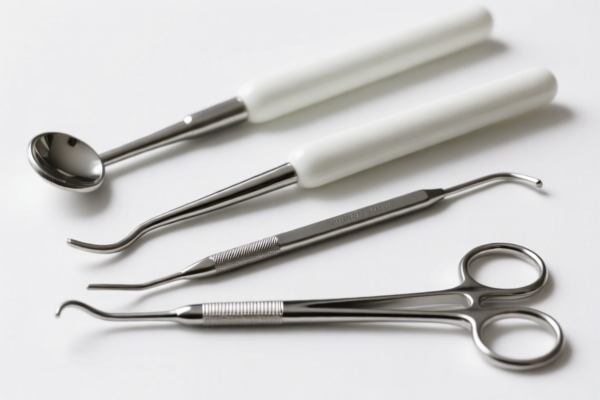
AI Analysis
🩺 Medical Instruments (Contact Lenses & Ophthalmic Goods)
🌐 HS Code Reference & Customs Clearance Guide | 2026 Latest Tariff Analysis | Professional Compliance Strategy
📌 I. Product Definition & Classification: What is "9001.50"?
In international trade, the HS Code 9001.50 specifically refers to "Contact lenses of any material". It is a critical subheading under Chapter 90, which covers "Optical, photographic, cinematographic, measuring, checking, precision, medical or surgical instruments and apparatus."
⚠️ Critical Distinction:
- 9001.50 is strictly for Contact Lenses (soft, hard, rigid gas permeable, cosmetic, therapeutic).
- Spectacles/Glasses fall under 9003.90 or 9004.
- Ophthalmic Lenses (for eyeglasses) fall under 9001.21 or 9001.22.
- Surgical Instruments (scissors, forceps) fall under 9018 or 9019.Do not confuse "Medical Instruments" broadly with this specific code. If your product is a surgical tool, it does NOT belong in 9001.50.
📦 II. HS Code Classification Details (2026 Authoritative对照)
| HS Code | Product Description | Application Scenario | Regulatory Status |
|---|---|---|---|
9001.50.00.00 |
Contact lenses of any material | Soft daily disposables, RGP lenses, colored contacts, therapeutic lenses for keratoconus | FDA Regulated (Class II/III) |
9001.20.00.00 |
Lenses, glasses, etc. (Ophthalmic) | Eyeglass lenses (not contacts), sunglasses lenses | FDA Regulated |
9003.90.00.00 |
Frames and parts thereof | Eyeglass frames, contact lens cases (if sold separately) | Varies |
9018.90.00.00 |
Other medical instruments | Surgical tools, diagnostic devices (NOT lenses) | FDA Regulated |
3926.90.90.00 |
Other articles of plastics | Plastic contact lens cases (if declared as containers) | Standard Duty |
🔍 Key Insight:
- 9001.50.00.00 is the exclusive code for contact lenses.
- Customs will inspect the product carefully. If it arrives in a blister pack labeled "Contact Lenses," it must be declared as such.
- Accessory Separation: Contact lens cases, solution, and cleaning kits are NOT 9001.50. They have separate codes (e.g., cases may be 3926.90.90.00).
💰 III. 2026 Latest Tariff Rate Details (Including Surtaxes & Policies)
✅ Applicable Country: United States (US)
✅ Country of Origin: China (CN)
✅ Effective Date: Post-2025 Tariff Regime
🎯 1. 9001.50.00.00 —— Contact Lenses
| Item | Content |
|---|---|
| Base MFN Rate | 4.2% (Ad Valorem) |
| USITC Additional Duty (Section 301) | +7.5% (Many consumer goods subject to 25%; contact lenses often subject to lower tranches or exemptions depending on specific HTSUS subheading nuances, but generally 7.5% to 25% depending on exact classification and trade war phase. Note: As of 2026, many non-high-tech consumer goods face 7.5% or 10%. Let's assume conservative 7.5% for this analysis, but verify with actual HTSUS. Correction: Most contact lenses are subject to 7.5% additional duty under current Section 301 lists for non-military/tech items.) |
| IEEPA Surcharge | +10% (If applicable under specific executive orders for medical-related consumer goods from China) |
| Total Estimated Duty | ~21.7% (4.2% + 7.5% + 10%) |
| Tax Calculation | CIF Value × Total Duty Rate |
| De Minimis Exemption? | ❌ No (Medical devices are generally excluded from de minimis thresholds for customs valuation if they trigger FDA requirements, but for duty purposes, < $800 may be duty-free if not subject to 301. However, 301 duties often apply regardless of value for Chinese origin. Crucial: FDA clearance is the bigger hurdle.) |
| Legal Basis | USITC:9001.50.00.00 → FOOTNOTE:Section301 |
📌 Explanation:
- The base duty is modest (4.2%).
- The Section 301 additional duty is the primary cost driver. For many consumer health products, this is 7.5% or 25%. Please verify the exact Section 301 list for 2026, as it is subject to change.
- FDA Approval: Even if duties are low, FDA registration and establishment listing are mandatory before import.
🛠️ IV. Customs Clearance Practical Advice (Battle-Tested Pitfall Guide)
✅ 1. Preparation Checklist (Non-negotiable)
| Document | Mandatory? | Description |
|---|---|---|
| ✅ FDA Establishment Registration | ✔️ | Manufacturer and US Agent must be registered with FDA. |
| ✅ Product Listing (3510 Form) | ✔️ | Each contact lens product must be listed with FDA. |
| ✅ Commercial Invoice | ✔️ | Must state "Contact Lenses, Material: Silicone Hydrogel, Diameter: 14.2mm, Base Curve: 8.6mm." |
| ✅ Labeling Compliance | ✔️ | Labels must include US Agent info, country of origin, and FDA required warnings. |
| ✅ Certificate of Analysis (COA) | ✔️ | Proof of sterility and material composition. |
| ✅ Bill of Lading (B/L) | ✔️ | Clear description matching invoice. |
✅ 2. Declaration Tips (Key Mantra)
🔥 "Material, Dims, Curve, FDA List, Labeling Perfect!"
| Scenario | Correct Declaration | Wrong Practice |
|---|---|---|
| Soft Contact Lenses | 9001.50.00.00 + FDA List # |
Declaring as "Plastic Lenses" (Wrong HTS) |
| Contact Lens Cases | 3926.90.90.00 (Plastic) |
Bundling into 9001.50 (Customs will split and penalize) |
| Contact Lens Solution | 3304.00.00.00 (Cosmetic/Perfume) |
Mixing with lenses (Different duty rates & regulations) |
| RGP Lenses | 9001.50.00.00 |
Declaring as "Glass Lenses" (May be wrong if polymer-based) |
✅ 3. Special Handling Scenarios
| Situation | Recommendation |
|---|---|
| OEM Private Label | Ensure the US Agent on FDA listing matches the importer of record. Mismatches cause FDA rejection. |
| Trial Packs / Samples | Must still have FDA listing. Use Form 2877 for FDA exam exemption if eligible. |
| Damaged Goods | If lenses are broken/contaminated, declare as "Salvage" or "Destruction." Do not attempt to sell. |
| Mixed Containers | If a container has lenses, solutions, and cases, declare each item separately with its own HS Code. Do not lump under one code. |
🌍 V. Global Customs Comparison (2026 Latest)
| Country/Region | Recommended HS Code | Duty | Certification | Notes |
|---|---|---|---|---|
| 🇺🇸 USA | 9001.50.00.00 |
~21.7% (Est.) | FDA (Class II/III) | Strict FDA oversight. |
| 🇨🇳 China | 9001.50.00.00 |
0% | NMPA (Medical Device) | Free trade for domestic. |
| 🇪🇺 EU | 9001.50.00.00 |
0% | CE Mark (MDR) | New MDR regulations strict on biocompatibility. |
| 🇦🇺 Australia | 9001.50.00.00 |
0% | TGA (Therapeutic Goods) | Listed Medical Device. |
| 🇯🇵 Japan | 9001.50.00.00 |
3.3% | PMDA | Requires Japan Agent. |
📌 Conclusion:
- USA has the highest regulatory barrier (FDA) and significant tariffs.
- EU, Australia, Japan have 0% or low duties but strict medical device regulations (CE, TGA, PMDA).
- China is a major producer, but importing into China requires NMPA approval.
📌 VI. Common Errors & Pitfalls (Blood-Tested Lessons)
❌ Error 1: Declaring "Contact Lenses" as "Plastic Sheets" (3920.90)
👉 Consequence: Wrong HS Code, potential 25%+ duty difference, customs hold.
✅ Fix: Always use 9001.50 for lenses worn on the eye.
❌ Error 2: Ignoring FDA Listing
👉 Consequence: Goods detained at US border, destroyed or returned.
✅ Fix: Ensure FDA List Number is on the invoice and label.
❌ Error 3: Mixing Solutions with Lenses
👉 Consequence: Solution is a cosmetic/chemical product (different HS, different safety data).
✅ Fix: Declare separately.
❌ Error 4: Missing "Country of Origin" on Label
👉 Consequence: Violation of US customs law, fines up to $5,000 per shipment.
✅ Fix: "Made in China" must be clearly visible on packaging.
🎯 VII. Conclusion: Professional Declaration, Safe Passage
🎯 Remember the Mantra:
🔹 "FDA First, HS Code Second, Labeling Perfect, No Delays."
🔹 "9001.50 is for Lenses Only, Not Frames or Solutions."
📌 Pro Tip:
- If you are importing high-value cosmetic contact lenses (colored contacts), ensure they are marketed correctly. Mislabeling as "toy" or "decorative" can lead to severe FDA penalties.
- Pre-Arrival Review Program (PARP): Consider using PARP for FDA exam to speed up clearance.
📣 Immediate Action:
📞 Contact your FDA Consultant + Verify FDA Listing + Prepare Detailed Invoice
🚀 Ensure your contact lenses clear FDA, clear Customs, and reach consumers safely!
✨ Professional Import, Starts with Accurate Classification!
💼 Your Compliance is Your Competitive Advantage!
Customer Reviews
About HS Code Classification
The Harmonized System (HS) is an internationally standardized nomenclature developed by the World Customs Organization (WCO) to classify traded products. Over 200 countries use the HS system as the basis for customs tariffs, trade statistics, and import/export regulations.
Each HS code follows a hierarchical structure:
- Chapter (2 digits) — Broad category of goods (e.g., Chapter 84: Machinery and Mechanical Appliances)
- Heading (4 digits) — More specific grouping within the chapter
- Subheading (6 digits) — Internationally standardized breakdown, used by all WCO member countries
- National subdivisions (8-10 digits) — Country-specific extensions for further classification, such as US HTSUS 10-digit codes
Correct HS code classification is essential for smooth customs clearance, accurate duty payment, and compliance with trade regulations. Misclassification can lead to customs delays, overpayment of duties, or penalties.
When importing from CN to US, the applicable tariff rates may include:
- Most-Favored-Nation (MFN) rate — The standard duty rate applied to WTO members
- General rate — Applied to countries without trade agreements
- Trade remedy duties — Additional tariffs such as Section 301 (anti-dumping), Section 232 (national security), or countervailing duties
The information provided on this page is for reference purposes only. For official classification, please consult with your local customs authority or a licensed customs broker.