Medical LCD Monitor
CN → US| HS Code | Tariff Rate | Origin | Destination | Doc |
|---|---|---|---|---|
| 8528727220 | 22.5% | CN | US | Official Doc |
| 8528593350 | 22.5% | CN | US | Official Doc |
| 8471601050 | 35.0% | CN | US | Official Doc |
| 8471609050 | 35.0% | CN | US | Official Doc |
Product Images
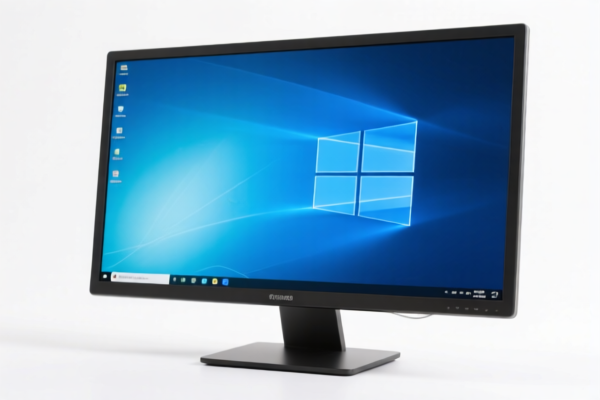
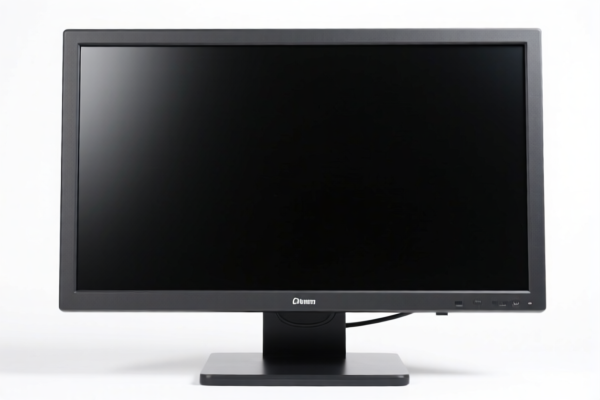
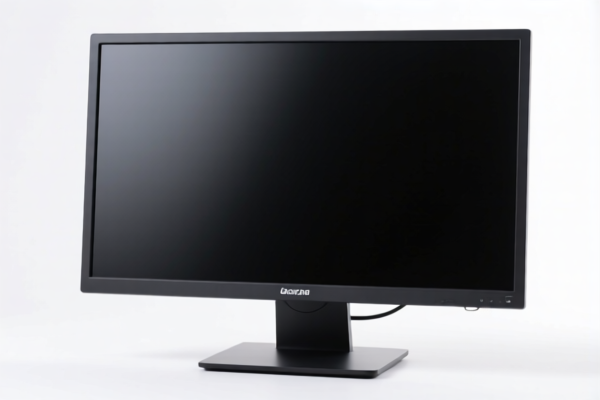
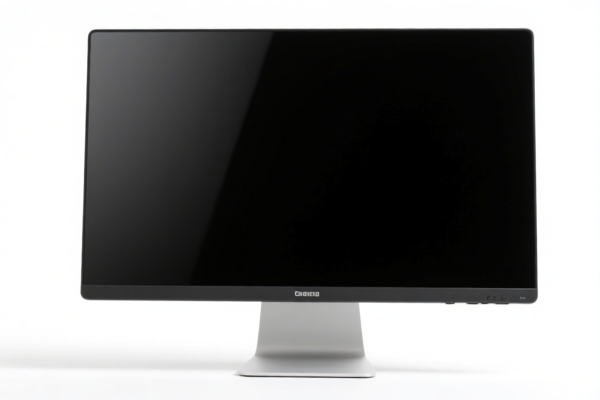
AI Analysis
🏥 Medical LCD Monitors (High-Resolution Diagnostic Displays)
🌐 HS Code Reference & Customs Clearance Guide | 2026 Latest Tariff Analysis | Professional Compliance Strategy
📌 I. Product Definition: Are You Shipping "Displays" or "Computer Parts"?
Medical LCD monitors are specialized output devices used in healthcare settings (HIS/PACS systems). However, in international trade, their HS Code classification hinges on a single, critical technical distinction:
Does the device contain a dedicated control board and user interface buttons/knobs, or is it merely a screen component?
⚠️ Critical Distinction Point:
- Scenario A (Standalone Monitor): Has its own on-screen display (OSD) menu, power supply, and input ports (HDMI/DisplayPort/VGA). It functions independently of a PC to some extent. → Classify under Chapter 85
- Scenario B (Output Unit): Lacks independent control logic; it is strictly an output peripheral connected to a mainframe or computer tower, relying entirely on the computer’s software for operation. → Classify under Chapter 84🚨 Compliance Warning:
Misclassifying a standalone medical monitor as a "computer part" (Chapter 84) to avoid higher tariffs on "displays" (Chapter 85) is a common but risky audit trigger. US Customs and Border Protection (CBP) often challenges this if the monitor has independent OSD controls.
📦 II. HS Code Classification Matrix (2026 Tariff Schedule)
Based on the provided data, there are four potential classifications depending on the specific technical architecture of your medical monitor.
| HS Code | Summary Description | Technical Criteria | Key Differentiator |
|---|---|---|---|
| 8528.72.72.20 | LCD Monitor matching LCD material & video display equipment usage | Standalone monitor with integrated video processing. | Independent OSD controls; not strictly tied to a specific ADP machine's internal architecture. |
| 8528.59.33.50 | LCD Monitor matching LCD-type material & monitor definition | General-purpose monitor definition. | Fits the broad definition of a "monitor" rather than a specific computer peripheral unit. |
| 8471.60.10.50 | LCD Monitor as an output unit of an Automatic Data Processing (ADP) machine | Strictly an output component. | No independent control board; plugs into a main computer as a peripheral (like a printer). |
| 8471.60.90.50 | LCD Monitor as an input/output component of ADP machines | Part of the ADP system ensemble. | Used in integrated systems where the monitor is considered a sub-component of the data processing unit. |
🔍 Analysis for Medical Devices:
Most high-end medical diagnostic monitors (e.g., for radiology, ultrasound, endoscopy) are classified under 8528.72.72.20 or 8528.59.33.50 because they often have specialized calibration, high color accuracy (DICOM compliance), and independent OSD settings for brightness/contrast that do not rely on the PC's OS for basic operation.
However, if the monitor is a simple panel mounted inside a larger medical imaging system without its own controls, it may fall under 8471.60.10.50.
💰 III. Detailed Tariff Breakdown (USA Market | China Origin)
✅ Applicable Country: United States (US)
✅ Origin: China (CN)
✅ Effective Time: 2025/2026 Trade Relations
The tax burden varies significantly between "Display" classifications (Ch 85) and "ADP Output Unit" classifications (Ch 84).
🎯 1. 8528.72.72.20 & 8528.59.33.50 —— Independent LCD Monitors
These codes are subject to a 22.5% total tariff rate.
| Component | Rate | Source / Legal Basis |
|---|---|---|
| Base Tariff | 5.0% | Standard Most Favored Nation (MFN) Rate |
| Section 301 Surcharge | 7.5% | USITC Footnote (Retaliation tariffs) |
| Section 122 Tariff | 10.0% | Specific Section 122 provisions (Note: Verify if still active in 2026; data indicates inclusion) |
| Total Effective Rate | 22.5% | Sum of all components |
📌 Explanation:
- These monitors are treated as consumer/industrial electronic displays.
- The 10% Section 122 tariff is specific and applies to certain LCD goods.
- No De Minimis Exemption: Shipments under $800 are NOT exempt from these additional duties if declared as formal entry goods.
🎯 2. 8471.60.10.50 & 8471.60.90.50 —— ADP Output Units
These codes are subject to a 35.0% total tariff rate.
| Component | Rate | Source / Legal Basis |
|---|---|---|
| Base Tariff | 0.0% | MFN Rate for computer peripherals is often 0% |
| Section 301 Surcharge | 25.0% | High-tier retaliation tariff for IT products |
| Section 122 Tariff | 10.0% | Specific Section 122 provisions |
| Total Effective Rate | 35.0% | Sum of all components |
📌 Explanation:
- Surprisingly Higher Tax: While the base rate is 0%, the 25% Section 301 surcharge for IT equipment is significantly higher than the 7.5% for general displays.
- Risk Factor: Classifying as an ADP part to get 0% base tax backfires because the penalty is much steeper (25% vs 7.5%).
- Recommendation: Avoid8471.60unless the monitor is definitively a non-independent peripheral component.
🛠️ IV. Customs Clearance Practical Advice
✅ 1. Documentation Checklist (Medical Specific)
| Document | Requirement | Note |
|---|---|---|
| Technical Data Sheet | ✔️ Mandatory | Must specify: Is it a standalone monitor or a PC peripheral? Include circuit diagrams if possible. |
| DICOM Compliance Certificate | ✔️ Strongly Recommended | Proves medical-grade color accuracy. Helps justify "Medical Device" status if applicable. |
| Product Photos | ✔️ Mandatory | Clear shots of inputs, outputs, and front-panel buttons. If it has OSD buttons, it leans toward 8528. |
| FCC ID | ✔️ Mandatory | All electronic displays sold in the US must have FCC certification. |
| Commercial Invoice | ✔️ Mandatory | Description must be precise. Avoid vague terms like "Screen." Use "LCD Medical Monitor" or "ADP Output Unit." |
| Form 8833 | ⚠️ If Applicable | If claiming any treaty benefits (rare for China origin). |
✅ 2. Classification Strategy (The "Golden Rule")
🔥 "Controls Define Category, Tariffs Define Cost"
| Scenario | Recommended HS Code | Total Tax | Why? |
|---|---|---|---|
| Monitor has OSD buttons/remote | 8528.72.72.20 |
22.5% | It is a "Display," not just a PC part. Lower Section 301 rate (7.5% vs 25%). |
| Monitor has NO buttons, only cables | 8471.60.10.50 |
35.0% | It is an ADP output. Higher Section 301 rate (25%). Higher Tax! |
| Integrated Medical Imaging System | 9022.xxxx |
Varies | If the monitor is permanently built into an X-ray or CT machine, classify the whole system, not the monitor. |
🚨 Critical Insight:
Many importers mistakenly try to classify monitors as8471.60to avoid "Display" duties, only to find the 25% surcharge makes it more expensive than the 7.5% surcharge for8528.
Verdict: For standalone medical monitors,8528.72.72.20(22.5%) is usually the most cost-effective and compliant choice.
✅ 3. Medical Device Regulatory Notes (FDA)
- Class II Device: Most diagnostic medical monitors are FDA Class II.
- 510(k) Exemption: Check if your specific monitor is exempt from pre-market notification.
- Labeling: Must include FDA establishment registration number on the label or packaging.
- Warning: Even if Customs allows the HS Code, the FDA may detain the shipment if it lacks proper FDA registration or 510(k) clearance. Ensure FDA compliance is separate from HS Code classification.
🌍 V. Global Market Comparison (2026 Snapshot)
| Destination | Recommended HS | Est. Tariff (China Origin) | Key Requirement |
|---|---|---|---|
| 🇺🇸 USA | 8528.72.72.20 |
22.5% | FCC, FDA (if Class II), Detailed Tech Specs |
| 🇪🇺 EU | 8528.59.00 |
0% - 4% | CE Mark, RoHS, EPR (Packaging) |
| 🇨🇳 China | 8528.52.00 |
0% - 5% | CCC (if applicable), CIQ |
| 🇬🇧 UK | 8528.59.00 |
0% | UKCA Mark, GB CE |
📌 VI. Common Pitfalls & How to Avoid Them
❌ Pitfall 1: Claiming "Medical Device" to avoid HS classification.
👉 Result: Customs doesn't care about medical use for HS purposes; they care about electrical function. A medical monitor is still an LCD monitor.
👉 Fix: Classify by technical function (LCD Display), then add medical certifications for FDA/CE.
❌ Pitfall 2: Using 8471.60 to save money.
👉 Result: You pay 35% instead of 22.5%.
👉 Fix: Use 8528.72.72.20 unless the monitor is strictly a non-independent peripheral.
❌ Pitfall 3: Ignoring Section 122.
👉 Result: Underpayment of duties.
👉 Fix: Ensure the 10% Section 122 is included in your landed cost calculations for both 8528 and 8471 codes.
🎯 VII. Conclusion: Smart Clearance for Medical Tech
🎯 Key Takeaway:
"Independent Controls = Lower Tax (22.5%) | Dependent Peripherals = Higher Tax (35.0%)"
For most standalone medical LCD monitors, the optimal path is:
1. HS Code: 8528.72.72.20
2. Tax Rate: 22.5%
3. Documentation: FCC + FDA 510(k) + Technical Specs proving OSD independence.
✅ Action Plan:
📞 Pre-Alert: Notify your customs broker of the medical nature but ensure the HS classification is based on electronics.
📄 Verify: Check if your monitor has independent OSD buttons. If yes,8528is your friend.
💊 Regulatory: Secure FDA clearance before shipping to avoid port holds.
✨ Compliance First, Profit Maximized!
💼 Every dollar saved on classification is a dollar added to your margin.
Customer Reviews
About HS Code Classification
The Harmonized System (HS) is an internationally standardized nomenclature developed by the World Customs Organization (WCO) to classify traded products. Over 200 countries use the HS system as the basis for customs tariffs, trade statistics, and import/export regulations.
Each HS code follows a hierarchical structure:
- Chapter (2 digits) — Broad category of goods (e.g., Chapter 84: Machinery and Mechanical Appliances)
- Heading (4 digits) — More specific grouping within the chapter
- Subheading (6 digits) — Internationally standardized breakdown, used by all WCO member countries
- National subdivisions (8-10 digits) — Country-specific extensions for further classification, such as US HTSUS 10-digit codes
Correct HS code classification is essential for smooth customs clearance, accurate duty payment, and compliance with trade regulations. Misclassification can lead to customs delays, overpayment of duties, or penalties.
When importing from CN to US, the applicable tariff rates may include:
- Most-Favored-Nation (MFN) rate — The standard duty rate applied to WTO members
- General rate — Applied to countries without trade agreements
- Trade remedy duties — Additional tariffs such as Section 301 (anti-dumping), Section 232 (national security), or countervailing duties
The information provided on this page is for reference purposes only. For official classification, please consult with your local customs authority or a licensed customs broker.