Medical Laboratory Analytical Instrument
CN → US| HS Code | Tariff Rate | Origin | Destination | Doc |
|---|---|---|---|---|
| 9031808085 | 35.0% | CN | US | Official Doc |
| 9022190000 | 35.0% | CN | US | Official Doc |
| 9027504015 | 35.0% | CN | US | Official Doc |
| 9031499000 | 35.0% | CN | US | Official Doc |
| 9027894530 | 35.0% | CN | US | Official Doc |
Product Images
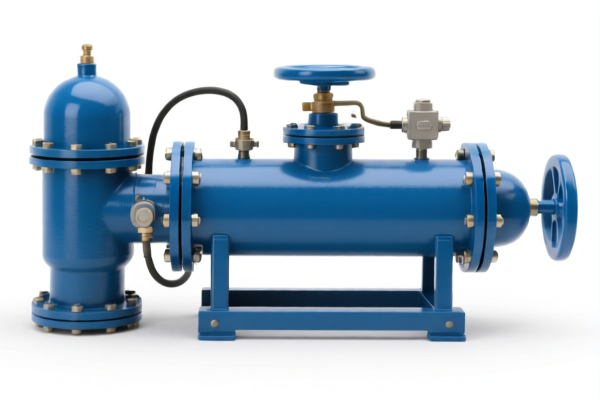
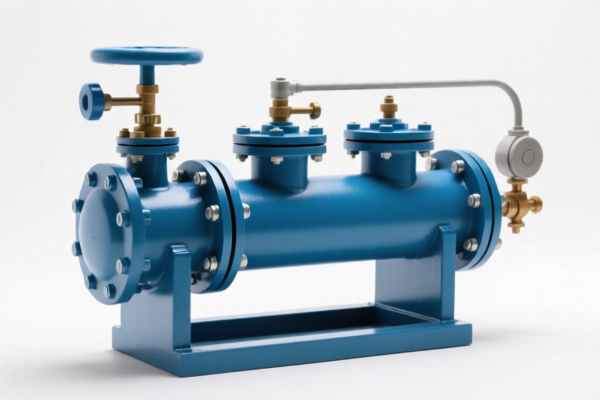
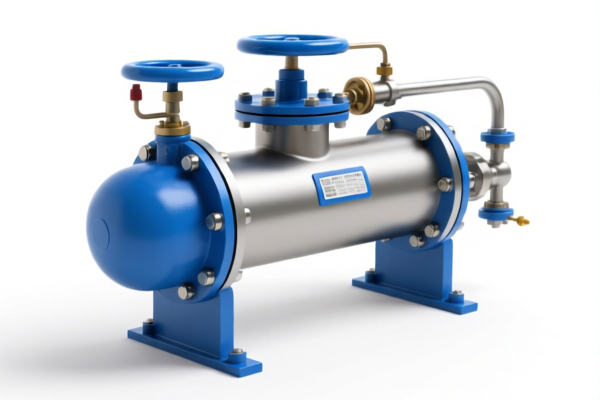
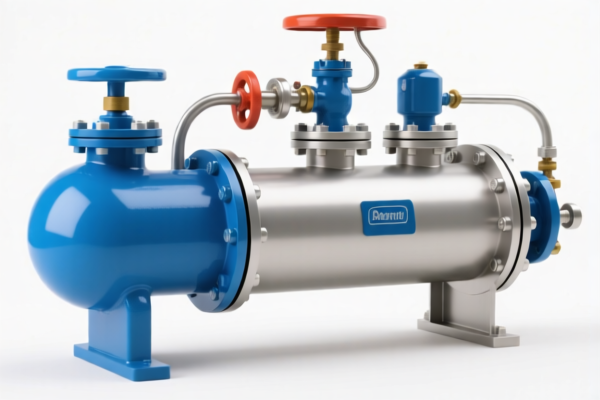
AI Analysis
🧪 Medical Laboratory Analytical Instruments (Medical Lab Analyzers)
🌐 HS Code Reference & Customs Clearance Guide | 2026 Latest Tariff Analysis | Professional Clearance Strategy
📌 I. Product Definition & Classification: Do You Truly Understand "Medical Lab Analyzers"?
Medical Laboratory Analytical Instruments are critical devices used for diagnosing diseases, monitoring health conditions, and managing treatments. In international trade, these instruments are complex systems that often blur the lines between "optical," "electrical," and "general measuring" equipment. Because of their diverse functions (e.g., X-ray imaging, chemical analysis, general measurement), they can be classified under multiple HS Codes depending on their primary function and technical principle.
⚠️ Key Distinction Point:
- If the device primarily uses X-rays for imaging/detection → 9022.19.00.00
- If the device is primarily for Chemical Analysis (e.g., blood chemistry, urinalysis) → 9027.89.45.30 or 9027.50.40.15
- If the device performs general measurement/testing not covered elsewhere → 9031.80.80.85 or 9031.49.90.00
📦 II. HS Code Classification Details (2026 Latest Tariff Authority Reference)
| HS Code | Product Description | Applicable Scenario | Key Technical Principle |
|---|---|---|---|
9031.80.80.85 |
Other measuring or checking instruments/appliances/machines (not specified elsewhere) | General lab instruments, multi-purpose testing devices, non-optical, non-X-ray, non-chemical-specific analyzers | General Measurement |
9022.19.00.00 |
Other apparatus using X-rays (excluding medical/ dental/ veterinary radiography) | Lab devices utilizing X-ray imaging or detection principles (non-standard medical imaging) | X-Ray Technology |
9027.50.40.15 |
Other instruments/apparatus for physical/chemical analysis (electric/electronic) | Chemical analysis instruments, electrical analysis devices, lab equipment matching chemical analysis | Electrical/Chemical Analysis |
9031.49.90.00 |
Optical instruments & apparatus (not specified elsewhere) | Measuring/checking instruments relying on optical principles for analysis or testing | Optical Technology |
9027.89.45.30 |
Other instruments/appliances for physical/chemical analysis | Directly corresponds to chemical analysis instruments/devices, no material/form conflict | Chemical Analysis |
🔍 Key Reminder:
- Chemical Analysis dominated devices (like blood analyzers) often fall under 9027;
- X-ray based detection tools fall under 9022;
- General or Optical instruments may fall under 9031;
- Incorrect classification leads to significant tariff differences and customs delays!
💰 III. 2026 Latest Tariff Rate Breakdown (Including Additional Taxes & Policy Surcharges)
✅ Applicable Country: United States (US)
✅ Origin: China (CN)
✅ Effective Date: From November 10, 2025 (including subsequent imports)
🎯 1. 9031.80.80.85 — Other Measuring/Checking Instruments
| Item | Content |
|---|---|
| Base Tariff | 0.0% (ad valorem) |
| Section 301 Additional Duty | +25.0% (USITC Footnote) |
| Section 122 Duty | +10.0% (Specific to certain Chinese imports) |
| Total Tariff Rate | 35.0% |
| Tax Calculation | CIF Value × 35% |
| De Minimis Eligibility | ❌ Not Applicable (High-risk item) |
| Legal Basis Path | USITC:9031.80.80.85 → Section 301: +25% → Section 122: +10% |
📌 Explanation:
- "Section 301 +25%" is the standard additional duty on many Chinese-made industrial and medical devices;
- "Section 122 +10%" is a specific surcharge applied to certain categories of Chinese goods;
- Combined Rate: 35%, which is high and must be factored into pricing strategies.
🎯 2. 9022.19.00.00 — Other X-Ray Apparatus
| Item | Content |
|---|---|
| Base Tariff | 0.0% |
| Section 301 Additional Duty | +25.0% |
| Section 122 Duty | +10.0% |
| Total Tariff Rate | 35.0% |
| Tax Calculation | CIF Value × 35% |
| De Minimis Eligibility | ❌ Not Applicable |
| Legal Basis Path | USITC:9022.19.00.00 → Section 301: +25% → Section 122: +10% |
📌 Note:
- X-ray based lab equipment is subject to the same high tariff as general measuring instruments;
- Even if the device is for non-medical imaging (e.g., material testing), it falls under this code;
- No de minimis exemption applies due to the high combined rate.
🎯 3. 9027.50.40.15 — Electrical/Chemical Analysis Instruments
| Item | Content |
|---|---|
| Base Tariff | 0.0% |
| Section 301 Additional Duty | +25.0% |
| Section 122 Duty | +10.0% |
| Total Tariff Rate | 35.0% |
| Tax Calculation | CIF Value × 35% |
| De Minimis Eligibility | ❌ Not Applicable |
| Legal Basis Path | USITC:9027.50.40.15 → Section 301: +25% → Section 122: +10% |
📌 Key Insight:
- This code is for electrical/electronic instruments used in chemical analysis;
- Commonly used for blood chemistry analyzers, urinalysis systems, etc.;
- 35% total duty makes this a high-cost import from China.
🎯 4. 9031.49.90.00 — Other Optical Instruments
| Item | Content |
|---|---|
| Base Tariff | 0.0% |
| Section 301 Additional Duty | +25.0% |
| Section 122 Duty | +10.0% |
| Total Tariff Rate | 35.0% |
| Tax Calculation | CIF Value × 35% |
| De Minimis Eligibility | ❌ Not Applicable |
| Legal Basis Path | USITC:9031.49.90.00 → Section 301: +25% → Section 122: +10% |
📌 Caution:
- If the analyzer relies on optical principles (e.g., spectrophotometry, laser-based detection), it may be classified here;
- Same 35% rate applies;
- Optical instruments are often scrutinized for proper classification to avoid misdeclaration.
🎯 5. 9027.89.45.30 — Other Chemical Analysis Instruments
| Item | Content |
|---|---|
| Base Tariff | 0.0% |
| Section 301 Additional Duty | +25.0% |
| Section 122 Duty | +10.0% |
| Total Tariff Rate | 35.0% |
| Tax Calculation | CIF Value × 35% |
| De Minimis Eligibility | ❌ Not Applicable |
| Legal Basis Path | USITC:9027.89.45.30 → Section 301: +25% → Section 122: +10% |
📌 Key Point:
- This is a broad category for chemical analysis instruments not specifically listed elsewhere;
- Many standard medical lab analyzers (e.g., hematology analyzers, immunoassay analyzers) may fall here;
- 35% total duty is consistent across all analyzed HS codes in this dataset.
🛠️ IV. Customs Clearance Practical Advice (Real-World Pitfall Avoidance Guide)
✅ 1. Required Documentation Checklist (Mandatory)
| Document | Mandatory? | Description |
|---|---|---|
| ✅ Product Specification Sheet | ✔️ | Detailed technical parameters, working principles, detection methods |
| ✅ Circuit/Structure Diagrams | ✔️ | To prove whether it uses X-ray, optical, or chemical analysis principles |
| ✅ Product Photos (Including Nameplate) | ✔️ | Clear display of model, brand, input/output parameters, and any radiation warnings |
| ✅ Third-Party Test Reports | ✔️ | FDA 510(k) clearance, CE, RoHS, UL (if applicable) |
| ✅ Commercial Invoice | ✔️ | Must clearly state "Medical Laboratory Analytical Instrument" and correct HS Code |
| ✅ Certificate of Origin (CO) | ✔️ | If not of Chinese origin, may qualify for preferential tariffs |
| ✅ Packing List | ✔️ | Clarify relationship between main unit and accessories to avoid split declaration |
✅ 2. Declaration Tips (Critical Mantra)
🔥 “Function First, Principle Clear, Name Accurate, Tariff Minimized!”
| Scenario | Correct Declaration | Wrong Practice |
|---|---|---|
| General Lab Analyzer (non-specific) | 9031.80.80.85 |
Misdeclare as "Chemical Analyzer" → 35% vs. potential lower if misclassified |
| X-Ray Based Detector | 9022.19.00.00 |
Misdeclare as "General Instrument" → Risk of penalty |
| Chemical/Blood Analyzer (electrical) | 9027.50.40.15 or 9027.89.45.30 |
Misdeclare as "Optical Instrument" → Incorrect duty base |
| Optical Spectrophotometer | 9031.49.90.00 |
Misdeclare as "General Instrument" → Potential audit |
| Standard Chemical Analyzer | 9027.89.45.30 |
Misdeclare as "X-Ray Device" → Severe compliance risk |
✅ 3. Special Case Handling
| Scenario | Handling Advice |
|---|---|
| OEM Custom Analyzers | Provide customer order + design drawings to prove primary function and avoid "general instrument" assumption |
| Multi-Function Devices (e.g., X-ray + Chemical) | Declare based on primary function; provide technical justification |
| Analyzers Used in Healthcare | Ensure FDA 510(k) clearance is attached; otherwise, customs may detain for regulatory reasons |
| Analyzers for Research Only | Still subject to 35% tariff; "Research" status does not exempt from Section 301/122 duties |
🌍 V. Global Main Market Clearance Comparison (2026 Latest)
| Country/Region | Recommended HS Code | Tariff | Certification Requirement | Notes |
|---|---|---|---|---|
| 🇺🇸 USA | 9027.89.45.30 / 9031.80.80.85 etc. |
35% (China Origin) | FDA 510(k) + RoHS | High tariff due to Section 301/122 |
| 🇨🇳 China | Same HS Codes | ~5-7% | CCC + RoHS | No additional duties |
| 🇪🇺 EU | 9027 or 9031 series | 0-4% (if CE compliant) | CE + MDR/IVDR | No additional duties |
| 🇦🇺 Australia | Same HS Codes | ~5-10% | TGA + RCM | No additional duties |
| 🇯🇵 Japan | Same HS Codes | 0-5% | PSE | No additional duties |
📌 Conclusion:
- USA is the only market imposing high additional duties (35%) on Chinese-made medical lab analyzers;
- EU, Japan, Australia offer much lower or zero duties if compliant with local standards;
- Supply chain diversification (e.g., manufacturing in Vietnam, Mexico) may help mitigate US tariffs.
📌 VI. Common Mistakes & Pitfall Guide (Lessons Learned)
❌ Mistake 1: Declaring all lab instruments under one generic HS Code
👉 Consequence: Customs audit → Delay + Potential Penalty
❌ Mistake 2: Ignoring the technical principle (X-ray vs. Optical vs. Chemical)
👉 Consequence: Misclassification → 35% duty instead of potential lower rate if eligible
❌ Mistake 3: Failing to provide FDA 510(k) or equivalent regulatory clearance
👉 Consequence: Detention or Return due to regulatory non-compliance
❌ Mistake 4: Using vague descriptions like "Lab Equipment" without specifying function
👉 Consequence: Customs assigns higher duty rate or requests clarification → Delays
✅ Correct Practice:
"Medical Blood Analyzer, Chemical Principle, Electrical Operation, FDA Cleared, Model XYZ, HS Code 9027.89.45.30"
🎯 VII. Conclusion: Precision Declaration, Time-Saving, Cost-Effective!
🎯 Remember the Mantra:
🔹 “Function First, Principle Clear, Name Accurate, Tariff Minimized!”
🔹 “HS Code Determines Destiny, 35% Duty is High, Declaration Error Costs Much!”
📌 Tips:
- If your analyzers are originating from Vietnam, Mexico, Thailand, or Malaysia, you may qualify for IEEPA exemptions, reducing tariffs to 0-5%;
- Apply for an Advance Ruling with US Customs (CBP) to secure classification certainty before shipment.
📣 Immediate Action:
📞 Contact Professional Customs Brokers + Provide Product Tech Specs + Apply for HS Code Advance Ruling
🚀 Ensure Your Medical Lab Analyzers Clear Customs Smoothly, Export Efficiently, Maximize Profits!
✨ Professional Clearance Starts with Accurate Classification!
💼 Every Cent of Your Cost Deserves Precise Calculation!
Customer Reviews
About HS Code Classification
The Harmonized System (HS) is an internationally standardized nomenclature developed by the World Customs Organization (WCO) to classify traded products. Over 200 countries use the HS system as the basis for customs tariffs, trade statistics, and import/export regulations.
Each HS code follows a hierarchical structure:
- Chapter (2 digits) — Broad category of goods (e.g., Chapter 84: Machinery and Mechanical Appliances)
- Heading (4 digits) — More specific grouping within the chapter
- Subheading (6 digits) — Internationally standardized breakdown, used by all WCO member countries
- National subdivisions (8-10 digits) — Country-specific extensions for further classification, such as US HTSUS 10-digit codes
Correct HS code classification is essential for smooth customs clearance, accurate duty payment, and compliance with trade regulations. Misclassification can lead to customs delays, overpayment of duties, or penalties.
When importing from CN to US, the applicable tariff rates may include:
- Most-Favored-Nation (MFN) rate — The standard duty rate applied to WTO members
- General rate — Applied to countries without trade agreements
- Trade remedy duties — Additional tariffs such as Section 301 (anti-dumping), Section 232 (national security), or countervailing duties
The information provided on this page is for reference purposes only. For official classification, please consult with your local customs authority or a licensed customs broker.